Download Free Sample
Kindly complete the form below to receive a free sample of this Report
US Eyewear Market Size, Share, Industry Trend & Analysis Research Report Information By Product Type (Spectacles, Sunglasses Contact Lenses, and Others), By Distribution Channel (Store-Based, Non-Store-Based, and Other), And By Region (North America, Europe, Asia-Pacific, And Rest Of The World) – Forecast Till 2035.
As per Market Research Future analysis, the US eyewear market Size was estimated at 47.52 USD Billion in 2024. The US eyewear market is projected to grow from 51.34 USD Billion in 2025 to 111.02 USD Billion by 2035, exhibiting a compound annual growth rate (CAGR) of 8.0% during the forecast period 2025 - 2035
The US eyewear market is experiencing a transformative shift towards sustainability and technology integration.
| 2024 Market Size | 47.52 (USD Billion) |
| 2035 Market Size | 111.02 (USD Billion) |
| CAGR (2025 - 2035) | 8.02% |
Luxottica (IT), Essilor (FR), Safilo Group (IT), Marcolin (IT), Kering (FR), Fielmann (DE), Johnson & Johnson (US), Bausch + Lomb (US)
Our Impact
Enabled $4.3B Revenue Impact for Fortune 500 and Leading Multinationals
Partnering with 2000+ Global Organizations Each Year
30K+ Citations by Top-Tier Firms in the Industry
The eyewear market in the United States is currently experiencing a dynamic transformation, driven by various factors including technological advancements, changing consumer preferences, and an increasing focus on health and wellness. The integration of innovative materials and designs has led to a surge in demand for eyewear products that not only serve functional purposes but also reflect personal style. Furthermore, the rise of online retail platforms has altered traditional purchasing behaviors, allowing consumers to explore a wider range of options from the comfort of their homes. This shift is indicative of a broader trend towards convenience and accessibility in the US eyewear market. In addition, the growing awareness of eye health has prompted consumers to seek eyewear solutions that offer protection against harmful blue light and UV rays. This trend is particularly relevant as more individuals engage with digital devices for extended periods. As a result, brands are increasingly focusing on developing lenses that provide enhanced protection and comfort. The US eyewear market appears poised for continued growth, with an emphasis on sustainability and eco-friendly practices likely to shape future developments. Overall, the current landscape reflects a blend of innovation, consumer-centric approaches, and a commitment to health and environmental considerations.
There is a noticeable shift towards sustainable practices within the US eyewear market. Brands are increasingly adopting eco-friendly materials and production methods, responding to consumer demand for environmentally responsible products. This trend not only addresses environmental concerns but also appeals to a growing demographic that prioritizes sustainability in their purchasing decisions.
The incorporation of advanced technology into eyewear products is becoming more prevalent. Features such as smart lenses, augmented reality, and enhanced lens coatings are gaining traction. This trend reflects a broader consumer interest in multifunctional products that enhance daily life while providing essential vision correction.
An increasing focus on eye health is influencing purchasing patterns in the US eyewear market. Consumers are more aware of the effects of prolonged screen time and UV exposure, leading to a demand for specialized lenses that offer protection. This trend highlights the importance of health and wellness in consumer decision-making.
The US eyewear market is significantly influenced by evolving fashion and lifestyle trends. Eyewear has transitioned from a mere functional accessory to a fashion statement, with consumers increasingly seeking stylish frames that reflect their personal identity. The rise of social media platforms has amplified this trend, as influencers and celebrities showcase various eyewear styles, leading to heightened consumer interest. In 2025, the US eyewear market is projected to reach a valuation of approximately $40 billion, with a substantial portion attributed to fashion-forward designs. This shift towards fashionable eyewear encourages brands to innovate and diversify their offerings, catering to a broader audience. As consumers prioritize aesthetics alongside functionality, the US eyewear market is likely to witness sustained growth driven by the intersection of fashion and vision correction.
The increasing prevalence of vision impairment in the US is a notable driver for the US eyewear market. According to recent data, approximately 12 million individuals aged 40 and older experience vision impairment, which translates to a growing demand for corrective eyewear. This trend is likely to continue as the population ages, with projections indicating that by 2030, the number of older adults will reach 73 million. Consequently, the US eyewear market is expected to expand as more consumers seek solutions for vision correction, including prescription glasses and contact lenses. The need for specialized eyewear, such as bifocals and progressive lenses, further emphasizes the importance of addressing vision impairment in the market. As awareness of eye health increases, consumers are more inclined to invest in quality eyewear, thereby driving growth in the US eyewear market.
Growing awareness of eye health among consumers is a pivotal driver for the US eyewear market. Educational campaigns and initiatives by health organizations have highlighted the importance of regular eye examinations and the role of eyewear in maintaining optimal vision. As individuals become more conscious of their eye health, there is a corresponding increase in demand for prescription eyewear and protective lenses. In 2025, it is estimated that around 60% of adults will prioritize eye health, leading to a surge in eyewear purchases. This trend is further supported by advancements in lens technology, such as blue light blocking and anti-reflective coatings, which appeal to health-conscious consumers. The US eyewear market is thus positioned to benefit from this heightened focus on eye care, as consumers seek products that enhance both vision and overall well-being.
The rapid expansion of e-commerce platforms is a significant driver for the US eyewear market in the US. Online shopping has transformed the way consumers purchase eyewear, providing greater accessibility and convenience. In 2025, it is estimated that online sales will account for over 30% of total eyewear sales, as consumers increasingly prefer the ease of browsing and purchasing from home. This shift has prompted traditional retailers to enhance their online presence and offer virtual try-on features, further bridging the gap between physical and digital shopping experiences. The US eyewear market is benefiting from this trend, as consumers can explore a wider range of styles and brands online. Additionally, competitive pricing and promotions available through e-commerce platforms are likely to attract price-sensitive consumers, contributing to the overall growth of the US eyewear market.
Technological innovations are reshaping the US eyewear market, offering consumers enhanced functionality and convenience. The integration of smart technology into eyewear, such as augmented reality (AR) and smart lenses, is gaining traction among tech-savvy consumers. These advancements not only improve the user experience but also create new market segments within the eyewear industry. For instance, smart glasses equipped with features like voice control and fitness tracking are becoming increasingly popular. In 2025, the market for smart eyewear is projected to grow by over 25%, reflecting the demand for multifunctional products. As technology continues to evolve, the US eyewear market is likely to see a surge in innovative offerings that cater to the needs of modern consumers, thereby driving overall market growth.
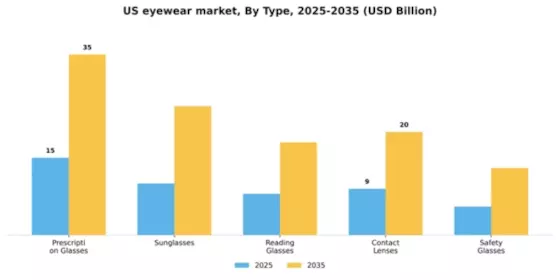
In the US eyewear market, the segment is predominantly led by prescription glasses, which cater to a significant portion of the population requiring vision correction. Sunglasses follow, gaining traction primarily due to increasing fashion awareness and protective needs from UV exposure, while reading glasses and contact lenses also hold notable shares. Safety glasses are important in specialized industries but represent a smaller share overall. Growth trends in this segment are influenced by various factors, including the rising prevalence of vision-related issues and the growing adoption of eyewear as a fashion accessory. Additionally, advancements in lens technology and materials are enhancing comfort and functionality, contributing to the overall expansion. The trend towards online retailing is also making eyewear more accessible, further boosting these segments.
Prescription Glasses (Dominant) vs. Sunglasses (Emerging)
Prescription glasses are characterized by their essential role in vision correction, serving a broad demographic including children and the elderly. As the dominant segment in the US eyewear market, they benefit from continual innovation in lens technology that enhances user experience and comfort. Sunglasses, while traditionally viewed as a seasonal accessory, are emerging strongly as a year-round necessity, influenced by growing consumer awareness of eye health and UV protection. The integration of fashion elements into functional eyewear has made sunglasses increasingly appealing, especially among younger consumers. This dynamic creates a competitive market where both segments are vying for consumer attention and loyalty.
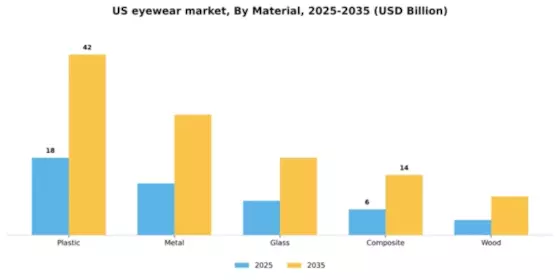
In the US eyewear market, the distribution of market share among materials reveals that plastic dominates due to its affordability, versatility, and comfort for consumers. Following plastic, metal and glass segments hold notable shares, attributed to their aesthetic appeal and durability. Composite and wood materials are more niche, serving specific consumer preferences, yet they contribute to the diversification of the market. Growth trends indicate a rising preference for eco-friendly materials, which is beginning to drive demand for wood and composite eyewear products. Metal frames, characterized by their strength and lightweight nature, are witnessing the fastest growth, appealing to consumers seeking durability combined with style. Technological advancements in production processes and an increasing focus on personalized eyewear options are also fueling market expansion.
Plastic: Dominant vs. Metal: Emerging
Plastic eyewear frames are recognized as the dominant choice in the market, celebrated for their lightweight and adaptable nature. They cater to a wide range of consumers, from budget-conscious shoppers to fashion-forward individuals. Meanwhile, metal frames are emerging rapidly, known for their sleek designs and durability, making them increasingly appealing to style-conscious consumers. This segment benefits from innovations such as corrosion-resistant coatings and adjustable fittings. Both materials reflect current consumer trends emphasizing comfort, sustainability, and aesthetic diversity, positioning them well for sustained growth in the evolving landscape of the US eyewear market.
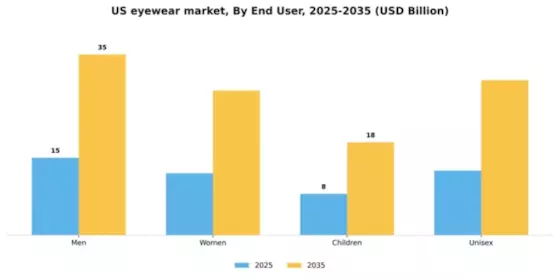
In the US eyewear market, Men represent the largest segment, significantly contributing to overall sales due to a strong inclination towards functionality and style. Women, on the other hand, have emerged as a fast-growing segment, driven by increasing fashion consciousness and the variety of eyewear options available that cater to their preferences for aesthetics as well as functionality. The growth of both segments can be attributed to changing lifestyle trends and technological advancements in eyewear designs. The rise of online retail has also enhanced accessibility, allowing consumers to explore a wider array of products. With Men focusing on durability and Women leaning towards stylish options, brands are adapting their marketing strategies to cater to these distinct consumer needs, ensuring sustained growth across both segments.
Men: Dominant vs. Women: Emerging
Men's eyewear in the US eyewear market is characterized by a preference for robust and functional designs, including sports and prescription eyewear. This segment dominates the market due to established buying trends that prioritize practicality and durability, often leading to higher average spending per purchase. In contrast, the Women's segment is emerging rapidly, showing a marked preference for trendy, colorful, and designer eyewear. Women are increasingly seen as discerning consumers who value brand reputation and are willing to invest in fashionable eyewear. The convergence of style and innovation has led to this rapid growth, making Women's eyewear a key focus for new product development and marketing strategies.
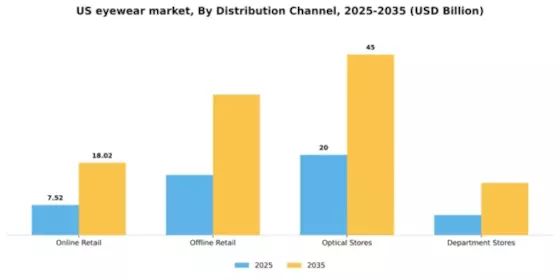
In the US eyewear market, the distribution of market share among various channels reveals that online retail dominates significantly, capturing a substantial portion of consumer purchases. This growth is attributed to the increasing preference for online shopping, spurred by convenience and an expansive selection of eyewear options. In contrast, offline retail channels, including optical stores and department stores, share the remaining market space, focusing on personalized services and immediate product access. The growth trends in this segment indicate a robust shift towards online platforms, driven by improved digital experiences and targeted marketing strategies. Optical stores have emerged as the fastest-growing segment, fueled by the rising importance of customized eyewear solutions and enhanced customer engagement. The interplay between online convenience and in-store expertise is reshaping how consumers approach eyewear purchasing decisions.
Online Retail (Dominant) vs. Optical Stores (Emerging)
Online retail has established itself as the dominant distribution channel in the US eyewear market, leveraging the advantages of convenience and a broad range of products. Consumers are increasingly opting for online purchases due to the ease of comparing options and accessing customer reviews. On the other hand, optical stores represent an emerging segment that is capitalizing on personalized customer service and expert consultations. As consumers seek tailored eyewear solutions, these stores are adapting to meet demand through technology integration and innovative service offerings. This dynamic landscape illustrates the growing importance of both channels, with online retail leading in market share while optical stores continue to be pivotal in meeting personalized customer needs.
Get more detailed insights about US Eyewear Market Request Free Sample
The eyewear market in the US is characterized by a dynamic competitive landscape, driven by innovation, consumer demand for personalized products, and the increasing integration of technology. Major players such as Luxottica (IT), Essilor (FR), and Johnson & Johnson (US) are strategically positioned to leverage these trends. Luxottica (IT) focuses on expanding its retail footprint while enhancing its digital capabilities, aiming to create a seamless omnichannel experience. Essilor (FR) emphasizes innovation in lens technology, particularly in the realm of digital eye strain solutions, which aligns with the growing consumer awareness of eye health. Johnson & Johnson (US) continues to invest in its contact lens segment, particularly in the development of smart lenses, indicating a strong commitment to technological advancement.The business tactics employed by these companies reflect a concerted effort to optimize supply chains and localize manufacturing processes. The market structure appears moderately fragmented, with a mix of large multinational corporations and smaller niche players. This fragmentation allows for diverse product offerings, catering to various consumer preferences. The collective influence of key players shapes competitive dynamics, as they engage in strategic partnerships and collaborations to enhance their market presence.In October Luxottica (IT) announced a partnership with a leading tech firm to develop augmented reality (AR) eyewear, which is expected to revolutionize the consumer experience by integrating digital content with the physical world. This strategic move not only positions Luxottica at the forefront of technological innovation but also aligns with the increasing consumer interest in AR applications. The potential for enhanced user engagement could significantly boost sales and brand loyalty.In September Essilor (FR) launched a new line of lenses designed specifically for digital device users, addressing the rising concerns over digital eye strain. This initiative underscores Essilor's commitment to innovation and consumer health, potentially capturing a significant share of the market as awareness of eye health continues to grow. The strategic importance of this launch lies in its alignment with current consumer trends, which favor products that enhance well-being and comfort.In August Johnson & Johnson (US) unveiled a new smart contact lens prototype that monitors glucose levels for diabetic patients. This development not only showcases the company's dedication to health technology but also highlights the potential for cross-industry innovation. The strategic importance of this product lies in its ability to address a critical health issue while expanding Johnson & Johnson's footprint in the wearable technology market.As of November current competitive trends in the US eyewear market include a strong emphasis on digitalization, sustainability, and the integration of artificial intelligence (AI) in product development. Strategic alliances are increasingly shaping the landscape, as companies collaborate to enhance their technological capabilities and product offerings. Looking ahead, competitive differentiation is likely to evolve from traditional price-based competition to a focus on innovation, technology integration, and supply chain reliability. This shift suggests that companies that prioritize these aspects will be better positioned to thrive in an increasingly competitive environment.


The US Eyewear Market is projected to grow at an 8.02% CAGR from 2025 to 2035, driven by technological advancements, increasing health awareness, and rising fashion trends.
New opportunities lie in:
By 2035, the US eyewear market is expected to achieve substantial growth and innovation.
| MARKET SIZE 2024 | 47.52(USD Billion) |
| MARKET SIZE 2025 | 51.34(USD Billion) |
| MARKET SIZE 2035 | 111.02(USD Billion) |
| COMPOUND ANNUAL GROWTH RATE (CAGR) | 8.02% (2025 - 2035) |
| REPORT COVERAGE | Revenue Forecast, Competitive Landscape, Growth Factors, and Trends |
| BASE YEAR | 2024 |
| Market Forecast Period | 2025 - 2035 |
| Historical Data | 2019 - 2024 |
| Market Forecast Units | USD Billion |
| Key Companies Profiled | Luxottica (IT), Essilor (FR), Safilo Group (IT), Marcolin (IT), Kering (FR), Fielmann (DE), Johnson & Johnson (US), Bausch + Lomb (US) |
| Segments Covered | Type, Material, End User, Distribution Channel |
| Key Market Opportunities | Integration of smart technology in eyewear enhances user experience and opens new market segments. |
| Key Market Dynamics | Shifting consumer preferences towards sustainable eyewear drive innovation and competition in the market. |
| Countries Covered | US |


Kindly complete the form below to receive a free sample of this Report

“This is really good guys. Excellent work on a tight deadline. I will continue to use you going forward and recommend you to others. Nice job”


“Thanks. It’s been a pleasure working with you, please use me as reference with any other Intel employees.”


“Thanks for sending the report it gives us a good global view of the Betaïne market.”


“Thank you, this will be very helpful for OQS.”


“We found the report very insightful! we found your research firm very helpful. I'm sending this email to secure our future business.”


“I am very pleased with how market segments have been defined in a relevant way for my purposes (such as "Portable Freezers & refrigerators" and "last-mile"). In general the report is well structured. Thanks very much for your efforts.”


“I have been reading the first document or the study, ,the Global HVAC and FP market report 2021 till 2026. Must say, good info! I have not gone in depth at all parts, but got a good indication of the data inside!”


“We got the report in time, we really thank you for your support in this process. I also thank to all of your team as they did a great job.”


“The Automotive 48V ECU Components Procurement Intelligence Study” was a complex project, but the Market Research Future (MRFR) team handled it with quality, agility, and customer-centricity. They delivered all requested data on time and within the agreed scope. The team, including Shubhendra Anand and Rahul Gotadki, was always readily available to clarify questions and swiftly implement necessary adjustments, driving the project to a successful conclusion within a very demanding timeframe.
I would also like to specifically commend Akshay Agarwal for his responsiveness and support at every stage—from our initial inquiry on May 6th through to final delivery on June 18th. His dedication made the entire process seamless.”



