×
Request Free Sample ×

Kindly complete the form below to receive a free sample of this Report

* Please use a valid business email

Leading companies partner with us for data-driven Insights

clients tt-cursor
Hero Background

US Food Aroma Market

ID: MRFR/FnB/18099-HCR
128 Pages
Snehal Singh
October 2025

US Food Aroma Market Research Report: By Type (Natural, Synthetic), By Product (Benzenoids as Food Aroma, Terpene as Food Aroma, Musk Chemical as Food Aroma, Others) and By Application (Beverages, Bakery, Dairy, Confectionery, Snacks, Other Application) - Forecast to 2035

Share:
Download PDF ×

We do not share your information with anyone. However, we may send you emails based on your report interest from time to time. You may contact us at any time to opt-out.

US Food Aroma Market Infographic
Purchase Options

US Food Aroma Market Summary

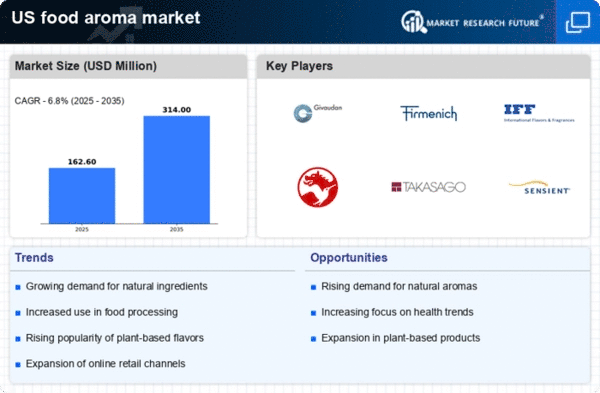
As per MRFR analysis, the US food aroma market size was estimated at 152.25 USD Million in 2024. The US food aroma market is projected to grow from 162.6 USD Million in 2025 to 314.0 USD Million by 2035, exhibiting a compound annual growth rate (CAGR) of 6.8% during the forecast period 2025 - 2035.

Key Market Trends & Highlights

The US food aroma market is experiencing a dynamic shift towards natural and innovative solutions.

  • The market is witnessing a notable shift towards natural ingredients, reflecting consumer preferences for authenticity.
  • Innovation in aroma technology is driving the development of more complex and appealing flavor profiles.
  • The rise of plant-based aromas is becoming increasingly prominent, catering to the growing vegan and vegetarian segments.
  • Key market drivers include the growing demand for authentic flavors and health consciousness, which are shaping consumer choices.

Market Size & Forecast

2024 Market Size 152.25 (USD Million)
2035 Market Size 314.0 (USD Million)
CAGR (2025 - 2035) 6.8%

Major Players

Givaudan (CH), Firmenich (CH), International Flavors & Fragrances (US), Symrise (DE), Takasago International Corporation (JP), Sensient Technologies Corporation (US), Robertet (FR), Mane (FR)

US Food Aroma Market Trends

The food aroma market is currently experiencing a dynamic evolution. This change is driven by changing consumer preferences and an increasing focus on health and wellness. As individuals become more discerning about their food choices, the demand for natural and organic aromas is on the rise. This shift is likely influenced by a growing awareness of the potential health impacts of artificial additives. Consequently, manufacturers are adapting their product lines to incorporate more natural ingredients, which may enhance the appeal of their offerings. Additionally, the trend towards plant-based diets is contributing to the diversification of aroma profiles, as consumers seek new and innovative flavors that align with their dietary choices. Moreover, technological advancements in extraction and processing methods are enabling the development of more complex and appealing aromas. These innovations not only improve the quality of aromas but also expand the range of applications across various food products. The food aroma market is poised for continued growth as companies invest in research and development to create unique sensory experiences. This focus on innovation, combined with a commitment to sustainability, suggests that the market will likely evolve in response to both consumer demands and environmental considerations. As such, stakeholders in the food aroma sector must remain agile and responsive to these emerging trends to maintain competitiveness in this vibrant landscape.

Shift Towards Natural Ingredients

There is a noticeable trend towards the use of natural ingredients in the food aroma market. Consumers are increasingly seeking products that contain fewer artificial additives, prompting manufacturers to reformulate their offerings. This shift is likely driven by health-conscious consumers who prefer aromas derived from natural sources, which may enhance the overall perception of food quality.

Innovation in Aroma Technology

Technological advancements are playing a crucial role in the evolution of the food aroma market. New extraction and processing techniques are enabling the creation of more complex and appealing aromas. This innovation not only improves the sensory experience of food products but also allows for greater customization to meet diverse consumer preferences.

Rise of Plant-Based Aromas

The growing popularity of plant-based diets is influencing the food aroma market significantly. As consumers adopt these diets, there is an increasing demand for aromas that complement plant-based foods. This trend suggests a potential for new flavor profiles that cater to the evolving tastes of health-conscious individuals.

US Food Aroma Market Drivers

Growing Demand for Authentic Flavors

The food aroma market is experiencing a notable increase in demand for authentic flavors. This trend is driven by consumer preferences for natural and traditional taste experiences. This trend is particularly evident in the rise of artisanal and gourmet food products, which often emphasize the use of high-quality ingredients and authentic aromas. According to recent data, the market for natural food aromas is projected to grow at a CAGR of 5.2% over the next five years, reflecting a shift towards products that resonate with consumers' desire for authenticity. As a result, manufacturers in the food aroma market are increasingly focusing on sourcing natural ingredients and developing aromas that replicate traditional flavors, thereby enhancing the overall sensory experience of food products.

Expansion of the Food and Beverage Sector

The food aroma market is benefiting from the ongoing expansion of the food and beverage sector, which is characterized by a growing number of restaurants, cafes, and food service establishments. This expansion is driven by changing consumer lifestyles and an increasing preference for dining out. According to industry reports, the food service market in the US is projected to reach $899 billion by 2027, creating substantial opportunities for aroma suppliers. As food service operators seek to differentiate their offerings, the demand for unique and appealing aromas is likely to increase. This trend is prompting manufacturers in the food aroma market to innovate and develop new aroma profiles that cater to the evolving tastes of consumers, thereby enhancing the overall dining experience.

Health Consciousness and Clean Label Trends

Health consciousness among consumers is significantly influencing the food aroma market, as individuals increasingly seek products that align with their wellness goals. The clean label movement, which emphasizes transparency and the use of recognizable ingredients, is reshaping consumer expectations. In the US, approximately 70% of consumers are willing to pay a premium for products that are free from artificial additives, which has prompted manufacturers to reformulate their offerings. This shift towards health-oriented products is driving innovation in the food aroma market, as companies strive to create aromas that not only enhance flavor but also meet the clean label criteria. Consequently, the demand for natural and organic aromas is expected to rise, reflecting a broader trend towards healthier eating habits.

Rising Popularity of Ethnic and Exotic Flavors

The food aroma market is increasingly influenced by the rising popularity of ethnic and exotic flavors, as consumers seek diverse culinary experiences. This trend is particularly pronounced among younger demographics, who are more adventurous in their food choices. The demand for aromas that replicate authentic ethnic cuisines is driving innovation in the market, as manufacturers strive to create products that capture the essence of global flavors. According to market analysis, the ethnic food segment is expected to grow by 6.5% annually, indicating a robust interest in diverse flavor profiles. Consequently, the food aroma market is likely to expand as companies develop new aroma offerings that cater to this growing consumer interest in international cuisines.

Technological Advancements in Aroma Production

Technological advancements are playing a crucial role in shaping the food aroma market, as innovations in production techniques enable the creation of more complex and appealing aromas. Techniques such as encapsulation and microencapsulation are being utilized to enhance the stability and release of aromas in food products. These advancements not only improve the sensory experience but also extend the shelf life of products. Furthermore, the integration of artificial intelligence and machine learning in aroma development is allowing manufacturers to analyze consumer preferences more effectively. As a result, the food aroma market is likely to witness a surge in the introduction of novel aroma formulations that cater to specific consumer demands, thereby driving market growth.


Market Segment Insights

By Type: Natural (Largest) vs. Synthetic (Fastest-Growing)

The US food aroma market is characterized by a diverse range of types, with natural aromas holding the largest market share. This segment is favored by consumers seeking authentic flavors derived from natural sources, leading to a significant preference among manufacturers looking to align with consumer trends. In contrast, synthetic aromas, while smaller in market share, have been gaining traction due to their versatility and cost-effectiveness, appealing to industries looking at scaling production efficiently. Growth trends in this segment indicate a strong shift towards natural aromas driven by increasing health awareness and clean label demands among consumers. The demand for organic and natural products continues to rise, propelling the market for natural aromas forward. Synthetic aromas are also experiencing growth as companies innovate and develop new formulations to meet specific market needs, presenting a balance between quality and affordability that attracts a wide range of customers.

Natural: Dominant vs. Synthetic: Emerging

Natural aromas are recognized as the dominant force in the US food aroma market, celebrated for their authenticity and consumer appeal. They are primarily sourced from herbs, spices, and other plant materials, appealing to health-conscious consumers and artisans prioritizing quality. On the other hand, synthetic aromas are emerging rapidly, utilizing advanced chemical processes to create flavors that replicate natural tastes at a lower cost. This segment offers consistency and versatility, making it a preferred choice for mass production in the food industry. Both segments are navigating a rapidly evolving market landscape that pushes them towards cleaner labels and healthier options, thereby driving innovation in product offerings and formulations.

By Product: Benzenoids (Largest) vs. Terpene (Fastest-Growing)

The market for food aromas is characterized by distinct segments, with benzenoids holding the largest share in the US food aroma market. This segment benefits from its extensive use across various food applications, enhancing flavors and aromas in processed foods. Meanwhile, terpene, known for its natural origin and diverse applications in the food industry, is rapidly gaining traction among manufacturers, thereby marking its significant influence on market dynamics. Growth trends indicate a strong consumer preference for natural ingredients, driving the terpene segment to emerge as the fastest-growing area within the market. The increasing demand for clean label products and the regulatory push for natural flavorings are key factors propelling this trend. Additionally, benzenoids are seeing stable growth due to their prevalence in crucial food production processes, ensuring a balanced market performance.

Benzenoids (Dominant) vs. Terpene (Emerging)

Benzenoids are characterized by their chemical structures that effectively enhance and impart specific flavors, making them a dominant force in the food aroma sector. Their wide usage in various products, from beverages to snacks, underscores their critical role in food formulation. On the other hand, terpenes represent an emerging trend, leveraging their natural properties to cater to the growing number of health-conscious consumers. These compounds are derived from plant sources, which resonate well with the clean label movement. As manufacturers seek innovative ways to capture consumer interest, terpenes are expected to play a more significant role in product development, reflecting a shift towards sustainable and natural ingredients in the food aroma market.

By Application: Beverages (Largest) vs. Dairy (Fastest-Growing)

In the US food aroma market, the 'Beverages' segment holds the largest market share, driven by a diverse range of flavored drinks, including juices, soft drinks, and alcoholic beverages. Following behind are 'Bakery' and 'Snacks', capitalizing on the growing consumer trend towards flavored and indulgent products. Meanwhile, 'Dairy' is showing significant growth potential, attributed to the rising demand for flavored yogurts and cheeses, positioning it as a key area of focus for brands looking to innovate with new aroma offerings. The growth trends in the application segment are largely influenced by changing consumer preferences favoring natural and organic ingredients. The booming beverage industry is rapidly expanding due to innovative flavor profiles and health-conscious products. Concurrently, the increasing popularity of dairy-based snacks has accelerated the integration of unique aromas to enhance taste experiences. This dual momentum is set to drive sustained growth and inspire new product development across all applications in the market.

Beverages: Dominant vs. Dairy: Emerging

The 'Beverages' segment stands as a dominant player in the US food aroma market, characterized by its extensive variety of flavor profiles that cater to diverse consumer preferences. This segment benefits from constant innovation and high investment in flavor technology, enabling brands to create compelling aromatic experiences across soft drinks, alcoholic beverages, and health-oriented drinks. On the other hand, the 'Dairy' segment is emerging rapidly, appealing to health-conscious consumers seeking unique flavors in products like flavored yogurts and cheeses. This segment is capitalizing on the trend of functional foods, making it a lucrative area for growth as more brands explore creative aroma applications to attract health-aware customers.

Get more detailed insights about US Food Aroma Market

Key Players and Competitive Insights

The food aroma market is characterized by a dynamic competitive landscape, driven by innovation, sustainability, and consumer preferences for natural ingredients. Major players such as International Flavors & Fragrances (US), Givaudan (CH), and Symrise (DE) are at the forefront, each adopting distinct strategies to enhance their market positioning. International Flavors & Fragrances (US) focuses on integrating advanced technologies into their product development processes, aiming to create unique flavor profiles that resonate with evolving consumer tastes. Givaudan (CH), on the other hand, emphasizes sustainability, committing to sourcing natural ingredients responsibly while investing in research to develop eco-friendly aroma solutions. Symrise (DE) leverages its global presence to expand into emerging markets, thereby diversifying its portfolio and enhancing its competitive edge. Collectively, these strategies contribute to a moderately fragmented market structure, where innovation and sustainability are pivotal in shaping competitive dynamics.

Key business tactics within the food aroma market include localizing manufacturing and optimizing supply chains to enhance efficiency and responsiveness to market demands. The competitive structure remains moderately fragmented, with several key players exerting influence through strategic partnerships and collaborations. This fragmentation allows for niche players to thrive, while larger companies leverage their scale to drive innovation and sustainability initiatives. The collective influence of these players fosters a competitive environment where agility and adaptability are crucial for success.

In October 2025, International Flavors & Fragrances (US) announced a partnership with a leading technology firm to develop AI-driven flavor creation tools. This strategic move is expected to enhance their product development capabilities, allowing for faster and more tailored solutions that meet specific consumer preferences. The integration of AI into their operations signifies a shift towards data-driven decision-making, potentially setting a new standard in the industry.

In September 2025, Givaudan (CH) launched a new line of natural flavorings derived from sustainable sources, reinforcing its commitment to environmental responsibility. This initiative not only aligns with growing consumer demand for clean-label products but also positions Givaudan as a leader in sustainable practices within the food aroma sector. The introduction of these products is likely to attract environmentally conscious consumers, thereby expanding their market share.

In August 2025, Symrise (DE) expanded its production facility in Brazil, aiming to enhance its capacity to serve the Latin American market. This expansion reflects Symrise's strategic focus on regional growth and its commitment to meeting the increasing demand for food aromas in emerging markets. By bolstering its operational capabilities in this region, Symrise is well-positioned to capitalize on the growth opportunities presented by a burgeoning consumer base.

As of November 2025, current trends in the food aroma market are increasingly defined by digitalization, sustainability, and the integration of AI technologies. Strategic alliances among key players are shaping the competitive landscape, fostering innovation and enhancing supply chain efficiencies. Looking ahead, competitive differentiation is likely to evolve from traditional price-based competition towards a focus on innovation, technological advancements, and reliable supply chains. This shift underscores the importance of adaptability and forward-thinking strategies in navigating the complexities of the food aroma market.

Key Companies in the US Food Aroma Market market include

Industry Developments

The US Food Aroma Market has seen notable developments recently, with companies like International Flavors and Fragrances and Givaudan innovating to enhance their product offerings. In October 2023, Givaudan announced an expansion of its flavor creation capabilities to meet rising consumer demand for natural flavors, reflecting a broader trend in the market towards more organic ingredients. Notably, in August 2023, International Flavors and Fragrances completed its acquisition of the biotechnology firm, Qualipharma, positioning itself for enhanced R&D in flavor technologies. Additionally, the merger of Sensient Technologies with a local flavor producer has increased competition in niche market segments.

The value of the US Food Aroma Market is projected to grow significantly, fueled by increasing consumer awareness regarding the ingredients in food products. A report from the United States Department of Agriculture indicates that the demand for flavor enhancers is being driven by a rise in the packaged food sector. Moreover, key players like Kerry Group and Firmenich are actively engaging in sustainable practices to meet consumer preferences for environmentally friendly products, indicating a shift towards sustainability in the industry.

Future Outlook

US Food Aroma Market Future Outlook

The Food Aroma Market is projected to grow at a 6.8% CAGR from 2024 to 2035, driven by increasing consumer demand for natural flavors and innovative food products.

New opportunities lie in:

  • Development of plant-based aroma solutions for health-conscious consumers.
  • Expansion of e-commerce platforms for direct-to-consumer aroma products.
  • Investment in R&D for sustainable aroma extraction technologies.

By 2035, the food aroma market is expected to achieve substantial growth and innovation.

Market Segmentation

US Food Aroma Market Type Outlook

  • Natural
  • Synthetic

US Food Aroma Market Product Outlook

  • Benzenoids as Food Aroma
  • Terpene as Food Aroma
  • Musk Chemical as Food Aroma
  • Others

US Food Aroma Market Application Outlook

  • Beverages
  • Bakery
  • Dairy
  • Confectionery
  • Snacks
  • Other Application

Report Scope

MARKET SIZE 2024 152.25(USD Million)
MARKET SIZE 2025 162.6(USD Million)
MARKET SIZE 2035 314.0(USD Million)
COMPOUND ANNUAL GROWTH RATE (CAGR) 6.8% (2024 - 2035)
REPORT COVERAGE Revenue Forecast, Competitive Landscape, Growth Factors, and Trends
BASE YEAR 2024
Market Forecast Period 2025 - 2035
Historical Data 2019 - 2024
Market Forecast Units USD Million
Key Companies Profiled Givaudan (CH), Firmenich (CH), International Flavors & Fragrances (US), Symrise (DE), Takasago International Corporation (JP), Sensient Technologies Corporation (US), Robertet (FR), Mane (FR)
Segments Covered Type, Product, Application
Key Market Opportunities Growing demand for natural food aromas driven by health-conscious consumer preferences and regulatory support.
Key Market Dynamics Rising consumer demand for natural flavors drives innovation and competition in the food aroma market.
Countries Covered US

Leave a Comment

FAQs

What is the expected market size of the US Food Aroma Market in 2024?

The US Food Aroma Market is expected to be valued at approximately 152.25 million USD in 2024.

What is the projected market size for the US Food Aroma Market by 2035?

By 2035, the US Food Aroma Market is expected to reach a valuation of around 268.0 million USD.

What is the anticipated compound annual growth rate (CAGR) for the US Food Aroma Market from 2025 to 2035?

The US Food Aroma Market is expected to grow at a CAGR of 5.275% between 2025 and 2035.

Which segment is projected to dominate the US Food Aroma Market in 2024?

In 2024, the synthetic segment is expected to hold a larger market share, valued at 82.25 million USD.

What will be the market value of the natural segment in the US Food Aroma Market by 2035?

The natural segment of the US Food Aroma Market is anticipated to be valued at 125.0 million USD by 2035.

Who are the key players in the US Food Aroma Market?

Key players in the US Food Aroma Market include International Flavors and Fragrances, T. Hasegawa, and Givaudan among others.

What are the growth drivers for the US Food Aroma Market?

Growth drivers for the US Food Aroma Market include rising demand for natural flavors and increased consumer interest in food quality.

How is the competition structured in the US Food Aroma Market?

The US Food Aroma Market features intense competition with major players focusing on innovation and product differentiation.

What are the emerging trends in the US Food Aroma Market?

Emerging trends in the US Food Aroma Market include a shift towards clean label products and heightened awareness of health and wellness.

What impact do regulatory changes have on the US Food Aroma Market?

Regulatory changes can significantly affect the US Food Aroma Market by influencing ingredient sourcing and product formulation strategies.

Download Free Sample

Kindly complete the form below to receive a free sample of this Report

Compare Licence

×
Features License Type
Single User Multiuser License Enterprise User
Price $4,950 $5,950 $7,250
Maximum User Access Limit 1 User Upto 10 Users Unrestricted Access Throughout the Organization
Free Customization
Direct Access to Analyst
Deliverable Format
Platform Access
Discount on Next Purchase 10% 15% 15%
Printable Versions