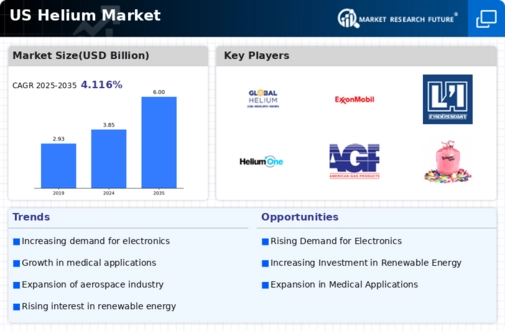
The helium market is characterized by a competitive landscape that is increasingly shaped by innovation, strategic partnerships, and regional expansions. Key players such as Air Products and Chemicals Inc (US), Linde plc (US), and Matheson Tri-Gas Inc (US) are actively pursuing strategies that enhance their market positioning. Air Products and Chemicals Inc (US) has focused on expanding its production capabilities, which appears to be a response to the growing demand for helium in various applications, including electronics and healthcare. Linde plc (US) emphasizes sustainability in its operations, indicating a shift towards environmentally friendly practices that may resonate well with contemporary consumer preferences. Meanwhile, Matheson Tri-Gas Inc (US) is enhancing its supply chain efficiency, which could potentially improve its competitive edge in a market that is becoming increasingly fragmented.
The business tactics employed by these companies reflect a concerted effort to localize manufacturing and optimize supply chains. The market structure is moderately fragmented, with several players vying for market share. This fragmentation suggests that while there are dominant players, there remains ample opportunity for smaller companies to carve out niches, particularly through specialized services or regional focus. The collective influence of these key players is likely to drive innovation and efficiency across the sector, fostering a competitive environment that rewards adaptability and responsiveness to market changes.
In November 2025, Linde plc (US) announced a strategic partnership with a leading technology firm to develop advanced helium recovery systems. This initiative is significant as it not only aligns with Linde's sustainability goals but also positions the company to capitalize on the increasing regulatory pressures for environmentally responsible practices. Such partnerships may enhance Linde's technological capabilities, allowing it to offer more efficient solutions to its customers.
In October 2025, Air Products and Chemicals Inc (US) unveiled a new helium production facility in Texas, aimed at increasing its output to meet the surging demand from the semiconductor industry. This expansion is crucial, as it underscores the company's commitment to maintaining a robust supply chain while addressing the specific needs of high-growth sectors. The facility is expected to enhance Air Products' competitive positioning by ensuring a reliable supply of helium to its clients.
In September 2025, Matheson Tri-Gas Inc (US) launched a digital platform designed to streamline customer interactions and improve order fulfillment processes. This move reflects a broader trend towards digital transformation within the industry, suggesting that companies are increasingly recognizing the importance of technology in enhancing customer experience and operational efficiency. By adopting such innovations, Matheson may strengthen its market presence and improve customer loyalty.
As of December 2025, the competitive trends in the helium market are heavily influenced by digitalization, sustainability, and the integration of advanced technologies such as AI. Strategic alliances are becoming more prevalent, as companies seek to leverage each other's strengths to navigate the complexities of the market. The shift from price-based competition to a focus on innovation, technology, and supply chain reliability is evident. Moving forward, companies that prioritize these aspects are likely to differentiate themselves and secure a more sustainable competitive advantage.




















Leave a Comment