Download Free Sample
Kindly complete the form below to receive a free sample of this Report
US Huntington's Disease Treatment Market Research Report: Size, Share, Trend Analysis By Drug Type (Antipsychotics, Antidepressants, Mood Stabilizers, Neurologics, Genetic Therapies), By Administration Route (Oral, Intravenous, Subcutaneous, Topical), By End Users (Hospitals, Clinics, Homecare Settings, Research Centers) and By Therapeutic Area (Psychiatric Disorders, Neurological Disorders, Genetic Disorders) - Growth Outlook & Industry Forecast 2025 To 2035
As per Market Research Future analysis, the US Huntington's disease treatment market size was estimated at 865.25 USD Million in 2024. The US huntington s-disease-treatment market is projected to grow from 902.54 USD Million in 2025 to 1376.35 USD Million by 2035, exhibiting a compound annual growth rate (CAGR) of 4.3% during the forecast period 2025 - 2035
The US Huntington's disease treatment market is experiencing transformative growth driven by innovative therapies and increased awareness.
| 2024 Market Size | 865.25 (USD Million) |
| 2035 Market Size | 1376.35 (USD Million) |
| CAGR (2025 - 2035) | 4.31% |
Roche (CH), Teva Pharmaceutical Industries (IL), Novartis (CH), Pfizer (US), Bristol-Myers Squibb (US), Horizon Therapeutics (IE), Ionis Pharmaceuticals (US), Wave Life Sciences (SG)
Our Impact
Enabled $4.3B Revenue Impact for Fortune 500 and Leading Multinationals
Partnering with 2000+ Global Organizations Each Year
30K+ Citations by Top-Tier Firms in the Industry
The huntington s-disease-treatment market is currently experiencing a notable evolution, driven by advancements in research and development. Innovative therapies are emerging, focusing on both symptomatic relief and potential disease-modifying treatments. This shift is largely influenced by a growing understanding of the underlying genetic mechanisms of Huntington's disease, which has led to targeted approaches in treatment. Furthermore, the increasing prevalence of the condition is prompting healthcare providers to seek more effective management strategies, thereby expanding the market's scope. As a result, stakeholders are investing in clinical trials and collaborations to bring new therapies to fruition. In addition, the regulatory landscape is adapting to facilitate the approval of novel treatments. Agencies are streamlining processes to ensure that promising therapies reach patients more swiftly. This trend is likely to enhance patient access to cutting-edge treatments, which may improve overall outcomes. Moreover, the emphasis on personalized medicine is gaining traction, as treatments are tailored to individual patient profiles. This approach not only holds the potential for better efficacy but also aligns with the broader movement towards precision healthcare. Overall, the huntington s-disease-treatment market is poised for significant growth, driven by innovation and a commitment to improving patient care.
Recent advancements in gene therapy are showing promise in the huntington s-disease-treatment market. These innovative approaches aim to address the root cause of the disease by targeting the genetic mutations responsible for its progression. As research continues, the potential for gene-editing technologies to provide long-term solutions is becoming increasingly apparent.
There is a growing emphasis on developing therapies that alleviate the symptoms associated with Huntington's disease. This trend reflects the urgent need for effective management options that can enhance the quality of life for patients. Pharmaceutical companies are investing in research to create medications that address various symptoms, such as movement disorders and cognitive decline.
Collaboration among academic institutions, pharmaceutical companies, and healthcare organizations is becoming more prevalent in the huntington s-disease-treatment market. These partnerships aim to accelerate the development of new therapies and share valuable insights. By pooling resources and expertise, stakeholders are better positioned to tackle the complexities of Huntington's disease.
The heightened awareness and advocacy surrounding Huntington's disease play a significant role in shaping the huntington s-disease-treatment market. Non-profit organizations and patient advocacy groups are actively working to educate the public and healthcare professionals about the disease, its symptoms, and available treatment options. This increased visibility is likely to lead to earlier diagnosis and intervention, which can improve patient outcomes. Moreover, advocacy efforts are driving legislative changes that support funding for research and access to care. For instance, initiatives aimed at increasing insurance coverage for genetic testing and treatment options are gaining traction. As awareness continues to grow, the demand for effective therapies in the huntington s-disease-treatment market is expected to rise, prompting pharmaceutical companies to invest in developing new solutions.
The emergence of personalized medicine is transforming the landscape of the huntington s-disease-treatment market. Tailoring treatment approaches to individual patients based on their genetic profiles and disease characteristics is becoming increasingly feasible. Advances in genomic technologies enable healthcare providers to identify specific mutations and biomarkers associated with Huntington's disease, allowing for more targeted therapies. This shift towards personalized treatment is likely to enhance the efficacy of interventions and minimize adverse effects. Additionally, the integration of pharmacogenomics into clinical practice may lead to improved patient adherence and satisfaction. As personalized medicine continues to gain traction, the huntington s-disease-treatment market is expected to evolve, with a growing emphasis on individualized care strategies that address the unique needs of each patient.
Ongoing advancements in research and development are pivotal for the huntington s-disease-treatment market. The scientific community is increasingly focused on understanding the underlying mechanisms of Huntington's disease, which has led to the exploration of novel therapeutic approaches. For instance, recent studies have highlighted the potential of gene silencing techniques and small molecule drugs that target specific pathways involved in the disease's progression. The US government has allocated substantial funding for research initiatives aimed at Huntington's disease, with the National Institutes of Health (NIH) investing over $50 million annually in related projects. This financial support fosters innovation and encourages collaboration among academic institutions, pharmaceutical companies, and biotech firms. As a result, the huntington s-disease-treatment market is likely to benefit from a pipeline of new therapies that could transform patient care and improve outcomes.
The increasing prevalence of Huntington's disease in the US is a critical driver for the huntington s-disease-treatment market. As the population ages, the incidence of neurodegenerative disorders, including Huntington's, is expected to rise. Current estimates suggest that approximately 30,000 individuals in the US are affected by this condition, with an additional 200,000 at risk of inheriting the gene. This growing patient population necessitates the development and availability of effective treatment options, thereby propelling market growth. Furthermore, the awareness surrounding genetic testing and early diagnosis is likely to enhance the identification of at-risk individuals, which could lead to an increased demand for therapeutic interventions. Consequently, the rising prevalence of Huntington's disease is poised to significantly impact the huntington s-disease-treatment market, driving innovation and investment in new therapies.
Regulatory support for innovative therapies is a crucial driver for the huntington s-disease-treatment market. The US Food and Drug Administration (FDA) has implemented various initiatives to expedite the approval process for breakthrough therapies, particularly those addressing unmet medical needs. Programs such as Fast Track designation and Breakthrough Therapy designation are designed to facilitate the development and review of promising treatments for conditions like Huntington's disease. This regulatory environment encourages pharmaceutical companies to invest in research and development, knowing that their innovative solutions may receive expedited approval. As a result, the huntington s-disease-treatment market is likely to witness an influx of new therapies that could significantly improve patient outcomes and quality of life.
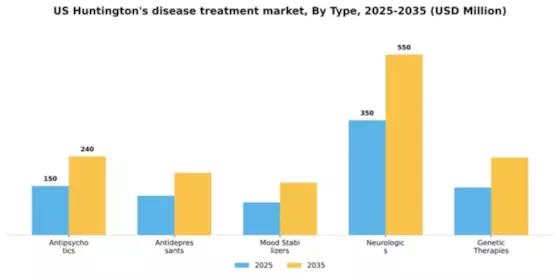
In the US huntington s-disease-treatment market, Antipsychotics hold the largest share among the various treatment types, largely due to their long-standing use for managing psychiatric symptoms associated with Huntington's disease. This class of drugs is preferred by many clinicians as it addresses the severe behavioral manifestations of the disease, hence securing a significant market position. In contrast, Genetic Therapies are emerging as a promising avenue, expected to capture an increasing market share as research in this area progresses. Their innovative approaches are drawing attention from both healthcare providers and patients alike, indicating a shift in treatment paradigms. The growth trends for the Antipsychotics segment are primarily influenced by consistent demand for symptomatic management and the extensive experience of healthcare professionals with these medications. On the other hand, Genetic Therapies, despite being in earlier stages of clinical use, are recognized for their potential in targeting the underlying genetic causes of Huntington's disease. This rapid evolution, along with increasing investments in genetic research and therapy development, positions Genetic Therapies as a leading candidate for future growth, creating a dynamic competition between established treatments and novel therapeutic options.
Antipsychotics: Dominant vs. Genetic Therapies: Emerging
Antipsychotics dominate the treatment landscape due to their efficacy in managing the psychological symptoms such as hallucinations and agitation, which are prevalent in Huntington's disease. They provide substantial relief to patients, making them a staple in therapeutic regimens. The familiarity of healthcare providers with these drugs also contributes to their sustained usage. Conversely, Genetic Therapies are emerging as a groundbreaking development aimed at correcting the genetic mutations responsible for the disease. As clinical trials show promising results, these therapies are gaining traction for their innovative approach to treatment, potentially offering longer-term solutions rather than just symptomatic relief. This evolution reflects a key trend towards personalized medicine, appealing to both patients and investors in the pharmaceutical space.
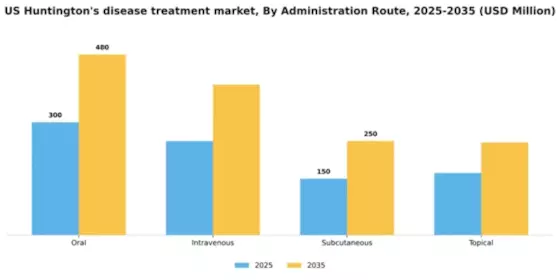
In the US huntington s-disease-treatment market, the Oral administration route holds the largest market share, appealing to patients due to its ease of use and convenience. The Intravenous route is gaining traction, driven by its effectiveness in managing more severe symptoms, resulting in rapid adoption in clinical settings. Growth trends indicate increasing research and development focused on optimizing both Oral and Intravenous formulations. The trend towards personalized medicine is also a significant driver, as patients seek tailored therapies that align with their lifestyles. Concurrently, advancements in drug delivery technologies are boosting the efficacy of Intravenous treatments, positioning them as a preferred option for aggressive disease progression.
Oral (Dominant) vs. Intravenous (Emerging)
The Oral administration route for Huntington's disease treatment is the dominant option due to its patient-friendly nature and widespread acceptance among healthcare providers. Patients favor oral medications because they can easily integrate them into their daily routines without the need for medical assistance. On the other hand, Intravenous administration is emerging rapidly, appealing to patients who may require more intensive treatment for advanced symptoms. This route allows for immediate drug action and better control of dosage, making it an attractive alternative. The market is witnessing an increasing shift toward balancing the ease of Oral treatments with the effectiveness of Intravenous therapies, indicating a diverse approach to managing the disease.
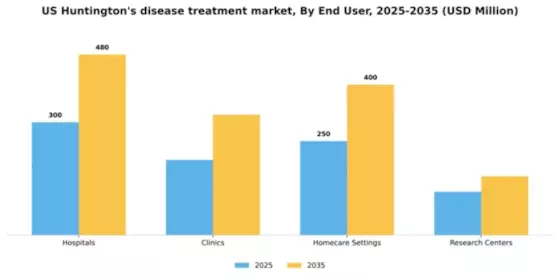
The US huntington s-disease-treatment market shows a diverse distribution across various end users, with hospitals commanding the largest share of the market. Serving as primary institutions for complex treatment regimes, hospitals have established extensive protocols and infrastructure that cater to Huntington’s disease. Conversely, clinics are rapidly gaining traction, driven by an increasing emphasis on outpatient care and personalized treatment options that enhance patient engagement and accessibility. In terms of growth trends, clinics are emerging as the fastest-growing segment due to an escalating demand for specialized services and patient-centric approaches. The rise in the aging population alongside advancements in telemedicine and home-based care models is fueling significant investment in clinic facilities. Additionally, research centers continue to play a pivotal role in driving innovations and developing novel therapeutic strategies, thus contributing to the overall dynamic of the market.
Hospitals: Dominant vs. Clinics: Emerging
Hospitals are characterized by their comprehensive resources, advanced technological capabilities, and multidisciplinary teams that allow them to deliver extensive care for Huntington's disease. They provide a wide range of services, including diagnosis, treatment, and rehabilitation, which reinforce their dominant position in the market. On the other hand, clinics represent an emerging segment, strategically focused on individualized patient care and shorter treatment cycles. Such facilities are increasingly attracting patients seeking less invasive options and more personalized support. Their growth is propelled by a shift in patient preferences towards outpatient services, indicating a notable transformation in the landscape of the US huntington s-disease-treatment market.
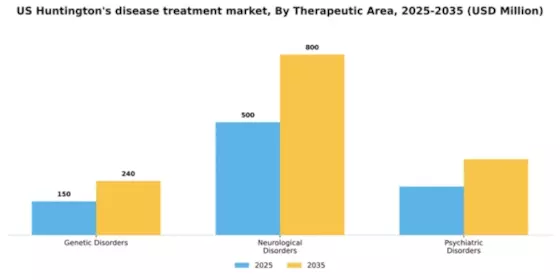
In the US huntington s-disease-treatment market, the distribution of market share among therapeutic areas shows that neurological disorders hold the largest share, primarily driven by the significant prevalence of Huntington's disease within this category. Genetic disorders, while smaller in comparison, are gaining traction as advancements in genetic therapies and precision medicine create new treatment avenues and options for patients. As the US huntington s-disease-treatment market evolves, the growth trends indicate a strong focus on neurological disorders, which are seeing continuous investment in research and development. On the other hand, genetic disorders are emerging prominently, driven by patient advocacy and technological progress in genetic understanding. This includes increased recognition of hereditary elements in Huntington's disease, positioning genetic treatments as increasingly relevant and essential to future care strategies.
Neurological Disorders: Dominant vs. Genetic Disorders: Emerging
Neurological disorders are characterized by a significant range of conditions that affect the brain, spinal cord, and nerves. In the context of the US huntington s-disease-treatment market, this segment is currently dominant, reflecting established treatment protocols and a robust pipeline of therapies focusing on symptomatic relief and disease progression management. In comparison, genetic disorders are classified as emerging, with innovative therapies on the horizon that leverage breakthroughs in genetics. This sector is rapidly evolving as the understanding of the genetic underpinnings of Huntington's disease expands, leading to new treatment modalities that offer hope for more effective management of the disease. Both segments face unique challenges and opportunities, with ongoing research shaping their respective futures.
Get more detailed insights about US Huntington’s Disease Treatment Market Request Free Sample
The Huntington's disease treatment market is characterized by a dynamic competitive landscape, driven by innovation and strategic collaborations among key players. Companies such as Roche (CH), Teva Pharmaceutical Industries (IL), and Ionis Pharmaceuticals (US) are at the forefront, each adopting distinct strategies to enhance their market presence. Roche (CH) focuses on advancing gene therapies, while Teva Pharmaceutical Industries (IL) emphasizes broadening its portfolio through strategic partnerships. Ionis Pharmaceuticals (US) is dedicated to developing RNA-targeted therapies, which positions it uniquely within the market. Collectively, these strategies foster a competitive environment that is increasingly centered on innovation and collaboration. Key business tactics employed by these companies include localizing manufacturing and optimizing supply chains to enhance efficiency and responsiveness to market demands. The market structure appears moderately fragmented, with several players vying for dominance. However, the influence of major companies is substantial, as they leverage their resources and expertise to shape market trends and consumer preferences. In September 2025, Roche (CH) announced a partnership with a leading biotech firm to accelerate the development of its gene therapy for Huntington's disease. This collaboration is expected to enhance Roche's research capabilities and expedite the delivery of innovative treatments to patients. The strategic importance of this partnership lies in its potential to position Roche as a leader in gene therapy, a rapidly evolving segment of the market. In October 2025, Teva Pharmaceutical Industries (IL) launched a new clinical trial for a novel treatment aimed at alleviating symptoms of Huntington's disease. This initiative underscores Teva's commitment to expanding its therapeutic offerings and addressing unmet medical needs. The trial's success could significantly bolster Teva's market share and reinforce its reputation as a key player in the Huntington's disease treatment landscape. In August 2025, Ionis Pharmaceuticals (US) received FDA approval for its latest RNA-targeted therapy, marking a pivotal moment in its strategic trajectory. This approval not only validates Ionis's innovative approach but also enhances its competitive positioning in the market. The therapy's unique mechanism of action may provide new hope for patients, thereby solidifying Ionis's role as a leader in the development of cutting-edge treatments. As of November 2025, current competitive trends in the Huntington's disease treatment market are increasingly defined by digitalization, sustainability, and the integration of artificial intelligence. Strategic alliances are becoming more prevalent, as companies recognize the value of collaboration in driving innovation. Looking ahead, competitive differentiation is likely to evolve, shifting from price-based competition to a focus on technological advancements, innovative therapies, and reliable supply chains. This transition suggests that companies that prioritize research and development, alongside strategic partnerships, will be better positioned to thrive in this complex and rapidly changing market.





The US Huntington's Disease Treatment Market has witnessed significant developments recently, particularly with advancements in research and new therapeutic options coming to light. Notably, in August 2023, Teva Pharmaceutical Industries announced progress in clinical trials for its new treatment targeting Huntington's Disease symptoms. Simultaneously, Novartis has been focusing on genetic therapies, showcasing promising results in early-stage trials. In terms of mergers and acquisitions, Horizon Therapeutics announced in June 2023 their acquisition of a small biotech firm specializing in neurodegenerative diseases, which could expand their portfolio in Huntington's Disease treatment.
Additionally, Wave Life Sciences made headlines in September 2023 as they partnered with Pfizer to leverage innovative gene-editing technologies to develop targeted therapies. The market valuation for these companies has been steadily growing due to increasing patient populations and heightened awareness about Huntington's Disease. Regulatory support from agencies like the FDA continues to bolster counts of clinical studies and applications for novel therapies. Recent investments, such as the significant funding raised by Apellis Pharmaceuticals for its Huntington's Drug development program in July 2023, signal positive momentum.
Overall, the landscape remains dynamic with various companies actively engaging in Research and Development efforts.
The Huntington s-disease-treatment market is projected to grow at a 4.31% CAGR from 2025 to 2035, driven by advancements in gene therapy, increased awareness, and improved diagnostic tools.
New opportunities lie in:
By 2035, the market is expected to achieve substantial growth, driven by innovative treatment solutions and enhanced patient care.
| MARKET SIZE 2024 | 865.25(USD Million) |
| MARKET SIZE 2025 | 902.54(USD Million) |
| MARKET SIZE 2035 | 1376.35(USD Million) |
| COMPOUND ANNUAL GROWTH RATE (CAGR) | 4.31% (2025 - 2035) |
| REPORT COVERAGE | Revenue Forecast, Competitive Landscape, Growth Factors, and Trends |
| BASE YEAR | 2024 |
| Market Forecast Period | 2025 - 2035 |
| Historical Data | 2019 - 2024 |
| Market Forecast Units | USD Million |
| Key Companies Profiled | Roche (CH), Teva Pharmaceutical Industries (IL), Novartis (CH), Pfizer (US), Bristol-Myers Squibb (US), Horizon Therapeutics (IE), Ionis Pharmaceuticals (US), Wave Life Sciences (SG) |
| Segments Covered | Type, Administration Route, End User, Therapeutic Area |
| Key Market Opportunities | Advancements in gene therapy and personalized medicine present new avenues in the huntington s-disease-treatment market. |
| Key Market Dynamics | Emerging therapies and regulatory advancements are reshaping the competitive landscape of the Huntington's disease treatment market. |
| Countries Covered | US |


Kindly complete the form below to receive a free sample of this Report

“This is really good guys. Excellent work on a tight deadline. I will continue to use you going forward and recommend you to others. Nice job”


“Thanks. It’s been a pleasure working with you, please use me as reference with any other Intel employees.”


“Thanks for sending the report it gives us a good global view of the Betaïne market.”


“Thank you, this will be very helpful for OQS.”


“We found the report very insightful! we found your research firm very helpful. I'm sending this email to secure our future business.”


“I am very pleased with how market segments have been defined in a relevant way for my purposes (such as "Portable Freezers & refrigerators" and "last-mile"). In general the report is well structured. Thanks very much for your efforts.”


“I have been reading the first document or the study, ,the Global HVAC and FP market report 2021 till 2026. Must say, good info! I have not gone in depth at all parts, but got a good indication of the data inside!”


“We got the report in time, we really thank you for your support in this process. I also thank to all of your team as they did a great job.”


“The Automotive 48V ECU Components Procurement Intelligence Study” was a complex project, but the Market Research Future (MRFR) team handled it with quality, agility, and customer-centricity. They delivered all requested data on time and within the agreed scope. The team, including Shubhendra Anand and Rahul Gotadki, was always readily available to clarify questions and swiftly implement necessary adjustments, driving the project to a successful conclusion within a very demanding timeframe.
I would also like to specifically commend Akshay Agarwal for his responsiveness and support at every stage—from our initial inquiry on May 6th through to final delivery on June 18th. His dedication made the entire process seamless.”



