×
Request Free Sample ×

Kindly complete the form below to receive a free sample of this Report

* Please use a valid business email

Leading companies partner with us for data-driven Insights

clients tt-cursor
Hero Background

US Organic Soup Market

ID: MRFR/FnB/16211-HCR
128 Pages
Snehal Singh
October 2025

US Organic Soup Market Research Report: By Product Type (Vegetable Soup, Chicken Soup, Beef Soup, Seafood Soup), By Packaging Type (Canned, Carton, Pouch, Frozen), By Distribution Channel (Supermarkets, Online Retail, Convenience Stores, Health Food Stores) and By Dietary Preference (Gluten-Free, Vegan, Low-Sodium, Low-Calorie) - Forecast to 2035

Share:
Download PDF ×

We do not share your information with anyone. However, we may send you emails based on your report interest from time to time. You may contact us at any time to opt-out.

US Organic Soup Market Infographic
Purchase Options

US Organic Soup Market Summary

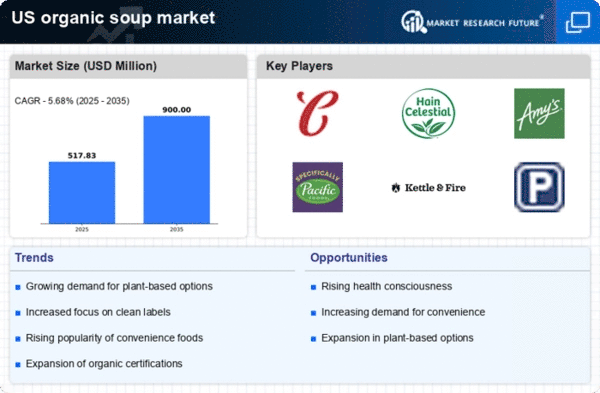
As per MRFR analysis, the US organic soup market size. was estimated at 490.0 USD Million in 2024. The US organic soup market is projected to grow from 517.83 USD Million in 2025 to 900.0 USD Million by 2035, exhibiting a compound annual growth rate (CAGR) of 5.68% during the forecast period 2025 - 2035.

Key Market Trends & Highlights

The US organic soup market is experiencing a robust growth trajectory driven by health-conscious consumer preferences.

  • The health and wellness focus among consumers is propelling the demand for organic soup options.
  • Convenience and ready-to-eat formats are becoming increasingly popular, catering to busy lifestyles.
  • Sustainability and ethical sourcing practices are gaining traction, influencing purchasing decisions.
  • Rising demand for clean label products and increased interest in plant-based diets are key drivers of market growth.

Market Size & Forecast

2024 Market Size 490.0 (USD Million)
2035 Market Size 900.0 (USD Million)
CAGR (2025 - 2035) 5.68%

Major Players

Campbell Soup Company (US), Hain Celestial Group (US), Amy's Kitchen (US), Pacific Foods (US), Kettle & Fire (US), Progresso (US), Health Valley (US), Nature's Promise (US)

US Organic Soup Market Trends

The organic soup market is currently experiencing a notable shift in consumer preferences, driven by an increasing awareness of health and wellness. As individuals become more conscious of the ingredients in their food, there is a growing demand for products that are not only organic but also free from artificial additives and preservatives. This trend appears to be influencing purchasing decisions, with many consumers opting for soups that emphasize natural ingredients and sustainable sourcing. Additionally, the rise of plant-based diets is contributing to the popularity of organic soups, as they often align with the values of health-conscious individuals seeking nutritious and environmentally friendly options. Moreover, the convenience factor plays a crucial role in the organic soup market. Busy lifestyles have led to a surge in demand for ready-to-eat meals, including organic soups that can be easily prepared or consumed on the go. This trend suggests that manufacturers are likely to innovate by offering a wider variety of flavors and packaging options to cater to diverse consumer needs. As the market evolves, it is essential for brands to stay attuned to these changing preferences and adapt their offerings accordingly, ensuring they meet the expectations of a discerning customer base that prioritizes quality and sustainability in their food choices.

Health and Wellness Focus

There is a marked emphasis on health and wellness among consumers, leading to a preference for organic soups that contain natural ingredients. This trend indicates a shift towards products that are perceived as healthier, free from artificial additives, and aligned with dietary preferences.

Convenience and Ready-to-Eat Options

The demand for convenience is rising, with consumers seeking ready-to-eat meals. Organic soups that are easy to prepare or consume on the go are becoming increasingly popular, prompting manufacturers to innovate in flavors and packaging.

Sustainability and Ethical Sourcing

Sustainability is a growing concern, with consumers favoring organic soups that emphasize ethical sourcing and environmentally friendly practices. This trend suggests that brands may need to highlight their commitment to sustainability to attract eco-conscious buyers.

US Organic Soup Market Drivers

Expansion of Retail Channels

The organic soup market is experiencing growth due in part to the expansion of retail channels, which enhances product accessibility for consumers. Traditional grocery stores, health food stores, and online platforms are increasingly stocking a diverse range of organic soup options. This expansion is crucial, as it allows consumers to easily find and purchase organic soups, thereby driving sales. Recent statistics show that online grocery sales of organic products have increased by 40% in the last year, indicating a shift in shopping habits. The convenience of online shopping, combined with the growing presence of organic products in physical stores, suggests that the organic soup market will continue to flourish as it becomes more accessible to a wider audience.

Influence of Culinary Trends

The organic soup market is significantly influenced by evolving culinary trends that emphasize gourmet flavors and unique ingredients. As consumers seek more diverse and exciting dining experiences, they are increasingly drawn to organic soups that offer innovative flavor profiles and high-quality ingredients. This trend is evident in the rise of artisanal and gourmet organic soups, which have gained popularity among food enthusiasts. Market data indicates that sales of premium organic soups have increased by approximately 20% over the past year. This suggests that brands that invest in unique recipes and high-quality organic ingredients may capture a larger share of the market. The organic soup market is thus poised for growth as it aligns with the culinary aspirations of modern consumers.

Rising Demand for Clean Label Products

The organic soup market is experiencing a notable shift towards clean label products, driven by consumer preferences for transparency in food sourcing and ingredients. As consumers become increasingly health-conscious, they seek products that are free from artificial additives and preservatives. This trend is reflected in the organic soup market, where sales of clean label soups have surged, accounting for approximately 30% of total soup sales in the US. The demand for organic ingredients, coupled with a desire for minimal processing, suggests that brands focusing on clean labels may capture a larger share of the market. This shift not only aligns with health trends but also enhances brand loyalty, as consumers are more likely to trust and repurchase products that meet their clean label criteria.

Increased Interest in Plant-Based Diets

The organic soup market is benefiting from the growing interest in plant-based diets, which are perceived as healthier and more sustainable. As more consumers adopt vegetarian or vegan lifestyles, the demand for plant-based soups has risen significantly. Recent data indicates that plant-based soup sales have increased by over 25% in the past year alone, reflecting a broader trend towards plant-based eating. This shift is not merely a fad; it appears to be a long-term change in consumer behavior. Brands that offer organic, plant-based soup options are likely to see enhanced market performance, as they cater to a demographic that prioritizes health, environmental sustainability, and ethical consumption. The organic soup market is thus positioned to thrive as it aligns with these evolving dietary preferences.

Growing Awareness of Nutritional Benefits

The organic soup market is witnessing a surge in consumer awareness regarding the nutritional benefits of organic ingredients. Research indicates that organic soups often contain higher levels of vitamins and minerals compared to their conventional counterparts. This heightened awareness is influencing purchasing decisions, with consumers increasingly opting for organic soups that promise better health outcomes. Approximately 40% of consumers in the US now consider nutritional value as a primary factor when selecting soup products. This trend suggests that brands emphasizing the health benefits of their organic soups may gain a competitive edge in the market. As consumers become more informed about the advantages of organic nutrition, the organic soup market is likely to expand, driven by a demand for healthier food options.


Market Segment Insights

By Type: Vegetable Soup (Largest) vs. Chicken Soup (Fastest-Growing)

In the US organic soup market, the distribution of market share reveals that Vegetable Soup holds the largest segment, appealing to health-conscious consumers with its array of nutrient-rich ingredients. Chicken Soup follows as a popular choice, especially among families, but its growth trajectory is steep, reflecting a shift towards organic options in poultry-based soups. Beef Soup and Seafood Soup, while valuable, cater to niche consumers and make up a smaller share of the overall market. Growth trends within the segment indicate a robust interest in health-oriented products, with Chicken Soup emerging as the fastest-growing category fueled by increased demand for organic, antibiotic-free chicken. Additionally, the trend towards convenience and quick meal solutions supports the rise in popularity of ready-to-eat Chicken Soup. Factors such as rising disposable incomes and awareness about organic food benefits contribute positively to this segment's expansion.

Vegetable Soup (Dominant) vs. Beef Soup (Emerging)

Vegetable Soup is the dominant force in the US organic soup market, characterized by its rich variety of flavors and ingredients that cater to growing health trends. Its appeal lies in offering low-calorie, low-fat options packed with vitamins and minerals, making it a top choice for consumers seeking nutritious meals. On the other hand, Beef Soup is considered an emerging segment, attracting a smaller yet dedicated group of consumers who appreciate the hearty flavors and protein-packed offerings. While it currently represents a niche market, its growth potential is evident, particularly as more beef suppliers adopt organic practices, which could enhance quality perceptions and lead to broader appeal among health-conscious buyers.

By Packaging Type: Carton (Largest) vs. Pouch (Fastest-Growing)

In the US organic soup market, the distribution of market share among packaging types reveals that cartons dominate with significant strength, accounting for a notable portion of the total. Canned soups follow closely, showcasing their established presence. Pouches and frozen packaging types have smaller shares, but they contribute uniquely to the diversity of available options. As consumer preferences evolve, the packaging choices are influencing purchasing behaviors, especially towards convenience and sustainability in packaging. The growth trends for the packaging segment are largely driven by shifting consumer behaviors and the rising demand for portable and eco-friendly solutions. The pouch segment is recognized as the fastest-growing due to its lightweight nature and ease of use, appealing particularly to younger demographics. The carton packaging's established market presence continues to garner strong support, driven by its freshness and sustainable design, positioning it as a preferred choice for organic soup consumers.

Carton (Dominant) vs. Pouch (Emerging)

Carton packaging stands out as the dominant choice in the US organic soup market, highly regarded for its ability to preserve flavor and nutritional content while offering a sustainable option. It caters to environmentally conscious consumers seeking convenient and healthy meal solutions. In contrast, pouch packaging is emerging rapidly, capturing interest due to its portability and innovative design. The growth of pouches is fueled by their adaptability for single servings and snacking occasions, making them attractive to busy consumers. Both packaging types highlight a significant trend towards convenience and sustainability, creating a diverse landscape where traditional and modern preferences coexist.

By Distribution Channel: Supermarkets (Largest) vs. Online Retail (Fastest-Growing)

In the US organic soup market, supermarkets dominate the distribution channel landscape with a substantial share, reflecting consumer reliance on traditional shopping methods for organic products. In contrast, online retail has emerged as a significant player, particularly among younger consumers looking for convenience and variety, leading to a rapid increase in its market share among distribution channels. Growth trends in this segment highlight the increasing consumer shift towards e-commerce platforms, driven by changing shopping habits influenced by technology and convenience. The COVID-19 pandemic accelerated this trend, with many consumers opting for online purchases, while supermarkets continue to innovate with in-store experiences to attract organic soup buyers. These dynamics are reshaping the competitive landscape of distribution channels in the market.

Supermarkets: Dominant vs. Online Retail: Emerging

Supermarkets serve as the dominant distribution channel for organic soups, capitalizing on established logistics and broad consumer reach, ensuring consistent availability and a holistic shopping experience. Their extensive product variety and the ability to provide a tactile shopping experience are significant advantages. Conversely, online retail is quickly becoming an emerging force, appealing especially to tech-savvy shoppers and those seeking niche organic options. The convenience of home delivery and enhanced online shopping platforms is driving its growth. As the online segment evolves, it may strongly challenge supermarkets' dominance, creating a more competitive ecosystem in the US organic soup market.

By Dietary Preference: Gluten-Free (Largest) vs. Vegan (Fastest-Growing)

The US organic soup market exhibits diverse dietary preferences, with Gluten-Free emerging as the largest segment, capturing a significant portion of market share. This preference reflects the increasing consumer awareness towards gluten-related health issues and a larger shift towards healthier eating habits. Following closely is the Vegan segment, which has rapidly gained traction, appealing to a growing demographic of health-conscious and environmentally aware consumers who prioritize plant-based diets. Growth trends indicate that dietary preferences in the US organic soup market are heavily influenced by evolving consumer lifestyles and preferences. The Vegan segment is witnessing the fastest growth due to rising awareness about the health benefits of plant-based diets and sustainability concerns. Additionally, the Low-Sodium and Low-Calorie segments continue to cater to health-focused consumers, further diversifying the market landscape as they seek nutritious yet flavorful options.

Gluten-Free (Dominant) vs. Vegan (Emerging)

The Gluten-Free segment is positioned as the dominant player in the US organic soup market, characterized by its strong appeal to consumers seeking to avoid gluten due to dietary restrictions or personal health choices. Its long-standing presence has solidified brand loyalty and created a wide variety of product offerings. On the other hand, the Vegan segment is emerging rapidly, fueled by a cultural shift towards plant-based eating, which is becoming mainstream. This segment is marked by innovation, as brands expand their portfolios to include rich, flavorful options that do not compromise on taste, attracting not only strict vegans but also flexitarians looking to reduce meat consumption.

Get more detailed insights about US Organic Soup Market

Key Players and Competitive Insights

The organic soup market exhibits a dynamic competitive landscape characterized by a growing consumer preference for health-conscious and sustainable food options. Key players such as Campbell Soup Company (US), Hain Celestial Group (US), and Amy's Kitchen (US) are actively shaping the market through innovative product offerings and strategic initiatives. Campbell Soup Company (US) has positioned itself as a leader by focusing on expanding its organic product line, while Hain Celestial Group (US) emphasizes its commitment to clean ingredients and sustainability. Amy's Kitchen (US) continues to cater to the demand for plant-based options, thereby enhancing its market presence. Collectively, these strategies contribute to a competitive environment that prioritizes health, sustainability, and innovation.

In terms of business tactics, companies are increasingly localizing manufacturing to reduce supply chain complexities and enhance responsiveness to consumer demands. The market structure appears moderately fragmented, with several players vying for market share. However, the influence of major companies is significant, as they leverage their established brand equity and distribution networks to capture a larger segment of the market.

In October 2025, Campbell Soup Company (US) announced the launch of a new line of organic soups aimed at the growing vegan demographic. This strategic move not only diversifies their product portfolio but also aligns with current consumer trends favoring plant-based diets. The introduction of these products is likely to enhance their competitive edge and attract a broader customer base.

In September 2025, Hain Celestial Group (US) revealed a partnership with a leading organic farm to source ingredients directly, thereby ensuring quality and sustainability. This initiative underscores the company's commitment to transparency and could potentially strengthen its brand loyalty among environmentally conscious consumers. Such partnerships may also streamline supply chains, reducing costs and improving efficiency.

In August 2025, Amy's Kitchen (US) expanded its distribution channels by entering into a collaboration with a major online grocery platform. This strategic action is indicative of the increasing importance of e-commerce in the food sector, particularly for organic products. By enhancing its online presence, Amy's Kitchen (US) is likely to capture a larger share of the market, especially among younger consumers who prefer shopping online.

As of November 2025, the organic soup market is witnessing trends such as digitalization, sustainability, and the integration of AI in supply chain management. Strategic alliances are becoming increasingly vital, as companies seek to enhance their operational capabilities and market reach. The competitive differentiation is expected to evolve, shifting from price-based competition to a focus on innovation, technology, and supply chain reliability. This transition may redefine how companies engage with consumers, emphasizing quality and sustainability over mere cost.

Key Companies in the US Organic Soup Market market include

Industry Developments

Recent developments in the US Organic Soup Market indicate a growing trend toward health-conscious options, with significant demand for organic and plant-based products. Companies like Amy's Kitchen and Pacific Foods have expanded their product lines to cater to increasing consumer preferences for organic ingredients. In terms of market dynamics, Campbell Soup Company has been focusing on product reformulation to eliminate artificial ingredients, aligning with the shift towards healthier options. As of September 2023, Bear Creek Country Kitchens announced a partnership with Trader Joe's to launch a limited-edition organic soup line, reflecting collaboration trends among key players.

In the mergers and acquisitions landscape, Hain Celestial Group revealed its acquisition of a smaller organic brand in August 2023, strengthening its market position. The overall market valuation for organic soups is projected to grow significantly, fueled by heightened consumer awareness of nutrition and sustainable practices. Additionally, a notable event in May 2022 was the introduction of a new organic soup range by Whole Foods Market, which gained traction in response to consumer demand for fresh, organic choices. These factors collectively illustrate a dynamic and evolving landscape within the US Organic Soup Market, driven by innovation and consumer preferences.

Future Outlook

US Organic Soup Market Future Outlook

The Organic Soup Market is projected to grow at a 5.68% CAGR from 2024 to 2035, driven by increasing health consciousness and demand for convenience.

New opportunities lie in:

  • Expansion of ready-to-eat organic soup lines in retail outlets.
  • Development of subscription-based organic soup delivery services.
  • Investment in sustainable packaging solutions for organic soup products.

By 2035, the organic soup market is expected to achieve robust growth and increased consumer engagement.

Market Segmentation

US Organic Soup Market Type Outlook

  • Vegetable Soup
  • Chicken Soup
  • Beef Soup
  • Seafood Soup

US Organic Soup Market Packaging Type Outlook

  • Canned
  • Carton
  • Pouch
  • Frozen

US Organic Soup Market Dietary Preference Outlook

  • Gluten-Free
  • Vegan
  • Low-Sodium
  • Low-Calorie

US Organic Soup Market Distribution Channel Outlook

  • Supermarkets
  • Online Retail
  • Convenience Stores
  • Health Food Stores

Report Scope

MARKET SIZE 2024 490.0(USD Million)
MARKET SIZE 2025 517.83(USD Million)
MARKET SIZE 2035 900.0(USD Million)
COMPOUND ANNUAL GROWTH RATE (CAGR) 5.68% (2024 - 2035)
REPORT COVERAGE Revenue Forecast, Competitive Landscape, Growth Factors, and Trends
BASE YEAR 2024
Market Forecast Period 2025 - 2035
Historical Data 2019 - 2024
Market Forecast Units USD Million
Key Companies Profiled Campbell Soup Company (US), Hain Celestial Group (US), Amy's Kitchen (US), Pacific Foods (US), Kettle & Fire (US), Progresso (US), Health Valley (US), Nature's Promise (US)
Segments Covered Type, Packaging Type, Distribution Channel, Dietary Preference
Key Market Opportunities Growing consumer demand for clean-label products drives innovation in the organic soup market.
Key Market Dynamics Rising consumer demand for healthy, convenient meal options drives innovation in organic soup formulations and packaging.
Countries Covered US

Leave a Comment

FAQs

What is the expected market size of the US Organic Soup Market in 2024?

The US Organic Soup Market is expected to be valued at 419.4 million USD in 2024.

What will the market value of the US Organic Soup Market be by 2035?

By 2035, the US Organic Soup Market is projected to reach a value of 734.52 million USD.

What is the expected CAGR for the US Organic Soup Market from 2025 to 2035?

The expected CAGR for the US Organic Soup Market from 2025 to 2035 is 5.227 %.

Which product type will dominate the US Organic Soup market by 2035?

By 2035, Chicken Soup is forecasted to dominate the US Organic Soup market with an expected value of 262.95 million USD.

What is the projected market value for Vegetable Soup in the US Organic Soup Market in 2024?

The projected market value for Vegetable Soup in the US Organic Soup Market is 119.4 million USD in 2024.

How much is expected from the Beef Soup segment by 2035 in the US Organic Soup Market?

The Beef Soup segment is expected to reach a value of 148.36 million USD by 2035 in the US Organic Soup Market.

What is the expected market value of Seafood Soup in 2025?

The expected market value of Seafood Soup in the US Organic Soup Market is anticipated to be part of the larger category, contributing 113.09 million USD by 2035.

Who are the major players in the US Organic Soup Market?

Major players in the US Organic Soup Market include brands such as Campbell Soup Company, Amy's Kitchen, and Trader Joe's.

What challenges does the US Organic Soup Market face currently?

The US Organic Soup Market is currently facing challenges related to increasing competition and evolving consumer preferences toward healthy options.

What growth opportunities exist within the US Organic Soup Market?

Growth opportunities within the US Organic Soup Market exist due to rising demand for organic products and expanding distribution channels.

Download Free Sample

Kindly complete the form below to receive a free sample of this Report

Compare Licence

×
Features License Type
Single User Multiuser License Enterprise User
Price $4,950 $5,950 $7,250
Maximum User Access Limit 1 User Upto 10 Users Unrestricted Access Throughout the Organization
Free Customization
Direct Access to Analyst
Deliverable Format
Platform Access
Discount on Next Purchase 10% 15% 15%
Printable Versions