Rising Construction Activities
The resurgence of construction activities in the United States is a significant driver for the solar control-glass market. With urbanization and population growth, there is an increasing demand for residential and commercial buildings. This trend is particularly evident in metropolitan areas, where new developments are on the rise. The construction sector is projected to grow by approximately 5% annually, which directly correlates with the demand for solar control-glass. Builders and developers are increasingly incorporating energy-efficient materials into their projects to meet consumer expectations and regulatory requirements. Consequently, the solar control-glass market is poised to benefit from this construction boom. More projects seek to utilize advanced glazing solutions that enhance energy efficiency and occupant comfort.. This alignment between construction growth and the solar control-glass market indicates a promising future for both industries.
Government Incentives and Rebates
Government incentives and rebates play a crucial role in stimulating the solar control-glass market. Various federal and state programs offer financial assistance to homeowners and businesses that invest in energy-efficient technologies, including solar control-glass. These incentives can significantly reduce the upfront costs associated with installation, making it more appealing for consumers. For instance, tax credits and rebates can cover up to 30% of the installation costs, thereby encouraging adoption. As a result, the market is experiencing increased demand, particularly in regions with robust incentive programs. This financial support not only boosts sales but also fosters a competitive landscape among manufacturers, prompting them to enhance product offerings. The solar control-glass market is likely to see continued growth as long as these incentives remain in place, further solidifying the importance of government involvement in promoting energy efficiency.
Increasing Awareness of Sustainability
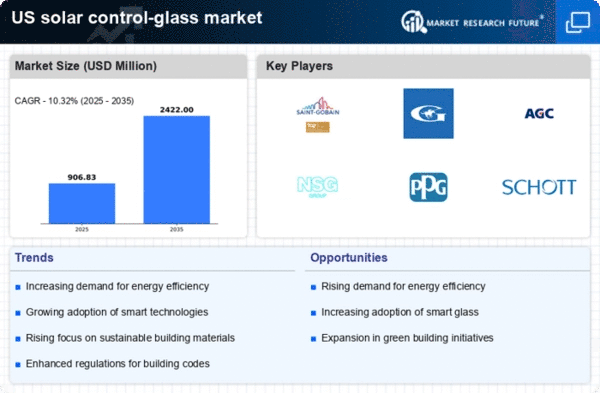
The growing awareness of sustainability among consumers and businesses is a pivotal driver for the solar control-glass market. As environmental concerns escalate, there is a notable shift towards eco-friendly building materials. This trend is reflected in the construction sector, where architects and builders increasingly prioritize sustainable solutions. the solar control-glass market benefits from this shift. These products contribute to energy efficiency and reduced carbon footprints.. In fact, the market is projected to grow at a CAGR of approximately 8% over the next five years, driven by this heightened focus on sustainability. Furthermore, consumers are willing to invest more in energy-efficient products, which enhances the market's potential. This awareness not only influences purchasing decisions but also encourages manufacturers to innovate and develop more sustainable glass solutions.
Consumer Preference for Aesthetic Appeal
Consumer preference for aesthetic appeal is increasingly influencing the solar control-glass market. As design trends evolve, homeowners and architects are seeking materials that not only provide energy efficiency but also enhance the visual appeal of buildings. Solar control-glass offers a range of design options, including various tints and finishes, allowing for greater customization. This trend is particularly pronounced in high-end residential and commercial projects, where aesthetics play a crucial role in decision-making. The market is responding to this demand by offering innovative designs that combine functionality with style. As a result, the solar control-glass market is likely to experience growth as consumers prioritize both energy efficiency and aesthetic considerations in their purchasing decisions. This dual focus on performance and design is shaping the future landscape of the market.
Technological Innovations in Glass Production
Technological innovations in glass production are transforming the solar control-glass market. Advances in manufacturing processes, such as low-emissivity coatings and advanced tinting technologies, are enhancing the performance of solar control-glass. These innovations allow for better thermal insulation and UV protection, making the glass more appealing to consumers. The market is witnessing a shift towards smart glass technologies, which can adjust their properties based on environmental conditions. This evolution in product offerings is likely to attract a broader customer base, including commercial and residential sectors. As manufacturers invest in research and development, the solar control-glass market is expected to expand, with new products that meet the evolving needs of consumers. The integration of technology into glass production not only improves energy efficiency but also enhances aesthetic appeal, further driving market growth.




















Leave a Comment