Download Free Sample
Kindly complete the form below to receive a free sample of this Report
US Wood Vinegar Market Size, Share, Industry Trend & Analysis
As per analysis, the US Wood Vinegar Market is projected to grow from USD 7.98 Million in 2024 to USD 14.0 Million by 2035, exhibiting a compound annual growth rate (CAGR) of 5.24% during the forecast period (2025 - 2035).
The US Wood Vinegar Market is experiencing a robust shift towards sustainability and organic practices.
| 2024 Market Size | 7.98 (USD Million) |
| 2035 Market Size | 14.0 (USD Million) |
| CAGR (2025 - 2035) | 5.24% |
Pine Chemical Group (US), Kraft Chemical Company (US), Sustainable Bioproducts (US), Hawkins Inc. (US), Biochar Now (US), Wood Vinegar Company (US), Agroforestry Research Trust (US), Greenway Biotech Inc. (US)
Our Impact
Enabled $4.3B Revenue Impact for Fortune 500 and Leading Multinationals
Partnering with 2000+ Global Organizations Each Year
30K+ Citations by Top-Tier Firms in the Industry
The US Wood Vinegar Market is currently experiencing a notable evolution, driven by increasing awareness of sustainable agricultural practices and the demand for organic products. Wood vinegar, a byproduct of the pyrolysis process, is recognized for its potential benefits in soil enhancement and pest control. As consumers and farmers alike seek environmentally friendly alternatives to synthetic chemicals, the market for wood vinegar appears to be expanding. This trend is further supported by government initiatives promoting organic farming and sustainable land management practices, which may encourage greater adoption of wood vinegar in various agricultural applications. Moreover, the US Wood Vinegar Market seems to be influenced by the growing interest in bio-based products. As industries shift towards renewable resources, wood vinegar is gaining traction not only in agriculture but also in sectors such as food preservation and cosmetics. The versatility of wood vinegar, combined with its natural origin, positions it as a favorable option for manufacturers looking to meet consumer demand for eco-friendly solutions. This evolving landscape suggests that the US Wood Vinegar Market could witness continued growth, driven by both consumer preferences and regulatory support for sustainable practices.
The US Wood Vinegar Market is experiencing a notable surge due to the increasing adoption of sustainable agriculture practices. Farmers are increasingly recognizing the benefits of wood vinegar as a natural soil amendment and pest deterrent. This organic product enhances soil health, promotes plant growth, and reduces reliance on synthetic fertilizers and pesticides. According to recent data, the organic farming sector in the United States has seen a growth rate of approximately 12% annually, which correlates with the rising demand for wood vinegar. As more agricultural producers seek eco-friendly solutions, the market for wood vinegar is likely to expand, driven by the need for sustainable farming methods that align with environmental conservation goals.
The US Wood Vinegar Market is poised for growth as the demand for bio-based products continues to rise. Consumers are increasingly inclined towards natural and organic products, which has led to a shift in purchasing behavior. Wood vinegar, derived from the pyrolysis of wood, is gaining traction as a versatile bio-based product used in agriculture, horticulture, and even food preservation. Market data indicates that the bio-based product market in the US is projected to reach USD 500 billion by 2027, reflecting a compound annual growth rate of 10%. This trend suggests that wood vinegar will play a crucial role in meeting consumer preferences for sustainable and environmentally friendly alternatives.
The US Wood Vinegar Market benefits from robust regulatory support for organic farming practices. The USDA has established guidelines that promote the use of organic inputs, including wood vinegar, which is recognized for its efficacy in enhancing soil fertility and pest management. This regulatory framework not only encourages farmers to adopt organic practices but also provides a level of assurance to consumers regarding the safety and quality of organic products. As the organic sector continues to expand, the demand for compliant inputs like wood vinegar is expected to rise, further solidifying its position in the market. The alignment of regulatory policies with market needs indicates a favorable environment for the growth of wood vinegar.
The US Wood Vinegar Market is benefiting from technological advancements in the production of wood vinegar. Innovations in pyrolysis technology have led to more efficient and cost-effective methods of producing high-quality wood vinegar. These advancements not only improve the yield and purity of the product but also reduce the environmental footprint of the production process. As production costs decrease, the accessibility of wood vinegar to a broader range of agricultural producers increases. Market analysis indicates that the introduction of new technologies could potentially double the production capacity of wood vinegar within the next five years. This growth in production capabilities is likely to meet the rising demand and solidify wood vinegar's role in sustainable agriculture.
The US Wood Vinegar Market is witnessing growth driven by heightened awareness of environmental issues among consumers and producers alike. As concerns regarding climate change and environmental degradation become more pronounced, there is a growing preference for products that contribute to sustainability. Wood vinegar, known for its ability to improve soil health and reduce chemical runoff, aligns well with these environmental goals. Recent surveys indicate that over 70% of consumers are willing to pay a premium for eco-friendly products, which bodes well for the wood vinegar market. This shift in consumer mindset suggests that wood vinegar could become a staple in sustainable agricultural practices, further enhancing its market presence.
The US Wood Vinegar Market showcases a diverse range of applications, with agriculture representing the largest segment. This is due to the increasing adoption of organic farming practices, where wood vinegar is valued for its natural properties that enhance soil fertility and promote plant health. Following agriculture, food preservation emerges as a significant contender, gaining traction as consumers lean towards natural preservatives over synthetic options. The growth trends within this segment highlight a shift towards sustainable practices across various industries. Agriculture continues to dominate as a reliable application for wood vinegar, while food preservation is rapidly expanding. The rising awareness about health benefits and environmental impacts, combined with the regulatory push towards greener alternatives, fuels this growth trajectory.
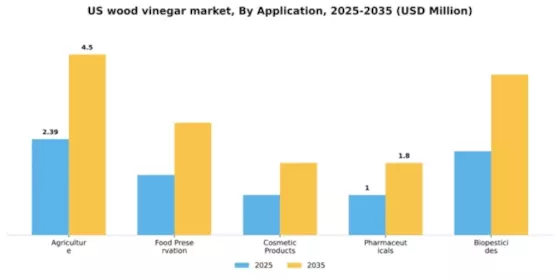
Agriculture (Dominant) vs. Soil Amendment (Emerging)
Agriculture is the dominant application in the US Wood Vinegar Market, primarily driven by the increasing demand for organic and sustainable farming techniques. Wood vinegar is utilized for its unique characteristics, such as promoting plant growth, enhancing soil structure, and providing natural pest control without harmful chemicals. Conversely, soil amendment is emerging as a noteworthy segment, where wood vinegar's properties improve soil quality and microbial activity. As farmers and gardeners alike seek organic alternatives to enhance soil health, this application presents significant growth potential, tapping into the broader trend of sustainable agriculture and eco-friendly farming practices.
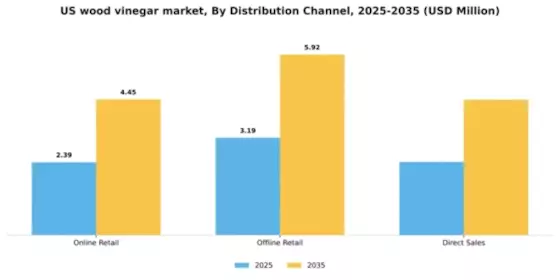
In the US Wood Vinegar Market, the 'End Use' segment showcases a diverse distribution in application areas, with Organic Farming emerging as the largest segment due to its sustainable practices. Horticulture, on the other hand, is rapidly gaining traction, driven by increasing consumer awareness regarding organic products and their benefits for plant growth. Other segments like Aquaculture, Forestry, and Biotechnology contribute to the market but do not capture as significant a share as the top two applications.
Organic Farming (Dominant) vs. Horticulture (Emerging)
Organic Farming stands as the dominant player in the US Wood Vinegar Market, leveraging its ecological advantages to enhance soil health and plant vitality. This segment benefits from a strong consumer preference for chemical-free produce. Horticulture is classified as an emerging segment, fueled by the growing demand for organic gardening and landscaping. Its rapid growth can be attributed to increasing adoption of eco-friendly products among hobbyists and professional growers alike. Both segments are interconnected, with Wood Vinegar serving as a natural solution that supports organic practices while simultaneously appealing to environmentally-conscious consumers.
In the US Wood Vinegar Market, the segment by Form showcases a diverse distribution among Liquid, Powder, Granular, and Concentrate options. The Liquid form holds the largest market share, favored for its versatility and ease of application in various agricultural and industrial uses. Following closely, the Powder segment has been gaining traction due to its convenient storage and transport characteristics, appealing to niche applications in the sector. Growth trends in the Form segment are propelled primarily by the increasing adoption of environmentally friendly products. The Powder form, in particular, is becoming faster-growing as consumers lean towards products that offer ease of use and portability. Additionally, innovations in processing techniques have improved the quality and availability of all forms, ensuring robust growth across multiple applications in organic farming and waste management sectors.
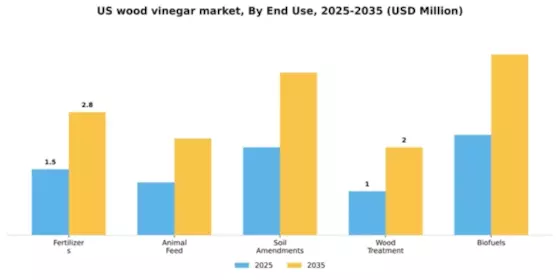
Liquid (Dominant) vs. Powder (Emerging)
The Liquid form of wood vinegar is a dominant player in the market, largely due to its extensive use in organic farming, food processing, and as a natural pesticide. Its liquid state allows for easy dilution and application, making it a preferred choice among agriculturalists. Conversely, the Powder form is emerging rapidly, benefiting from its lightweight nature and easier handling. It serves an increasingly diverse range of applications, such as soil amendment and nutrient delivery, attracting consumers who require convenience. Both forms are essential for meeting the demands of environmentally conscious consumers, with Liquid dominating the traditional market while Powder captures newer trends.
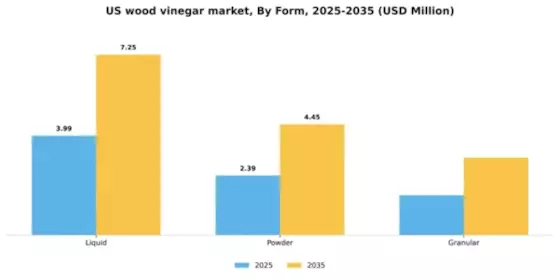
In the US Wood Vinegar Market, the distribution share is predominantly led by the online channel, which has become increasingly vital for reaching diverse consumer bases. The online platform allows for better accessibility and convenience, thereby capturing a significant share of the market. Meanwhile, retail channels also play a crucial role, providing tangible interaction with the product, although they currently hold a smaller portion of the overall distribution. The market is experiencing a notable shift, with online sales driving growth due to rising e-commerce penetration and changing consumer buying habits. Retail, on the other hand, is witnessing a resurgence as consumers are returning to physical stores post-pandemic, leading to its status as the fastest-growing channel amidst a mixed shopping landscape.
Online (Dominant) vs. Direct Sales (Emerging)
Online distribution channels are characterized by their extensive reach, allowing consumers to procure wood vinegar with ease and at their convenience. This channel thrives on digital marketing strategies, enhancing brand visibility and engagement. Major e-commerce platforms facilitate sales, contributing significantly to the dominant position of online distribution. In contrast, direct sales represent an emerging avenue, focusing on personalized channels and direct communication with consumers. This approach often involves direct interactions through trade shows or farm markets, emphasizing education and relationship-building around the product. While direct sales currently capture a smaller market share, their growth potential is promising as consumers seek authentic and localized purchasing experiences.
In the US wood vinegar market, the distribution of sales across channels shows online retail as the largest segment, capturing a significant share due to increasing consumer preference for convenience and the accessibility of products through e-commerce platforms. Offline retail is witnessing impressive growth, driven by the rising number of stores offering organic and eco-friendly products, contributing to a balanced market presence. Growth trends reflect a shift toward online purchasing, especially in the wake of the pandemic, as consumers favor the ease of home delivery. Meanwhile, offline retail is adapting, with new strategies to enhance in-store experiences and promote wood vinegar products, making it the fastest-growing channel as it resonates with environmentally conscious shoppers.
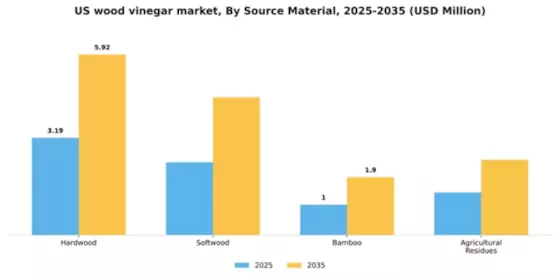
Online Retail (Dominant) vs. Direct Sales (Emerging)
Online retail has established itself as a dominant force in the US wood vinegar market, mainly due to its ability to reach a broader audience and cater to the consumer preference for convenience. E-commerce platforms make it easy for customers to access a diverse range of wood vinegar products. On the other hand, direct sales are an emerging segment that appeals directly to small businesses and eco-conscious consumers who prioritize quality and sustainability. Direct sales channels, ranging from farmer's markets to specialized online platforms, foster a personal connection between producers and consumers, helping build brand loyalty. As both channels evolve, the relationship between digital accessibility and personal engagement will shape the overall market dynamics.
Get more detailed insights about US Wood Vinegar Market Request Free Sample
The Wood Vinegar Market in the US is characterized by a competitive landscape that is increasingly shaped by innovation, sustainability, and strategic partnerships. Key players such as Pine Chemical Group (US), Kraft Chemical Company (US), and Sustainable Bioproducts (US) are actively positioning themselves to leverage these growth drivers. Pine Chemical Group (US) focuses on expanding its product portfolio through research and development, while Kraft Chemical Company (US) emphasizes sustainable sourcing and production methods. Sustainable Bioproducts (US) appears to be concentrating on enhancing its market presence through strategic collaborations, which collectively contribute to a dynamic competitive environment.
The market structure is moderately fragmented, with several players vying for market share. Key business tactics include localizing manufacturing to reduce costs and optimize supply chains, which is particularly relevant in the context of rising raw material prices. The collective influence of these major companies is significant, as they not only drive innovation but also set industry standards that smaller players may follow.
In December 2025, Pine Chemical Group (US) announced a partnership with a leading agricultural technology firm to develop advanced wood vinegar applications for organic farming. This strategic move is likely to enhance their product offerings and cater to the growing demand for organic agricultural solutions, thereby positioning them favorably in a niche market segment.
In November 2025, Kraft Chemical Company (US) launched a new line of eco-friendly wood vinegar products aimed at the horticultural sector. This initiative reflects a broader trend towards sustainability and could potentially capture a significant share of the market as consumers increasingly prioritize environmentally responsible products.
In October 2025, Sustainable Bioproducts (US) secured a major contract with a national retailer to supply wood vinegar for use in organic pest control solutions. This contract not only signifies a substantial revenue boost but also underscores the growing acceptance of wood vinegar in mainstream agricultural practices, further solidifying the company's market position.
As of January 2026, the competitive trends in the Wood Vinegar Market are increasingly defined by digitalization, sustainability, and the integration of advanced technologies. Strategic alliances are becoming more prevalent, as companies recognize the need to collaborate to enhance their competitive edge. The shift from price-based competition to a focus on innovation, technology, and supply chain reliability is evident, suggesting that future differentiation will hinge on these factors rather than merely cost.




The US Wood Vinegar Market is projected to grow at a 5.24% CAGR from 2025 to 2035, driven by increasing demand in agriculture, eco-friendly products, and waste management solutions.
New opportunities lie in:
By 2035, the market is expected to solidify its position as a key player in sustainable agricultural solutions.
| MARKET SIZE 2024 | 7.98(USD Million) |
| MARKET SIZE 2025 | 8.44(USD Million) |
| MARKET SIZE 2035 | 14.0(USD Million) |
| COMPOUND ANNUAL GROWTH RATE (CAGR) | 5.24% (2024 - 2035) |
| REPORT COVERAGE | Revenue Forecast, Competitive Landscape, Growth Factors, and Trends |
| BASE YEAR | 2024 |
| Market Forecast Period | 2025 - 2035 |
| Historical Data | 2019 - 2024 |
| Market Forecast Units | USD Million |
| Key Companies Profiled | Pine Chemical Group (US), Kraft Chemical Company (US), Sustainable Bioproducts (US), Hawkins Inc. (US), Biochar Now (US), Wood Vinegar Company (US), Agroforestry Research Trust (US), Greenway Biotech Inc. (US) |
| Segments Covered | Application, End Use, Form, Distribution Channel |
| Key Market Opportunities | Growing demand for organic agriculture and sustainable farming practices drives US Wood Vinegar Market opportunities. |
| Key Market Dynamics | Rising demand for organic agriculture drives growth in the US Wood Vinegar Market amid regulatory support. |
| Countries Covered | US |
The US Wood Vinegar Market was valued at 7.98 USD Million in 2024.
The market is projected to reach 14.0 USD Million by 2035.
The expected CAGR for the US Wood Vinegar Market from 2025 to 2035 is 5.24%.
Key players include Pine Chemical Group, Kraft Chemical Company, and Sustainable Bioproducts, among others.
Primary applications include agriculture, food preservation, soil amendment, animal feed, and pest control.
The market segments by end use include organic farming, horticulture, aquaculture, forestry, and biotechnology.
Wood vinegar is available in liquid, powder, granular, and concentrate forms.
Distribution channels include online sales, retail, wholesale, and direct sales.
The agriculture segment was valued at 2.5 USD Million in 2024.
The food preservation segment is projected to grow from 1.5 USD Million in 2024 to 2.5 USD Million by 2035.



Kindly complete the form below to receive a free sample of this Report

“This is really good guys. Excellent work on a tight deadline. I will continue to use you going forward and recommend you to others. Nice job”


“Thanks. It’s been a pleasure working with you, please use me as reference with any other Intel employees.”


“Thanks for sending the report it gives us a good global view of the Betaïne market.”


“Thank you, this will be very helpful for OQS.”


“We found the report very insightful! we found your research firm very helpful. I'm sending this email to secure our future business.”


“I am very pleased with how market segments have been defined in a relevant way for my purposes (such as "Portable Freezers & refrigerators" and "last-mile"). In general the report is well structured. Thanks very much for your efforts.”


“I have been reading the first document or the study, ,the Global HVAC and FP market report 2021 till 2026. Must say, good info! I have not gone in depth at all parts, but got a good indication of the data inside!”


“We got the report in time, we really thank you for your support in this process. I also thank to all of your team as they did a great job.”


“The Automotive 48V ECU Components Procurement Intelligence Study” was a complex project, but the Market Research Future (MRFR) team handled it with quality, agility, and customer-centricity. They delivered all requested data on time and within the agreed scope. The team, including Shubhendra Anand and Rahul Gotadki, was always readily available to clarify questions and swiftly implement necessary adjustments, driving the project to a successful conclusion within a very demanding timeframe.
I would also like to specifically commend Akshay Agarwal for his responsiveness and support at every stage—from our initial inquiry on May 6th through to final delivery on June 18th. His dedication made the entire process seamless.”



