下载免费样本
请填写以下表格以获取本报告的免费样本
高级基底细胞癌市场研究报告按治疗类型(外科切除、莫氏手术、冷冻疗法、局部化疗、放射治疗)、按疾病阶段(局部、区域、远处)、按诊断方法(皮肤活检、皮肤镜检查、组织病理学、分子检测)、按患者人口统计(成人、儿童)、按治疗环境(医院、门诊诊所、皮肤科办公室)以及按地区(北美、欧洲、南美、亚太、中东和非洲)- 预测到2035年
| CAGR (2025 - 2035) | 7.47% |
The Advanced Basal Cell Carcinoma Market is currently experiencing notable developments, driven by a combination of increasing awareness regarding skin cancer and advancements in treatment modalities. As healthcare professionals and patients alike become more informed about the implications of advanced basal cell carcinoma, there is a growing demand for innovative therapies and diagnostic tools. This heightened awareness is likely to foster a more proactive approach to treatment, potentially leading to earlier interventions and improved patient outcomes. Furthermore, the integration of technology in healthcare, such as telemedicineand digital health platforms, appears to enhance access to specialized care, thereby influencing the market dynamics positively. In addition, the Advanced Basal Cell Carcinoma Market is witnessing a shift towards personalized medicine, where treatments are tailored to individual patient profiles. This trend suggests a move away from one-size-fits-all approaches, as healthcare providers increasingly recognize the importance of genetic and molecular factors in treatment efficacy. The collaboration between pharmaceutical companies and research institutions is likely to accelerate the development of targeted therapies, which may offer more effective solutions for patients suffering from advanced stages of this skin cancer. Overall, the market landscape is evolving, with a focus on innovation and patient-centered care, which could redefine treatment paradigms in the near future.
There is a growing emphasis on educating both healthcare providers and the public about advanced basal cell carcinoma. This trend is likely to lead to increased early detection and treatment, as more individuals recognize the symptoms and seek medical advice.
Innovations in treatment options, including targeted therapies and immunotherapies, are becoming more prevalent. These advancements may provide more effective solutions for patients, potentially improving survival rates and quality of life.
The market is gradually moving towards personalized treatment approaches, where therapies are tailored to the genetic makeup of individual patients. This trend suggests a more effective management of advanced basal cell carcinoma, as treatments become increasingly specific.
诊断技术的演变在塑造先进基底细胞癌市场中发挥着至关重要的作用。增强的成像技术,如皮肤镜检查和反射共聚焦显微镜,显著提高了基底细胞癌诊断的准确性。这些进展促进了对晚期病例的早期发现,这对有效治疗至关重要。此外,人工智能在诊断过程中的整合正在兴起,可能会简化皮肤病变的识别。随着医疗专业人员越来越多地采用这些复杂的诊断工具,先进基底细胞癌治疗的市场可能会扩大,推动这一市场的是对及时和精确干预的需求。
监管机构越来越支持创新疗法,这成为了高级基底细胞癌市场的重要驱动力。突破性疗法和孤儿药物的加速审批流程鼓励制药公司投资于先进治疗的开发。这种监管环境促进了一个新疗法能够更快进入市场的格局,以满足晚期基底细胞癌患者的迫切需求。因此,尖端治疗选择的可用性可能会增加,进一步刺激高级基底细胞癌市场的增长。
针对肿瘤学研究的投资激增是高级基底细胞癌市场的一个显著驱动因素。制药公司和研究机构正在分配大量资源来开发新型疗法和治疗方式,以应对高级基底细胞癌。这一趋势通过越来越多的临床试验得到了强调,这些试验旨在评估新的药物候选者和联合疗法。近年来,肿瘤学领域见证了资金的显著涌入,每年投资数十亿美元。这种财务承诺不仅加快了创新的步伐,还增强了先进治疗选择的可用性,从而促进了高级基底细胞癌市场的增长。
对微创治疗日益增长的偏好正在显著影响先进基底细胞癌市场。患者越来越倾向于选择恢复时间更短、并发症风险更低的治疗方案。由于其有效性和对患者友好的特性,莫氏显微外科手术和局部治疗等技术正在获得关注。这种患者偏好的转变促使医疗服务提供者调整其治疗方案,从而扩大了先进基底细胞癌疗法的市场。随着对更少侵入性选择的需求持续上升,先进基底细胞癌市场正处于显著增长的有利位置。
晚期基底细胞癌的发病率上升是推动晚期基底细胞癌市场的关键因素。数据显示,皮肤癌,特别是基底细胞癌的发病率一直在上升,估计在美国每年诊断出超过400万例。这一增长可归因于长期的阳光暴露、使用日光浴床以及老龄化人口等因素。随着越来越多的人被诊断为晚期癌症,针对有效治疗方案的需求也在增加。因此,制药公司和医疗服务提供者被迫创新并扩大其产品供应,从而推动晚期基底细胞癌市场的增长。
高级基底细胞癌市场展示了多种治疗类型的不同分布,其中外科切除因其确立的有效性和可靠性占据了最大的市场份额。莫氏手术正在迅速崛起,因其精确性和较低的复发率而受到医生的青睐,成为不断发展的治疗领域中的一个引人注目的选择。其他治疗方法如冷冻疗法和局部化疗,尽管有效,但由于它们针对更特定的患者需求,市场份额较小。
外科切除(主流)与莫氏手术(新兴)
外科切除是晚期基底细胞癌市场的主要治疗选择,因其全面去除肿瘤及周围病变组织的方法而受到青睐,这通常会导致成功的治疗结果。这种方法特别受到重视,因为其程序简单且并发症少。相比之下,莫氏手术作为一种创新的替代方案正在兴起,其独特的逐层切除癌变皮肤的技术,最大限度地保留健康组织,同时确保完全去除肿瘤。对莫氏手术日益增长的偏好源于其高效的治疗效果和患者满意度,表明皮肤肿瘤学治疗范式的转变。
高级基底细胞癌市场分为三个不同的疾病阶段:局部、区域和远处。在这些阶段中,局部阶段占据了最大的市场份额,反映出在这一早期阶段被诊断的患者的较高流行率。区域阶段虽然相对较小,但由于意识的提高和早期检测策略的实施,正在成为一个重要的关注点,捕获了市场上不断增长的份额。
本地化(主导)与区域化(新兴)
局部阶段的高级基底细胞癌市场以肿瘤局限于原始部位为特征,使其成为一个主导细分市场,因其有效的治疗选择和高生存率而受到关注。在这一阶段被诊断的患者通常受益于如莫氏手术等外科干预,从而降低复发率。相比之下,区域阶段则以癌症扩散至附近淋巴结为标志,被视为一个新兴细分市场。对这一阶段的关注增加源于对先进治疗方法的需求,这一需求受到改善的诊断能力和对该疾病的高度关注的推动,从而提升了治疗效果。
在高级基底细胞癌市场中,诊断方法细分展示了不同的方法,每种方法都有其自身的市场份额动态。皮肤活检因其在检测基底细胞癌方面的可靠性和准确性而脱颖而出,成为最大的细分市场。紧随其后的是皮肤镜检查和组织病理学等方法,由于其在视觉和显微评估中的有效性,分别占据了重要的市场份额。分子检测虽然目前的市场份额较小,但正在迅速获得关注,反映出向更具创新性的诊断方法的转变。
皮肤活检(主导)与分子检测(新兴)
皮肤活检是诊断晚期基底细胞癌的主要方法,其特点是通过侵入性但明确的方法获取组织样本进行组织学检查。它在该领域的长期存在使其成为临床医生信赖的选择。相比之下,分子检测正在通过利用基因组分析的进步来识别癌症生物标志物,成为一场游戏规则的改变。这种方法虽然仍在发展中,但满足了对精准医学和个性化治疗策略日益增长的需求,从而吸引了越来越多的投资和研究关注。
在高级基底细胞癌市场中,患者按人口统计学的分布显示出对成人群体的显著偏好,成人群体因基底细胞癌病例的更高发病率而主导市场。成人占已诊断患者的更大比例,反映出年龄与皮肤癌发生率之间的相关性。尽管儿科群体较小,但正在获得关注,这表明年轻人群体的意识和早期诊断正在上升。随着医疗保健的进步,儿科群体正成为市场中增长最快的人口统计学群体。对皮肤健康的认识增加以及针对儿童皮肤癌的宣传活动的增加促进了这一增长。此外,专为年轻患者设计的治疗选择的进步正在推动需求,并促进了在儿科领域向早期干预策略的转变。
患者人口统计:成人(主导)与儿童(新兴)
成人群体在高级基底细胞癌市场中仍然占主导地位,主要表现为由于长期紫外线暴露和皮肤老化等因素导致的皮肤癌发病率较高。成人通常呈现出更复杂的病例,需要一系列针对不同疾病阶段的治疗方案。相比之下,尽管儿科领域正在崛起,但在儿童癌症日益受到关注的推动下,开始逐渐开辟出自己的市场。儿科患者通常需要针对其独特生理需求的量身定制的治疗方案,这突显了开发专业疗法的重要性。这两个群体共同表明了治疗考虑的变化格局,强调了既需要以成人为中心的解决方案,同时也要关注儿科市场中显著的潜力。
在晚期基底细胞癌市场中,治疗环境部分主要由医院主导,医院因其先进的设施和全面的护理能力而占据了显著的市场份额。门诊诊所和皮肤科办公室也发挥着重要作用,但它们的市场份额相对较小。医院提供的多样化治疗选择和可及性满足了大量患者的人群,巩固了它们在该领域的领先地位。
治疗设置:医院(主导)与门诊诊所(新兴)
医院因其丰富的资源、合格的专家以及提供多种服务(包括手术和化疗)的能力,成为晚期基底细胞癌的主要治疗场所。它们通常是复杂病例患者的首个就医点。另一方面,门诊诊所作为这一市场的重要参与者,主要由于其成本效益、便利性以及能够及时提供如莫氏手术或光动力疗法等治疗。随着医疗系统向门诊护理转变以提高效率,这些诊所正在迅速增长,吸引寻求更少侵入性程序并专注于皮肤癌治疗的患者。
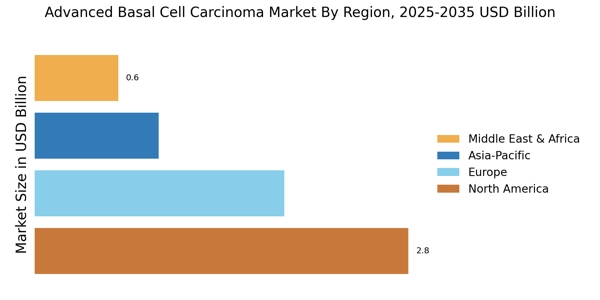
North America is the largest market for advanced basal cell carcinoma treatments, holding approximately 45% of the global market share. The region benefits from a robust healthcare infrastructure, high R&D investments, and increasing awareness of skin cancer. Regulatory support from agencies like the FDA accelerates the approval of innovative therapies, driving demand for advanced treatment options. The United States is the primary contributor, with significant market players such as Roche, Bristol-Myers Squibb, and Merck & Co. leading the competitive landscape. The presence of advanced healthcare facilities and a growing patient population further enhance market growth. Canada also plays a vital role, contributing to the overall market dynamics with its supportive healthcare policies and increasing incidence rates of skin cancer.
Europe is the second-largest market for advanced basal cell carcinoma treatments, accounting for approximately 30% of the global market share. The region is witnessing a surge in demand due to increasing skin cancer prevalence and supportive regulatory frameworks. The European Medicines Agency (EMA) plays a crucial role in expediting the approval of innovative therapies, which is vital for market expansion. Leading countries include Germany, France, and the UK, where key players like Novartis and Sanofi are actively involved. The competitive landscape is characterized by a mix of established pharmaceutical companies and emerging biotech firms. The growing focus on personalized medicine and targeted therapies is expected to further enhance market dynamics in Europe.
Asia-Pacific is an emerging powerhouse in the advanced basal cell carcinoma market, holding about 15% of the global market share. The region is experiencing rapid growth driven by increasing awareness of skin cancer, rising disposable incomes, and improving healthcare infrastructure. Countries like China and India are witnessing a significant rise in skin cancer cases, prompting a demand for advanced treatment options. China is the largest market in the region, with a growing number of local and international players entering the market. The competitive landscape is evolving, with companies like Amgen and Eli Lilly expanding their presence. The increasing focus on research and development, along with government initiatives to improve healthcare access, is expected to propel market growth in the coming years.
The Middle East and Africa represent a nascent market for advanced basal cell carcinoma treatments, holding approximately 10% of the global market share. The region faces challenges such as limited healthcare access and varying regulatory environments. However, increasing awareness of skin cancer and rising healthcare investments are driving demand for advanced therapies, presenting significant growth potential. Countries like South Africa and the UAE are leading the market, with a growing number of healthcare facilities and initiatives aimed at improving cancer care. The competitive landscape is still developing, with both local and international players exploring opportunities. The presence of key players like AstraZeneca is expected to enhance market dynamics as they introduce innovative treatment options.
The Advanced Basal Cell Carcinoma Market is characterized by a dynamic competitive landscape, driven by increasing incidences of skin cancer and a growing demand for innovative treatment options. Key players such as Roche (CH), Bristol-Myers Squibb (US), and Novartis (CH) are strategically positioned to leverage their extensive research capabilities and established market presence. Roche (CH) focuses on developing targeted therapies, while Bristol-Myers Squibb (US) emphasizes immunotherapy advancements. Novartis (CH) is actively pursuing partnerships to enhance its product pipeline, collectively shaping a competitive environment that prioritizes innovation and patient-centric solutions.In terms of business tactics, companies are increasingly localizing manufacturing to reduce costs and optimize supply chains. The market appears moderately fragmented, with several players vying for market share. However, the collective influence of major companies like Amgen (US) and Merck & Co. (US) is notable, as they continue to expand their therapeutic offerings and enhance their market positions through strategic collaborations and acquisitions.
In August Roche (CH) announced the initiation of a pivotal clinical trial for its novel BCC treatment, which aims to provide a more effective option for patients with advanced basal cell carcinoma. This strategic move underscores Roche's commitment to innovation and its focus on addressing unmet medical needs in oncology. The trial's outcomes could significantly impact the company's market share and reinforce its leadership in the sector.
In September Bristol-Myers Squibb (US) revealed a partnership with a leading biotechnology firm to co-develop a combination therapy targeting advanced basal cell carcinoma. This collaboration is expected to enhance the therapeutic landscape by integrating complementary technologies, thereby potentially improving patient outcomes. Such strategic alliances are indicative of a broader trend towards collaborative innovation in the market.
In July Novartis (CH) expanded its global footprint by entering into a licensing agreement with a regional player in Asia, aimed at distributing its advanced BCC therapies. This move not only enhances Novartis's market access but also reflects a strategic focus on emerging markets, where the incidence of skin cancer is rising. By localizing its operations, Novartis is likely to improve its supply chain efficiency and responsiveness to regional healthcare needs.
As of October the Advanced Basal Cell Carcinoma Market is witnessing trends such as digitalization and AI integration, which are reshaping competitive dynamics. Companies are increasingly leveraging technology to enhance drug development processes and patient engagement. Strategic alliances are becoming pivotal in driving innovation, as firms collaborate to share resources and expertise. Looking ahead, competitive differentiation is expected to evolve, with a shift from price-based competition to a focus on innovation, technological advancements, and supply chain reliability, ultimately benefiting patients and healthcare providers alike.

Recent developments in the Advance Basal Cell Carcinoma Market indicate a growing focus on novel therapeutics and increased investment in research and development. With the market projected to reach a valuation of approximately 10.2 billion USD by 2032, stakeholders are increasingly interested in targeted therapies and immunotherapy options, reflecting a shift toward personalized medicine. Regulatory bodies are also expediting the approval processes for innovative treatments, further enhancing market dynamics. Additionally, awareness campaigns aimed at early detection and prevention are expanding, contributing to increased patient outreach and treatment demand.
Partnerships between pharmaceutical companies and research institutions are becoming more prevalent, facilitating the development of new treatment models and approaches. Technological advancements in diagnostic tools are improving the accuracy of basal cell carcinoma detection, which is expected to drive market growth.
As the healthcare landscape evolves, the focus on patient-centric care and advancements in therapeutic alternatives remains pivotal for stakeholders navigating this dynamic market environment.
高级基底细胞癌市场预计将在2024年至2035年间以7.47%的年复合增长率增长,推动因素包括发病率上升、治疗选择的进步以及意识的提高。
新机遇在于:
到2035年,市场预计将实现显著增长,反映出不断发展的治疗范式和患者参与度的提高。
| MARKET SIZE 2024 | 6.169(USD Billion) |
| MARKET SIZE 2025 | 6.63(USD Billion) |
| MARKET SIZE 2035 | 13.63(USD Billion) |
| COMPOUND ANNUAL GROWTH RATE (CAGR) | 7.47% (2025 - 2035) |
| REPORT COVERAGE | Revenue Forecast, Competitive Landscape, Growth Factors, and Trends |
| BASE YEAR | 2024 |
| Market Forecast Period | 2025 - 2035 |
| Historical Data | 2019 - 2024 |
| Market Forecast Units | USD Billion |
| Key Companies Profiled | Roche (CH), Bristol-Myers Squibb (US), Novartis (CH), Amgen (US), Merck & Co. (US), Regeneron Pharmaceuticals (US), Eli Lilly and Company (US), Sanofi (FR), AstraZeneca (GB) |
| Segments Covered | Treatment Type, Stage of Disease, Diagnosis Method, Patient Demographics, Treatment Setting, Regional |
| Key Market Opportunities | Emergence of novel therapies and personalized medicine in the Advanced Basal Cell Carcinoma Market. |
| Key Market Dynamics | Rising demand for targeted therapies drives innovation and competition in the Advanced Basal Cell Carcinoma treatment landscape. |
| Countries Covered | North America, Europe, APAC, South America, MEA |


请填写以下表格以获取本报告的免费样本

“This is really good guys. Excellent work on a tight deadline. I will continue to use you going forward and recommend you to others. Nice job”


“Thanks. It’s been a pleasure working with you, please use me as reference with any other Intel employees.”


“Thanks for sending the report it gives us a good global view of the Betaïne market.”


“Thank you, this will be very helpful for OQS.”


“We found the report very insightful! we found your research firm very helpful. I'm sending this email to secure our future business.”


“I am very pleased with how market segments have been defined in a relevant way for my purposes (such as "Portable Freezers & refrigerators" and "last-mile"). In general the report is well structured. Thanks very much for your efforts.”


“I have been reading the first document or the study, ,the Global HVAC and FP market report 2021 till 2026. Must say, good info! I have not gone in depth at all parts, but got a good indication of the data inside!”


“We got the report in time, we really thank you for your support in this process. I also thank to all of your team as they did a great job.”


“The Automotive 48V ECU Components Procurement Intelligence Study” was a complex project, but the Market Research Future (MRFR) team handled it with quality, agility, and customer-centricity. They delivered all requested data on time and within the agreed scope. The team, including Shubhendra Anand and Rahul Gotadki, was always readily available to clarify questions and swiftly implement necessary adjustments, driving the project to a successful conclusion within a very demanding timeframe.
I would also like to specifically commend Akshay Agarwal for his responsiveness and support at every stage—from our initial inquiry on May 6th through to final delivery on June 18th. His dedication made the entire process seamless.”



