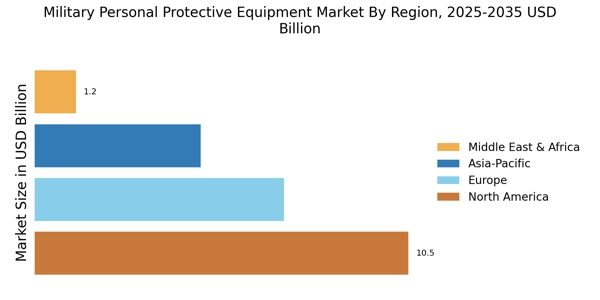
Global market valuation was derived through defense contract value mapping and military personnel equipment analysis. The methodology included:
Identification of 50+ key defense contractors and PPE manufacturers across North America, Europe, Asia-Pacific, and Middle East
Product mapping across body armor (soft/hard armor, plate carriers), tactical vests (modular/load-bearing), advanced combat helmets, ballistic eyewear, respiratory protection (gas masks, respirators), pelvic protection systems, and life safety jackets
Analysis of reported and modeled defense procurement revenues specific to soldier protection systems and PPE portfolios
Coverage of manufacturers representing 65-70% of global market share in 2024
Extrapolation using bottom-up (military personnel count × equipment unit cost by country/branch) and top-down (defense contractor revenue validation) approaches to derive segment-specific valuations
Key Government & Defense Sources Referenced:
US Department of Defense (DoD) - Defense budget justifications, Soldier Protection System (SPS) program data, procurement forecasts
NATO Standardization Office - Standardization agreements for soldier equipment, ballistic protection standards
National Institute of Justice (NIJ) - Ballistic resistance standards (NIJ 0101.06/07), body armor compliance testing
Defense Logistics Agency (DLA) - Troop support contracts, individual equipment procurement data
DARPA - Personalized Protective Biosystems (PPB) program, lightweight armor R&D initiatives
European Defence Agency (EDA) - European defense procurement reports, soldier modernization programs
SIPRI (Stockholm International Peace Research Institute) - Military expenditure databases, arms transfers
UK Ministry of Defence - Defence Equipment & Support (DE&S) procurement statistics
Joint Program Executive Office Soldier (JPEO-Soldier) - US Army soldier equipment portfolio data
National Technical Information Service (NTIS) - Military technical reports and field test data