Zero Liquid Discharge Market Summary
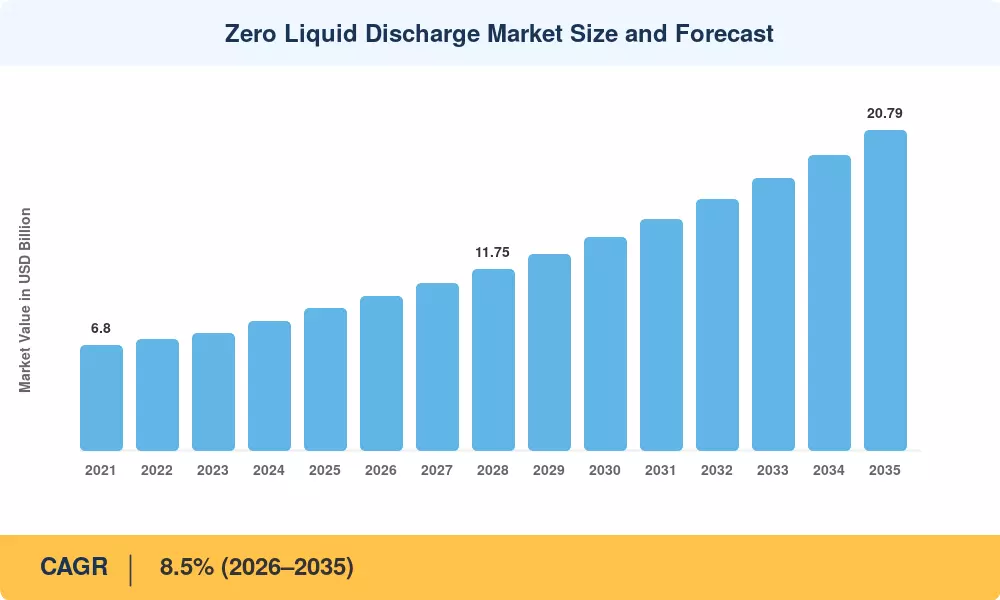
零液体排放市场预计到 2025 年将达到 92 亿美元,预计将从 2026 年的 99.8 亿美元增长到 2035 年的 207.9 亿美元,在预测期内(2026-2035 年)复合年增长率为 8.5%。这一扩张的基础是发达经济体和发展中经济体收紧废水排放法规。美国 EPA 于 2024 年修订了蒸汽发电类别的废水限制指南,对烟气脱硫废水施加了更严格的限制,推动公用事业公司全面采用 ZLD[1]。与此同时,中国的“十四五”规划拨出超过 120 亿美元用于工业水循环基础设施,为燃煤电厂和化工园区的 ZLD 系统创造了重要的需求走廊[2].
市场上的零液体排放技术运动正在发生变化。传统的纯热处理系统(盐水浓缩器、强制循环结晶器)正在被将高回收率反渗透与微型热后端相结合的混合架构所取代。这一变化使每立方米处理后的废水的能源使用量减少了 40-60%,使得 ZLD 对于依赖传统蒸发池的中型工厂来说在经济上是可行的[3]。膜蒸馏和正向渗透试点工作正在加速这一转变,能源部 4500 万美元的水安全大挑战在一定程度上提供了支持[4].
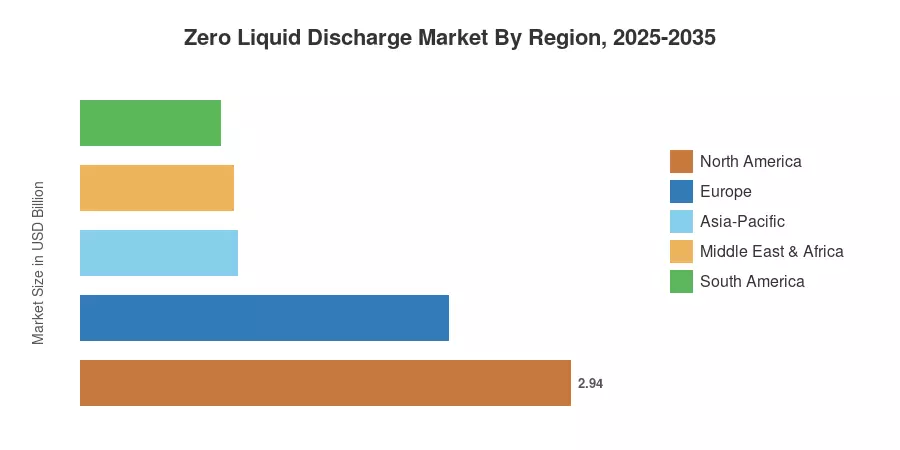
受电力行业严格监管和老化燃煤电厂合规计划的推动,北美占据了零液体排放市场的最大份额,占 2025 年收入的近 32%。在印度中央污染控制委员会的要求和中国零排放工业园区激增的推动下,亚太地区是发展最快的市场,预计复合年增长率为 10.2%。受欧盟工业排放指令下制药和化学行业变化的推动,欧洲紧随其后,约占 24%[5]。 “随着全球水资源短缺的加剧,到 2035 年,各个工业垂直领域的零液体排放市场预计将继续以两位数增长。
报告要点
• 按技术
- 热力系统(蒸发器和结晶器)约占零液体排放市场的 55%,受益于高盐应用中经过验证的可靠性。
- 在能源效率提高和膜成本下降的推动下,基于膜的 ZLD 技术正以 11.3% 的复合年增长率增长。
- 将膜预浓缩与热抛光相结合的混合系统到 2025 年将产生约 13.8 亿美元的收入。
• 按最终用途行业
- 发电是主要的最终用途领域,在零液体排放市场中占据 28% 的份额,这主要是由燃煤电厂废水合规要求推动的。
- 纺织行业是增长最快的最终用途垂直行业,复合年增长率为 10.8%,其中印度的公共污水处理厂指令引领了纺织行业的发展。
- 2025 年,化工和石化设施合计贡献了 20.2 亿美元的收入。
• 按地理位置
- 2025 年,北美在零液体排放市场中占据 32% 的领先份额。
- 预计到 2035 年,亚太地区的复合年增长率将达到 10.2%,是所有地区中增长最快的。
- 欧洲的零液体排放市场以制药和化学行业的合规要求为基础。
零液体排放市场规模及预测(2021-2035)
The market sizing model uses bottom-up project-level data from over 200 ZLD installations internationally, cross-validated with top-down industry capacity reports, regulatory compliance timeframes and published capital expenditure disclosures from key EPC contractors.历史数据基于实际市场活动(2021-2024 年),并根据经过验证的管道分析以 2025 年为基准年。预测值(2026-2035 年)的复合年增长率保持不变,为 8.5%,并根据主要地区的预期监管加速进行了调整。





















.webp?v=1787579745)
