Überblick über den globalen Markt für künstliche Augen
Die Größe des Marktes für künstliche Augen wurde im Jahr 2023 auf 1,92 Milliarden US-Dollar geschätzt. Der Markt für künstliche Augen wird voraussichtlich von 2,05 Milliarden US-Dollar im Jahr 2024 auf 3,33 Milliarden US-Dollar im Jahr 2032 wachsen und im Prognosezeitraum (2024 – 2032) eine durchschnittliche jährliche Wachstumsrate (CAGR) von 6,21 % aufweisen. Eine alternde Bevölkerung, wachsendes Bewusstsein und zunehmende Akzeptanz, zunehmende Prävalenz von Augenerkrankungen, individuelle Anpassung und Personalisierung sind die wichtigsten Markttreiber, die das Marktwachstum fördern.
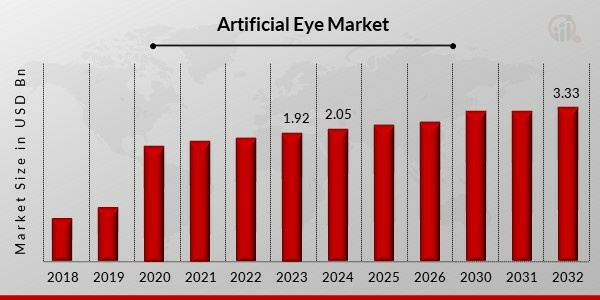
Quelle Sekundärforschung, Primärforschung,Marktforschung ZukunftDatenbank- und Analystenbewertung
Im Februar 2024, Eye Prosthetics of Utah wurde von United Ocular übernommen, ein Schritt, der das Leben von Menschen verbessern wird, die durch einen Unfall, ein Trauma oder eine Krankheit ein Auge verloren haben.
Das indische Verabreichungssystem Clareon Monarch IV und die Intraokularlinsen (IOLs) Clareon Monofocal und Clareon Toric von Alcon India wurden im August 2023 auf den Markt gebracht; Dies ist bisher die ausgefeilteste Kombination aller von Alcon Co Ltd angebotenen Optionen zur Kataraktbehandlung.
Im Juli 2023, Eyenuk, ein Unternehmen, das sich mit medizinischer KI bestens auskennt, wurde von der US-amerikanischen FDA für seine innovative Technologie zur Erkennung von Retinopathie mittels bildgebender Analyse des Augenhintergrunds zugelassen.
Im Juni 2023Das in Israel ansässige Startup CorNeat Vision hat sein synthetisches Gewebeprodukt von der US-amerikanischen FDA genehmigen lassen. Das weltweit erste nicht abbaubare synthetische Gewebe für den Einsatz in der Augenchirurgie ist dieser bahnbrechende synthetische Gewebeersatz, der von der Firma entwickelt wurde. Anstelle von Spendergewebe wurde EverPatch entwickelt, um die Übertragung von Krankheiten zu verhindern.
Im Juni 2022pSivida (eine Tochtergesellschaft von EyePoint Pharmaceuticals) war der erste westliche Pharmahersteller, der die behördliche Genehmigung Chinas allein auf der Grundlage realer Daten für ein Implantat zur Behandlung einer Form von Augenentzündungen erhielt. Die Food and Drug Administration (FDA) hat Australiens bionisches Auge im Januar 2022 kürzlich als „bahnbrechendes Gerät“ bezeichnet. Das bedeutet, dass BVT beschleunigte Entwicklungs- und Prüffristen sowie eine stärkere Interaktion mit der FDA hinsichtlich ihres Innovationspfads zur Marktzulassung erleben wird.
Im März 2021Acuvue Oasys Multifocal mit Pupillenoptimiertem Design wurde von Johnson & Johnson unter Verwendung des Acuvue Oasys-Materials eingeführt, das aus Senofilcon A besteht und im Vergleich zu anderen heute auf dem Markt erhältlichen Materialien über hervorragende Bequemlichkeit und Sehkorrektureigenschaften verfügt.
Im Juni 2020Die Hong Kong University of Science and Technology (HKUST) gab bekannt, dass sie das weltweit erste künstliche 3D-Auge entwickelt hat, dessen Fähigkeiten die derzeit verwendeten bionischen Augen und in einigen Fällen sogar die der menschlichen Augen übertreffen, was sowohl für Android-Roboter als auch für Menschen, die unter Sehverlust leiden, Hoffnung geben könnte.
Markttrends für künstliche Augen
Die steigende Prävalenz von Augenerkrankungen treibt das Marktwachstum voran
Der Anstieg der älteren Bevölkerung, die Zunahme der Zahl blinder oder teilweise blinder Menschen und die Zunahme von Krankheiten, die das Sehvermögen beeinträchtigen, wie Diabetes und Netzhautkrebs, sind alles Faktoren, die zum prognostizierten deutlichen Wachstum des Marktes für künstliche Augen zwischen 2023 und 2032 beitragen.
Künstliche Augen, auch Augenprothesen genannt, ermöglichen Menschen, die aufgrund einer Krankheit oder eines Traumas ein Auge verloren haben, ein besseres Aussehen. Es wird erwartet, dass die Verfügbarkeit vergleichsweise kostengünstiger alternativer Behandlungen und die hohen Therapiekosten das Marktwachstum begrenzen. Allerdings werden kostengünstige Verfahren zur Implantation künstlicher Augen sowie andere technologische Fortschritte bei der Herstellung dieser Prothesen das industrielle Wachstum in den kommenden Jahren ankurbeln.
Branchenführer werden Produktentwicklungs- und andere Forschungs- und Entwicklungsaktivitäten durchführen, um den Umsatz auf dem Markt für künstliche Augen zu steigern. Millionen von Menschen sind von der zunehmenden Verbreitung von Augenproblemen betroffen, die für die ganze Welt eine große Sorge darstellen. Augenerkrankungen sind eine breite Kategorie von Erkrankungen, die die Struktur und Funktion der Augen beeinträchtigen und zu Sehstörungen oder Blindheit führen können. Zahlreiche Gründe wie demografische Veränderungen, Lebensstilentscheidungen und die allgemeine Alterung der Bevölkerung könnten mit dieser Tendenz in Zusammenhang stehen.
Die alternde Bevölkerung ist einer der Schlüsselfaktoren für die zunehmende Prävalenz von Augenproblemen. Altersbedingte Augenerkrankungen treten mit zunehmendem Alter häufiger auf. Zu den häufigsten altersbedingten Augenerkrankungen gehören Katarakte, Glaukom, altersbedingte Makuladegeneration (AMD) unddiabetische Retinopathie. Wenn diese Störungen ignoriert werden, können sie zu einem allmählichen Verlust der Sehkraft führen und sich auf alltägliche Aktivitäten und die allgemeine Lebensqualität auswirken.
Refraktionsfehler erhöhen neben altersbedingten Augenproblemen auch die Wahrscheinlichkeit einer Sehbehinderung erheblich. Weltweit sind viele Menschen von Myopie (Kurzsichtigkeit), Hyperopie (Weitsichtigkeit), Astigmatismus und Presbyopie betroffen. Diese Probleme resultieren aus Anomalien in der Augenform, die es schwierig machen, auf Objekte in unterschiedlichen Entfernungen zu fokussieren. Während Brechungsfehler mit Brillen, Kontaktlinsen oder refraktiver Chirurgie behandelt werden können, unterstreicht ihre steigende Prävalenz die Notwendigkeit eines einfachen Zugangs zu wirksamen Techniken zur Sehkorrektur. Dadurch wird der Umsatz des Marktes für künstliche Augen gesteigert.
Einblicke in das Marktsegment für künstliche Augen
Einblicke in den Typ des künstlichen Auges
Die Marktsegmentierung für künstliche Augen umfasst je nach Typ nicht-integrierte Implantate und integrierte Implantate. Das Segment der integrierten Implantate dominierte den Markt und machte 67,54 % des Marktumsatzes aus. Für die Herstellung integrierter Implantate werden durchlässige Materialien wie poröses Polyethylen verwendet. Diese Polymere verleihen dem Implantat die Fähigkeit, sich in das Gewebe der Augenhöhle zu integrieren und es so zu einem funktionellen Körperteil zu machen. Infolgedessen könnten sie als wesentlicher Bestandteil des Körpers wirken.
Einblicke in die künstliche Augentechnologie
Die auf Technologie basierende Marktsegmentierung für künstliche Augen umfasst elektronische und mechanische. Die mechanische Kategorie generierte die meisten Einnahmen (65,25 %). Die Segmententwicklung kann durch steigende Augenkrankheitsraten und eine alternde Bevölkerung beeinträchtigt werden. Einer Studie zufolge wird es bis 2040 schätzungsweise 80 Millionen Amerikaner über 65 Jahre geben. Einer der Hauptfaktoren für die Nachfrage nach dieser Technologie sind die günstigen Kosten für die mechanische Augenimplantation und damit verbundene Verfahren.
Abbildung 1 Markt für künstliche Augen, nach Technologie, 2022 und 2032 (Milliarden US-Dollar)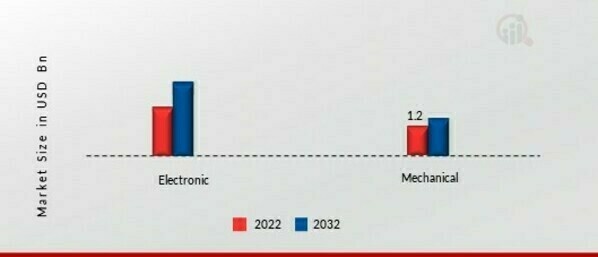
Quelle Sekundärforschung, Primärforschung, MRFR-Datenbank und Analystenbewertung
Einblicke in künstliche Augen für Endbenutzer
Die auf Endverbrauchern basierende Marktsegmentierung für künstliche Augen umfasst Krankenhäuser, Kliniken und andere. Das Segment Krankenhäuser dominierte den Markt und machte 57,54 % des Marktumsatzes aus. Im Vergleich zu anderen Krankenhäusern verfügen diese Gesundheitseinrichtungen über größere Ausgabenbudgets. Qualifiziertes, sachkundiges und professionelles Krankenhauspersonal ist ein weiteres attraktives Merkmal. Darüber hinaus würde der Anteil des Segments durch die starke Präsenz zahlreicher Augenkliniken und Krankenhäuser, die künstliche Augenbehandlungen anbieten, weiter erhöht.
Regionale Einblicke in das künstliche Auge
Nach Regionen bietet die Studie Markteinblicke in Nordamerika, Europa, den asiatisch-pazifischen Raum und den Rest der Welt. Der nordamerikanische Markt für künstliche Augen dominierte diesen Markt im Jahr 2022 (45,80 %). Das Gebiet verfügt über eine starke Gesundheitsinfrastruktur, modernste Prothetiktechnologie und ein hohes Maß an Bewusstsein für künstliche Augenalternativen. Die Expansion des Marktes in dieser Region wird durch die Präsenz renommierter Hersteller, Augenärzte und Gesundheitseinrichtungen erleichtert. Darüber hinaus hatte der US-amerikanische Markt für künstliche Augen den größten Marktanteil und der kanadische Markt für künstliche Augen war der am schnellsten wachsende Markt in der Region Nordamerika.
Darüber hinaus sind die wichtigsten im Marktbericht untersuchten Länder die USA, Kanada, Deutschland, Frankreich, das Vereinigte Königreich, Italien, Spanien, China, Japan, Indien, Australien, Südkorea und Brasilien.
Abbildung 2 MARKTANTEIL FÜR KÜNSTLICHE AUGEN NACH REGIONEN 2022 (Milliarden USD)
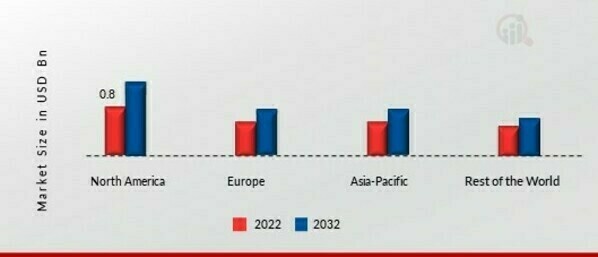
Quelle Sekundärforschung, Primärforschung, MRFR-Datenbank und Analystenbewertung
Der europäische Markt für künstliche Augen hat den zweitgrößten Marktanteil. Dies ist auf die niedrigen Kosten der bariatrischen Chirurgie und die steigende Zahl von Diabetikern zurückzuführen. Forschung und Entwicklung haben in diesem Bereich Priorität, was zu Durchbrüchen in der künstlichen Augentechnologie führt. Darüber hinaus hatte der deutsche Markt für künstliche Augen den größten Marktanteil und der britische Markt für künstliche Augen war der am schnellsten wachsende Markt in der europäischen Region
Es wird erwartet, dass der Markt für künstliche Augen im asiatisch-pazifischen Raum von 2024 bis 2032 mit der schnellsten jährlichen Wachstumsrate wachsen wird. Die Nachfrage der Region nach künstlichen Augen wird durch eine große demografische Basis und eine wachsende ältere Bevölkerung angeheizt. Darüber hinaus hatte Chinas Markt für künstliche Augen den größten Marktanteil und der indische Markt für künstliche Augen war der am schnellsten wachsende Markt im asiatisch-pazifischen Raum.
Künstliche Augen – wichtige Marktteilnehmer und Wettbewerbseinblicke
Führende Marktteilnehmer investieren stark in Forschung und Entwicklung, um ihre Produktlinien zu erweitern, was dem Markt für künstliche Augen zu noch mehr Wachstum verhelfen wird. Marktteilnehmer unternehmen außerdem eine Vielzahl strategischer Aktivitäten, um ihre Präsenz zu erweitern. Zu wichtigen Marktentwicklungen gehören die Einführung neuer Produkte, vertragliche Vereinbarungen, Fusionen und Übernahmen, höhere Investitionen und die Zusammenarbeit mit anderen Organisationen. Um in einem wettbewerbsintensiveren und steigenden Marktklima zu expandieren und zu überleben, muss die Branche für künstliche Augen kostengünstige Produkte anbieten.
Die Herstellung vor Ort zur Minimierung der Betriebskosten ist eine der wichtigsten Geschäftstaktiken, die Hersteller in der Branche der künstlichen Augen anwenden, um Kunden zu helfen und den Marktsektor zu vergrößern. In den letzten Jahren hat die künstliche Augenindustrie der Medizin einige der bedeutendsten Vorteile geboten. Wichtige Akteure auf dem Markt für künstliche Augen, darunter Advanced Artificial Eye, The National Artificial Eye Services, Marie Allen Ocularist Ltd, COS-MEDIC PTY LTD, Retina Implant AG, Second Sight, Pixium Vision, Ericksons Custom Made Artificial Eye und andere, versuchen, die Marktnachfrage durch Investitionen in Forschungs- und Entwicklungsaktivitäten zu steigern.
Advanced Artificial Eye ist ein führendes Unternehmen auf dem Markt für künstliche Augen, das sich auf die Entwicklung und Herstellung modernster Augenprothesen spezialisiert hat. Das Unternehmen bietet hochmoderne künstliche Augen an, die dem Aussehen und der Leistung echter Augen sehr nahe kommen, wobei der Schwerpunkt auf technologischen Verbesserungen liegt. Ihre Produkte kombinieren modernste Materialien, hochentwickelte bildgebende Verfahren und winzige Elektronik, um atemberaubende ästhetische und kosmetische Ergebnisse zu erzielen. Die vom Unternehmen angebotenen Augenprothesen sind äußerst individuell und können in Augenfarbe, -größe und -form genau aufeinander abgestimmt werden, um jedem Träger ein unverwechselbares und realistisches Aussehen zu verleihen.
Die strengen Qualitätskontrollverfahren und die akribische Liebe zum Detail in jeder Phase der Herstellung zeigen das Engagement von Advanced Artificial Eye für Exzellenz und Patientenzufriedenheit.
Marie Allen Ocularist Ltd ist ein renommiertes Unternehmen, das auf dem Markt für künstliche Augen tätig ist und sich auf den Bereich der Augenprothetik spezialisiert hat. Mit einer langen Geschichte und umfangreichen Fachkenntnissen ist das Unternehmen für sein hervorragendes Handwerk und seine patientenorientierte Philosophie bekannt. Um sowohl das Sehvermögen als auch das Aussehen wiederherzustellen, ist Marie Allen Ocularist bestrebt, Menschen, die ihr Augenlicht verloren haben, hochwertige und einzigartig gestaltete künstliche Augen zur Verfügung zu stellen. Ein talentiertes Team von Okularisten des Unternehmens verbindet traditionelle Kunst mit modernen Methoden, um individuelle und realistische künstliche Augen herzustellen.
Sie arbeiten eng mit jedem Patienten zusammen, um seine spezifischen Anforderungen zu verstehen und so einen sicheren Sitz, ein glattes Erscheinungsbild und die bestmögliche Leistung zu gewährleisten. Marie Allen Ocularist legt großen Wert auf einen mitfühlenden und ermutigenden Ansatz, der die Patienten durch den Eingriff führt und sich um eventuelle Sorgen kümmert.
Zu den wichtigsten Unternehmen auf dem Markt für künstliche Augen gehören:
- Fortschrittliches künstliches Auge
- Die National Artificial Eye Services
- Marie Allen Ocularist Ltd
- COS-MEDIC PTY LTD
- Retina Implant AG
- Zweiter Blick
- Pixium Vision
- Ericksons maßgeschneidertes künstliches Auge
Entwicklungen in der Branche für künstliche Augen
2020- Ein System für künstliche Augen namens „EYEMATE-IO“ wurde von der deutschen Firma Osmed GmbH eingeführt. Durch die Verwendung modernster Materialien und Designs bietet dieses System ein natürlicheres und anpassungsfähigeres Erscheinungsbild und erhöht den Patientenkomfort.
2019-Um zu untersuchen, wie ihre Augmented-Reality-Kontaktlinsentechnologie Menschen mit Sehbehinderungen helfen könnte, arbeitete Mojo Vision mit dem Vista Center for the Blind and Visually Impaired zusammen. Ziel dieser Partnerschaft war es, die Lebensqualität und Sehkraft blinder Menschen zu verbessern.
Marktsegmentierung für künstliche Augen
Ausblick auf den künstlichen Augentyp
- Nicht integrierte Implantate
- Integrierte Implantate
Ausblick auf die künstliche Augentechnologie
Ausblick für Endanwender künstlicher Augen
- Krankenhäuser
- Kliniken
- Andere
Regionaler Ausblick auf das künstliche Auge
- Asien-Pazifik
- Rest der Asien-Pazifik-Region