Smart Lock Market Summary
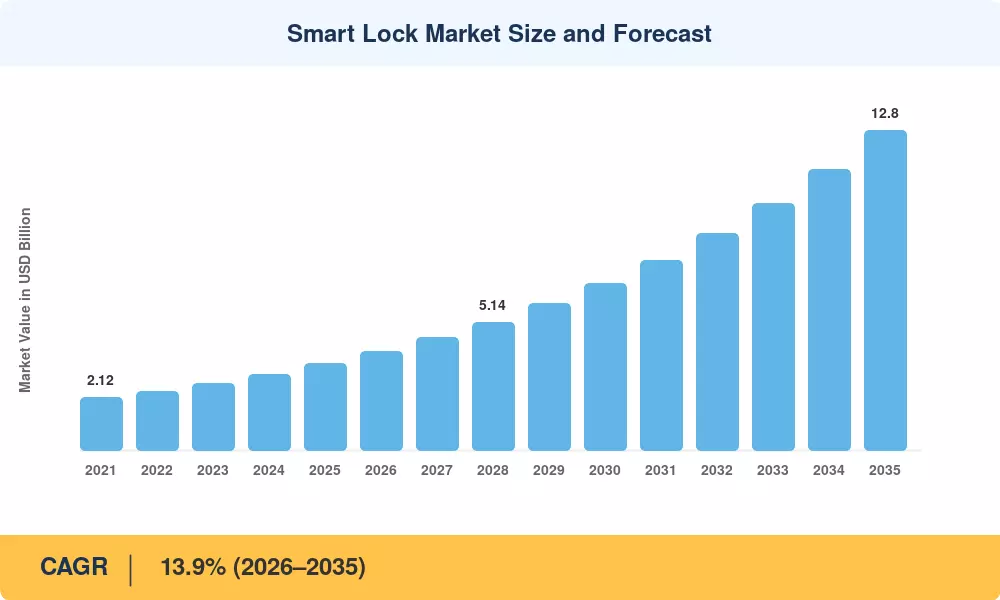
Der Smart-Lock-Markt erreichte im Jahr 2025 ein Volumen von 3,48 Milliarden US-Dollar und soll von 3,96 Milliarden US-Dollar im Jahr 2026 auf 12,80 Milliarden US-Dollar im Jahr 2035 wachsen, was einem durchschnittlichen jährlichen Wachstum von 13,9 % im Prognosezeitraum (2026–2035) entspricht. Diese Expansion basiert auf der BeschleunigungSmart HomeDie Einführung von Plattformen, die Verschärfung städtischer Sicherheitsvorschriften und die Weiterentwicklung von Interoperabilitätsstandards wie Matter und Thread lassen seit langem bestehende Integrationsbarrieren in Geräte-Ökosystemen zusammenbrechen [1].
Es ist ein grundlegender Technologieübergang im Gange, hin zu vernetzten, ausweisfreien Zutrittssystemen, die klassische Stiftschlösser und mechanische Riegel ersetzen. Niedrigere Preise für kapazitive Fingerabdruckmodule (ca. 38 % seit 2021 pro Branche für Komponenten-Tracker).[2]) haben die biometrische Authentifizierung in die Mittelklasse gebracht, und die Veröffentlichung von Matter 1.2 durch die Connectivity Standards Alliance hat über 40 Smart-Lock-SKUs in eine einheitliche Kontrollebene gebracht[3]. Versicherungsanbieter in den USA und im Vereinigten Königreich gewähren derzeit 5–15 % Prämieneinsparungen für zertifizierte Smart-Lock-Installationen und bieten so einen messbaren Anreiz für die Gesamtbetriebskosten bei Hausmodernisierungen[4].
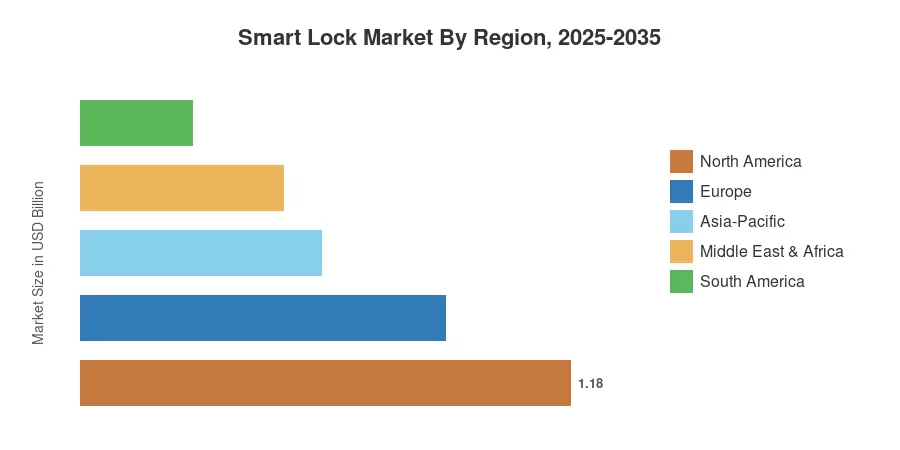
Nordamerika hielt im Jahr 2025 etwa 33,9 % des Umsatzanteils am Smart-Lock-Markt, unterstützt durch einen ausgereiften E-Commerce-Vertrieb und die kurzfristige Mietnutzung durch Airbnb. Der asiatisch-pazifische Raum wächst am schnellsten und wird bis 2035 voraussichtlich um 16,7 % pro Jahr wachsen, was auf die großflächige Urbanisierung in Indien, China und den ASEAN-Ländern zurückzuführen ist. Europa hält mit etwa 25,3 % den zweithöchsten Markt, wobei gewerbliche Installationen durch die Harmonisierung der EN 15684-Regularien und nachhaltigkeitsbezogene Baunormen vorangetrieben werden. Der Smart-Lock-Markt befindet sich an der Schnittstelle von physischer Sicherheit, digitaler Identifikation und Immobilientechnologie – eine Konvergenz, die die Zugangskontrolle für das nächste Jahrzehnt bestimmen wird.
Wichtige Erkenntnisse aus dem Bericht
• Nach Sperrtyp
- Intelligente Riegelschlösser machten im Jahr 2025 rund 48,2 % des Umsatzes auf dem Markt für intelligente Schlösser aus, was auf die Nachrüstkompatibilität mit bestehenden Türvorbereitungen für Wohngebäude zurückzuführen ist.
- Es wird prognostiziert, dass Türdrückersysteme bis 2035 eine durchschnittliche jährliche Wachstumsrate von 16,3 % verzeichnen und in gewerblichen Büros und im Gastgewerbe zunehmend an Bedeutung gewinnen.
• Durch Authentifizierung
- Die tastaturbasierte Authentifizierung machte im Jahr 2025 etwa 45,0 % des Marktanteils von Smart Locks aus und wird für die Flexibilität der Gästecodes in Mietobjekten bevorzugt.
• Nach Geographie
- Nordamerika führte den Markt für intelligente Schlösser mit einem Anteil von 33,9 % im Jahr 2025 an.
- Der asiatisch-pazifische Raum wird voraussichtlich bis 2035 die höchste regionale CAGR von 16,7 % verzeichnen.
Marktgröße und Prognose für Smart Locks (2021–2035)
Die Prognosen für die Marktforschungszukunft (MRFR) basieren auf Primärinterviews mit Schloss-OEMs, Komponentenlieferanten und Vertriebskanälen sowie Sekundärdaten von Handelsgruppen, Patentanmeldungen und Regulierungsdatenbanken. Die historischen Werte basieren auf den gemeldeten Versanderlösen, angepasst um ASP-Erosion und Währungseffekte. Prognosewerte basieren auf einem zusammengesetzten jährlichen Wachstumsmodell, das auf Makrofaktoren wie Hausneubauten, kommerzielle Entwicklungsgenehmigungen und Durchdringungsraten von IoT-Geräten kalibriert ist.