Descargar muestra gratis
Complete el formulario a continuación para recibir una muestra gratuita de este informe
Informe de Investigación del Mercado de Nuevos Medicamentos y Dispositivos Inteligentes para Trastornos Respiratorios por Tipo de Producto (Nuevo Medicamento, Dispositivo Inteligente, Terapia Combinada), por Aplicación (Asma, Enfermedad Pulmonar Obstructiva Crónica, Fibrosis Quística, Hipertensión Arterial Pulmonar), por Usuario Final (Hospitales, Entornos de Atención Domiciliaria, Farmacias, Instituciones de Investigación), por Vía de Administración (Inhalación, Oral, Inyectable) y por Región (América del Norte, Europa, América del Sur, Asia-Pacífico, Medio Oriente y África) - Pronóstico hasta 2035
Según el análisis de MRFR, se estimó que el mercado de Nuevos Medicamentos y Dispositivos Inteligentes para Trastornos Respiratorios alcanzaría los 56.48 mil millones de USD en 2024. Se proyecta que el mercado crecerá de 59.95 mil millones de USD en 2025 a 108.8 mil millones de USD para 2035, exhibiendo una Tasa de Crecimiento Anual Compuesto (CAGR) de 6.14 durante el período de pronóstico 2025 - 2035.
El mercado de nuevos medicamentos y dispositivos inteligentes para trastornos respiratorios está preparado para un crecimiento sustancial impulsado por los avances tecnológicos y el aumento de la conciencia sobre la salud.
| 2024 Market Size | 56.48 (mil millones de USD) |
| 2035 Market Size | 108.8 (mil millones de USD) |
| CAGR (2025 - 2035) | 6.14% |
GlaxoSmithKline (GB), AstraZeneca (GB), Boehringer Ingelheim (DE), Novartis (CH), Roche (CH), Teva Pharmaceutical Industries (IL), Merck & Co. (US), Pfizer (US), Sanofi (FR), AbbVie (US)
El mercado de Nuevos Fármacos y Dispositivos Inteligentes para Trastornos Respiratorios está experimentando actualmente una fase transformadora, impulsada por los avances en tecnología y una creciente comprensión de las condiciones respiratorias. Las innovaciones en formulaciones de medicamentos y la integración de dispositivos inteligentes están remodelando los paradigmas de tratamiento, ofreciendo a los pacientes opciones de manejo más efectivas. La convergencia de productos farmacéuticos y soluciones de salud digital parece mejorar la adherencia y el monitoreo de los pacientes, lo que podría llevar a mejores resultados de salud. Además, la creciente prevalencia de trastornos respiratorios a nivel mundial requiere el desarrollo de terapias y dispositivos personalizados que atiendan las diversas necesidades de los pacientes. Además, los organismos reguladores se están adaptando a estos cambios, fomentando un entorno propicio para la innovación. El énfasis en la medicina personalizada y el uso de inteligencia artificial en el desarrollo de medicamentos y la funcionalidad de los dispositivos sugieren un futuro prometedor para este mercado. A medida que los interesados, incluidas las empresas farmacéuticas y las firmas de tecnología, colaboran más estrechamente, el potencial para soluciones innovadoras en el cuidado respiratorio parece expandirse. Esta sinergia no solo puede mejorar la calidad de vida de los pacientes, sino también optimizar los sistemas de entrega de atención médica, haciéndolos más eficientes y receptivos a los requisitos individuales.
La incorporación de tecnologías de salud digital en el cuidado respiratorio se está volviendo cada vez más prevalente. Dispositivos inteligentes, como inhaladores equipados con sensores, están permitiendo el monitoreo en tiempo real del uso de medicamentos y la adherencia del paciente. Esta tendencia sugiere un cambio hacia enfoques de tratamiento más interactivos y personalizados, lo que podría mejorar los resultados de los pacientes.
Hay un creciente énfasis en la medicina personalizada dentro del mercado de Nuevos Fármacos y Dispositivos Inteligentes para Trastornos Respiratorios. Las terapias personalizadas que consideran los perfiles individuales de los pacientes y los factores genéticos probablemente mejorarán la eficacia del tratamiento. Esta tendencia indica un alejamiento de las soluciones universales hacia una atención médica más personalizada.
Las innovaciones en los sistemas de entrega de medicamentos están transformando la forma en que se administran los medicamentos respiratorios. Nuevas formulaciones y mecanismos de entrega, como nebulizadores e inhaladores con capacidades mejoradas, pueden mejorar la absorción de medicamentos y la adherencia del paciente. Esta tendencia destaca la evolución continua de las estrategias terapéuticas en el cuidado respiratorio.
Los organismos reguladores están apoyando cada vez más el desarrollo de terapias innovadoras para trastornos respiratorios, lo que sirve como un motor clave para el Mercado de Nuevos Medicamentos y Dispositivos Inteligentes para Trastornos Respiratorios. Las iniciativas destinadas a acelerar el proceso de aprobación de nuevos medicamentos y dispositivos están alentando a las empresas farmacéuticas a invertir en investigación y desarrollo. Programas como las designaciones de terapia innovadora y las aprobaciones aceleradas están diseñados para llevar tratamientos efectivos al mercado más rápidamente. Este entorno regulatorio fomenta la innovación y alienta la introducción de soluciones de vanguardia que abordan necesidades médicas no satisfechas en el cuidado respiratorio. Como resultado, el mercado está preparado para crecer a medida que nuevas terapias y dispositivos inteligentes obtienen aprobación regulatoria y se vuelven disponibles para los pacientes.
El aumento de la incidencia de trastornos respiratorios, como el asma y la enfermedad pulmonar obstructiva crónica (EPOC), es un factor principal que impulsa el mercado de Nuevos Medicamentos y Dispositivos Inteligentes para Trastornos Respiratorios. Según estimaciones recientes, las enfermedades respiratorias afectan a millones de individuos en todo el mundo, lo que lleva a una mayor demanda de opciones de tratamiento innovadoras. Este aumento en la prevalencia requiere el desarrollo de nuevos medicamentos y dispositivos inteligentes que puedan gestionar eficazmente los síntomas y mejorar los resultados para los pacientes. Se proyecta que el mercado experimentará un crecimiento sustancial a medida que los proveedores de atención médica busquen soluciones avanzadas para abordar la creciente carga de las condiciones respiratorias. Además, la integración de dispositivos inteligentes en los regímenes de tratamiento probablemente mejorará la adherencia y el monitoreo de los pacientes, contribuyendo así a la expansión general del mercado.
Las innovaciones tecnológicas en el desarrollo de medicamentos están influyendo significativamente en el mercado de Nuevos Medicamentos y Dispositivos Inteligentes para Trastornos Respiratorios. La llegada de biofármacos avanzados y nuevas formulaciones de medicamentos ha revolucionado el panorama de tratamiento para los trastornos respiratorios. Técnicas como la cribado de alto rendimiento y la inteligencia artificial están agilizando el proceso de descubrimiento de medicamentos, permitiendo un desarrollo más rápido y eficiente de terapias efectivas. Además, la aparición de inhaladores inteligentes y dispositivos conectados está mejorando la entrega de medicamentos y el compromiso del paciente. Estos avances no solo mejoran los resultados terapéuticos, sino que también fomentan un enfoque más personalizado del tratamiento. Como resultado, se espera que el mercado se expanda a medida que las empresas farmacéuticas inviertan en investigación y desarrollo para ofrecer soluciones innovadoras a los pacientes que sufren de enfermedades respiratorias.
El cambio hacia soluciones de atención médica en el hogar es un impulsor significativo para el mercado de Nuevos Medicamentos y Dispositivos Inteligentes para Trastornos Respiratorios. Con un número creciente de pacientes que prefieren gestionar sus condiciones de salud en casa, hay una demanda creciente de dispositivos inteligentes que faciliten el monitoreo y tratamiento remoto. Dispositivos como nebulizadores portátiles e inhaladores inteligentes se están convirtiendo en herramientas esenciales para los pacientes con trastornos respiratorios, permitiendo una gestión conveniente y efectiva de sus condiciones. Esta tendencia se ve respaldada aún más por la población envejecida, que a menudo requiere atención respiratoria continua. Es probable que el mercado continúe creciendo a medida que los sistemas de salud se adapten a esta demanda, enfocándose en proporcionar soluciones accesibles y fáciles de usar que empoderen a los pacientes para tomar el control de su salud.
Hay una creciente conciencia y educación sobre la salud respiratoria, lo que está impulsando el mercado de Nuevos Medicamentos y Dispositivos Inteligentes para Trastornos Respiratorios. Las campañas de salud pública y las iniciativas educativas están informando a los pacientes sobre la importancia del diagnóstico temprano y la gestión efectiva de los trastornos respiratorios. Esta mayor conciencia está llevando a un aumento en la participación de los pacientes y una mayor disposición a buscar tratamiento. A medida que los pacientes se informan más sobre sus condiciones, es más probable que utilicen nuevos medicamentos y dispositivos inteligentes que pueden mejorar su calidad de vida. Se espera que el mercado se beneficie de esta tendencia a medida que los proveedores de atención médica y las organizaciones continúan promoviendo la educación sobre la salud respiratoria, lo que en última instancia conduce a mejores resultados para los pacientes y a una mayor demanda de soluciones innovadoras.
En el mercado de Nuevos Medicamentos y Dispositivos Inteligentes para Trastornos Respiratorios, los Nuevos Medicamentos tienen la mayor participación de mercado, representando una porción significativa debido a su eficacia establecida y la amplia investigación que los respalda. Mientras continúan dominando, los Dispositivos Inteligentes están emergiendo como un componente vital, capturando gradualmente una mayor participación al integrar tecnología avanzada para mejorar la adherencia y los resultados de los pacientes. La Terapia Combinada, aunque importante, ocupa una porción más pequeña ya que conecta tanto medicamentos como dispositivos, apelando a mercados especializados. Las tendencias de crecimiento indican un cambio hacia soluciones más personalizadas y tecnológicamente impulsadas para los trastornos respiratorios. A medida que aumenta la conciencia sobre las enfermedades respiratorias y se expanden las opciones de tratamiento innovadoras, se espera que la demanda de Dispositivos Inteligentes aumente, impulsada por los avances en telemedicina y monitoreo remoto. Mientras tanto, los Nuevos Medicamentos continúan evolucionando con formulaciones mejoradas que apuntan a vías específicas en condiciones respiratorias, preservando su relevancia junto a estas tecnologías emergentes.
Nuevo Medicamento (Dominante) vs. Dispositivo Inteligente (Emergente)
En el mercado de Nuevos Medicamentos y Dispositivos Inteligentes para Trastornos Respiratorios, el segmento de Nuevos Medicamentos es dominante debido a su larga presencia y eficacia terapéutica establecida dirigida a condiciones crónicas como el asma y la EPOC. Estos medicamentos están a la vanguardia del tratamiento, respaldados por rigurosos ensayos clínicos y aprobaciones regulatorias. Mientras tanto, los Dispositivos Inteligentes representan el segmento emergente, integrando características innovadoras como monitoreo en tiempo real y análisis de datos, que satisfacen la creciente preferencia por la autogestión entre los pacientes. Estos dispositivos mejoran la adherencia al tratamiento y proporcionan valiosos conocimientos sobre la salud, atrayendo a consumidores expertos en tecnología. La Terapia Combinada complementa estos segmentos al aprovechar las fortalezas de ambos, medicamentos y dispositivos, con el objetivo de optimizar los resultados del tratamiento para diversas necesidades de los pacientes.
El asma sigue siendo un segmento dominante en el mercado de Nuevos Medicamentos y Dispositivos Inteligentes para Trastornos Respiratorios, contribuyendo significativamente al panorama general de aplicaciones. Esta condición afecta a una vasta población, lo que lleva a una proliferación de terapias innovadoras y dispositivos inteligentes diseñados para gestionar los síntomas y mejorar los resultados para los pacientes. Siguiendo de cerca, la Enfermedad Pulmonar Obstructiva Crónica (EPOC) está surgiendo rápidamente, impulsada por una tasa de incidencia creciente vinculada a factores como el tabaquismo y la contaminación. El enfoque en la gestión de la EPOC está impulsando avances en la tecnología de medicamentos y dispositivos diseñados para mejorar la calidad de vida de los pacientes.
Asma (Dominante) vs. Fibrosis Quística (Emergente)
El asma se destaca como la aplicación dominante en el mercado de Nuevos Medicamentos y Dispositivos Inteligentes para Trastornos Respiratorios debido a su amplia prevalencia y la considerable atención de las compañías farmacéuticas y los fabricantes de dispositivos. La extensa gama de tratamientos, incluidos inhaladores, nebulizadores y biológicos, lo posiciona firmemente en la vanguardia de este sector. En contraste, la Fibrosis Quística ha emergido como un área vital de enfoque, dadas las únicas dificultades que presenta. La necesidad de terapias y dispositivos especializados para manejar este trastorno genético está creciendo, impulsada por los avances en la investigación genética y un compromiso por mejorar los resultados del tratamiento. Ambos segmentos subrayan la diversidad y la naturaleza dinámica del mercado de trastornos respiratorios.
En el mercado de nuevos medicamentos y dispositivos inteligentes para trastornos respiratorios, los hospitales son el segmento de usuario final más grande, controlando una parte significativa debido a su infraestructura de atención médica avanzada y la capacidad de proporcionar tratamiento respiratorio especializado. La presencia de personal médico capacitado y de instalaciones integrales de atención al paciente en los hospitales les permite adoptar nuevos medicamentos y dispositivos inteligentes de manera más efectiva en comparación con otros sectores. Los entornos de atención domiciliaria, por otro lado, están observando un crecimiento rápido a medida que los pacientes prefieren cada vez más la atención en casa para manejar las condiciones respiratorias. Este cambio está respaldado por los avances tecnológicos que permiten la monitorización y el tratamiento remoto, haciendo que la atención domiciliaria sea una opción más viable. Las tendencias de crecimiento en este segmento están impulsadas por una creciente prevalencia de trastornos respiratorios y el envejecimiento de la población, lo que lleva a una mayor demanda tanto de atención hospitalaria como de soluciones de atención médica en el hogar. Los sistemas innovadores de entrega de medicamentos y los dispositivos inteligentes mejoran los resultados para los pacientes, lo que lleva a los hospitales a invertir fuertemente en estas tecnologías. Además, el rápido aumento de los servicios de telemedicina está empoderando a los entornos de atención domiciliaria para expandir sus servicios, fomentando un entorno propicio para la adopción de nuevos medicamentos y dispositivos inteligentes. Así, la trayectoria de crecimiento del mercado está influenciada tanto por las necesidades de atención médica institucional como individual.
Hospitales (Dominante) vs. Entornos de Atención Domiciliaria (Emergente)
Los hospitales son considerados como el segmento de usuario final dominante en el mercado de Nuevos Medicamentos y Dispositivos Inteligentes para Trastornos Respiratorios debido a sus amplios recursos, lo que les permite facilitar opciones de tratamiento avanzadas para los pacientes. Típicamente, tienen acceso a las últimas tecnologías y experiencia médica, lo que permite la implementación de nuevos medicamentos y dispositivos inteligentes que mejoran la atención al paciente. Por otro lado, los entornos de atención domiciliaria están emergiendo como un segmento crítico, ganando terreno debido a la creciente preferencia por opciones de tratamiento en casa entre los pacientes con trastornos respiratorios. La integración de dispositivos inteligentes en la atención domiciliaria ha llevado a una mejor monitorización y gestión de las condiciones, proporcionando a los pacientes una mayor autonomía. Mientras que los hospitales brindan atención aguda, los entornos de atención domiciliaria mejoran la continuidad de la atención, convirtiéndolos en una parte vital del ecosistema de atención médica en este mercado.
El segmento 'Ruta de Administración' en el Mercado de Nuevos Medicamentos y Dispositivos Inteligentes para Trastornos Respiratorios muestra una distribución diversa de la participación de mercado entre las rutas de inhalación, oral e inyectable. La inhalación sigue siendo el segmento más grande debido a su efectividad en la entrega de medicamentos directamente a los pulmones, maximizando los resultados terapéuticos. Por el contrario, el segmento de administración oral, aunque más pequeño, está ganando terreno por su conveniencia y cumplimiento por parte del paciente, influyendo así significativamente en la dinámica del mercado. Las tendencias de crecimiento indican un fuerte aumento en el sector de administración oral, impulsado por los avances en la formulación y entrega de medicamentos tecnologías. A medida que más pacientes prefieren opciones no invasivas y fáciles de usar, el mercado está presenciando un número creciente de medicamentos orales innovadores para trastornos respiratorios. Además, la terapia de inhalación continúa prosperando, impulsada por el aumento de la incidencia de enfermedades respiratorias y un enfoque creciente en la gestión de la salud respiratoria, lo que indica que ambos segmentos tienen impulsores de crecimiento únicos alineados con las necesidades de los pacientes.
Inhalación (Dominante) vs. Oral (Emergente)
La inhalación sigue siendo la vía de administración dominante en el mercado de Nuevos Medicamentos y Dispositivos Inteligentes para Trastornos Respiratorios, principalmente debido a su capacidad para proporcionar un inicio de acción rápido y un tratamiento dirigido para condiciones como el asma y la EPOC. Dispositivos como nebulizadores e inhaladores han evolucionado significativamente, ofreciendo sistemas de entrega y formulaciones mejoradas. Por otro lado, la administración oral está emergiendo como una alternativa viable, caracterizada por su facilidad de uso y una buena adherencia por parte de los pacientes. La aparición de nuevas formulaciones orales de medicamentos diseñadas para aplicaciones respiratorias está alimentando el interés en esta vía, marcando un cambio en la preferencia de los pacientes hacia opciones de tratamiento más accesibles. Tanto las vías de inhalación como las orales son críticas para abordar las diversas necesidades de los pacientes, destacando el panorama en evolución de la terapéutica para trastornos respiratorios.
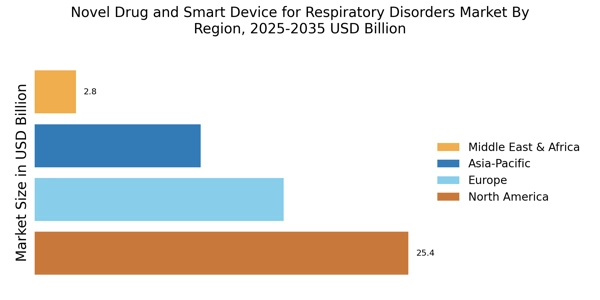
El mercado de Nuevos Fármacos y Dispositivos Inteligentes para Trastornos Respiratorios muestra una diversidad regional sustancial, con América del Norte liderando el mercado con una valoración de 20.0 mil millones de USD en 2023, que se espera que aumente a 34.8 mil millones de USD para 2032, mostrando su mayoría en la industria. Europa sigue con una valoración de 12.5 mil millones de USD en 2023 y un crecimiento pronosticado de 20.0 mil millones de USD, reflejando su demanda significativa de soluciones respiratorias innovadoras. La región de Asia-Pacífico está ganando terreno, valorada en 10.0 mil millones de USD en 2023, proyectando alcanzar 18.0 mil millones de USD debido al aumento de la prevalencia de enfermedades respiratorias.
Mientras tanto, América del Sur y Medio Oriente y África representan segmentos más pequeños pero notables, valorados en 4.0 mil millones de USD y 3.63 mil millones de USD en 2023, respectivamente. El crecimiento de América del Sur se ve impulsado por la mejora de la infraestructura sanitaria, mientras que la expansión de la región MEA se atribuye a una población en aumento con trastornos respiratorios. Esta segmentación destaca los datos del mercado de Nuevos Fármacos y Dispositivos Inteligentes para Trastornos Respiratorios, indicando áreas clave de crecimiento, desafíos y oportunidades que dan forma al panorama del mercado.

Fuente: Investigación Primaria, Investigación Secundaria, Base de Datos de MRFR y Revisión de Analistas
El mercado de Nuevos Fármacos y Dispositivos Inteligentes para Trastornos Respiratorios se caracteriza por una diversa gama de participantes, incluidas empresas farmacéuticas y firmas tecnológicas, cada una esforzándose por innovar y satisfacer las necesidades cambiantes de los pacientes y proveedores de atención médica. Este mercado se basa en la creciente prevalencia de trastornos respiratorios, lo que ha obligado a los interesados a invertir fuertemente en investigación y desarrollo para ofrecer terapias novedosas y dispositivos médicos avanzados.
Las dinámicas competitivas están impulsadas por varios factores, incluidos los avances en los sistemas de entrega de medicamentos, un enfoque en la medicina personalizada y la integración de tecnologías inteligentes que mejoran la gestión y adherencia del paciente. A medida que las empresas buscan diferenciar sus ofertas a través de propuestas de valor únicas, también navegan por desafíos regulatorios y un entorno de atención médica en rápida evolución que enfatiza los resultados y la rentabilidad.
Sanofi es un actor prominente en el mercado de Nuevos Fármacos y Dispositivos Inteligentes para Trastornos Respiratorios, aprovechando su sólida cartera de medicamentos diseñados para abordar diversas condiciones respiratorias. Las fortalezas de la empresa incluyen un fuerte compromiso con la innovación, respaldado por una inversión sustancial en investigación y desarrollo que le permite lanzar tratamientos de vanguardia.
Sanofi ha establecido una sólida reputación por su alcance global y esfuerzos colaborativos con profesionales de la salud para desarrollar soluciones terapéuticas personalizadas. Esto les ha ayudado a obtener una ventaja competitiva dentro del mercado, ya que se enfocan en mejorar los resultados de los pacientes a través de estrategias de tratamiento personalizadas y sistemas de entrega de medicamentos efectivos que incorporan tecnología inteligente. El legado de la empresa y su presencia establecida en el mercado demuestran aún más su capacidad para responder a los desafíos emergentes en el cuidado respiratorio.
Johnson y Johnson presenta un impacto igualmente significativo en el mercado de Nuevos Fármacos y Dispositivos Inteligentes para Trastornos Respiratorios, mostrando su amplia experiencia tanto en productos farmacéuticos como en dispositivos médicos avanzados. La fortaleza de la empresa radica en su cartera de productos integral, que atiende a una variedad de trastornos respiratorios, asegurando que satisfaga diversas necesidades de los pacientes a través de diferentes demografías.
El enfoque innovador de Johnson y Johnson se refleja en su inversión en tecnologías de salud inteligentes que mejoran la funcionalidad y la experiencia del usuario de los dispositivos respiratorios, promoviendo efectivamente la adherencia y el compromiso del paciente. Además, la sólida reputación que Johnson y Johnson ha construido a nivel global la posiciona favorablemente entre los proveedores de atención médica y los pacientes por igual, y su compromiso con mejorar la calidad de vida de las personas con trastornos respiratorios continúa impulsando su éxito en el mercado y su posicionamiento competitivo.






Los desarrollos recientes en el mercado de Nuevos Medicamentos y Dispositivos Inteligentes para Trastornos Respiratorios incluyen los avances continuos en terapias y tecnología destinados a mejorar los resultados para los pacientes. Empresas como Sanofi, Johnson & Johnson y GlaxoSmithKline están lanzando activamente soluciones innovadoras para abordar las condiciones respiratorias, enfatizando la necesidad de herramientas de gestión efectivas. Los asuntos actuales destacan la creciente demanda de dispositivos inteligentes que faciliten el monitoreo y la gestión en tiempo real de los trastornos respiratorios, con actores importantes como Merck & Co y Teva Pharmaceuticals invirtiendo en plataformas de salud digital.
Notablemente, AstraZeneca y Gilead Sciences han sido reconocidas por sus esfuerzos colaborativos en el desarrollo de terapias combinadas para mejorar la eficacia del tratamiento. En términos de fusiones y adquisiciones, la reciente estrategia de adquisición de Amgen centrada en integrar tratamientos respiratorios de vanguardia la posiciona competitivamente dentro del mercado.
Mientras tanto, Boehringer Ingelheim y Vertex Pharmaceuticals también han estado involucradas en asociaciones estratégicas para acelerar el desarrollo de nuevos medicamentos. La valoración del mercado para las empresas líderes se ve significativamente impactada por estas innovaciones y colaboraciones, reflejando una trayectoria de crecimiento robusta a medida que los interesados se esfuerzan por satisfacer las necesidades cambiantes de los pacientes en el cuidado respiratorio.
Se proyecta que el mercado de Nuevos Fármacos y Dispositivos Inteligentes para Trastornos Respiratorios crecerá a una Tasa de Crecimiento Anual Compuesto (CAGR) del 6.14% desde 2024 hasta 2035, impulsado por los avances tecnológicos y el aumento de la prevalencia de enfermedades respiratorias.
Nuevas oportunidades se encuentran en:
Para 2035, se espera que el mercado sea robusto, impulsado por la innovación y el aumento de la demanda.
| TAMAÑO DEL MERCADO 2024 | 56.48 (mil millones de USD) |
| TAMAÑO DEL MERCADO 2025 | 59.95 (mil millones de USD) |
| TAMAÑO DEL MERCADO 2035 | 108.8 (mil millones de USD) |
| TASA DE CRECIMIENTO ANUAL COMPUESTO (CAGR) | 6.14% (2024 - 2035) |
| COBERTURA DEL INFORME | Pronóstico de ingresos, panorama competitivo, factores de crecimiento y tendencias |
| AÑO BASE | 2024 |
| Período de Pronóstico del Mercado | 2025 - 2035 |
| Datos Históricos | 2019 - 2024 |
| Unidades de Pronóstico del Mercado | mil millones de USD |
| Empresas Clave Perfiladas | Análisis de mercado en progreso |
| Segmentos Cubiertos | Análisis de segmentación del mercado en progreso |
| Oportunidades Clave del Mercado | La integración de la inteligencia artificial en dispositivos inteligentes mejora el tratamiento personalizado de los trastornos respiratorios. |
| Dinámicas Clave del Mercado | El aumento de la demanda de terapias innovadoras y dispositivos inteligentes impulsa la competencia y el escrutinio regulatorio en la gestión de trastornos respiratorios. |
| Países Cubiertos | América del Norte, Europa, APAC, América del Sur, MEA |


Complete el formulario a continuación para recibir una muestra gratuita de este informe

“This is really good guys. Excellent work on a tight deadline. I will continue to use you going forward and recommend you to others. Nice job”


“Thanks. It’s been a pleasure working with you, please use me as reference with any other Intel employees.”


“Thanks for sending the report it gives us a good global view of the Betaïne market.”


“Thank you, this will be very helpful for OQS.”


“We found the report very insightful! we found your research firm very helpful. I'm sending this email to secure our future business.”


“I am very pleased with how market segments have been defined in a relevant way for my purposes (such as "Portable Freezers & refrigerators" and "last-mile"). In general the report is well structured. Thanks very much for your efforts.”


“I have been reading the first document or the study, ,the Global HVAC and FP market report 2021 till 2026. Must say, good info! I have not gone in depth at all parts, but got a good indication of the data inside!”


“We got the report in time, we really thank you for your support in this process. I also thank to all of your team as they did a great job.”


“The Automotive 48V ECU Components Procurement Intelligence Study” was a complex project, but the Market Research Future (MRFR) team handled it with quality, agility, and customer-centricity. They delivered all requested data on time and within the agreed scope. The team, including Shubhendra Anand and Rahul Gotadki, was always readily available to clarify questions and swiftly implement necessary adjustments, driving the project to a successful conclusion within a very demanding timeframe.
I would also like to specifically commend Akshay Agarwal for his responsiveness and support at every stage—from our initial inquiry on May 6th through to final delivery on June 18th. His dedication made the entire process seamless.”



