Request Free Sample ×

Kindly complete the form below to receive a free sample of this Report

* Please use a valid business email

Leading companies partner with us for data-driven Insights

clients tt-cursor
Hero Background

Polyglycolic Acid in the Oil and Gas Industry Market

ID: MRFR/CnM/35651-HCR
111 Pages
Chitranshi Jaiswal
Last Updated: May 21, 2026
Ácido poliglicólico in Informe de investigación de mercado de la industria del petróleo y el gas: por aplicación (fluidos de perforación, fracturación hidráulica, estimulación de pozos, revestimientos de tuberías), por uso final (en tierra, costa afuera), por tipo (suturas quirúrgicas, aplicaciones biomédicas, aditivos para petróleo y gas), por forma (gránulos, polvo, fibras) y por región (América del Norte, Europa, América del Sur, Asia Pacífico, Medio Oriente y África) - Previsión a 2035.
Download PDF ×

We do not share your information with anyone. However, we may send you emails based on your report interest from time to time. You may contact us at any time to opt-out.

  1. 1 SECCIÓN I: RESUMEN EJECUTIVO Y DESTACADOS CLAVE
    1. 1.1 RESUMEN EJECUTIVO
      1. 1.1.1 Descripción general del mercado
      2. 1.1.2 Hallazgos clave
      3. 1.1.3 Segmentación del mercado
      4. 1.1.4 Panorama competitivo
      5. 1.1.5 Desafíos y Oportunidades
      6. 1.1.6 Perspectivas futuras
  2. 2 SECCIÓN II: ALCANCE, METODOLOGÍA Y ESTRUCTURA DEL MERCADO
    1. 2.1 INTRODUCCIÓN AL MERCADO
      1. 2.1.1 Definición
      2. 2.1.2 Alcance del estudio
        1. 2.1.2.1 Objetivo de la investigación
        2. 2.1.2.2 Supuesto
  3. Limitaciones de 2.1.2.3
    1. 2.2 METODOLOGÍA DE INVESTIGACIÓN
      1. 2.2.1 Descripción general
      2. 2.2.2 Minería de datos
      3. 2.2.3 Investigación Secundaria
      4. 2.2.4 Investigación primaria
        1. 2.2.4.1 Entrevistas primarias y proceso de recopilación de información
        2. 2.2.4.2 Desglose de encuestados principales
      5. 2.2.5 Modelo de pronóstico
      6. 2.2.6 Estimación del tamaño del mercado
        1. 2.2.6.1 Enfoque ascendente
        2. 2.2.6.2 Enfoque de arriba hacia abajo
      7. 2.2.7 Triangulación de datos
      8. 2.2.8 Validación
  4. 3 SECCIÓN III: ANÁLISIS CUALITATIVO
    1. 3.1 DINÁMICA DEL MERCADO
  5. Descripción general de 3.1.1
  6. Controladores 3.1.2
  7. Restricciones 3.1.3
    1. 3.1.4 Oportunidades
    2. 3.2 ANÁLISIS DE FACTOR DE MERCADO
      1. 3.2.1 Análisis de la cadena de valor
      2. 3.2.2 Análisis de las cinco fuerzas de Porter
        1. 3.2.2.1 Poder de negociación de los proveedores
        2. 3.2.2.2 Poder de negociación de los compradores
        3. 3.2.2.3 Amenaza de nuevos participantes
        4. 3.2.2.4 Amenaza de sustitutos
        5. 3.2.2.5 Intensidad de la rivalidad
      3. 3.2.3 COVID-19 Análisis de impacto
        1. 3.2.3.1 Análisis de impacto en el mercado
        2. 3.2.3.2 Impacto regional
        3. 3.2.3.3 Análisis de oportunidades y amenazas
  8. 4 SECCIÓN IV: ANÁLISIS CUANTITATIVO
    1. 4.1 Productos químicos y materiales, POR aplicación (USD Millones)
      1. 4.1.1 Fluidos de perforación
      2. 4.1.2 Estimulación de pozo
      3. 4.1.3 Recuperación mejorada de petróleo
      4. 4.1.4 Recubrimientos para tuberías
    2. 4.2 Productos químicos y materiales, POR uso final (USD Millones)
      1. 4.2.1 En tierra
      2. 4.2.2 Costa afuera
      3. 4.2.3 Operaciones de Refinería
    3. 4.3 Productos químicos y materiales, POR tipo de formulación (USD Millones)
      1. 4.3.1 Soluciones acuosas
      2. 4.3.2 Emulsiones
      3. 4.3.3 Formas sólidas
    4. 4.4 Productos químicos y materiales, POR método de producción (USD Millones)
      1. 4.4.1 Polimerización
      2. 4.4.2 Síntesis química
      3. 4.4.3 Procesos biodegradables
    5. 4.5 Productos químicos y materiales, POR dinámica del mercado (USD Millones)
      1. 4.5.1 Factores de la cadena de suministro
      2. 4.5.2 Entorno regulatorio
      3. 4.5.3 Avances tecnológicos

    6. 4.6 Productos químicos y materiales, POR región (USD Millones)
      1. 4.6.1 Norteamérica
        1. 4.6.1.1 US
        2. 4.6.1.2 Canadá
      2. 4.6.2 Europa
        1. 4.6.2.1 Alemania
        2. 4.6.2.2 UK
        3. 4.6.2.3 Francia
        4. 4.6.2.4 Rusia
        5. 4.6.2.5 Italia
        6. 4.6.2.6 España
        7. 4.6.2.7 Resto de Europa
      3. 4.6.3 APAC
        1. 4.6.3.1 China
        2. 4.6.3.2 India
        3. 4.6.3.3 Japón
        4. 4.6.3.4 Corea del Sur
        5. 4.6.3.5 Malasia
        6. 4.6.3.6 Tailandia
        7. 4.6.3.7 Indonesia
        8. 4.6.3.8 Resto de APAC
      4. 4.6.4 América del Sur
        1. 4.6.4.1 Brasil
        2. 4.6.4.2 México
        3. 4.6.4.3 Argentina
        4. 4.6.4.4 Resto de Sudamérica
      5. 4.6.5 MEA
        1. 4.6.5.1 Países del CCG
        2. 4.6.5.2 Sudáfrica
        3. 4.6.5.3 Resto de MEA
  9. 5 SECCIÓN V: ANÁLISIS COMPETITIVO
    1. 5.1 Panorama competitivo
  10. Descripción general de 5.1.1
    1. 5.1.2 Análisis competitivo
    2. 5.1.3 Análisis de cuota de mercado
    3. 5.1.4 Importante estrategia de crecimiento en los productos químicos y materiales
    4. 5.1.5 Evaluación comparativa competitiva
    5. 5.1.6 Actores Líderes in Términos de Número de Desarrollos en los Productos Químicos y Materiales
    6. 5.1.7 Desarrollos clave y estrategias de crecimiento
      1. 5.1.7.1 Lanzamiento de nuevo producto/implementación de servicio
      2. 5.1.7.2 Fusiones y Adquisiciones
      3. 5.1.7.3 Empresas conjuntas
    7. 5.1.8 Matriz financiera de los principales actores
      1. 5.1.8.1 Ventas e ingresos operativos
      2. 5.1.8.2 Gasto en I+D de los principales actores. 2023
    8. 5.2 Perfiles de empresa
      1. 5.2.1 BASF SE (DE)
        1. 5.2.1.1 Resumen financiero
        2. 5.2.1.2 Productos Ofrecidos
        3. 5.2.1.3 Desarrollos clave
        4. 5.2.1.4 Análisis FODA
        5. 5.2.1.5 Estrategias clave
      2. 5.2.2 E. I. du Pont de Nemours y Compañía (US)
        1. 5.2.2.1 Resumen financiero
        2. 5.2.2.2 Productos Ofrecidos
        3. 5.2.2.3 Desarrollos clave
        4. 5.2.2.4 Análisis FODA
        5. 5.2.2.5 Estrategias clave
      3. 5.2.3 Mitsubishi Chemical Corporation (JP)
        1. 5.2.3.1 Resumen financiero
        2. 5.2.3.2 Productos ofrecidos
        3. 5.2.3.3 Desarrollos clave
        4. 5.2.3.4 Análisis FODA
        5. 5.2.3.5 Estrategias clave
      4. 5.2.4 Teijin Limitado (JP)
        1. 5.2.4.1 Resumen financiero
        2. 5.2.4.2 Productos Ofrecidos
        3. 5.2.4.3 Desarrollos clave
        4. 5.2.4.4 Análisis FODA
        5. 5.2.4.5 Estrategias clave
      5. 5.2.5 Corbion N.V. (NL)
        1. 5.2.5.1 Resumen financiero
        2. 5.2.5.2 Productos Ofrecidos
        3. 5.2.5.3 Desarrollos clave
        4. 5.2.5.4 Análisis FODA
        5. 5.2.5.5 Estrategias clave
      6. 5.2.6 NatureWorks LLC (US)
        1. 5.2.6.1 Resumen financiero
        2. 5.2.6.2 Productos Ofrecidos
        3. 5.2.6.3 Desarrollos clave
        4. 5.2.6.4 FODA Análisis
        5. 5.2.6.5 Estrategias clave
      7. 5.2.7 Futerro (BE)
        1. 5.2.7.1 Resumen financiero
        2. 5.2.7.2 Productos Ofrecidos
        3. 5.2.7.3 Desarrollos clave
        4. 5.2.7.4 Análisis FODA
        5. 5.2.7.5 Estrategias clave
      8. 5.2.8 Corporación Kraton (US)
        1. 5.2.8.1 Resumen financiero
        2. 5.2.8.2 Productos Ofrecidos
        3. 5.2.8.3 Desarrollos clave
        4. 5.2.8.4 Análisis FODA
        5. 5.2.8.5 Estrategias clave
      9. 5.2.9 Boehringer Ingelheim GmbH (DE)
        1. 5.2.9.1 Resumen financiero
        2. 5.2.9.2 Productos Ofrecidos
        3. 5.2.9.3 Desarrollos clave
        4. 5.2.9.4 Análisis FODA
        5. 5.2.9.5 Estrategias clave
    9. 5.3 Apéndice
      1. 5.3.1 Referencias
      2. 5.3.2 Informes relacionados
  11. 6 LISTA DE CIFRAS
    1. 6.1 SINOPSIS DEL MERCADO
    2. 6.2 ANÁLISIS DEL MERCADO DE AMÉRICA DEL NORTE
    3. 6.3 US ANÁLISIS DE MERCADO POR APLICACIÓN
    4. 6.4 US ANÁLISIS DE MERCADO POR USO FINAL
    5. 6.5 US ANÁLISIS DE MERCADO POR TIPO DE FORMULACIÓN
    6. 6.6 US ANÁLISIS DE MERCADO POR MÉTODO DE PRODUCCIÓN
    7. 6.7 US ANÁLISIS DE MERCADO POR DINÁMICA DEL MERCADO
    8. 6.8 ANÁLISIS DEL MERCADO DE CANADÁ POR APLICACIÓN
    9. 6.9 ANÁLISIS DEL MERCADO DE CANADÁ POR USO FINAL
    10. 6.10 ANÁLISIS DEL MERCADO DE CANADÁ POR TIPO DE FORMULACIÓN
    11. 6.11 ANÁLISIS DEL MERCADO DE CANADÁ POR MÉTODO DE PRODUCCIÓN
    12. 6.12 ANÁLISIS DEL MERCADO DE CANADÁ POR DINÁMICA DEL MERCADO
    13. 6.13 ANÁLISIS DEL MERCADO EUROPEO
    14. 6.14 ANÁLISIS DEL MERCADO DE ALEMANIA POR APLICACIÓN
    15. 6.15 ANÁLISIS DEL MERCADO DE ALEMANIA POR USO FINAL
    16. 6.16 ANÁLISIS DEL MERCADO DE ALEMANIA POR TIPO DE FORMULACIÓN
    17. 6.17 ANÁLISIS DEL MERCADO DE ALEMANIA POR MÉTODO DE PRODUCCIÓN
    18. 6.18 ANÁLISIS DEL MERCADO DE ALEMANIA POR DINÁMICA DEL MERCADO
    19. 6.19 UK ANÁLISIS DE MERCADO POR APLICACIÓN
    20. 6.20 UK ANÁLISIS DE MERCADO POR USO FINAL
    21. 6.21 UK ANÁLISIS DE MERCADO POR TIPO DE FORMULACIÓN
    22. 6.22 UK ANÁLISIS DE MERCADO POR MÉTODO DE PRODUCCIÓN
    23. 6.23 UK ANÁLISIS DE MERCADO POR DINÁMICA DEL MERCADO
    24. 6.24 ANÁLISIS DEL MERCADO DE FRANCIA POR APLICACIÓN
    25. 6.25 ANÁLISIS DEL MERCADO DE FRANCIA POR USO FINAL
    26. 6.26 ANÁLISIS DEL MERCADO DE FRANCIA POR TIPO DE FORMULACIÓN | 6.27 ANÁLISIS DEL MERCADO DE FRANCIA POR MÉTODO DE PRODUCCIÓN
    27. 6.28 ANÁLISIS DEL MERCADO DE FRANCIA POR DINÁMICA DEL MERCADO
    28. 6.29 ANÁLISIS DEL MERCADO DE RUSIA POR APLICACIÓN
    29. 6.30 ANÁLISIS DEL MERCADO DE RUSIA POR USO FINAL
    30. 6.31 ANÁLISIS DEL MERCADO DE RUSIA POR TIPO DE FORMULACIÓN
    31. 6.32 ANÁLISIS DEL MERCADO DE RUSIA POR MÉTODO DE PRODUCCIÓN
    32. 6.33 ANÁLISIS DEL MERCADO DE RUSIA POR DINÁMICA DEL MERCADO
    33. 6.34 ANÁLISIS DEL MERCADO DE ITALIA POR APLICACIÓN
    34. 6.35 ANÁLISIS DEL MERCADO DE ITALIA POR USO FINAL
    35. 6.36 ANÁLISIS DEL MERCADO DE ITALIA POR TIPO DE FORMULACIÓN
    36. 6.37 ANÁLISIS DEL MERCADO DE ITALIA POR MÉTODO DE PRODUCCIÓN
    37. 6.38 ANÁLISIS DEL MERCADO DE ITALIA POR DINÁMICA DEL MERCADO
    38. 6.39 ANÁLISIS DEL MERCADO DE ESPAÑA POR APLICACIÓN
    39. 6.40 ANÁLISIS DEL MERCADO ESPAÑA POR USO FINAL
    40. 6.41 ANÁLISIS DEL MERCADO DE ESPAÑA POR TIPO DE FORMULACIÓN
    41. 6.42 ANÁLISIS DEL MERCADO DE ESPAÑA POR MÉTODO DE PRODUCCIÓN
    42. 6.43 ANÁLISIS DEL MERCADO DE ESPAÑA POR DINÁMICA DEL MERCADO
    43. 6.44 RESTO DE EUROPA ANÁLISIS DE MERCADO POR APLICACIÓN
    44. 6.45 RESTO DE EUROPA ANÁLISIS DE MERCADO POR USO FINAL | 6.46 ANÁLISIS DEL MERCADO DEL RESTO DE EUROPA POR TIPO DE FORMULACIÓN
    45. 6.47 ANÁLISIS DE MERCADO DEL RESTO DE EUROPA POR MÉTODO DE ELABORACIÓN
    46. 6.48 ANÁLISIS DE MERCADO DEL RESTO DE EUROPA POR DINÁMICA DEL MERCADO
    47. 6.49 APAC ANÁLISIS DE MERCADO
    48. 6.50 ANÁLISIS DEL MERCADO CHINA POR APLICACIÓN
    49. 6.51 ANÁLISIS DEL MERCADO CHINA POR USO FINAL
    50. 6.52 ANÁLISIS DEL MERCADO CHINA POR TIPO DE FORMULACIÓN
    51. 6.53 ANÁLISIS DEL MERCADO CHINA POR MÉTODO DE PRODUCCIÓN
    52. 6.54 ANÁLISIS DEL MERCADO CHINA POR DINÁMICA DEL MERCADO
    53. 6.55 ANÁLISIS DEL MERCADO DE LA INDIA POR APLICACIÓN
    54. 6.56 ANÁLISIS DEL MERCADO DE LA INDIA POR USO FINAL
    55. 6.57 ANÁLISIS DEL MERCADO DE INDIA POR TIPO DE FORMULACIÓN
    56. 6.58 ANÁLISIS DEL MERCADO DE LA INDIA POR MÉTODO DE PRODUCCIÓN
    57. 6.59 ANÁLISIS DEL MERCADO DE LA INDIA POR DINÁMICA DEL MERCADO
    58. 6.60 ANÁLISIS DEL MERCADO JAPÓN POR APLICACIÓN
    59. 6.61 ANÁLISIS DEL MERCADO JAPÓN POR USO FINAL
    60. 6.62 ANÁLISIS DEL MERCADO JAPÓN POR TIPO DE FORMULACIÓN
    61. 6.63 ANÁLISIS DEL MERCADO JAPÓN POR MÉTODO DE PRODUCCIÓN
    62. 6.64 ANÁLISIS DEL MERCADO JAPÓN POR DINÁMICA DEL MERCADO
    63. 6.65 ANÁLISIS DEL MERCADO DE COREA DEL SUR POR APLICACIÓN
    64. 6.66 ANÁLISIS DEL MERCADO DE COREA DEL SUR POR USO FINAL
    65. 6.67 ANÁLISIS DEL MERCADO DE COREA DEL SUR POR TIPO DE FORMULACIÓN
    66. 6.68 ANÁLISIS DEL MERCADO DE COREA DEL SUR POR MÉTODO DE PRODUCCIÓN
    67. 6.69 ANÁLISIS DEL MERCADO DE COREA DEL SUR POR DINÁMICA DEL MERCADO
    68. 6.70 ANÁLISIS DEL MERCADO DE MALASIA POR APLICACIÓN
    69. 6.71 ANÁLISIS DEL MERCADO DE MALASIA POR USO FINAL
    70. 6.72 ANÁLISIS DEL MERCADO DE MALASIA POR TIPO DE FORMULACIÓN
    71. 6.73 ANÁLISIS DEL MERCADO DE MALASIA POR MÉTODO DE PRODUCCIÓN
    72. 6.74 ANÁLISIS DEL MERCADO DE MALASIA POR DINÁMICA DEL MERCADO
    73. 6.75 ANÁLISIS DEL MERCADO DE TAILANDIA POR APLICACIÓN
    74. 6.76 ANÁLISIS DEL MERCADO DE TAILANDIA POR USO FINAL
    75. 6.77 ANÁLISIS DEL MERCADO DE TAILANDIA POR TIPO DE FORMULACIÓN
    76. 6.78 ANÁLISIS DEL MERCADO DE TAILANDIA POR MÉTODO DE PRODUCCIÓN
    77. 6.79 ANÁLISIS DEL MERCADO DE TAILANDIA POR DINÁMICA DEL MERCADO
    78. 6.80 ANÁLISIS DEL MERCADO DE INDONESIA POR APLICACIÓN
    79. 6.81 ANÁLISIS DEL MERCADO DE INDONESIA POR USO FINAL
    80. 6.82 ANÁLISIS DEL MERCADO DE INDONESIA POR TIPO DE FORMULACIÓN
    81. 6.83 ANÁLISIS DEL MERCADO DE INDONESIA POR MÉTODO DE PRODUCCIÓN
    82. 6.84 ANÁLISIS DEL MERCADO DE INDONESIA POR DINÁMICA DEL MERCADO
    83. 6.85 RESTO DE APAC ANÁLISIS DE MERCADO POR APLICACIÓN
    84. 6.86 RESTO DE APAC ANÁLISIS DE MERCADO POR USO FINAL
    85. 6.87 RESTO DE APAC ANÁLISIS DE MERCADO POR TIPO DE FORMULACIÓN
    86. 6.88 RESTO DE APAC ANÁLISIS DE MERCADO POR MÉTODO DE PRODUCCIÓN
    87. 6.89 RESTO DE APAC ANÁLISIS DE MERCADO POR DINÁMICA DEL MERCADO
    88. 6.90 ANÁLISIS DEL MERCADO DE AMÉRICA DEL SUR
    89. 6.91 ANÁLISIS DEL MERCADO DE BRASIL POR APLICACIÓN
    90. 6.92 ANÁLISIS DEL MERCADO BRASIL POR USO FINAL
    91. 6.93 ANÁLISIS DEL MERCADO DE BRASIL POR TIPO DE FORMULACIÓN
    92. 6.94 ANÁLISIS DEL MERCADO BRASIL POR MÉTODO DE PRODUCCIÓN
    93. 6.95 ANÁLISIS DEL MERCADO DE BRASIL POR DINÁMICA DEL MERCADO
    94. 6.96 ANÁLISIS DEL MERCADO MÉXICO POR APLICACIÓN
    95. 6.97 ANÁLISIS DEL MERCADO MÉXICO POR USO FINAL
    96. 6.98 ANÁLISIS DEL MERCADO MÉXICO POR TIPO DE FORMULACIÓN
    97. 6.99 ANÁLISIS DEL MERCADO MÉXICO POR MÉTODO DE PRODUCCIÓN
    98. 6.100 ANÁLISIS DEL MERCADO MÉXICO POR DINÁMICA DEL MERCADO
    99. 6.101 ARGENTINA ANÁLISIS DE MERCADO POR APLICACIÓN
    100. 6.102 ANÁLISIS DEL MERCADO ARGENTINO POR USO FINAL
    101. 6.103 ANÁLISIS DEL MERCADO ARGENTINO POR TIPO DE FORMULACIÓN
    102. 6.104 ANÁLISIS DEL MERCADO ARGENTINO POR MÉTODO DE PRODUCCIÓN
    103. 6.105 ANÁLISIS DEL MERCADO ARGENTINO POR DINÁMICA DEL MERCADO
    104. 6.106 ANÁLISIS DE MERCADO RESTO DE SUDAMÉRICA POR APLICACIÓN
    105. 6.107 ANÁLISIS DEL MERCADO RESTO DE SUDAMÉRICA POR USO FINAL
    106. 6.108 ANÁLISIS DEL MERCADO DEL RESTO DE SUDAMÉRICA POR TIPO DE FORMULACIÓN
    107. 6.109 ANÁLISIS DEL MERCADO DEL RESTO DE SUDAMÉRICA POR MÉTODO DE PRODUCCIÓN
    108. 6.110 ANÁLISIS DE MERCADO RESTO DE SUDAMÉRICA POR DINÁMICA DEL MERCADO
    109. 6.111 MEA ANÁLISIS DE MERCADO
    110. 6.112 ANÁLISIS DEL MERCADO DE LOS PAÍSES DEL CCG POR APLICACIÓN
    111. 6.113 ANÁLISIS DEL MERCADO DE LOS PAÍSES DEL CCG POR USO FINAL
    112. 6.114 ANÁLISIS DEL MERCADO DE LOS PAÍSES DEL CCG POR TIPO DE FORMULACIÓN
    113. 6.115 ANÁLISIS DEL MERCADO DE LOS PAÍSES DEL CCG POR MÉTODO DE PRODUCCIÓN
    114. 6.116 ANÁLISIS DEL MERCADO DE LOS PAÍSES DEL CCG POR DINÁMICA DEL MERCADO
    115. 6.117 ANÁLISIS DEL MERCADO DE SUDÁFRICA POR APLICACIÓN
    116. 6.118 ANÁLISIS DEL MERCADO DE SUDÁFRICA POR USO FINAL
    117. 6.119 ANÁLISIS DEL MERCADO DE SUDÁFRICA POR TIPO DE FORMULACIÓN
    118. 6.120 ANÁLISIS DEL MERCADO DE SUDÁFRICA POR MÉTODO DE PRODUCCIÓN
    119. 6.121 ANÁLISIS DEL MERCADO DE SUDÁFRICA POR DINÁMICA DEL MERCADO
    120. 6.122 RESTO DE MEA ANÁLISIS DE MERCADO POR APLICACIÓN
    121. 6.123 RESTO DE MEA ANÁLISIS DE MERCADO POR USO FINAL
    122. 6.124 RESTO DE MEA ANÁLISIS DE MERCADO POR TIPO DE FORMULACIÓN
    123. 6.125 RESTO DE MEA ANÁLISIS DE MERCADO POR MÉTODO DE PRODUCCIÓN
    124. 6.126 RESTO DE MEA ANÁLISIS DE MERCADO POR DINÁMICA DEL MERCADO
    125. 6.127 CRITERIOS CLAVE DE COMPRA DE QUÍMICOS Y MATERIALES
    126. 6.128 PROCESO DE INVESTIGACIÓN DE MRFR
    127. 6.129 ANÁLISIS DRO DE PRODUCTOS QUÍMICOS Y MATERIALES
    128. 6.130 ANÁLISIS DE IMPACTO DE LOS IMPULSORES: QUÍMICOS Y MATERIALES
    129. 6.131 ANÁLISIS DE IMPACTO DE LAS RESTRICCIONES: QUÍMICOS Y MATERIALES
    130. 6.132 CADENA DE SUMINISTRO / VALOR: QUÍMICOS Y MATERIALES
    131. 6.133 PRODUCTOS QUÍMICOS Y MATERIALES, POR APLICACIÓN, 2024 (% DE PARTICIPACIÓN)
    132. 6.134 PRODUCTOS QUÍMICOS Y MATERIALES, POR APLICACIÓN, 2024 A 2035 (USD Million)
    133. 6.135 PRODUCTOS QUÍMICOS Y MATERIALES, POR USO FINAL, 2024 (% DE PARTICIPACIÓN)
    134. 6.136 PRODUCTOS QUÍMICOS Y MATERIALES, POR USO FINAL, 2024 A 2035 (USD Million)
    135. 6.137 PRODUCTOS QUÍMICOS Y MATERIALES, POR TIPO DE FORMULACIÓN, 2024 (% DE PARTICIPACIÓN)
    136. 6.138 PRODUCTOS QUÍMICOS Y MATERIALES, POR TIPO DE FORMULACIÓN, 2024 A 2035 (USD Million)
    137. 6.139 PRODUCTOS QUÍMICOS Y MATERIALES, POR MÉTODO DE PRODUCCIÓN, 2024 (% DE PARTICIPACIÓN)
    138. 6.140 PRODUCTOS QUÍMICOS Y MATERIALES, POR MÉTODO DE PRODUCCIÓN, 2024 A 2035 (USD Million)
    139. 6.141 PRODUCTOS QUÍMICOS Y MATERIALES, POR DINÁMICA DEL MERCADO, 2024 (% DE PARTICIPACIÓN)
    140. 6.142 PRODUCTOS QUÍMICOS Y MATERIALES, POR DINÁMICA DEL MERCADO, 2024 A 2035 (USD Million)
    141. 6.143 COMPARACIÓN DE LOS PRINCIPALES COMPETIDORES
  12. 7 LISTA DE TABLAS
    1. 7.1 LISTA DE SUPUESTOS
      1. 7.1.1 | 7.2 ESTIMACIONES DEL TAMAÑO DEL MERCADO DE América del Norte; PRONÓSTICO
      2. 7.2.1 POR APLICACIÓN, 2025-2035 (USD Millones)
      3. 7.2.2 POR USO FINAL, 2025-2035 (USD Millones)
      4. 7.2.3 POR TIPO DE FORMULACIÓN, 2025-2035 (USD Millones)
      5. 7.2.4 POR MÉTODO DE PRODUCCIÓN, 2025-2035 (USD Millones)
      6. 7.2.5 POR DINÁMICA DEL MERCADO, 2025-2035 (USD Millones)
    2. 7.3 US ESTIMACIONES DEL TAMAÑO DEL MERCADO; PRONÓSTICO
      1. 7.3.1 POR APLICACIÓN, 2025-2035 (USD Millones)
      2. 7.3.2 POR USO FINAL, 2025-2035 (USD Millones)
      3. 7.3.3 POR TIPO DE FORMULACIÓN, 2025-2035 (USD Millones)
      4. 7.3.4 POR MÉTODO DE PRODUCCIÓN, 2025-2035 (USD Millones)
      5. 7.3.5 POR DINÁMICA DEL MERCADO, 2025-2035 (USD Millones)
    3. 7.4 ESTIMACIONES DEL TAMAÑO DEL MERCADO DE CANADÁ; PRONÓSTICO
      1. 7.4.1 POR APLICACIÓN, 2025-2035 (USD Millones)
      2. 7.4.2 POR USO FINAL, 2025-2035 (USD Millones)
      3. 7.4.3 POR TIPO DE FORMULACIÓN, 2025-2035 (USD Millones)
      4. 7.4.4 POR MÉTODO DE PRODUCCIÓN, 2025-2035 (USD Millones)
      5. 7.4.5 POR DINÁMICA DEL MERCADO, 2025-2035 (USD Millones)
    4. 7.5 ESTIMACIONES DEL TAMAÑO DEL MERCADO DE Europa; PRONÓSTICO
      1. 7.5.1 POR APLICACIÓN, 2025-2035 (USD Millones)
      2. 7.5.2 POR USO FINAL, 2025-2035 (USD Millones)
      3. 7.5.3 POR TIPO DE FORMULACIÓN, 2025-2035 (USD Millones)
      4. 7.5.4 POR MÉTODO DE PRODUCCIÓN, 2025-2035 (USD Millones)
      5. 7.5.5 POR DINÁMICA DEL MERCADO, 2025-2035 (USD Millones)
    5. 7.6 ESTIMACIONES DEL TAMAÑO DEL MERCADO DE Alemania; PRONÓSTICO
      1. 7.6.1 POR APLICACIÓN, 2025-2035 (USD Millones)
      2. 7.6.2 POR USO FINAL, 2025-2035 (USD Millones)
      3. 7.6.3 POR TIPO DE FORMULACIÓN, 2025-2035 (USD Millones)
      4. 7.6.4 POR MÉTODO DE PRODUCCIÓN, 2025-2035 (USD Millones)
      5. 7.6.5 POR DINÁMICA DEL MERCADO, 2025-2035 (USD Millones)
    6. 7.7 UK ESTIMACIONES DEL TAMAÑO DEL MERCADO; PRONÓSTICO
      1. 7.7.1 POR APLICACIÓN, 2025-2035 (USD Millones)
      2. 7.7.2 POR USO FINAL, 2025-2035 (USD Millones)
      3. 7.7.3 POR TIPO DE FORMULACIÓN, 2025-2035 (USD Millones)
      4. 7.7.4 POR MÉTODO DE PRODUCCIÓN, 2025-2035 (USD Millones)
      5. 7.7.5 POR DINÁMICA DEL MERCADO, 2025-2035 (USD Millones)
    7. 7.8 ESTIMACIONES DEL TAMAÑO DEL MERCADO DE Francia; PRONÓSTICO
      1. 7.8.1 POR APLICACIÓN, 2025-2035 (USD Millones)
      2. 7.8.2 POR USO FINAL, 2025-2035 (USD Millones)
      3. 7.8.3 POR TIPO DE FORMULACIÓN, 2025-2035 (USD Millones)
      4. 7.8.4 POR MÉTODO DE PRODUCCIÓN, 2025-2035 (USD Millones)
      5. 7.8.5 POR DINÁMICA DEL MERCADO, 2025-2035 (USD Millones)
    8. 7.9 ESTIMACIONES DEL TAMAÑO DEL MERCADO DE Rusia; PRONÓSTICO
      1. 7.9.1 POR APLICACIÓN, 2025-2035 (USD Millones)
      2. 7.9.2 POR USO FINAL, 2025-2035 (USD Millones)
      3. 7.9.3 POR TIPO DE FORMULACIÓN, 2025-2035 (USD Millones)
      4. 7.9.4 POR MÉTODO DE PRODUCCIÓN, 2025-2035 (USD Millones)
      5. 7.9.5 POR DINÁMICA DEL MERCADO, 2025-2035 (USD Millones)
    9. 7.10 ESTIMACIONES DEL TAMAÑO DEL MERCADO DE Italia; PRONÓSTICO
      1. 7.10.1 POR APLICACIÓN, 2025-2035 (USD Millones)
      2. 7.10.2 POR USO FINAL, 2025-2035 (USD Millones)
      3. 7.10.3 POR TIPO DE FORMULACIÓN, 2025-2035 (USD Millones)
      4. 7.10.4 POR MÉTODO DE PRODUCCIÓN, 2025-2035 (USD Millones)
      5. 7.10.5 POR DINÁMICA DEL MERCADO, 2025-2035 (USD Millones)
    10. 7.11 ESTIMACIONES DEL TAMAÑO DEL MERCADO EN ESPAÑA; PRONÓSTICO
      1. 7.11.1 POR APLICACIÓN, 2025-2035 (USD Millones)
      2. 7.11.2 POR USO FINAL, 2025-2035 (USD Millones)
      3. 7.11.3 POR TIPO DE FORMULACIÓN, 2025-2035 (USD Millones)
      4. 7.11.4 POR MÉTODO DE PRODUCCIÓN, 2025-2035 (USD Millones)
      5. 7.11.5 POR DINÁMICA DEL MERCADO, 2025-2035 (USD Millones)
    11. 7.12 Resto de Europa ESTIMACIONES DEL TAMAÑO DEL MERCADO; PRONÓSTICO
      1. 7.12.1 POR APLICACIÓN, 2025-2035 (USD Millones)
      2. 7.12.2 POR USO FINAL, 2025-2035 (USD Millones)
      3. 7.12.3 POR TIPO DE FORMULACIÓN, 2025-2035 (USD Millones)
      4. 7.12.4 POR MÉTODO DE PRODUCCIÓN, 2025-2035 (USD Millones)
      5. 7.12.5 POR DINÁMICA DEL MERCADO, 2025-2035 (USD Millones)
    12. 7.13 APAC ESTIMACIONES DEL TAMAÑO DEL MERCADO; PRONÓSTICO
      1. 7.13.1 POR APLICACIÓN, 2025-2035 (USD Millones)
      2. 7.13.2 POR USO FINAL, 2025-2035 (USD Millones)
      3. 7.13.3 POR TIPO DE FORMULACIÓN, 2025-2035 (USD Millones)
      4. 7.13.4 POR MÉTODO DE PRODUCCIÓN, 2025-2035 (USD Millones)
      5. 7.13.5 POR DINÁMICA DEL MERCADO, 2025-2035 (USD Millones)
    13. 7.14 ESTIMACIONES DEL TAMAÑO DEL MERCADO DE China; PRONÓSTICO
      1. 7.14.1 POR APLICACIÓN, 2025-2035 (USD Millones)
      2. 7.14.2 POR USO FINAL, 2025-2035 (USD Millones)
      3. 7.14.3 POR TIPO DE FORMULACIÓN, 2025-2035 (USD Millones)
      4. 7.14.4 POR MÉTODO DE PRODUCCIÓN, 2025-2035 (USD Millones)
      5. 7.14.5 POR DINÁMICA DEL MERCADO, 2025-2035 (USD Millones)
    14. 7.15 India ESTIMACIONES DEL TAMAÑO DEL MERCADO; PRONÓSTICO
      1. 7.15.1 POR APLICACIÓN, 2025-2035 (USD Millones)
      2. 7.15.2 POR USO FINAL, 2025-2035 (USD Millones)
      3. 7.15.3 POR TIPO DE FORMULACIÓN, 2025-2035 (USD Millones)
      4. 7.15.4 POR MÉTODO DE PRODUCCIÓN, 2025-2035 (USD Millones)
      5. 7.15.5 POR DINÁMICA DEL MERCADO, 2025-2035 (USD Millones)
    15. 7.16 ESTIMACIONES DEL TAMAÑO DEL MERCADO DE Japón; PRONÓSTICO
      1. 7.16.1 POR APLICACIÓN, 2025-2035 (USD Millones)
      2. 7.16.2 POR USO FINAL, 2025-2035 (USD Millones)
      3. 7.16.3 POR TIPO DE FORMULACIÓN, 2025-2035 (USD Millones)
      4. 7.16.4 POR MÉTODO DE PRODUCCIÓN, 2025-2035 (USD Millones)
      5. 7.16.5 POR DINÁMICA DEL MERCADO, 2025-2035 (USD Millones)
    16. 7.17 ESTIMACIONES DEL TAMAÑO DEL MERCADO DE Corea del Sur; PRONÓSTICO
      1. 7.17.1 POR APLICACIÓN, 2025-2035 (USD Millones)
      2. 7.17.2 POR USO FINAL, 2025-2035 (USD Millones)
      3. 7.17.3 POR TIPO DE FORMULACIÓN, 2025-2035 (USD Millones)
      4. 7.17.4 POR MÉTODO DE PRODUCCIÓN, 2025-2035 (USD Millones)
      5. 7.17.5 POR DINÁMICA DEL MERCADO, 2025-2035 (USD Millones)
    17. 7.18 ESTIMACIONES DEL TAMAÑO DEL MERCADO DE Malasia; PRONÓSTICO
      1. 7.18.1 POR APLICACIÓN, 2025-2035 (USD Millones)
      2. 7.18.2 POR USO FINAL, 2025-2035 (USD Millones)
      3. 7.18.3 POR TIPO DE FORMULACIÓN, 2025-2035 (USD Millones)
      4. 7.18.4 POR MÉTODO DE PRODUCCIÓN, 2025-2035 (USD Millones)
      5. 7.18.5 POR DINÁMICA DEL MERCADO, 2025-2035 (USD Millones)
    18. 7.19 ESTIMACIONES DEL TAMAÑO DEL MERCADO DE Tailandia; PRONÓSTICO
      1. 7.19.1 POR APLICACIÓN, 2025-2035 (USD Millones)
      2. 7.19.2 POR USO FINAL, 2025-2035 (USD Millones)
      3. 7.19.3 POR TIPO DE FORMULACIÓN, 2025-2035 (USD Millones)
      4. 7.19.4 POR MÉTODO DE PRODUCCIÓN, 2025-2035 (USD Millones)
      5. 7.19.5 POR DINÁMICA DEL MERCADO, 2025-2035 (USD Millones)
    19. 7.20 ESTIMACIONES DEL TAMAÑO DEL MERCADO DE Indonesia; PRONÓSTICO
      1. 7.20.1 POR APLICACIÓN, 2025-2035 (USD Millones)
      2. 7.20.2 POR USO FINAL, 2025-2035 (USD Millones)
      3. 7.20.3 POR TIPO DE FORMULACIÓN, 2025-2035 (USD Millones)
      4. 7.20.4 POR MÉTODO DE PRODUCCIÓN, 2025-2035 (USD Millones)
      5. 7.20.5 POR DINÁMICA DEL MERCADO, 2025-2035 (USD Millones)
    20. 7.21 Resto de APAC ESTIMACIONES DE TAMAÑO DEL MERCADO; PRONÓSTICO
      1. 7.21.1 POR APLICACIÓN, 2025-2035 (USD Millones)
      2. 7.21.2 POR USO FINAL, 2025-2035 (USD Millones)
      3. 7.21.3 POR TIPO DE FORMULACIÓN, 2025-2035 (USD Millones)
      4. 7.21.4 POR MÉTODO DE PRODUCCIÓN, 2025-2035 (USD Millones)
      5. 7.21.5 POR DINÁMICA DEL MERCADO, 2025-2035 (USD Millones)
    21. 7.22 ESTIMACIONES DEL TAMAÑO DEL MERCADO DE América del Sur; PRONÓSTICO
      1. 7.22.1 POR APLICACIÓN, 2025-2035 (USD Millones)
      2. 7.22.2 POR USO FINAL, 2025-2035 (USD Millones)
      3. 7.22.3 POR TIPO DE FORMULACIÓN, 2025-2035 (USD Millones)
      4. 7.22.4 POR MÉTODO DE PRODUCCIÓN, 2025-2035 (USD Millones)
      5. 7.22.5 POR DINÁMICA DEL MERCADO, 2025-2035 (USD Millones)
    22. 7.23 ESTIMACIONES DEL TAMAÑO DEL MERCADO DE Brasil; PRONÓSTICO
      1. 7.23.1 POR APLICACIÓN, 2025-2035 (USD Millones)
      2. 7.23.2 POR USO FINAL, 2025-2035 (USD Millones)
      3. 7.23.3 POR TIPO DE FORMULACIÓN, 2025-2035 (USD Millones)
      4. 7.23.4 POR MÉTODO DE PRODUCCIÓN, 2025-2035 (USD Millones)
      5. 7.23.5 POR DINÁMICA DEL MERCADO, 2025-2035 (USD Millones)
    23. 7.24 ESTIMACIONES DEL TAMAÑO DEL MERCADO DE México; PRONÓSTICO
      1. 7.24.1 POR APLICACIÓN, 2025-2035 (USD Millones)
      2. 7.24.2 POR USO FINAL, 2025-2035 (USD Millones)
      3. 7.24.3 POR TIPO DE FORMULACIÓN, 2025-2035 (USD Millones)
      4. 7.24.4 POR MÉTODO DE PRODUCCIÓN, 2025-2035 (USD Millones)
      5. 7.24.5 POR DINÁMICA DEL MERCADO, 2025-2035 (USD Millones)
    24. 7.25 ESTIMACIONES DEL TAMAÑO DEL MERCADO DE Argentina; PRONÓSTICO
      1. 7.25.1 POR APLICACIÓN, 2025-2035 (USD Millones)
      2. 7.25.2 POR USO FINAL, 2025-2035 (USD Millones)
      3. 7.25.3 POR TIPO DE FORMULACIÓN, 2025-2035 (USD Millones)
      4. 7.25.4 POR MÉTODO DE PRODUCCIÓN, 2025-2035 (USD Millones)
      5. 7.25.5 POR DINÁMICA DEL MERCADO, 2025-2035 (USD Millones)
    25. 7.26 Resto de Sudamérica ESTIMACIONES DEL TAMAÑO DEL MERCADO; PRONÓSTICO
      1. 7.26.1 POR APLICACIÓN, 2025-2035 (USD Millones)
      2. 7.26.2 POR USO FINAL, 2025-2035 (USD Millones)
      3. 7.26.3 POR TIPO DE FORMULACIÓN, 2025-2035 (USD Millones)
      4. 7.26.4 POR MÉTODO DE PRODUCCIÓN, 2025-2035 (USD Millones)
      5. 7.26.5 POR DINÁMICA DEL MERCADO, 2025-2035 (USD Millones)
    26. 7.27 MEA ESTIMACIONES DEL TAMAÑO DEL MERCADO; PRONÓSTICO
      1. 7.27.1 POR APLICACIÓN, 2025-2035 (USD Millones)
      2. 7.27.2 POR USO FINAL, 2025-2035 (USD Millones)
      3. 7.27.3 POR TIPO DE FORMULACIÓN, 2025-2035 (USD Millones)
      4. 7.27.4 POR MÉTODO DE PRODUCCIÓN, 2025-2035 (USD Millones)
      5. 7.27.5 POR DINÁMICA DEL MERCADO, 2025-2035 (USD Millones)
    27. 7.28 ESTIMACIONES DEL TAMAÑO DEL MERCADO DE LOS PAÍSES DEL CCG; PRONÓSTICO
      1. 7.28.1 POR APLICACIÓN, 2025-2035 (USD Millones)
      2. 7.28.2 POR USO FINAL, 2025-2035 (USD Millones)
      3. 7.28.3 POR TIPO DE FORMULACIÓN, 2025-2035 (USD Millones)
      4. 7.28.4 POR MÉTODO DE PRODUCCIÓN, 2025-2035 (USD Millones)
      5. 7.28.5 POR DINÁMICA DEL MERCADO, 2025-2035 (USD Millones)
    28. 7.29 ESTIMACIONES DEL TAMAÑO DEL MERCADO DE Sudáfrica; PRONÓSTICO
      1. 7.29.1 POR APLICACIÓN, 2025-2035 (USD Millones)
      2. 7.29.2 POR USO FINAL, 2025-2035 (USD Millones)
      3. 7.29.3 POR TIPO DE FORMULACIÓN, 2025-2035 (USD Millones)
      4. 7.29.4 POR MÉTODO DE PRODUCCIÓN, 2025-2035 (USD Millones)
      5. 7.29.5 POR DINÁMICA DEL MERCADO, 2025-2035 (USD Millones)
    29. 7.30 Resto de MEA ESTIMACIONES DE TAMAÑO DEL MERCADO; PRONÓSTICO
      1. 7.30.1 POR APLICACIÓN, 2025-2035 (USD Millones)
      2. 7.30.2 POR USO FINAL, 2025-2035 (USD Millones)
      3. 7.30.3 POR TIPO DE FORMULACIÓN, 2025-2035 (USD Millones)
      4. 7.30.4 POR MÉTODO DE PRODUCCIÓN, 2025-2035 (USD Millones)
      5. 7.30.5 POR DINÁMICA DEL MERCADO, 2025-2035 (USD Millones)
    30. 7.31 LANZAMIENTO DE PRODUCTO/DESARROLLO DE PRODUCTO/APROBACIÓN
      1. 7.31.1 | 7.32 ADQUISICIÓN/ASOCIACIÓN
      2. 7.32.1 |

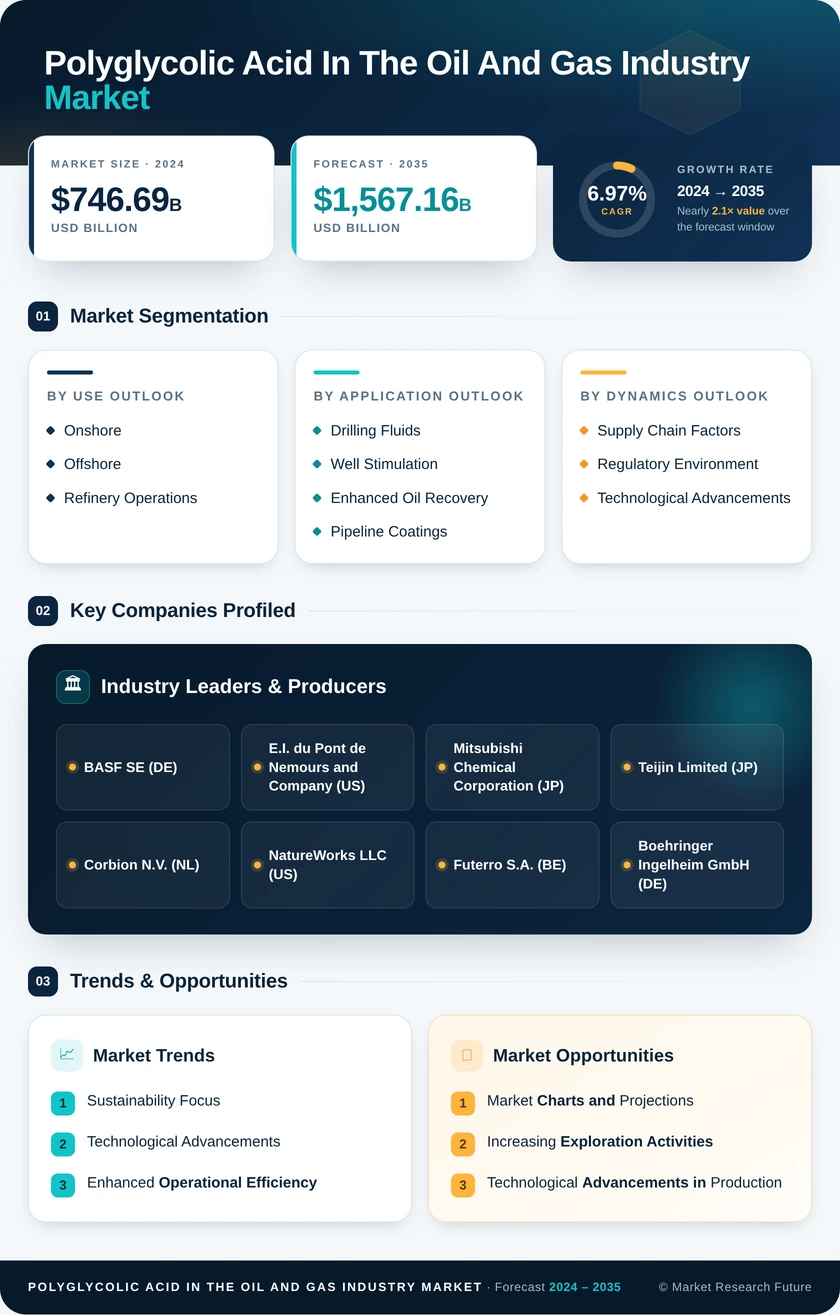
Segmentación del mercado de productos químicos y materiales

Productos químicos y materiales por aplicación (USD Millones, 2025-2035)

  • Fluidos de perforación
  • Estimulación del pozo
  • Recuperación mejorada de petróleo
  • Recubrimientos para tuberías

Productos químicos y materiales por uso final (USD Millones, 2025-2035)

  • En tierra
  • Costa afuera
  • Operaciones de refinería

Productos químicos y materiales por tipo de formulación (USD Millones, 2025-2035)

  • Soluciones acuosas
  • Emulsiones
  • Formas sólidas

Productos químicos y materiales por método de producción (USD Millones, 2025-2035)

  • Polimerización
  • Síntesis química
  • Procesos biodegradables

Productos químicos y materiales por dinámica del mercado (USD Millones, 2025-2035)

  • Factores de la cadena de suministro
  • Entorno regulatorio
  • Avances tecnológicos