Automotive Glass Market Summary
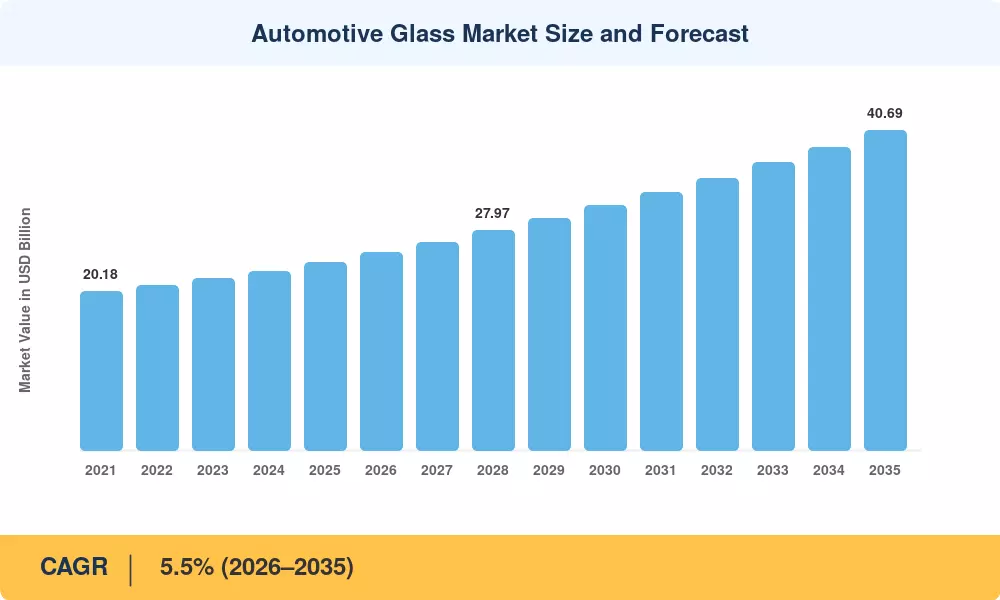
自動車用ガラス市場は2025年に推定239億1,000万米ドルに達し、2026年の251億3,000万米ドルから2035年までに406億9,000万米ドルに成長すると予測されており、予測窓全体で5.5%のCAGRを記録します。自動車生産台数の増加 — 世界の軽自動車生産台数は 2024 年に 9,000 万台を突破[1]—そして、UNECE 規則 43 に基づく安全ガラス義務の強化が、この軌道の 2 本のアンカーです。 OEM の調達サイクルでは、車両重量を削減し、ADAS をサポートできる軽量で多機能なガラスの優先順位がますます高まっています。センサー統合により、自動車用ガラス市場に耐久性のある構造的な追い風が与えられます。
テクノロジーの変化により、車両のガラスの機能が再定義されています。従来のフロートプロセスフロントガラスは、アンテナ層、ヘッドアップディスプレイ反射板、赤外線フィルタリングコーティングを埋め込んだ高度な積層アセンブリに譲りつつあります。欧州委員会の改訂一般安全規則は、2024 年半ばに発効し、前面ガラスの歩行者衝撃性能の強化を義務付けています。[2]、サプライヤーはより薄く、より丈夫なラミネートスタックへの投資を余儀なくされています。福耀硝子だけでも、2023年から2025年にかけて新規生産能力に約8億ドルを投入[3]、この移行の資本集中を示しています。
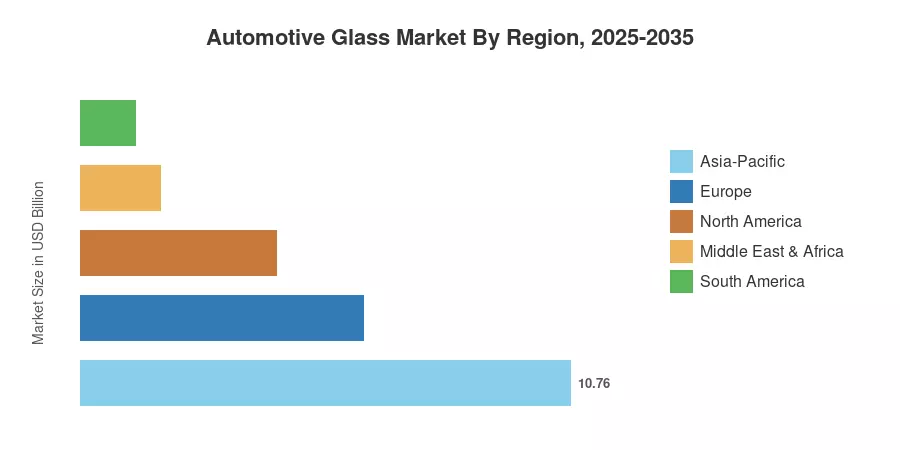
アジア太平洋地域は自動車用ガラス市場の収益の約45%を占めており、中国とインドの年間合計3,500万台を超える乗用車生産が牽引しています。[4]。中東・アフリカ地域は絶対規模では小さいものの、サウジアラビアとモロッコへの組立工場への投資によって、2035年まで約7.3%という最高のCAGRを記録すると予測されている。ヨーロッパは、高級車の需要と軽量ガラスソリューションを好む厳格な CO₂ 基準に支えられ、約 26% で 2 番目に大きなシェアを占めています。今後 10 年は、高度なコーティングを拡張し、デジタル機能をすべての窓ガラスに統合できるサプライヤーが報われるでしょう。
レポートの重要なポイント
• ガラスの種類別
- 通常のガラスは 2025 年の自動車用ガラス市場の約 87% を占め、これは量販車全体で従来のフロート製品と強化製品が引き続き優勢であることを反映しています。
- スマートグラス高級客室でのエレクトロクロミックおよび懸濁粒子デバイスの採用により、2035 年まで約 13.1% の CAGR で拡大すると予想されています。
• アプリケーション別
- フロントガラスは自動車用ガラス市場内で最大の用途シェアを獲得し、2025 年の収益の 47% 近くを占めました。
• 車両タイプ別
- フロントガラスは自動車用ガラス市場内で最大の用途シェアを獲得し、2025 年の収益の 47% 近くを占めました。
- 小型商用車は、ラストマイル配送車両の拡大により、最も速いセグメントの CAGR が約 7.1% になると予測されています。
• 地域別
- アジア太平洋地域は依然として自動車用ガラス市場に最も貢献している地域であり、中東とアフリカは2035年まで最高の成長率を記録すると予想されています。
- 北米は、堅調な交換用ガラス需要に支えられ、2025 年の世界収益の約 18% に貢献しました。SUV- 大量のプロダクションミックス。
市場規模と予測 (2021 ~ 2035 年)
Market Research Future のサイジング フレームワークは、OICA からのトップダウンの OEM 生産データと、大手生産者によって報告されたボトムアップのガラス出荷量を三角測量し、貿易フロー データベースと独自のチャネル調査に対して相互検証します。






















.webp?v=1787579601)
