Electric Motorcycle Market Summary
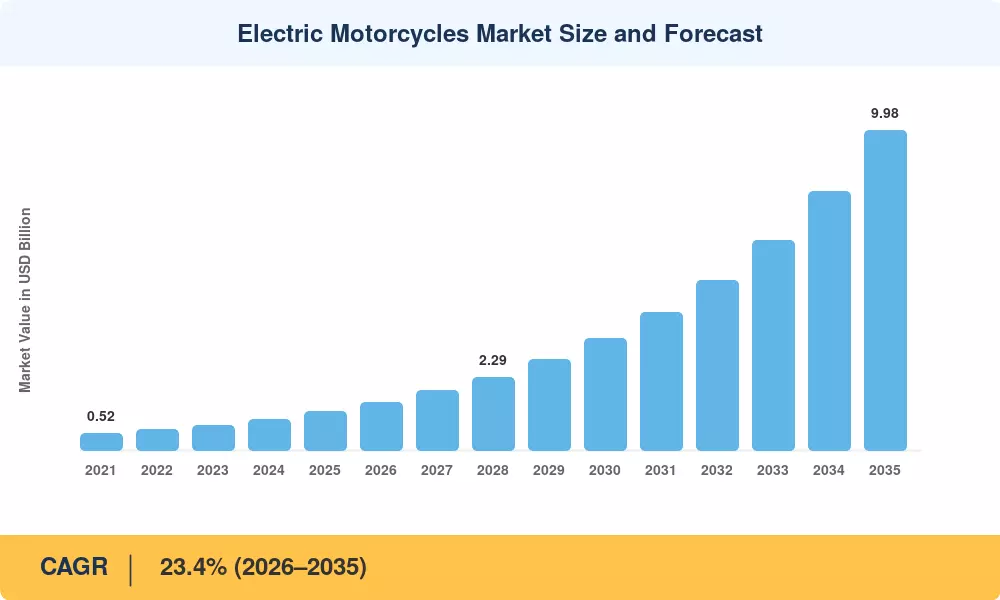
電動バイク市場は、2025年に評価額12億2000万ドルに達し、2026年の15億1000万ドルから2035年までに99億8000万ドルに成長すると予測されており、予測期間全体で23.4%のCAGRを記録します。導入を加速するために 2 つの力が結集しています。リチウムイオン電池の価格は 2024 年後半には kWh あたり 120 米ドルを下回り、総所有コストは同等の内燃エンジン (ICE) のコストを下回りました。オートバイ都市部の通勤ユースケースで[1]。同時に、欧州連合およびインドのいくつかの州におけるゼロエミッション車の義務化により、新しい ICE 二輪車に登録料が課せられ、購入の経済性が電気代替車にさらに傾いています。[2].
技術情勢は密閉型鉛蓄電池やブラシ付き DC モーターから高密度へと移行しつつあります。リチウム-イオンパックと永久磁石同期モーターを組み合わせたもの。政府はこの移行を資金面で支援している。インドのFAME III制度は2028年まで電動二輪車購入補助金に12億ドルを割り当て、中国工業情報化省は新エネルギー車生産クレジットプログラムを2027年まで延長した。[3]。ナトリウムイオンおよび固体化学は実験室試作からパイロットライン生産に移行しており、より安価な正極材料とより高速な充電受け入れが約束されており、2030年代初頭までに電動バイク市場を再形成する可能性がある[4].
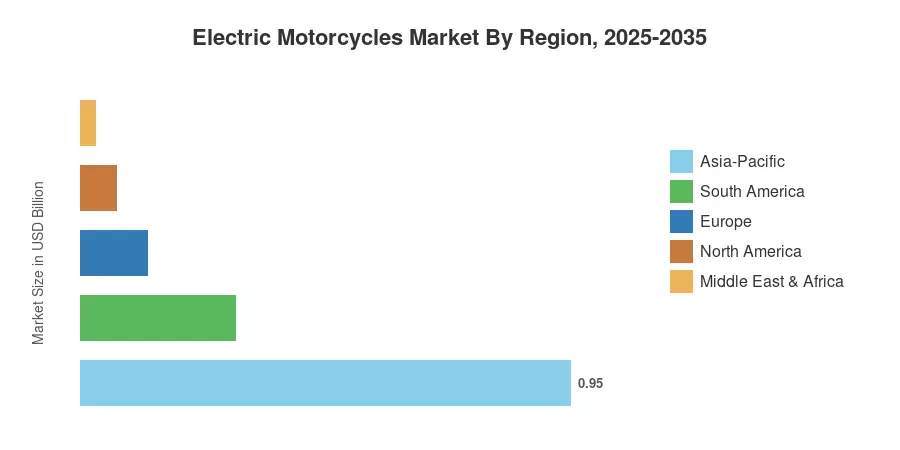
アジア太平洋地域は、中国の統合サプライチェーンとインドとASEAN経済の大衆市場の需要に支えられ、2024年には78.2%の収益シェアを獲得して電動バイク市場を支配します。南米は、ブラジルのロタ2030奨励金と都市部の配送車両の拡大により、CAGR 24.2%で最も急成長している地域です。欧州は 10.3% で 2 番目に大きなシェアを占めており、これは EU の CO₂ フリート目標と都市内燃機関の禁止に支えられています。バッテリーのコストは 2030 年までにさらに 30 ~ 40% 低下するため、電動バイク市場は早期採用のニッチ市場から都市部や地方の主流のモビリティに移行する態勢が整っています。
レポートの重要なポイント
• バッテリーの種類別
- リチウムイオン電池は、成熟したセル製造と競争力のあるパック価格を反映して、2024 年の電動バイク市場シェアの約 69% を占めました。
- ナトリウムイオンの化学は、2035 年まで 24.1% の CAGR で進歩しており、低速都市モデルにコバルトフリーのコスト上の利点をもたらします。
• モータータイプ別
- ハブモーター2024 年の出荷台数の約 66.8% を占め、コミュータークラスのプラットフォームでの機械的な単純さが支持されました。
• 出力別
- ハブ モーターは 2024 年の出荷台数の約 66.8% を占め、コミューター クラスのプラットフォームでは機械的な単純さが好まれました。
- 定格 10 kW を超えるモデルは 25.5% CAGR で成長しており、高速道路対応のパフォーマンス プラットフォームに対する関心の高まりを反映しています。
• 最終用途別
- 2024 年の電動バイク市場の収益の約 83.6% を個人所有権が占めましたが、配送とロジスティクスフリート事業者がキロメートルあたりのコストの削減を追求する中、アプリケーションは 26.1% の CAGR で拡大しています。
• 地域別
- アジア太平洋地域は、2024 年の電動バイク市場の 78.2% を占めました。
- 南米は CAGR 24.2% で最も急速に成長している地域であり、ブラジルが導入をリードしています。
電動バイク市場規模と予測(2021~2035年)
Market Research Future のサイジング モデルは、14 か国の OEM 38 社からのボトムアップの生産出荷データと、各国の運輸当局からのトップダウンの輸出入および登録統計を組み合わせています。過去の数値 (2021 ~ 2024 年) は税関データベースおよび四半期収益開示と照合されています。予測予測 (2026 ~ 2035 年) は、バッテリーコスト曲線と政策パイプライン分析によって検証された回帰調整後の成長仮定を適用します。





















.webp?v=1787579633)
