Intelligent Virtual Assistant (IVA) Market Summary
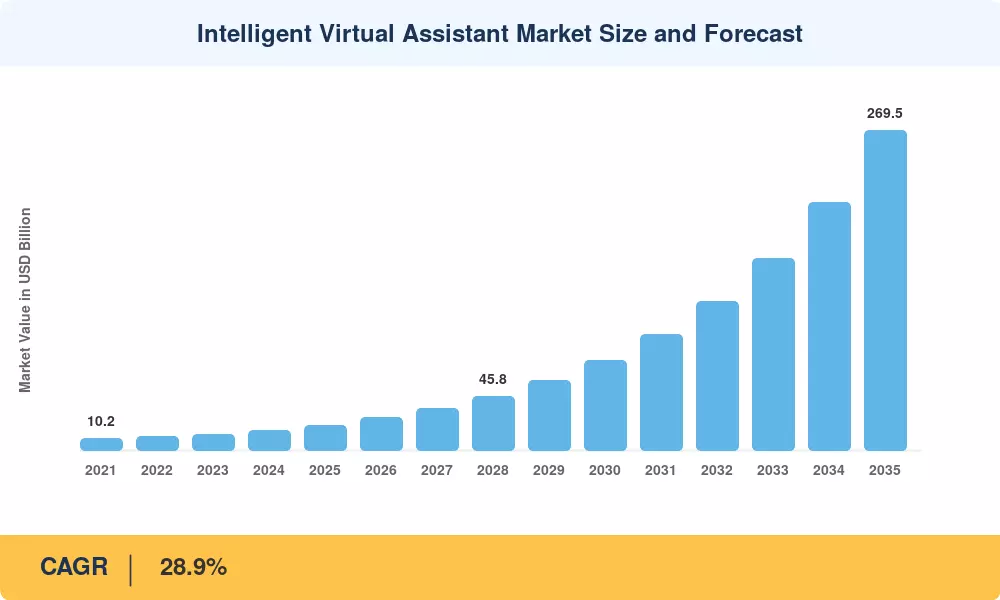
インテリジェント仮想アシスタント市場は 2025 年に推定 210 億米ドルに達し、この分野は今後 10 年間で爆発的に拡大すると予測されています。インテリジェント仮想アシスタント市場は、2026 年の予測ベース 275 億米ドルから始まり、2035 年までに 2,695 億米ドルに急増すると予測されており、2026 年から 2035 年の予測期間中に 28.9% の年間複利成長率を記録します。この軌道を加速しているのは 2 つの力です。企業のコスト削減義務 - ある大手世界的旅行会社は、IVA 主導のセルフサービス チャネルの導入後、年間 1,100 万米ドルの節約ができたと報告しています。[1]—そして政府支援のデジタル経済プログラムへの資金提供会話型AI公共サービス全体でパイロットを実施[2].
インテリジェント仮想アシスタント市場は現在、重大な技術革命を迎えています。従来の自動音声応答 (IVR) ツリーとルールベースのチャットボットは、コンテキストに応じたマルチモーダルなコミュニケーションを管理できる大規模な言語モデル アーキテクチャに置き換えられています。オンデバイス AI 推論チップは 1 台あたり約 43,000 米ドルで販売されており、継続的なクラウド コストを削減するエッジ展開を可能にしています。[3]。近代化を促進する緊急性は、企業が 2024 年だけで生成 AI コンタクト センターのアップグレードに世界中で 48 億米ドルを費やすという予測に反映されています。[4].
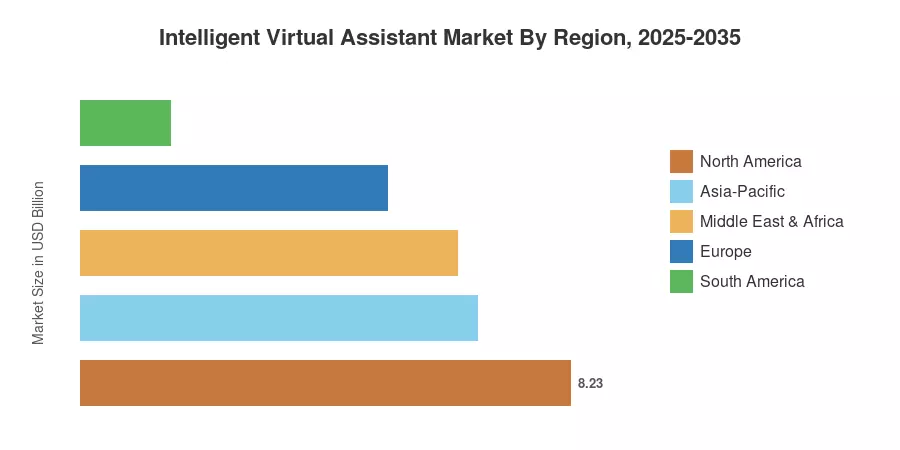
ハイパースケール テクノロジー企業からの多額の研究開発投資と AI ガバナンスに関する早期の立法措置によって、2025 年に北米はインテリジェント仮想アシスタント市場の約 39.2% を獲得しました。アジア太平洋地域は、スマートフォンの普及と現地言語の AI モデルにより、新たな消費者層が開拓され、2035 年まで 31.7% の CAGR で発展すると予想されている最も急成長している地域です。次に欧州が約 24.5% で、これは主に EU AI 法のコンプライアンスの制約によるもので、皮肉にも信頼できる仮想アシスタントへの投資が増加しています。[5]。次の 10 年は、プライバシーに準拠したマルチモーダル アシスタントが、規制対象のビジネスにおいて試験運用から本番環境に移行する速度によって決まるでしょう。
レポートの重要なポイント
• 製品別
- スマート スピーカーは、2025 年の時点でインテリジェント仮想アシスタント市場で主要な収益の地位を占めており、約 48.5% のシェアを獲得しています。
- 車載インテリジェント仮想アシスタントは、コネクテッドビークルの義務化とインフォテインメントのアップグレードにより、2035 年まで 30.5% の CAGR で拡大します。
• 導入モード別
- クラウド導入は、2025 年のインテリジェント仮想アシスタント市場の約 72.0% を占めました。
- データ主権規制により処理がエンドユーザーに近づくにつれて、オンプレミスとエッジの導入は 31.3% の CAGR で成長しています。
• ユーザーインターフェーステクノロジーによる
- 2025 年には音声ベースのシステムが収益の約 52.5% を占めました。
- マルチモーダル音声ビジュアル ソリューションは、2035 年まで CAGR 35.2% で成長すると予測されています。
• エンドユーザーによる
- 小売と電子商取引は、2025 年にインテリジェント仮想アシスタント市場の推定 22.2% を獲得しました。
- ヘルスケアは 2035 年まで、業種の中で最も速い 35.0% の CAGR で拡大すると予測されています。
• 地理別
- 北米は、2025 年にインテリジェント仮想アシスタント市場の 39.2% で最大のシェアを占めました。
- アジア太平洋地域は 31.7% CAGR という最高の成長を記録する見込みです。
市場規模と予測 (2021 ~ 2035 年)
Market Research Future (MRFR) は、独自の推定モデルを使用して、世界のエンタープライズ モビリティ サービス市場の市場規模を把握します。 [MRFR は、ボトムアップの収益モデリング アプローチを使用して、主要ベンダーの開示情報に基づいて世界のエンタープライズ モビリティ サービス市場の市場規模を導き出し、企業の IT 支出調査に基づくトップダウンの TAM 推定値と照合します。需要側の検証は、エンドユーザーの調達データを使用して行われます。過去の数値は監査済みの年次報告書と公式取引データベースから得られています。予測の推定値は、マクロ経済変数を毎年修正したシナリオ加重 CAGR に基づいています。





















.webp?v=1787579596)
