IT Asset Disposition Market

グローバルIT資産処分(ITAD)市場調査レポート:資産タイプ(コンピューター、モバイルデバイス、サーバー、ストレージデバイス、および周辺機器)、サービス(データ破壊、リサイクル、リバースロジスティクス、デマニュファクチャリング、リマーケティングと価値回復、ロジスティクス管理、およびリマーク)、組織規模(SME)および大企業)、および業界(航空宇宙および防衛、エネルギーおよび電力、製薬、石油およびガス、食品および飲料、化学、自動車など)、および地域(北米、ヨーロッパ、アジア太平洋、中東およびアフリカ、南米)-2027年までの予測
ID: MRFR/ICT/0496-HCR
110 Pages
Ankit Gupta
Last Updated: June 26, 2026
IT Asset Disposition Market
Market Size
Forecast Period2025 - 2035
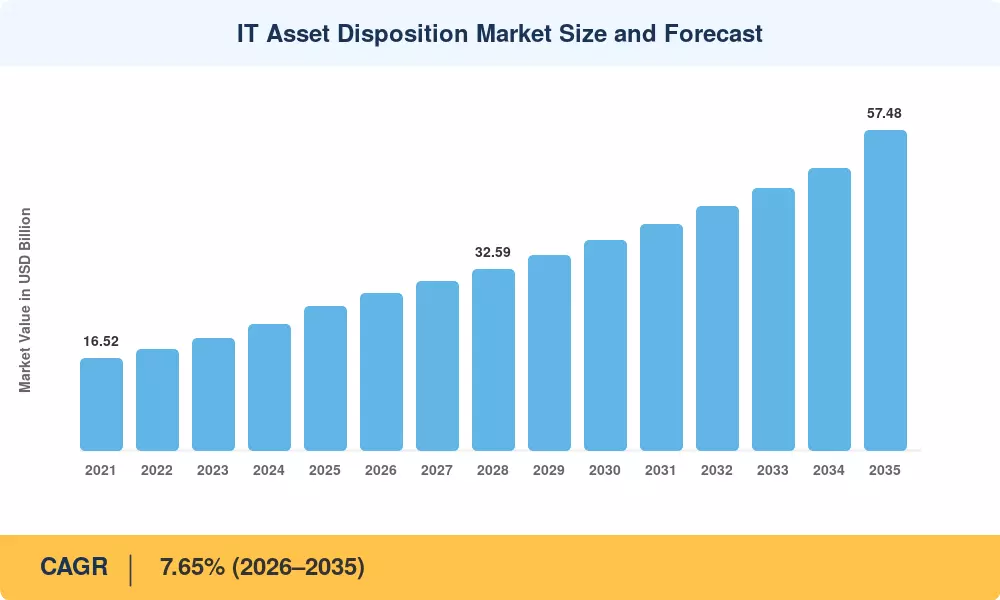
CAGR (2025 - 2035)8.02%
2024 Market Size$ 21.68 Billion
2025 Market Size$ 23.42 Billion
2035 Market Size$ 50.65 Billion
Key Players
Iron Mountain
Sims Recycling Solutions
Dell Technologies
Hewlett Packard Enterprise
IBM
Cimpress
Opportunities
  • Rising Data Security Threats
  • Growing Environmental Concerns
  • Increasing Regulatory Compliance

IT Asset Disposition Market 概要

MRFR分析によると、IT資産処分市場規模は2024年に216億8,000万米ドルと推定されています。IT資産処分業界は2025年の234億2,000万米ドルから2035年までに506億5,000万米ドルに成長すると予測されており、2025年から2035年の予測期間中に8.02%の年間平均成長率(CAGR)を示します。

主要な市場動向とハイライト

IT 資産処分市場は、持続可能性とセキュリティの需要によって成長する準備ができています。

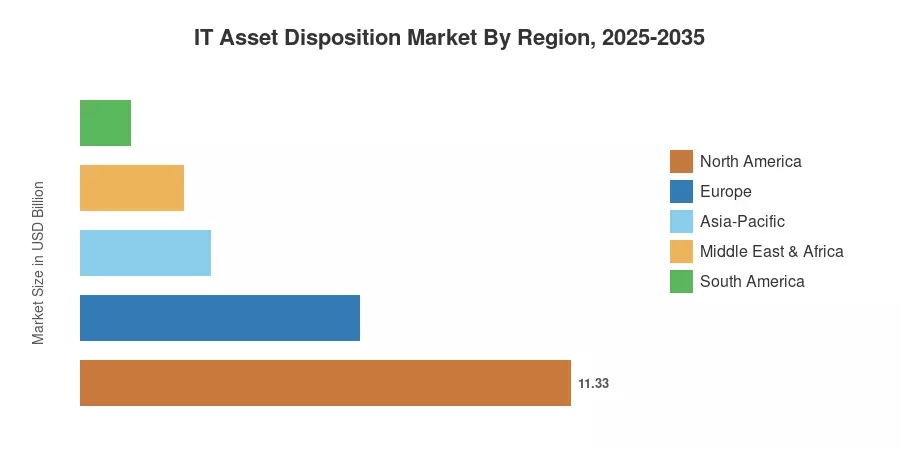
  • 北米は依然として IT 資産処分の最大の市場であり、データ セキュリティと規制遵守が重視されていることが反映されています。
  • アジア太平洋地域は、テクノロジーの導入と持続可能性への取り組みの増加により、最も急速に成長している地域として浮上しています。
  • データ破壊セグメントは依然として市場を支配し続けていますが、リマーケティングセグメントは再生デバイスの需要の高まりにより急速に成長しています。
  • 主要な市場推進力には、IT 資産処分の将来を形作る持続可能性への取り組みとデータ セキュリティの強化が含まれます。

市場規模と予測

2024年の市場規模 21.68 (USD Billion)
2035年の市場規模 50.65 (USD Billion)
CAGR (2025 - 2035) 8.02%
2024 年に最大の地域市場シェアを獲得 北米

主要なプレーヤー

アイアンマウンテン(米国)、Sims Recycling Solutions (米国)、Dell Technologies (米国)、Hewlett Packard Enterprise (米国)、IBM (米国)、Cimpress (IE)、GEEP (CA)、Ecovadis (フランス)、Arrow Electronics (米国)

Our Impact
Enabled $4.3B Revenue Impact for Fortune 500 and Leading Multinationals
Partnering with 2000+ Global Organizations Each Year
30K+ Citations by Top-Tier Firms in the Industry

市場セグメントの洞察

アプリケーション別: データ破壊 (最大) vs. リマーケティング (急成長)

IT資産処分市場はデータ破壊、リサイクル、リマーケティング、資産回復に分かれており、それぞれが大きな市場シェアを占めています。このうち、データの取り扱いにおける厳格なセキュリティ対策の必要性が高まっているため、データ破壊が最大のセグメントとして際立っています。データプライバシー規制とセキュリティコンプライアンスに対する意識の高まりにより、データ破壊が最前線に押し上げられ、リサイクルと資産回復もそれに続きます。組織が廃棄された IT 資産の価値を最大化しようとする中、リマーケティングは重要なセグメントとして浮上しており、市場での関心が高まっている分野となっています。

データ破壊 (主流) vs. リマーケティング (新興)

データ破壊は IT 資産処分市場の主要なセグメントであり、主に組織が機密情報を保護する必要性によって推進されています。このセグメントは、データの物理的な破壊または上書きを確実に行うことで、データ侵害に関連するリスクを軽減する包括的なソリューションを提供します。逆に、リマーケティングは、廃棄された IT 資産の改修と再販を特徴とする新興セグメントです。企業は効果的なリマーケティング戦略を通じてコストを回収できる可能性をますます認識しており、中古ハードウェアの再販を容易にするサービスの需要が高まっています。データ破壊はセキュリティに重点を置き、リマーケティングは廃棄された資産からの価値の回収に重点を置き、どちらのセグメントも不可欠です。

最終用途別: IT 企業 (最大手) vs. ヘルスケア (急成長)

IT 資産処分市場では、古くなったハードウェアとデータを安全に処分する広範なニーズがあるため、IT 企業が最大のセグメントを占めています。この分野はサイバーセキュリティ対策の強化の恩恵を受けており、企業はデータ侵害を防ぐために専門の廃棄サービスを利用することが不可欠となっています。一方、ヘルスケアは重要なプレーヤーとしての地位を急速に高めており、機密の患者情報や医療機器の廃棄を管理する厳しい規制を遵守する必要性を強調しています。

IT 企業 (有力) vs ヘルスケア (新興)

IT 企業セグメントは、高度な資産回復ソリューションとデータ破壊技術を活用した大量の電子廃棄が特徴です。これらの企業は大量の機密情報を管理することが多いため、このカテゴリでは緊急性、機密性、環境コンプライアンスが優先されます。対照的に、ヘルスケアは、規制上の監視の強化とデータプライバシーへの注目の高まりにより、急成長している分野として浮上しています。この分野の組織は、データ侵害に関連するリスクを軽減するために安全な IT 資産の処分方法への投資を増やしており、進行中のデジタル変革において医療を重要なプレーヤーとして位置づけています。

サービス タイプ別: データ無害化サービス (最大規模) vs. オンサイト サービス (急成長)

IT 資産処分市場では、サービスの種類ごとに明確な分布が見られ、データ セキュリティと規制遵守に関する懸念の高まりにより、データ無害化サービスが最大のシェアを占めています。オフサイトサービスと物流サービスが続き、資産管理の合理化を目指す企業に対応します。オンサイトサービスは、即時的なデータセキュリティソリューションと廃棄プロセス中の制御を優先する企業への傾向の高まりを反映して、注目を集めています。

データ無害化サービス (主流) vs. オンサイト サービス (新興)

データ無害化サービスは、データ侵害と厳格なデータ保護規制に対する意識の高まりにより、IT 資産処分セクターの主要なプレーヤーとして浮上しています。これらのサービスは機密情報を確実に確実に消去し、クライアントのプライバシーを保護します。対照的に、オンサイト サービスはこの市場の新たな側面であり、資産処分に伴うリスクを軽減したい企業に利便性とリアルタイムの監視を提供します。組織が社内での効果的なデータ管理を優先する中、オンサイト サービスは急速に普及しており、より広範な IT 資産処分の状況において極めて重要なソリューションとして位置付けられています。

資産タイプ別: コンピュータ (最大) vs. モバイル デバイス (最も急速に成長)

IT資産処分市場では、資産タイプセグメントは主要カテゴリ全体でさまざまな分布を示しています。コンピュータはこのセグメントを支配しており、企業環境で広く使用されているため、最大のシェアを保持しています。組織がテクノロジーのアップグレードを続けるにつれて、コンピュータは責任ある廃棄を必要とする大量の余剰機器を生成します。続いてモバイル デバイスが続きます。モバイル デバイスは、ユーザーがハンドヘルド テクノロジーに移行するにつれて急速に注目を集めており、その結果、処分プロセスに課題と機会が生まれています。

デバイス: コンピューター (主流) vs. モバイル デバイス (新興)

コンピュータは、企業環境内での広範な使用と定期的なアップグレードにより、IT 資産処分市場における優位性を確固たるものとしています。これらのデバイスは通常、新しいモデルに道を譲るために段階的に廃止されるデスクトップとラップトップで構成されます。一方、スマートフォンやタブレットなどのモバイルデバイスは、消費者の需要と技術の進歩によって加速される新興分野です。絶え間ない革新のペースにより、これらのデバイスは最も急速に成長している市場セグメントとなっており、企業が安全かつ持続的に管理するためには、デバイスの廃棄がますます重要な焦点となっています。

IT Asset Disposition Marketに関する詳細な洞察を得る

IT Asset Disposition Market市場の主要企業には以下が含まれます

レポートの範囲

FAQs

How should enterprises evaluate ITAD vendor certifications when selecting a partner?
Prioritize vendors holding both R2 (Responsible Recycling) and NAID AAA certifications, as this combination covers environmental compliance and data-destruction rigor under a single audit framework [8]. Request recent third-party audit reports and verify active certification status directly with the certifying body.
What insurance considerations arise when shipping retired IT assets containing lithium-ion batteries?
Carriers increasingly require hazmat packaging compliance and battery-condition declarations before accepting shipments, with premiums running 30–45% above standard freight [10]. Enterprises should negotiate battery-specific coverage riders within their logistics contracts.
How does the secondary pricing spread between refurbished enterprise servers and desktops typically behave?
Refurbished servers command USD 1,200–1,800 per unit versus USD 150–350 for desktops, reflecting higher component value and longer useful second-life in inference and edge workloads [7]. This spread widens during major refresh cycles.
What role do blockchain-based chain-of-custody platforms play in IT asset disposition today?
Several vendors now embed blockchain audit trails to provide immutable proof of data sanitization and material recovery, addressing compliance documentation gaps identified in cross-border transactions [11]. Adoption remains early-stage but is accelerating in regulated industries.
How are Device-as-a-Service contracts changing ITAD demand predictability?
DaaS agreements lock in contractual return dates and volumes, converting sporadic disposition events into scheduled inflows that allow ITAD vendors to optimize labor and facility utilization [6]. This predictability reduces per-unit processing costs by an estimated 10–15%.
What critical-mineral recovery economics make IT hardware recycling commercially viable?
Precious metals (gold, palladium) and rare earths recovered from circuit boards can yield USD 15–25 per kilogram of processed e-waste at current commodity prices [12]. Margins improve further when vendors integrate material recovery with IT hardware remarketing.
How do data-sovereignty laws affect multinational ITAD program design?
Multinational enterprises must establish in-country ITAD data destruction nodes or use locally certified partners in jurisdictions like China and India where storage media cannot legally cross borders [11]. This requirement adds 20–30% to program overhead compared to centralized models.    
著者
Author
Author Profile
Ankit Gupta LinkedIn
Team Lead - Research
Ankit Gupta is a seasoned market intelligence and strategic research professional with over six plus years of experience in the ICT and Semiconductor industries. With academic roots in Telecom, Marketing, and Electronics, he blends technical insight with business strategy. Ankit has led 200+ projects, including work for Fortune 500 clients like Microsoft and Rio Tinto, covering market sizing, tech forecasting, and go-to-market strategies. Known for bridging engineering and enterprise decision-making, his insights support growth, innovation, and investment planning across diverse technology markets.
コメントを残す

Research Approach


Secondary Research

The secondary research process involved comprehensive analysis of regulatory databases, industry publications, environmental compliance reports, and authoritative technology organizations. Key sources included the US Environmental Protection Agency (EPA), National Institute of Standards and Technology (NIST), International Telecommunication Union (ITU), World Economic Forum (WEF) Global E-waste Monitor, Basel Convention on the Control of Transboundary Movements of Hazardous Wastes, European Environment Agency (EEA), OECD Electronic Waste Statistical Framework, National Center for Electronics Recycling (NCER), US Department of Commerce Bureau of Industry and Security, Electronics Takeback Coalition, Sustainable Electronics Recycling International (SERI), ISACA (Information Systems Audit and Control Association), ISO/IEC 27001 Standards Bodies, United Nations University (UNU) SCYCLE Programme, Eurostat Waste Statistics, US Census Bureau ICT Sector Reports, International Data Corporation (IDC) Device Tracker Reports, and national environmental protection agencies from key markets (China MEE, India CPCB, Japan Ministry of Environment).

E-waste generation figures, asset lifecycle trends, regulatory compliance frameworks, data security standards, and market landscape analysis for data destruction services, recycling/remanufacturing, remarketing/resale, and reverse logistics categories were gathered from these sources.


Primary Research

In order to gather both qualitative and quantitative insights, supply-side and demand-side stakeholders were interviewed during the primary research process. CEOs, Chief Sustainability Officers (CSOs), VP of Operations, heads of regulatory compliance, and commercial directors from ITAD service providers, OEMs, and electronics recyclers were examples of supply-side sources. Chief information officers (CIOs), IT asset managers, procurement leaders, compliance officers, and facilities directors from Fortune 500 companies, healthcare systems, financial institutions, governmental organizations, and educational institutions made up demand-side sources. Primary research verified facility certification timelines (R2, e-Stewards, NAID AAA), gathered information on adoption patterns of cloud migration impacts, circular economy initiatives, pricing models, and data security protocol adherence, and validated market segmentation across asset types (computers, mobile devices, servers, storage devices, peripherals), service categories (data destruction/degaussing, recycling, remarketing, de-manufacturing, reverse logistics), and enterprise sizes (SMEs vs. Large Enterprises).

Primary Respondent Breakdown:

By Designation: C-level Primaries (42%), Director Level (31%), Others (27%)

By Region: North America (31%), Europe (33%), Asia-Pacific (28%), Rest of World (8%)


Market Size Estimation

Revenue mapping and asset volume analysis were used to get the global market valuation. The methodology comprised:

Finding more than sixty major ITAD service providers in Latin America, Europe, Asia-Pacific, and North America

Data destruction, recycling/recovery, remarketing/resale, de-manufacturing, and reverse logistics service mapping

Examination of projected and reported yearly revenues for ITAD service portfolios

Coverage of suppliers accounting for 75–80% of the worldwide market in 2024

Extrapolation of segment-specific valuations utilizing top-down (service provider revenue validation) and bottom-up (asset disposal volume × ASP by asset type and service category by nation) methods

無料サンプルをダウンロード

このレポートの無料サンプルを受け取るには、以下のフォームにご記入ください

Download PDF ×

We do not share your information with anyone. However, we may send you emails based on your report interest from time to time. You may contact us at any time to opt-out.