Global market valuation was derived through revenue mapping and production volume analysis. The methodology included:
Identification of 40+ key producers across Quebec (Canada), Vermont, New York, Maine, Ontario, and emerging regions (Asia-Pacific, Europe)
Product mapping across Grade A (Golden/Dark/Amber), Grade B (Processing grade), Organic certified, and Flavored/Infused maple syrup categories
Analysis of reported and modeled annual revenues specific to maple syrup portfolios, including bulk ingredient sales and retail packaged goods
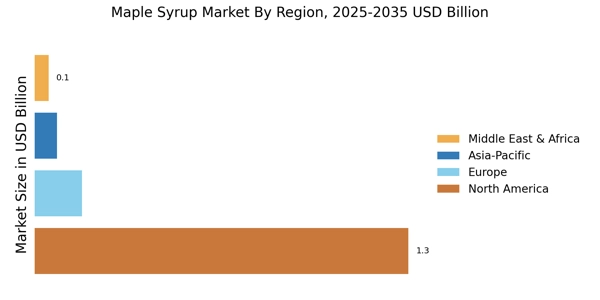
Coverage of producers and packers representing 78-82% of global market share in 2024 (accounting for Quebec's ~72% global production dominance)
Extrapolation using bottom-up (production volume × average selling price by grade and region) and top-down (manufacturer revenue validation across retail and foodservice channels) approaches to derive segment-specific valuations for household consumption, food industry ingredient use, and beverage applications
Key Methodological Notes:
Regional weighting reflects the actual geographic concentration of maple syrup production (concentrated in Northeastern North America) versus the dermal filler example which had broader geographic distribution
Company tier thresholds adjusted downward to account for the artisanal/agricultural nature of maple production (many small sugar shacks) versus high-value medical devices
Primary research focus includes agricultural cooperatives (like FPAQ) and foodservice procurement given the commodity/ingredient nature of the product versus medical professionals in the dermal filler example