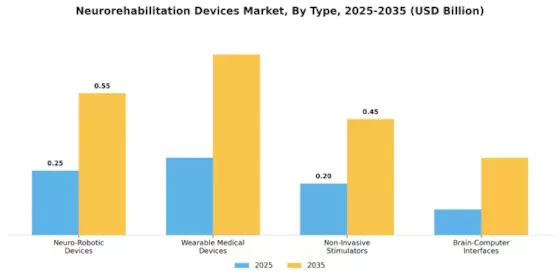
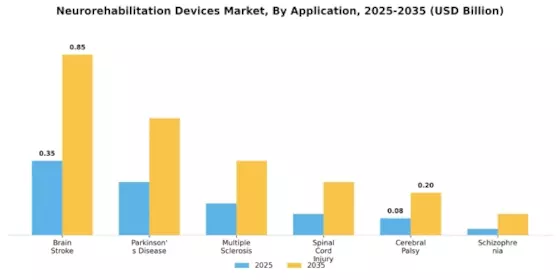
北米は神経リハビリテーションデバイス市場を支配しており、世界シェアの約45%を占めています。主な成長原動力には、高度な医療インフラ、神経疾患の有病率の増加、研究開発への多額の投資が含まれます。 FDA などの機関からの規制上のサポートにより、市場の拡大がさらに促進され、デバイス開発の安全性と有効性が確保されます。この地域は革新的な技術と患者中心のソリューションに重点を置いており、そのリーダー的地位を維持すると期待されています。
EMA 規制当局の承認により、ヨーロッパ全土で複数の神経リハビリテーション装置の商品化が促進され、120 を超えるリハビリテーション技術が承認されました。ドイツ、英国、フランスでは臨床導入が増加しており、神経疾患の有病率は増加し続けており、高度な治療的リハビリテーションソリューションへの需要が高まっています。
She holds an experience of about 5+ years in market research and business consulting projects for sectors such as life sciences, medical devices, and healthcare IT. She possesses a robust background in data analysis, market estimation, competitive intelligence, pipeline analysis market trend identification, and consumer behavior insights. Her expertise lies in technical Sales support, client interaction and project management, designing and implementing market research studies, conducting competitive analysis, and synthesizing complex data into actionable recommendations that drive business growth.
read more
Co-Author
Kinjoll Dey
Senior Research Analyst
He is an extremely curious individual currently working in Healthcare and Medical Devices Domain. Kinjoll is comfortably versed in data centric research backed by healthcare educational background. He leverages extensive data mining and analytics tools such as Primary and Secondary Research, Statistical Analysis, Machine Learning, Data Modelling. His key role also involves Technical Sales Support, Client Interaction and Project management within the Healthcare team. Lastly, he showcases extensive affinity towards learning new skills and remain fascinated in implementing them.
The secondary research process involved comprehensive analysis of regulatory databases, peer-reviewed medical journals, clinical publications, and authoritative health organizations. Key sources included the US Food & Drug Administration (FDA) Center for Devices and Radiological Health (CDRH), European Medicines Agency (EMA) Medical Device Coordination Group (MDCG), International Organization for Standardization (ISO 13485 medical device quality management), World Health Organization (WHO) Neurological Disorders Program, National Institutes of Health (NIH) National Institute of Neurological Disorders and Stroke (NINDS), National Center for Biotechnology Information (NCBI/PubMed), Centers for Disease Control and Prevention (CDC) Division of Population Health, American Academy of Physical Medicine and Rehabilitation (AAPM&R), American Congress of Rehabilitation Medicine (ACRM), International Federation of Physical and Rehabilitation Medicine (ISPRM), European Brain Council, National Stroke Association, Parkinson's Foundation, National Multiple Sclerosis Society, Christopher & Dana Reeve Foundation, and national neurological institute reports from key markets. These sources were utilized to collect clinical trial data, regulatory clearance pathways (510(k), PMA, CE marking), procedure volume statistics, epidemiological data on neurological disorders, reimbursement codes (CPT, HCPCS, DRG), and competitive intelligence on neuro-robotic systems, wearable sensors, transcranial magnetic stimulation devices, and brain-computer interface technologies.
Primary Research
Qualitative and quantitative insights were obtained by interviewing supply-side and demand-side stakeholders during the primary research process. The supply-side sources consisted of CEOs, Chief Technology Officers, VPs of Regulatory Affairs, leaders of Clinical Affairs, and commercial directors from neurorehabilitation device manufacturers, robotics developers, wearable technology companies, and brain-computer interface developers. The demand-side sources included board-certified neurologists, physical medicine & rehabilitation (PM&R) physicians, neurorehabilitation therapists (physical and occupational), clinical directors of inpatient rehabilitation facilities (IRFs), outpatient neurological rehabilitation centers, hospital vice presidents of neurosciences service lines, and procurement managers from academic medical centers and Veterans Affairs healthcare systems. Market segmentation was validated across device types, product development timelines and regulatory submission pathways were confirmed, and insights on clinical adoption rates, reimbursement strategies, and healthcare budget allocation for neurorehabilitation technologies were garnered through Primary research.
Primary Respondent Breakdown:
By Designation: C-level Primaries (28%), Director Level (32%), Others (40%)
By Region: North America (42%), Europe (25%), Asia-Pacific (22%), Rest of World (11%)
Market Size Estimation
Global market valuation was derived through revenue mapping, installed base analysis, and procedure volume estimation. The methodology included:
Identification of 50+ key manufacturers across North America, Europe, Asia-Pacific, and Latin America specializing in neuro-robotic exoskeletons, wearable sensors and actuators, non-invasive neuromodulation devices (TMS, tDCS), and brain-computer interface systems
Product mapping across neurorobotics (end-effector robots, exoskeletons, soft robotics), wearable devices (functional electrical stimulation garments, movement sensors), non-invasive stimulators (transcranial magnetic stimulation, transcranial direct current stimulation), and brain-computer interfaces (invasive and non-invasive neural interfaces)
Analysis of reported and modeled annual revenues specific to neurorehabilitation device portfolios, including direct device sales, leasing models, and software-as-a-service (SaaS) recurring revenue streams
Coverage of manufacturers representing 72-78% of global market share in 2024
Extrapolation using bottom-up (patient volume by neurological condition × device utilization rate × average selling price by country/region) and top-down (manufacturer revenue validation and serviceable obtainable market analysis) approaches to derive segment-specific valuations across stroke rehabilitation, Parkinson's disease management, multiple sclerosis therapy, spinal cord injury intervention, cerebral palsy treatment, and cognitive rehabilitation applications
“This is really good guys. Excellent work on a tight deadline. I will continue to use you going forward and recommend you to others. Nice job”
Noah MalgeriCo-Founder
“Thanks. It’s been a pleasure working with you, please use me as reference with any other Intel employees.”
Joseph AguayoSales Operations & Pricing Manager
“Thanks for sending the report it gives us a good global view of the Betaïne market.”
Peter Groot koerkampAccount and Business Manager
“Thank you, this will be very helpful for OQS.”
La Terria DoddProgram Support Specialist
“We found the report very insightful! we found your research firm very helpful. I'm sending this email to secure our future business.”
Younghwan ChoiSenior Retail Manager
“I am very pleased with how market segments have been defined in a relevant way for my purposes (such as "Portable Freezers & refrigerators" and "last-mile").
In general the report is well structured. Thanks very much for your efforts.”
Mark IrwinManagement Consultant
“I have been reading the first document or the study, ,the Global HVAC and FP market report 2021 till 2026. Must say, good info! I have not gone in depth at all parts, but got a good indication of the data inside!”
Rob KooikerGroup Product Manager HVAC & Fire Protection GMA
“We got the report in time, we really thank you for your support in this process. I also thank to all of your team as they did a great job.”
Akif MorogluStrategy & Business Development Director
“The Automotive 48V ECU Components Procurement Intelligence Study” was a complex project, but the Market Research Future (MRFR) team handled it with quality, agility, and customer-centricity. They delivered all requested data on time and within the agreed scope. The team, including Shubhendra Anand and Rahul Gotadki, was always readily available to clarify questions and swiftly implement necessary adjustments, driving the project to a successful conclusion within a very demanding timeframe.
I would also like to specifically commend Akshay Agarwal for his responsiveness and support at every stage—from our initial inquiry on May 6th through to final delivery on June 18th. His dedication made the entire process seamless.”
Guilherme Gomes MartinsProduct Management Director