Online Grocery Market Summary
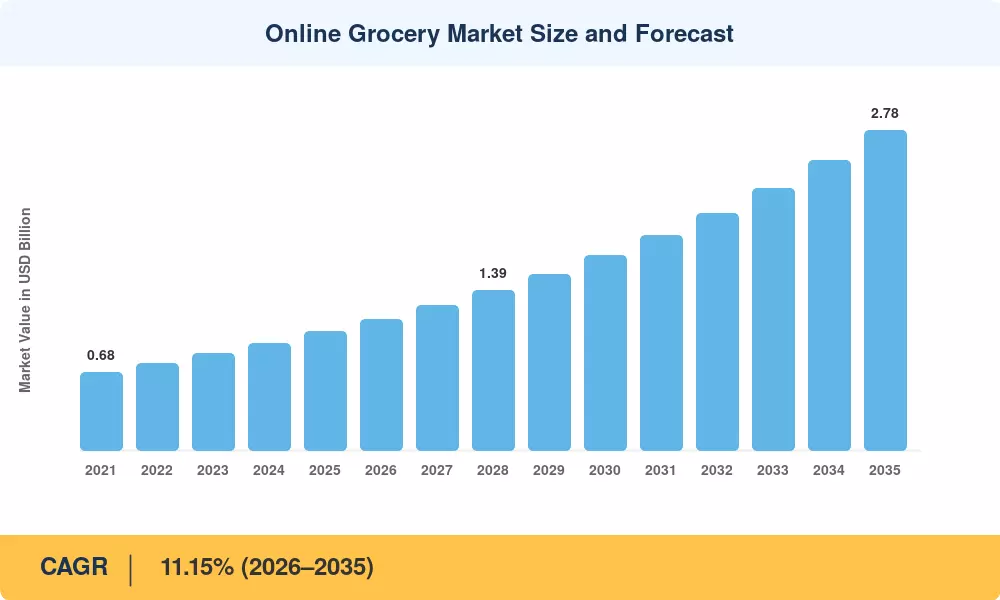
オンライン食料品市場は2025年に推定1.03兆米ドルに達し、2026年には1.14兆米ドルから2035年には2.78兆米ドルに成長すると予測されており、予測期間中の年平均成長率(CAGR)は11.15%です。この軌道は、パンデミック時代の習慣形成によって加速された消費者のeコマース食品ショッピングへの決定的なシフトを反映しており、冷凍物流インフラへの継続的な投資によって支えられています。主要経済国の政府はデジタル商取引のインセンティブプログラムを導入しており、米国農務省は全50州でSNAPのオンライン購入資格を拡大し、デジタルスーパーマーケットプラットフォームのために年間1300億米ドル以上の利益支出を解放しました [2]。
食料品小売業界は数十年で最も重要な運営の変革を遂げています。従来の店舗専用の履行モデルは、AI駆動のマイクロ履行センターや自動化されたダークストアに取って代わられ、ロボットピッキングシステムによって注文処理時間が最大80%短縮されています [3]。小売業者は2022年から2024年の間に食料品配達サービス技術と倉庫自動化に推定180億米ドルを投資しており、クリック&コレクトの食料品インフラにはその資本の約30%が配分されています [4]。この変化は漸進的なものではなく、食品が消費者に届く方法の構造的な再設計を表しています。
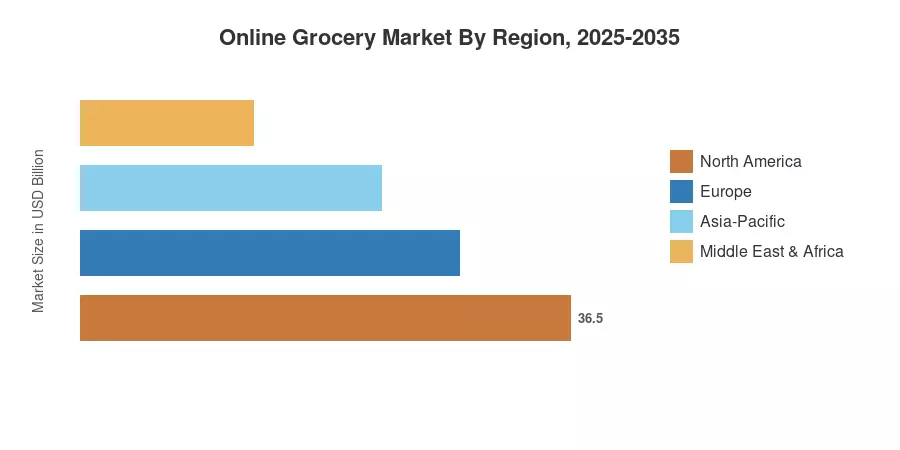
北米はオンライン食料品市場の最大のシェアを占めており、世界の収益の約33.5%を占めています。これは成熟したデジタルインフラと高いブロードバンド普及率によって推進されています。アジア太平洋地域は、インド、インドネシア、ベトナムでの爆発的なスマートフォンの普及により、19.4%のCAGRで最も成長の早い地域となっています。ヨーロッパは第二位の位置を占めており、世界の支出の約27%を占めており、オンライン食品注文アプリが日常生活に組み込まれている英国、フランス、ドイツが中心です。次の10年では、オンライン食料品が便利な代替手段から家庭の供給の主要なチャネルに移行するでしょう。
主なレポートの要点
• 商品カテゴリ別
- 新鮮で腐りやすい商品は2025年にオンライン食料品市場の約37.8%を占めており、eコマース食品ショッピングにおける冷凍チェーンの信頼性に対する消費者の信頼を反映しています。
- パッケージ食品は、デジタルスーパーマーケットプラットフォームでのサブスクリプションベースの補充モデルによって推進され、2035年までに17.2%のCAGRで最も急成長しているカテゴリを表しています。
- パントリーの必需品や料理の基本食材は、2025年に推定2650億米ドルを生み出し、オンライン食品注文アプリでのバルク購入プロモーションの恩恵を受けています。
• 配達モデル別
- 当日配達サービスは2025年にオンライン食料品市場の47.9%のシェアを占めており、スピードに対する消費者の期待を強調しています。
- 即時配達は2035年までに16.5%のCAGRで成長すると予測されており、ダークストアの拡大とラストマイルドローンの試験運用によって推進されています。
- スケジュール配達モデルは郊外や農村地域で強い支持を維持しており、クリック&コレクトの食料品オプションがホームデリバリーを補完しています。
• プラットフォームタイプ別
- アグリゲータープラットフォームは2025年の食料品配達サービス支出の約58.2%を占めており、複数の小売業者の選択と統一されたチェックアウトを活用しています。
- 小売業者が所有するウェブサイトやアプリは、チェーンが独自のeコマース食品ショッピング体験に投資するにつれて、2035年までに16.1%のCAGRで拡大すると予測されています。
• 地域別
- 北米は2025年にオンライン食料品市場で33.5%の収益シェアを持ってリードしています。
- アジア太平洋地域は2035年までに19.4%のCAGRを達成する見込みで、食料品配達サービスで最も成長の早い地域となっています。
市場規模と予測(2021–2035)
市場規模は、320以上の食料品小売業者とプラットフォーム運営者への一次調査データ、公開されたeコマース取引量データ、物流投資に関する開示、第三者決済ゲートウェイデータの三角測量によって導出されています。歴史的な数字(2021-2024)は確認済みの企業の提出書類から導出されており、予測(2026-2035)は、採用曲線、インフラ展開率、マクロ経済調整を組み込んだ調整された複利モデルに基づいています。