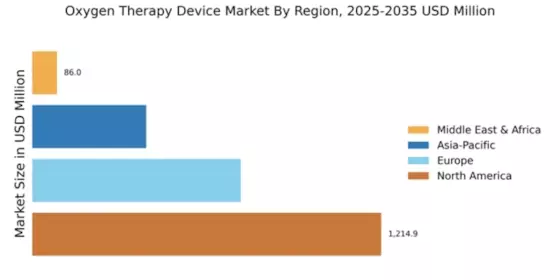
世界の酸素療法装置市場規模は2024年に24億2,482万米ドルと評価され、市場は2025年の25億9,020万米ドルから2035年までに50億1,035万米ドルに成長すると予測されており、2025年から2035年の予測期間中に6.82%のCAGRを記録します。北米は 2024 年に 50.07% 以上のシェアで市場をリードし、約 12 億 1,490 万米ドルの収益を生み出しました。
COPD、喘息、肺炎などの慢性呼吸器疾患の有病率の増加は、酸素療法装置市場を牽引する主要な成長要因です。特に高齢の患者や長期の肺疾患を患っている人の間で、酸素補給の需要が高まっているため、先進的な酸素療法装置の導入が世界中で加速しています。
WHOのデータによると、世界中で5億5,000万人以上が慢性呼吸器疾患に罹患しており、COPDだけでも年間350万人以上が死亡しており、医療施設や在宅医療現場における酸素療法ソリューションや長期呼吸器ケア機器の需要が大幅に増加している。
主要な市場動向とハイライト
酸素療法装置市場は、技術の進歩とホームケアソリューションへの需要の増加によって力強い成長を遂げています。
- 北米が市場をリードし、2024 年に生み出される世界収益の 50.07% 以上を占めます。
- ヨーロッパ市場は 2024 年に約 7 億 2,745 万ドルに達し、世界市場の約 30% に相当します。
- コネクテッド呼吸器ケアとポータブル酸素システムの技術進歩により、世界的に治療効率、可動性、患者モニタリングが向上し続けています。
- 高齢化人口の増加と医療費の増加により、世界中の高齢の呼吸器疾患患者の間で酸素療法の導入が加速しています。
市場規模と予測
| 2024年の市場規模 | 2424.82 (USD Million) |
| 2035年の市場規模 | 5010.35 (USD Million) |
| CAGR (2025 - 2035) | 6.82% |
| 2024 年に最大の地域市場シェアを獲得 | 北米 |
主要なプレーヤー
などの企業 フィリップス(NL)、ResMed (AU)、Breas Medical (SE)、Invacare (US)、AirSep Corporation (US)、OxySure Systems (US)、DeVilbiss Healthcare (US)、Nidek Medical (JP)、Fisher & Paykel Healthcare (NZ) は、世界市場の主要な参加企業です。