Author

Pradeep Nandi

サングラス市場規模、シェア、業界動向および分析調査レポート情報 製品タイプ別(偏光、非偏光)、エンドユーザー別(男性、女性、子供)、製品カテゴリ別(マス、プレミアム)、流通チャネル別(オフライン小売店、オンライン小売店)、地域別(北米、ヨーロッパ、アジア太平洋、南米、中東およびアフリカ) - 2035年までの予測
MRFRの分析によると、サングラス市場の規模は2024年に415億米ドルと推定されました。サングラス業界は2025年に440.5億米ドルから2035年には799.5億米ドルに成長すると予測されており、2025年から2035年の予測期間中に年平均成長率(CAGR)は6.14%となる見込みです。
サングラス市場は、技術革新によって推進される持続可能性とファッショナブルなデザインへのダイナミックなシフトを経験しています。
| 2024 Market Size | 415億米ドル |
| 2035 Market Size | 79.95 (USD十億) |
| CAGR (2025 - 2035) | 6.14% |
ルクソティカ(IT)、サフィログループ(IT)、レイバン(IT)、オークリー(US)、マウイジム(US)、ペルソール(IT)、フェンディ(IT)、プラダ(IT)、グッチ(IT)、ディオール(FR)
Our Impact
Enabled $4.3B Revenue Impact for Fortune 500 and Leading Multinationals
Partnering with 2000+ Global Organizations Each Year
30K+ Citations by Top-Tier Firms in the Industry
サングラス市場は、ファッションのトレンド、技術の進歩、目の保護に関する消費者の意識の高まりなど、さまざまな要因によって現在、ダイナミックな進化を遂げています。サングラスの需要は単なる機能的なものではなく、個人のスタイルを反映するユニークなデザインを求める消費者によってファッションステートメントに変わっています。この変化は、個人が実用性とともに美学を重視する中で、プレミアムブランドやデザイナーブランドへの傾向が高まっていることを示しています。さらに、ソーシャルメディアのインフルエンサーやセレブリティの推薦が特定のブランドの可視性を高め、若い世代の購買決定に影響を与える可能性があるようです。 美学的な考慮に加えて、サングラス市場では持続可能性に対する注目が高まっています。消費者は、リサイクル素材を使用したり、持続可能な生産方法を採用したりするブランドを支持する傾向が強まっています。このトレンドは、環境意識の高まりを示唆しており、今後数年でブランド戦略を再構築する可能性があります。市場が進化し続ける中で、レンズ技術やフレーム素材の革新が消費者を惹きつける重要な役割を果たし、市場全体の景観を向上させることが期待されます。
ファッショントレンドは、サングラス市場における消費者の好みを形成する上で重要な役割を果たしています。スタイル、色、デザインの継続的な進化は購買行動に影響を与え、消費者はしばしば自分の個性に合ったサングラスを求めます。最近の市場分析によると、オーバーサイズやレトロデザインの需要が急増しており、ファッションにおけるノスタルジアの広がるトレンドを反映しています。この変化は、ブランドが消費者の関心を引きつけるために、変化するトレンドに敏感で柔軟である必要があることを示唆しています。さらに、ファッションデザイナーやインフルエンサーとのコラボレーションは、ブランドの可視性と魅力を高め、売上を促進する可能性があります。ファッションがダイナミックな力であり続ける限り、サングラス市場はこれらのトレンドに適応し、関連性と競争力を維持する必要があります。
アウトドア活動やスポーツの人気が高まる中、サングラス市場の主要な推進力として浮上しています。ハイキング、サイクリング、ビーチへの外出などの活動に多くの人々が参加するにつれて、機能的でスタイリッシュなサングラスの需要が高まると考えられます。最近の調査によると、消費者の約60%がアウトドア活動においてサングラスを必需品と考えており、まぶしさやUV光線からの保護の重要性が強調されています。この傾向は、偏光レンズや耐久性のある素材など、パフォーマンス重視のデザインに焦点を当てるブランドが受け入れられる可能性があることを示唆しています。アウトドアライフスタイルがますます普及する中、サングラス市場はこのアクティブな消費者セグメントによって販売が増加する可能性があります。
さまざまな層における可処分所得の増加は、サングラス市場を後押しする可能性が高いです。消費者が財政的な柔軟性を感じることで、プレミアムなアイウェア製品に投資する意欲が高まります。市場データによると、サングラスのラグジュアリーセグメントは、年間約7%の大幅な成長が見込まれています。この傾向は、消費者が自分の地位やライフスタイルを反映する製品を求める中で、より高品質な素材やデザイナーブランドへのシフトを示しています。その結果、プレミアムセグメントに位置づけられるブランドは、この傾向から利益を得る可能性があり、品質と独自性を重視する消費者層にアピールすることができるでしょう。
UV放射線が目の健康に与える有害な影響に対する認識の高まりは、サングラス市場の重要な推進要因であるようです。消費者は、長時間の太陽光曝露に伴うリスクについてより多くの知識を持つようになり、UV保護を提供するサングラスの需要が高まっています。最近のデータによると、UV保護眼鏡の市場は今後5年間で約5.5%の年平均成長率で成長することが予測されています。この傾向は、消費者がスタイリッシュな選択肢を求めるだけでなく、健康上の利点を優先していることを示しており、購買決定に影響を与えています。その結果、マーケティング戦略においてUV保護を強調するブランドは、サングラス市場の競争環境の中でより良い位置にいる可能性があります。
eコマースプラットフォームの拡大は、サングラス市場の小売環境を変革しました。オンラインショッピングの利便性により、消費者はますますデジタルチャネルを通じて眼鏡を購入するようになっています。データによると、サングラスのオンライン販売は著しい増加を見せており、今後数年でeコマースが総売上の30%以上を占める可能性があると予測されています。このシフトは、ブランドの市場到達範囲を広げるだけでなく、ターゲットマーケティングや推奨を通じてパーソナライズされたショッピング体験を提供することも可能にします。消費者がオンライン取引にますます慣れていく中で、堅牢なeコマース戦略とユーザーフレンドリーなインターフェースに投資するブランドは、サングラス市場で競争優位を得ることができるかもしれません。
サングラス市場は、まぶしさを軽減し視覚の明瞭さを高める優れた能力で認識されている偏光サングラスに明確な好みを示しています。その結果、偏光サングラスは市場を支配し、運転、釣り、スキーなどのアウトドア活動に従事する幅広い消費者にアピールしています。実用性とUV光線からの効果的な保護が、小売における普及に寄与しています。一方、非偏光サングラスは、その手頃な価格とトレンディなデザインで注目を集めており、特に機能性よりもファッションを重視する若年層の消費者の間で需要が高まっています。成長トレンドは、偏光セグメントが支配的である一方で、低価格で鮮やかな美学を提供する非偏光デザインからの競争が増加していることを示しています。多くのブランドがこの分野で革新を進めており、スタイリッシュなデザインを求めるファッション志向の消費者にアプローチしています。これにより、非偏光セグメントの加速が進み、市場で最も成長しているセグメントとして位置付けられています。ソーシャルメディアの影響、セレブリティの推薦、オーダーメイドやユニークなサングラスへの消費者の嗜好の変化などの要因が、非偏光オプションへの関心を刺激し、その成長をさらに促進しています。
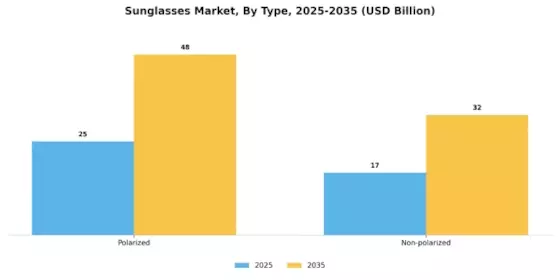
サングラス市場:偏光(主流)対非偏光(新興)
偏光サングラスは、サングラス市場において主導的な存在であり、眩しさを軽減する能力と視覚性能の向上が評価されています。これらのサングラスは、水面や道路などの表面からの反射を最小限に抑える特別なコーティングが施されており、アウトドア活動に最適です。この機能的な優位性は、アスリートやカジュアルな着用者の両方にアピールし、強力な市場地位に寄与しています。一方、非偏光サングラスは新興セグメントを代表し、スタイリッシュなバリエーションや予算に優しいオプションにより注目を集めています。これらは主にトレンドに基づいているファッション意識の高い消費者に向けられており、パフォーマンスよりもスタイルが重視されています。このセグメントの柔軟性と手頃な価格は、印象的な成長を促進し、ブランドがスタイルやデザインを継続的に革新する中で多様な顧客層を引き寄せています。
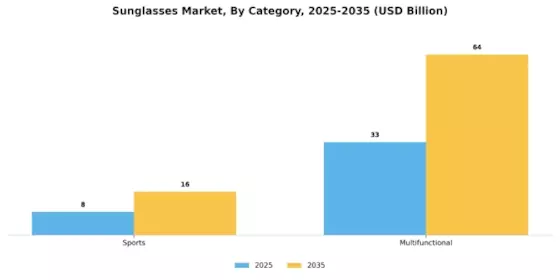
サングラス市場は、スポーツサングラスが現在市場シェアの大部分を占める最大のセグメントとして、カテゴリーセグメントにおいてダイナミックな変化を経験しています。彼らの人気は、アウトドア活動への意識の高まりと、アスリートやフィットネス愛好者の間での保護眼鏡の必要性の増加に起因しています。スポーツサングラスは、高い耐久性、衝撃耐性、特化したレンズ技術などの機能を提供し、さまざまなスポーツの特有のニーズに応えています。
サングラス市場:スポーツ(支配的)対多機能(新興)
スポーツサングラスは、軽量フレーム、優れたグリップ、眩しさを軽減し明瞭さを向上させる先進的なレンズ技術を備え、さまざまなアスレチック環境でのパフォーマンスを向上させるように設計されています。これらはニッチ市場に対応しており、真剣なアスリートやアウトドア冒険者の間で忠実な顧客基盤を惹きつけています。対照的に、多機能サングラスは、スタイルと機能性の融合を求める消費者にとって多用途な選択肢として浮上しています。これらのフレームは、レクリエーションの外出からカジュアルな着用まで、複数の目的に対応するように設計されており、その適応性とトレンディなデザインのために人気を集めています。現代の消費者はますます多様性を重視しています。
サングラス市場では、男性用サングラスがファッションの好みやレジャー活動の組み合わせにより、最大のシェアを占めており、市場シェアの分布が大きく支配されています。男性用サングラスは、パフォーマンスとスタイルを重視してマーケティングされることが多く、市場での強い存在感に寄与しています。一方、女性用サングラスは急速に人気を集めており、アイウェアを通じたアクセサリーや個人の表現のトレンドが高まっています。ブランドが革新し、汎用性が高くスタイリッシュなオプションをデザインするにつれて、女性用サングラスの魅力は大幅に増加し続けています。
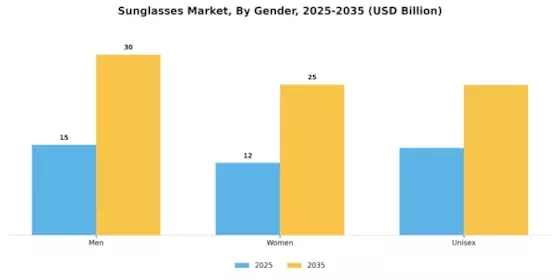
男性(支配的)対女性(新興)
機能性とスタイルの融合を特徴とする男性用サングラスは、市場を支配し、ファッションと実用性の両方を重視する幅広い層にアピールしています。これらは、アウトドア活動やスポーツ、頑丈さとパフォーマンスを強調するブランドとしばしば関連付けられます。一方、女性用サングラスは、個々のスタイルと美学を重視する進化するファッショントレンドの恩恵を受けており、重要なセグメントとして浮上しています。このセグメントは、特に女性の多様な好みに応じたファッショナブルなデザインを展開するブランドが登場することで拡大しており、スタイリッシュで機能的なアイウェアを求める成長する顧客基盤を惹きつけています。個別化されたファッション選択へのシフトは、女性用サングラスを全体市場においてますます重要な部分として位置付けています。
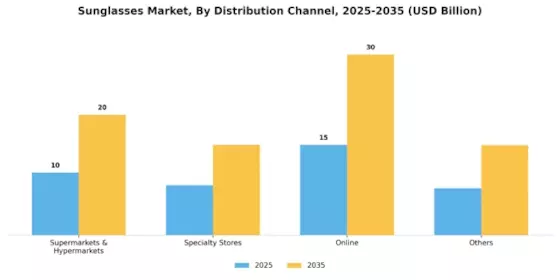
サングラス市場では、流通チャネルの市場シェアに大きな変動が見られます。オンライン販売は、eコマース技術の進展と利便性を重視する消費者の好みにより、最大のチャネルとして浮上しています。スーパーマーケットやハイパーマーケットも notable なシェアを持っていますが、成長はオンラインチャネルほど急激ではありません。専門店は、トレンディで高級なブランドの厳選されたセレクションを提供するため、売上のかなりの部分に寄与しています。特定の消費者ニーズに応える形で。
成長トレンドは、オンラインセグメントが最大であるだけでなく、急速に拡大し続けていることを示しています。専門店セグメントは最も成長が早く、独占的なアイウェアブランドやパーソナライズされたショッピング体験に対する需要の高まりに起因しています。この成長は、一般的な小売店ではなく、品質に特化した店舗から高級商品を購入するという消費者行動の変化によって後押しされています。
オンライン(主流)対専門店(新興)
オンライン小売はサングラス市場において、その利便性とボタン一つで利用できる幅広いブランドの選択肢により、主にその支配力が際立っています。このセグメントは、ミレニアル世代やZ世代の消費者をターゲットにしたユーザーフレンドリーなショッピング体験とパーソナライズされたマーケティング戦略に基づいて成長しています。それに対して、専門店は高品質でニッチな製品に焦点を当て、独自のデザインを求めるファッション意識の高いバイヤーにアピールする新たな道として位置付けられています。専門店は、専門的なフィッティングやスタイリングアドバイスなどのパーソナライズされたサービスも提供し、消費者体験が製品選択と同じくらい重要な市場で際立っています。これらのセグメントの進化は、消費者の小売嗜好の変化を浮き彫りにしています。
サングラス市場に関する詳細な洞察を得る 無料サンプルを請求する
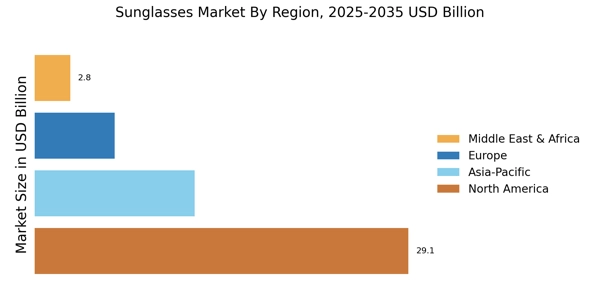
北米のサングラス市場は、プレミアムおよびデザイナーアイウェアに対する消費者の好みの高まりによって推進されており、UV保護とファッショントレンドに大きく焦点を当てています。アメリカ合衆国は約70%の市場シェアを持ち、カナダが約15%で続いています。消費者がUV保護の重要性を認識するようになり、目の健康と安全を促進する規制の取り組みも市場の成長に寄与しています。 この地域の主要国はアメリカ合衆国とカナダであり、オークリーやレイバンなどの主要プレーヤーが支配する競争の激しい市場です。グッチやプラダなどのラグジュアリーブランドの存在が市場のダイナミクスをさらに強化しています。小売チャネルは進化しており、消費者がより多くの製品にアクセスできるようにするために、Eコマースへの顕著なシフトが見られます。市場は、さまざまな消費者の好みに応じた素材やデザインの革新によって特徴付けられています。
ヨーロッパのサングラス市場は、エコフレンドリーな製品に対する消費者の需要によって推進される持続可能性とイノベーションに強く重点を置いています。この地域は約15%のシェアを持つ第二の市場であり、イタリアやフランスなどの国がリードしています。製造における持続可能な慣行を促進する規制の枠組みが成長を促進しており、ブランドは変化する消費者の好みや環境問題に適応しています。 イタリアは、ルクソティカやサフィログループなどの主要プレーヤーが存在し、アイウェアデザインにおける豊かな遺産を持つ市場をリードしています。フランスも続き、ディオールやグッチなどのブランドが重要な貢献をしています。競争の激しい市場は、ラグジュアリーとパフォーマンスブランドのブレンドによって特徴付けられ、さまざまな消費者セグメントに対応しています。Eコマースも注目を集めており、消費者はプレミアムアイウェアオプションによりアクセスしやすくなっています。
アジア太平洋のサングラス市場は、可処分所得の増加と目の保護に対する意識の高まりによって急成長しています。中国や日本などの国が市場をリードしており、中国は約30%のシェアを持っています。この地域は、ファッションに敏感な若い人口によって特徴付けられ、トレンディで手頃な価格のアイウェアオプションに対する需要が高まっています。目の健康を促進することを目的とした規制の取り組みも市場の拡大に寄与しています。 中国と日本はこの市場の主要プレーヤーであり、地元および国際ブランドが競争する激しい市場です。マウイジムやオークリーなどの主要プレーヤーがこの地域での存在感を拡大し、高品質のサングラスに対する需要の高まりに応えています。市場はまた、オンライン小売チャネルの増加を見ており、消費者がさまざまな製品やブランドにアクセスしやすくなり、成長をさらに促進しています。
中東およびアフリカのサングラス市場は、多様な消費者の好みとファッションアイウェアへの関心の高まりによって特徴付けられています。この地域は約5%のシェアを持つ重要な市場として浮上しており、都市化の進展と若い人口によって推進されています。南アフリカやUAEなどの国が市場をリードしており、目の健康と安全を促進する取り組みを通じてアイウェア産業の成長を支える規制の枠組みがあります。 南アフリカとUAEはこの地域の主要市場であり、地元および国際ブランドが競争する激しい市場です。レイバンやペルソールなどの主要プレーヤーがファッションに敏感な消費者に応えるために強い存在感を確立しています。市場はまた、Eコマースプラットフォームの増加を見ており、消費者がさまざまなアイウェアオプションにアクセスしやすくなり、市場のダイナミクスを強化しています。
サングラス市場は、目の保護に対する消費者の意識の高まり、ファッショントレンド、ソーシャルメディアの影響の増大といった要因によって、現在、ダイナミックな競争環境が特徴づけられています。ルクソティカ(IT)、レイバン(IT)、オークリー(US)などの主要プレーヤーは、イノベーションとブランドの多様化を通じてこれらのトレンドを活用するために戦略的に位置づけられています。たとえば、ルクソティカは、持続可能な素材を含む製品ラインの拡大に注力しており、これはエコフレンドリーな製品に対する消費者の需要の高まりと一致しています。一方、レイバンは、顧客がサングラスをバーチャルに試着できるように拡張現実を活用し、デジタルプレゼンスを強化し続けています。これらの戦略は、製品の品質だけでなく、消費者のエンゲージメントと持続可能性を重視する競争環境を形成しています。
ビジネス戦略に関しては、企業はリードタイムを短縮し、サプライチェーンを最適化するために製造のローカライズを進めています。このアプローチは、機敏性が競争優位を提供できる中程度に分散した市場において特に効果的であるようです。サフィログループ(IT)やマウイジム(US)などの主要プレーヤーの集団的な影響は、これらの企業が戦略的パートナーシップや買収を通じて市場シェアを拡大しようとする傾向を示唆しています。
2025年8月、サフィログループ(IT)は、健康モニタリング機能を統合したスマートサングラスを開発するために、主要なテクノロジー企業とのコラボレーションを発表しました。この戦略的な動きは、サフィロをウェアラブルテクノロジーの最前線に位置づけるだけでなく、健康とウェルネスに対する消費者の関心の高まりにも応えています。眼鏡へのテクノロジーの統合は、消費者の期待を再定義し、市場機会を拡大する可能性があります。
2025年9月、オークリー(US)は、さまざまな光条件に適応する先進的なレンズ技術を備えた、アスリート向けに特別に設計された新しいパフォーマンスサングラスのラインを発表しました。この取り組みは、オークリーのイノベーションへのコミットメントとニッチ市場への焦点を強調しており、スポーツ愛好者の間でブランドロイヤルティを高める可能性があります。特定の消費者ニーズに応えることで、オークリーはパフォーマンスアイウェアセグメントにおける競争力を強化する可能性が高いです。
さらに、2025年7月、マウイジム(US)は、著名なオンライン小売業者とのパートナーシップを結ぶことで流通ネットワークを拡大しました。この戦略的な行動は、特にオンラインショッピングを好む若い消費者の間で、製品のアクセス性と可視性を高めることを目的としています。このような動きは、現在の小売環境においてますます重要になっているデジタルトランスフォーメーションへのシフトを示しています。
2025年10月現在、サングラス市場の競争トレンドは、デジタル化、持続可能性、人工知能の統合によって大きく影響を受けています。戦略的アライアンスは、企業がリソースと専門知識をプールしてより効果的にイノベーションを行うことを可能にし、景観を形成しています。今後、競争の差別化は、従来の価格ベースの競争から、イノベーション、テクノロジーの統合、サプライチェーンの信頼性に焦点を当てたものへと進化する可能性があります。このシフトは、消費者の期待を再定義し、サングラス市場における成功の新たなベンチマークを生み出すかもしれません。



2020年2月:サフィログループは、米国のアイウェアブランドPrivé Revauxの61.34%を6750万米ドルで取得しました。Privé Revauxは急成長中の米国発のブランドで、ミレニアル世代をターゲットにしたデジタルマーケティング戦略を展開し、手頃な価格で高品質で美しくデザインされたアイウェアを提供することを使命としています。セレブリティの推薦を活用してブランド認知度と売上を向上させています。
2022年3月:サフィログループは、オランダの著名な非営利環境団体「The Ocean Cleanup」のために特別に製造されたリサイクルプラスチックからの初のアイウェア製品を発表しました。この団体は、海洋からプラスチック汚染を除去するための先進技術を開発しています。従来のプラスチックのリサイクルの難しさを克服するために、同社はOcean Cleanupサングラスの製造に注入プラスチックを使用しました。この注入プラスチックは、質が高く安全と見なされるグレート・パシフィック・ガーベッジ・パッチから取得されています。
2019年10月:マルコリン・グループとオメガが協力して、ラグジュアリーアイウェア製品のラインを発表しました。ブランドの人気が高まる中、同社はオンラインストア、独立小売店、企業ブティックのネットワークにさらに多くの店舗を追加することで流通を拡大する計画を立てています。
サングラス市場は、2024年から2035年までの間に6.14%のCAGRで成長すると予測されており、ファッション意識の高まり、UV保護意識の向上、技術の進歩がその要因となっています。
新しい機会は以下にあります:
2035年までに、サングラス市場は堅調な成長を遂げると予想されており、これは進化する消費者の好みと革新的な製品の提供を反映しています。
| 市場規模 2024 | 415億米ドル |
| 市場規模 2025 | 440.5億米ドル |
| 市場規模 2035 | 799.5億米ドル |
| 年平均成長率 (CAGR) | 6.14% (2024 - 2035) |
| レポートの範囲 | 収益予測、競争環境、成長要因、トレンド |
| 基準年 | 2024 |
| 市場予測期間 | 2025 - 2035 |
| 過去データ | 2019 - 2024 |
| 市場予測単位 | 億米ドル |
| 主要企業のプロファイル | 市場分析進行中 |
| カバーされるセグメント | 市場セグメンテーション分析進行中 |
| 主要市場機会 | サングラス市場におけるスマート技術と持続可能な材料の統合は、有望な機会を提供します。 |
| 主要市場ダイナミクス | 持続可能な材料に対する消費者の需要の高まりが、サングラス市場における革新と競争を促進しています。 |
| カバーされる国 | 北米、ヨーロッパ、アジア太平洋、南米、中東・アフリカ |


The secondary research process involved comprehensive analysis of regulatory databases, industry publications, eyewear trade journals, and authoritative market intelligence sources. Key sources included the US Food & Drug Administration (FDA) for medical device classifications and UV protection standards, European Commission Directorate-General for Internal Market, Industry, Entrepreneurship and SMEs (DG GROW) for product safety regulations, International Organization for Standardization (ISO 12312-1) for sunglass standards compliance, American Optometric Association (AOA), Vision Council of America, National Sunglass Day Initiative, National Eye Institute (NEI/NIH), World Health Organization (WHO) Vision Report databases, US Bureau of Labor Statistics Consumer Expenditure Surveys, EU Eurostat Consumer Goods Database, International Trade Centre (ITC) Trade Map for import/export data, US International Trade Commission (USITC), ** eyewear industry associations including IOFT (International Optical Fair Tokyo)**, MIDO (Milan International Optics, Optometry & Ophthalmology Exhibition), and national trade ministry reports from key manufacturing hubs including China National Light Industry Council, Federopticos (Spain), and Optical Suppliers Association (UK). These sources were used to collect consumer spending patterns, regulatory compliance data, UV protection technology studies, demographic purchasing trends, and competitive landscape analysis for polarized lenses, photochromic lenses, prescription sunglasses, and smart eyewear technologies.
During the primary research process, both supply-side and demand-side stakeholders were interviewed to gather qualitative and quantitative views. Supply-side sources were CEOs, VPs of Product Innovation, heads of Eyewear Design and Development, sustainability officers, and heads of Omnichannel. Luxury fashion businesses, sporty brands, independent eyewear makers, and optical retail chains all sell things. Optometrists, ophthalmologists, optical store owners, fashion buyers, procurement managers from department stores and duty-free shops, and e-commerce category managers who focus on accessories and eyeglasses were also sources of demand. Primary research established market segmentation, corroborated the deadlines for sustainable material innovation, and acquired information on omnichannel distribution strategies, premium pricing dynamics, seasonal demand patterns, and the effect of using digital screens on the adoption of blue-light filtering lenses.
Primary Respondent Breakdown:
Table
Copy
Category Segmentation Percentage
By Company Tier Tier 1 (>USD 5B revenue) 38%
Tier 2 (USD 500M-5B) 31%
By Designation C-level Executives 29%
Director Level 34%
Others (Managers, Specialists, Consultants) 37%
By Region North America 32%
Europe 29%
Asia-Pacific 33%
Rest of World (Latin America, Middle East, Africa) 6%
Global market valuation was derived through revenue mapping and unit volume analysis across multiple distribution channels. The methodology included:
Identification of 55+ key manufacturers and brands across North America, Europe, Asia-Pacific, and Latin America, spanning luxury fashion houses, sport-specific eyewear specialists, mass-market retailers, and independent designers
Product mapping across lens technologies including polarized, photochromic, gradient, mirrored, prescription-compatible, and blue-light filtering variants, as well as frame materials (acetate, metal, titanium, sustainable bio-based materials, recycled ocean plastics)
Channel analysis covering optical specialty stores, department stores, brand flagship boutiques, e-commerce direct-to-consumer, duty-free/travel retail, and third-party online marketplaces
Analysis of reported and modeled annual revenues specific to sunglass portfolios, including licensed eyewear operations and private label manufacturing
Coverage of manufacturers and brands representing 72-78% of global market share in 2024
Extrapolation using bottom-up (unit volume × average selling price by country/region, adjusted for channel mix and price tier distribution) and top-down (manufacturer revenue validation, retail audit data, and import/export trade statistics) approaches to derive segment-specific valuations for premium, mid-range, and mass-market categories
Key Adjustments Made:
Company Tiers: Adjusted revenue thresholds downward (USD 5B vs. USD 10B) to reflect eyewear industry structure
Regional weights: Increased Asia-Pacific (33% vs. 30%), reduced North America (32% vs. 35%), increased Europe (29% vs. 27%), reduced Rest of World (6% vs. 8%)
このレポートの無料サンプルを受け取るには、以下のフォームにご記入ください

“This is really good guys. Excellent work on a tight deadline. I will continue to use you going forward and recommend you to others. Nice job”


“Thanks. It’s been a pleasure working with you, please use me as reference with any other Intel employees.”


“Thanks for sending the report it gives us a good global view of the Betaïne market.”


“Thank you, this will be very helpful for OQS.”


“We found the report very insightful! we found your research firm very helpful. I'm sending this email to secure our future business.”


“I am very pleased with how market segments have been defined in a relevant way for my purposes (such as "Portable Freezers & refrigerators" and "last-mile"). In general the report is well structured. Thanks very much for your efforts.”


“I have been reading the first document or the study, ,the Global HVAC and FP market report 2021 till 2026. Must say, good info! I have not gone in depth at all parts, but got a good indication of the data inside!”


“We got the report in time, we really thank you for your support in this process. I also thank to all of your team as they did a great job.”


“The Automotive 48V ECU Components Procurement Intelligence Study” was a complex project, but the Market Research Future (MRFR) team handled it with quality, agility, and customer-centricity. They delivered all requested data on time and within the agreed scope. The team, including Shubhendra Anand and Rahul Gotadki, was always readily available to clarify questions and swiftly implement necessary adjustments, driving the project to a successful conclusion within a very demanding timeframe.
I would also like to specifically commend Akshay Agarwal for his responsiveness and support at every stage—from our initial inquiry on May 6th through to final delivery on June 18th. His dedication made the entire process seamless.”


.webp?v=1784721199)
