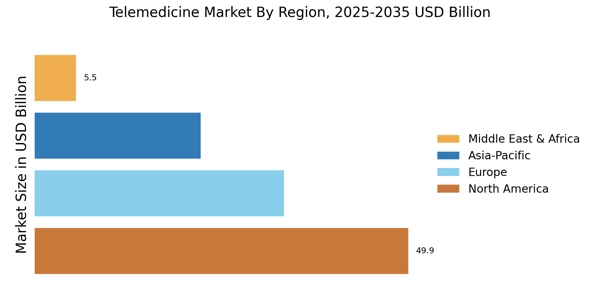
世界の遠隔医療市場規模は2024年に1,108億5,000万米ドルと評価され、市場は2025年の1,244億米ドルから2035年までに3,940億2,000万米ドルに成長すると予測されており、2025年から2035年の予測期間中に12.22%のCAGRを記録します。北米は 2024 年に 45% 以上のシェアで市場をリードし、約 498 億 8,000 万米ドルの収益を生み出しました。遠隔医療市場の成長は、遠隔医療アクセスに対する需要の増加、慢性疾患の有病率の上昇、デジタル医療インフラの拡大によって推進されています。
仮想診察や遠隔ケア ソリューションの採用が拡大することで、世界的にアクセシビリティが向上し、コストが削減され、医療提供の効率が向上しています。 WHOは、10億人以上の人が必須の医療サービスを利用できないと報告している一方、IHMEは慢性疾患が世界の死亡の70%以上を占めており、遠隔医療ソリューションの需要が高まり、世界中で遠隔医療プラットフォームの導入が加速していると推定しています。
主要な市場動向とハイライト
遠隔医療市場は、技術の進歩とアクセス可能な医療への需要の増加によって力強い成長を遂げています。
- 北米は 4 兆 5,000 億米ドルの医療支出と急速な遠隔医療導入率に支えられ、45% 以上のシェアで優位に立っています。
- ヨーロッパは、慢性疾患と強力なデジタルヘルスへの取り組みにより、市場規模が 332 億 6,000 万ドルとなり 30% のシェアを占めています。
- 10億人以上の人が必須の医療(WHO)にアクセスできず、世界中で遠隔医療および遠隔医療ソリューションに対する需要が大幅に増加しています。
- AI により診断精度が 20 ~ 30% 向上し、世界中で高度な遠隔医療プラットフォームと予測医療技術の導入が加速します。
市場規模と予測
| 2024年の市場規模 | 110.85 (USD Billion) |
| 2035年の市場規模 | 394.02 (USD Billion) |
| CAGR (2025 - 2035) | 12.22% |
| 2024 年に最大の地域市場シェアを獲得 | 北米 |
主要なプレーヤー
などの企業アムウェル(米国)、MDLIVE (米国)、オンデマンドのドクター(米国)、HealthTap (米国)、Lemonaid Health (米国)、PlushCare (米国)、Zocdoc (米国) は、世界市場の主要な参加企業です。