Active B12 Test Market Research Report Information By Type (Elisa Assay, Enzyme Immunoassay, and Others), By Application (Folate Deficiency Anemia, Pernicious Anemia, Macrocytic Anemia, and Others) And By Region (North America, Europe, Asia-Pacific, And Rest Of The World) –Market Forecast Till 2035
Forecast Period
2025 - 2035
CAGR
16.26%
2024 Market Size
$ 3.98 Million
2035 Market Size
$ 20.86 Million
Life Sciences● Updated May 15, 2026Report ID: MRFR/LS/2855-HCR|Pages: 206|Author: Vikita Thakur, Kinjoll Dey
Active B12 Test Market Summary
As per MRFR analysis, the Active B12 Test Market Size was estimated at 3.98 USD Million in 2024. The Active B12 Test industry is projected to grow from 4.62 in 2025 to 20.86 by 2035, exhibiting a compound annual growth rate (CAGR) of 16.26% during the forecast period 2025 - 2035.
Key Market Trends & Highlights
The Active B12 Test Market is experiencing robust growth driven by technological advancements and increasing health awareness.
North America remains the largest market for Active B12 testing, driven by a well-established healthcare infrastructure.
The Asia-Pacific region is emerging as the fastest-growing market, fueled by rising health consciousness and access to advanced testing technologies.
Clinical testing continues to dominate the market, while home testing is rapidly gaining traction among consumers seeking convenience.
Key market drivers include the rising geriatric population and the integration of B12 testing into routine health check-ups, enhancing preventive healthcare efforts.
Enabled $4.3B Revenue Impact for Fortune 500 and Leading Multinationals
Partnering with 2000+ Global Organizations Each Year
30K+ Citations by Top-Tier Firms in the Industry
Active B12 Test Market Trends
The Active B12 Test Market is currently experiencing a notable evolution, driven by an increasing awareness of vitamin B12's critical role in human health. This test is essential for diagnosing deficiencies that can lead to severe neurological and cognitive issues. As healthcare providers emphasize preventive measures, the demand for accurate and efficient testing methods is on the rise. Furthermore, advancements in technology are facilitating the development of more precise testing kits, which are becoming increasingly accessible to both healthcare professionals and patients. This trend suggests a shift towards more personalized healthcare, where individuals can monitor their vitamin levels proactively.
In addition, the growing geriatric population is likely to contribute to the expansion of the Active B12 Test Market. Older adults are more susceptible to vitamin B12 deficiencies due to various factors, including dietary restrictions and absorption issues. Consequently, healthcare systems are prioritizing the implementation of routine testing for this demographic. Moreover, the integration of telehealth services is enhancing the accessibility of testing, allowing patients to receive results and consultations remotely. This combination of factors indicates a promising future for the Active B12 Test Market, as it adapts to meet the evolving needs of the population.
Technological Advancements in Testing
Recent innovations in testing methodologies are enhancing the accuracy and efficiency of Active B12 tests. These advancements are likely to lead to the development of user-friendly kits that can be utilized in various settings, including home testing.
Increased Awareness of Nutritional Health
There appears to be a growing recognition of the importance of nutritional health among consumers. This trend is driving demand for Active B12 testing as individuals seek to understand their vitamin levels and overall well-being.
Focus on Preventive Healthcare
The healthcare sector is increasingly emphasizing preventive measures, which includes routine testing for vitamin deficiencies. This focus is expected to bolster the Active B12 Test Market as more individuals seek proactive health management.
Active B12 Test Market Drivers
Market Growth Projections
The Global Active B12 Test Market Industry is projected to experience substantial growth over the next decade. With a market value of 3.98 USD Billion in 2024, it is expected to reach 20.9 USD Billion by 2035, reflecting a compound annual growth rate of 16.25% from 2025 to 2035. This growth trajectory indicates a robust demand for active B12 testing, driven by factors such as increased awareness of vitamin deficiencies, advancements in diagnostic technologies, and supportive regulatory frameworks. The market's expansion is indicative of a broader trend towards preventive healthcare and improved nutritional awareness.
Regulatory Support for Nutritional Testing
Regulatory bodies are increasingly recognizing the importance of nutritional testing, which is positively influencing the Global Active B12 Test Market Industry. Policies that promote routine screening for vitamin deficiencies are being implemented in various countries. This regulatory support encourages healthcare providers to incorporate active B12 testing into standard practice. As a result, the market is likely to experience growth as more individuals gain access to testing services. The alignment of healthcare policies with nutritional health initiatives suggests a promising future for the active B12 testing sector.
Rising Prevalence of Vitamin B12 Deficiency
The increasing incidence of vitamin B12 deficiency globally is a primary driver for the Global Active B12 Test Market Industry. Factors such as dietary changes, particularly in vegetarian and vegan populations, contribute to this trend. According to health organizations, deficiencies can lead to severe neurological and cognitive issues. As awareness of these health risks grows, healthcare providers are more likely to recommend active B12 testing. This heightened demand is expected to propel the market, with projections indicating a market value of 3.98 USD Billion in 2024, reflecting the urgent need for effective diagnostic solutions.
Aging Population and Associated Health Risks
The aging global population is a crucial factor impacting the Global Active B12 Test Market Industry. Older adults are at a higher risk for vitamin B12 deficiency due to factors such as decreased absorption and dietary limitations. As the demographic of individuals aged 65 and older continues to grow, there is an increasing need for effective screening and diagnostic tools. This trend is likely to drive demand for active B12 testing, as healthcare systems adapt to the needs of an aging population. Consequently, the market is expected to witness substantial growth in the coming years.
Technological Advancements in Diagnostic Testing
Innovations in diagnostic technologies are significantly influencing the Global Active B12 Test Market Industry. The introduction of more accurate and efficient testing methods, such as high-performance liquid chromatography and mass spectrometry, enhances the reliability of B12 assessments. These advancements not only improve patient outcomes but also streamline laboratory processes, making testing more accessible. As healthcare facilities adopt these technologies, the market is poised for growth, with an anticipated compound annual growth rate of 16.25% from 2025 to 2035. This trend underscores the importance of integrating cutting-edge technology in routine diagnostics.
Increased Awareness and Education on Nutritional Health
There is a growing emphasis on nutritional health and preventive care, which is driving the Global Active B12 Test Market Industry. Public health campaigns and educational initiatives aimed at informing populations about the importance of vitamin B12 are becoming more prevalent. This increased awareness leads to higher testing rates as individuals seek to understand their nutritional status. Healthcare providers are also more proactive in recommending testing as part of routine health assessments. As a result, the market is expected to expand significantly, with projections indicating a value of 20.9 USD Billion by 2035.
Market Segment Insights
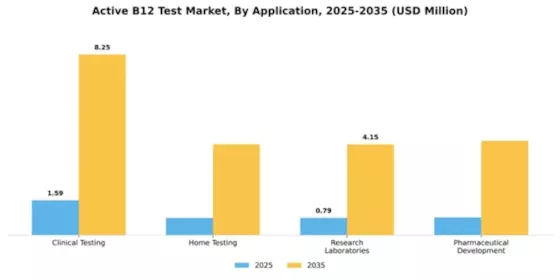
By Application: Clinical Testing (Largest) vs. Home Testing (Fastest-Growing)
The Active B12 Test Market is characterized by a diverse range of applications, with clinical testing commanding the largest market share. This segment encompasses a variety of diagnostic environments, including hospitals and laboratories, where precision in vitamin B12 measurement is crucial for patient management. Home testing, on the other hand, is rapidly gaining traction among consumers who seek convenient health monitoring options. This trend is particularly driven by the increasing prevalence of vitamin B12 deficiency and the growing interest in self-health management among individuals.
Growth trends in the Active B12 Test Market are propelled primarily by technological advancements and an increase in consumer awareness regarding health issues related to vitamin B12 levels. The demand for home testing kits is accelerating as consumers favor ease of use and immediate results. Furthermore, pharmaceutical development and research laboratories are also contributing to market growth through innovations in testing methodologies and enhanced product efficacy, making the segment increasingly competitive and dynamic.
Clinical Testing: Dominant vs. Home Testing: Emerging
The clinical testing segment in the Active B12 Test Market is marked by its dominant position, primarily due to established infrastructures within hospitals and laboratories that validate its necessity in routine diagnostics. This segment benefits from regulatory support and clinical guidelines that emphasize the importance of accurate B12 measurement for diagnosing various health conditions. In contrast, home testing represents an emerging segment influenced by the digital health revolution. It caters to health-conscious consumers who prefer the accessibility of home tests, thus enhancing patient engagement. Home testing kits are designed for user-friendliness and rapid results, positioning them as a valuable tool for proactive health management. Both segments, while distinct in their approaches, are essential to the market’s evolution and consumer health priorities.
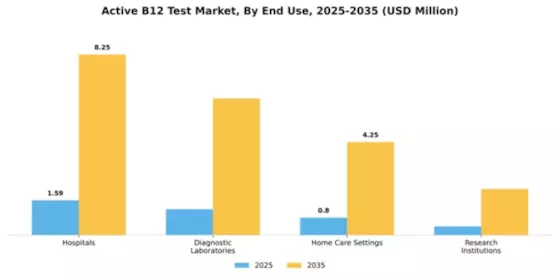
By End Use: Hospitals (Largest) vs. Diagnostic Laboratories (Fastest-Growing)
The Active B12 Test market is characterized by a diverse utilization across various end users, with hospitals commanding the largest share due to their comprehensive care capabilities and diagnostic needs. Diagnostic laboratories are witnessing rapid growth, fueled by the rising demand for specialized testing and advanced diagnostic technologies, making them pivotal in the segment's evolution. Home care settings and research institutions, while essential, hold smaller market shares compared to these two key players. Their roles are becoming increasingly relevant as healthcare shifts towards personalized medicine and home-based health monitoring, respectively.
End Use: Hospitals (Dominant) vs. Diagnostic Laboratories (Emerging)
Hospitals remain the dominant segment in the Active B12 Test market, driven by their extensive patient base and the necessity for high-quality diagnostic services. They are equipped with advanced technologies and skilled personnel to conduct Active B12 testing, ensuring accurate results that are vital for patient management. In contrast, diagnostic laboratories are an emerging segment, leveraging innovations in testing methodologies and automation. Their flexibility and focus on precision diagnostics are attracting a growing share of the market, supported by a trend towards earlier and more routine diagnostic testing in the healthcare continuum. As both segments evolve, the synergy between them could redefine testing standards in active B12 diagnostics.
By Test Type: Serum Test (Largest) vs. Point-of-Care Test (Fastest-Growing)
In the Active B12 Test Market, the Serum Test maintains its position as the largest segment, capturing a significant market share due to its widespread adoption in clinical settings. This test type’s reliability and established methodology make it the preferred choice among healthcare providers. Following closely are the Plasma and Urine Tests, which also contribute meaningfully to the market but do not match the dominance of the Serum Test.
On the other hand, the Point-of-Care Test is gaining traction rapidly, becoming the fastest-growing segment. This growth can be attributed to the increasing demand for quick and accurate diagnostic results that can be obtained at the patient's location. As healthcare continues to shift towards more immediate care solutions, the adoption of Point-of-Care Tests is expected to rise significantly.
Serum Test (Dominant) vs. Point-of-Care Test (Emerging)
The Serum Test remains the dominant testing method in the Active B12 Test Market due to its accuracy and sensitivity. Its ability to provide comprehensive insights into Vitamin B12 levels makes it essential in diagnosing deficiencies and related conditions. In contrast, the Point-of-Care Test is emerging as a strong competitor, primarily driven by advancements in technology that facilitate ease of use and accessibility. This test type offers swift results, making it invaluable in settings where quick decision-making is crucial, such as emergency care facilities and remote healthcare environments. The rising focus on preventive care and the urgency of health interventions further support its growth, indicating a shift in consumer preferences towards more convenient testing options.
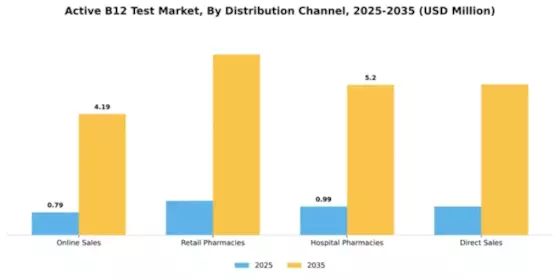
By Distribution Channel: Online Sales (Largest) vs. Retail Pharmacies (Fastest-Growing)
In the Active B12 Test Market, the distribution of sales across various channels reveals interesting dynamics. Online sales hold the largest share, reflecting a significant consumer inclination towards convenience and accessibility. Retail pharmacies also contribute notably but are increasingly challenged by the evolving shopping behaviors of consumers who prefer the ease of online purchasing. On the other hand, hospital pharmacies represent a crucial segment, providing vital support but not at the same scale as online or retail channels. Direct sales remain a niche yet important channel, especially for specialized tests.
Online Sales (Dominant) vs. Retail Pharmacies (Emerging)
The online sales channel has become a dominant force in the Active B12 Test Market by capitalizing on the growing trend of e-commerce and consumer demand for immediate access to testing solutions. This segment thrives on user-friendly platforms and user engagement, making it easier for customers to procure tests without the need for in-person visits. On the other hand, retail pharmacies, while traditionally seen as a stable channel for pharmacy-led sales, are experiencing rapid growth as they adapt to modern retail experiences and integrate digital strategies. This evolution makes retail pharmacies an emerging player capable of capturing a larger share of health-conscious consumers who seek both convenience and reliability in their purchasing decisions.
By Demographics: Adults (Largest) vs. Elderly (Fastest-Growing)
In the Active B12 Test Market, the Adults segment holds the largest market share, reflecting a significant focus on health and wellness among this demographic. With increasing awareness about vitamin deficiencies, many adults proactively seek testing solutions to monitor their B12 levels, driving demand. Meanwhile, the Elderly segment is emerging as the fastest-growing demographic due to the rise in age-related health issues. This group is particularly susceptible to B12 deficiencies, stimulating a growing need for accessible testing options that cater specifically to their health concerns.
Adults (Dominant) vs. Elderly (Emerging)
The Adults segment in the Active B12 Test Market represents a dominant force, characterized by a health-conscious population that prioritizes regular health check-ups. This demographic often has the resources and motivation to invest in personal health, leading to a higher uptake of B12 testing services. On the other hand, the Elderly segment is emerging, spurred by an aging global population and increasing diagnoses of health conditions that can be associated with low B12 levels. As healthcare systems adapt to meet these needs, tailored solutions for the elderly are expected to see substantial growth, indicating a shifting focus in market strategies.
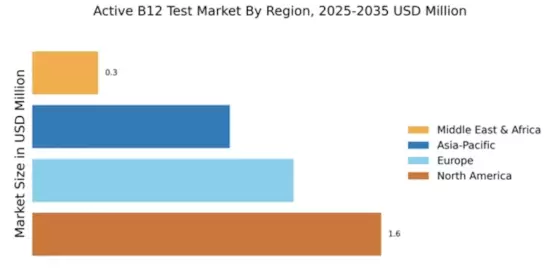
North America is poised to maintain its leadership in the Active B12 Test market, holding a significant market share of $1.59B in 2025. The region's growth is driven by increasing healthcare expenditure, a rise in B12 deficiency awareness, and advancements in diagnostic technologies. Regulatory support from agencies like the FDA further catalyzes market expansion, ensuring the availability of innovative testing solutions.
The competitive landscape is robust, with key players such as Abbott Laboratories, Thermo Fisher Scientific, and Roche Diagnostics leading the charge. The U.S. is the primary market, benefiting from a well-established healthcare infrastructure and high demand for accurate diagnostic tests. The presence of these major companies fosters innovation and enhances market dynamics, ensuring a steady supply of advanced testing options.
Europe : Emerging Market Dynamics
Europe's Active B12 Test market is projected to reach $1.19B by 2025, driven by increasing health awareness and a growing aging population. Regulatory frameworks across the EU are becoming more supportive of diagnostic innovations, which is expected to enhance market accessibility. The demand for accurate and efficient testing methods is rising, particularly in countries like Germany and France, where healthcare investments are robust.
Germany leads the market, supported by a strong healthcare system and significant investments in medical technology. Key players like Siemens Healthineers and Roche Diagnostics are actively expanding their product offerings. The competitive landscape is characterized by collaborations and partnerships aimed at enhancing diagnostic capabilities, ensuring that the region remains at the forefront of medical advancements.
Asia-Pacific : Rapidly Growing Market
The Asia-Pacific region is witnessing rapid growth in the Active B12 Test market, projected to reach $0.9B by 2025. Factors such as increasing healthcare investments, rising awareness of nutritional deficiencies, and a growing population are driving demand. Countries like China and India are focusing on improving healthcare infrastructure, which is expected to enhance access to diagnostic tests and services.
China is emerging as a key player in the market, with significant investments in healthcare technology and diagnostics. The competitive landscape includes both local and international players, with companies like Thermo Fisher Scientific and Bio-Rad Laboratories expanding their presence. The region's market dynamics are characterized by innovation and a focus on improving healthcare outcomes, positioning it as a vital area for growth in the diagnostics sector.
Middle East and Africa : Untapped Market Potential
The Middle East and Africa (MEA) region is gradually emerging in the Active B12 Test market, with a projected size of $0.3B by 2025. The growth is driven by increasing healthcare investments and a rising prevalence of nutritional deficiencies. Governments are focusing on enhancing healthcare access and quality, which is expected to catalyze demand for diagnostic tests in the region.
Countries like South Africa and the UAE are leading the way in healthcare advancements, with significant investments in medical technology. The competitive landscape is still developing, with opportunities for both local and international players to establish a foothold. As healthcare systems evolve, the demand for accurate diagnostic solutions is expected to rise, making MEA a promising market for future growth.
Key Players and Competitive Insights
The Active B12 Test Market is characterized by a competitive landscape that is increasingly shaped by innovation, strategic partnerships, and a focus on digital transformation. Key players such as Abbott Laboratories (US), Roche Diagnostics (CH), and Siemens Healthineers (DE) are at the forefront, each employing distinct strategies to enhance their market presence. Abbott Laboratories (US) emphasizes innovation in diagnostic technologies, aiming to streamline testing processes and improve accuracy. Meanwhile, Roche Diagnostics (CH) focuses on expanding its product portfolio through strategic acquisitions, thereby enhancing its capabilities in the B12 testing segment. Siemens Healthineers (DE) is leveraging digital health solutions to optimize laboratory workflows, which appears to be a critical factor in maintaining competitive advantage in this evolving market.The business tactics employed by these companies reflect a concerted effort to localize manufacturing and optimize supply chains, which is essential in a moderately fragmented market. This competitive structure allows for a diverse range of offerings, yet the influence of major players remains pronounced. The collective strategies of these companies not only enhance their operational efficiencies but also contribute to a more resilient market environment, capable of adapting to changing consumer demands and technological advancements.
In November Abbott Laboratories (US) announced the launch of a new Active B12 Test that utilizes advanced biomarker technology, which is expected to significantly improve diagnostic accuracy. This strategic move is likely to reinforce Abbott's position as a leader in the market, as it addresses the growing demand for precise and rapid testing solutions. The introduction of this innovative product aligns with the company's broader strategy of enhancing its diagnostic capabilities through cutting-edge technology.
In October Roche Diagnostics (CH) completed the acquisition of a biotech firm specializing in vitamin B12 assays, which is anticipated to bolster its research and development efforts in the Active B12 Test segment. This acquisition not only expands Roche's product offerings but also enhances its competitive edge by integrating novel technologies into its existing portfolio. Such strategic actions indicate Roche's commitment to maintaining leadership in the market through continuous innovation and expansion.
In September Siemens Healthineers (DE) launched a digital platform aimed at improving laboratory efficiency and data management for Active B12 testing. This initiative is indicative of the company's focus on digital transformation, which is becoming increasingly vital in the healthcare sector. By enhancing data analytics capabilities, Siemens Healthineers is likely to improve decision-making processes within laboratories, thereby increasing the overall efficiency of B12 testing.
As of December the competitive trends in the Active B12 Test Market are heavily influenced by digitalization, sustainability, and the integration of artificial intelligence (AI). Strategic alliances among key players are shaping the landscape, fostering innovation and collaboration. The shift from price-based competition to a focus on technological advancement and supply chain reliability is evident. Companies that prioritize innovation and adaptability are likely to thrive, as the market continues to evolve in response to emerging trends and consumer expectations.
Key Companies in the Active B12 Test Market include
Industry Developments
August 2021: The makers of nutritional status tests for omega-3 fatty acids and vitamin D, OmegaQuant, have announced the availability of a new test to determine vitamin B12 status that consumers may take at home. The practical test detects methylmalonic acid (uMMA), which OmegaQuant claims is the most precise approach to assess poor B12 status. A person is more likely to be deficient in this nutrient if you have more uMMA.
Future Outlook
Active B12 Test Market Future Outlook
The Active B12 Test Market is projected to grow at a 16.26% CAGR from 2025 to 2035, driven by increasing awareness of vitamin deficiencies and advancements in diagnostic technologies.
New opportunities lie in:
Development of portable testing devices for home use
Integration of AI for personalized health insights
Expansion into emerging markets with tailored marketing strategies
By 2035, the Active B12 Test Market is expected to achieve substantial growth and innovation.
Market Segmentation
Active B12 Test Market End Use Outlook
Hospitals
Diagnostic Laboratories
Home Care Settings
Research Institutions
Active B12 Test Market Test Type Outlook
Serum Test
Plasma Test
Urine Test
Point-of-Care Test
Active B12 Test Market Application Outlook
Clinical Testing
Home Testing
Research Laboratories
Pharmaceutical Development
Active B12 Test Market Customer Type Outlook
Healthcare Professionals
Patients
Researchers
Pharmaceutical Companies
Active B12 Test Market Distribution Channel Outlook
Online Sales
Retail Pharmacies
Hospital Pharmacies
Direct Sales
Report Scope
MARKET SIZE 2024
3.98(USD Million)
MARKET SIZE 2025
4.62(USD Million)
MARKET SIZE 2035
20.86(USD Million)
COMPOUND ANNUAL GROWTH RATE (CAGR)
16.26% (2025 - 2035)
REPORT COVERAGE
Revenue Forecast, Competitive Landscape, Growth Factors, and Trends
What is the current market valuation of the Active B12 Test Market?
The market valuation of the Active B12 Test Market was 3.98 USD Million in 2024.
What is the projected market size for the Active B12 Test Market by 2035?
The projected market size for the Active B12 Test Market is expected to reach 20.86 USD Million by 2035.
What is the expected CAGR for the Active B12 Test Market during the forecast period?
The expected CAGR for the Active B12 Test Market from 2025 to 2035 is 16.26%.
Which companies are the key players in the Active B12 Test Market?
Key players in the Active B12 Test Market include Quest Diagnostics, Labcorp, Roche Diagnostics, Abbott Laboratories, Siemens Healthineers, Thermo Fisher Scientific, Bio-Rad Laboratories, and Ortho Clinical Diagnostics.
What are the main applications of Active B12 tests?
The main applications of Active B12 tests include Clinical Testing, Home Testing, Research Laboratories, and Pharmaceutical Development.
How do hospitals and diagnostic laboratories contribute to the market?
Hospitals and Diagnostic Laboratories contributed significantly, with valuations of 1.59 USD Million and 1.19 USD Million, respectively, in 2024.
What types of tests are included in the Active B12 Test Market?
The Active B12 Test Market includes Serum Tests, Plasma Tests, Urine Tests, and Point-of-Care Tests.
What distribution channels are utilized for Active B12 tests?
Distribution channels for Active B12 tests include Online Sales, Retail Pharmacies, Hospital Pharmacies, and Direct Sales.
Which demographic segments are targeted in the Active B12 Test Market?
The demographic segments targeted include Adults, Elderly, Pregnant Women, and Children, with valuations reflecting their respective market sizes.
What is the growth potential for the Active B12 Test Market in the coming years?
The growth potential for the Active B12 Test Market appears robust, with a projected increase in valuation and a strong CAGR of 16.26% from 2025 to 2035.
Author
Author
Vikita Thakur
Senior Research Analyst
She holds an experience of about 5+ years in market research and business consulting projects for sectors such as life sciences, medical devices, and healthcare IT. She possesses a robust background in data analysis, market estimation, competitive intelligence, pipeline analysis market trend identification, and consumer behavior insights. Her expertise lies in technical Sales support, client interaction and project management, designing and implementing market research studies, conducting competitive analysis, and synthesizing complex data into actionable recommendations that drive business growth.
read more
Co-Author
Kinjoll Dey
Senior Research Analyst
He is an extremely curious individual currently working in Healthcare and Medical Devices Domain. Kinjoll is comfortably versed in data centric research backed by healthcare educational background. He leverages extensive data mining and analytics tools such as Primary and Secondary Research, Statistical Analysis, Machine Learning, Data Modelling. His key role also involves Technical Sales Support, Client Interaction and Project management within the Healthcare team. Lastly, he showcases extensive affinity towards learning new skills and remain fascinated in implementing them.
The secondary research process involved comprehensive analysis of regulatory databases, peer-reviewed medical journals, clinical publications, and authoritative health organizations. Key sources included:
Regulatory & Government Authorities:
US Food & Drug Administration (FDA) - In vitro diagnostic device approvals and 510(k) clearances for B12 testing platforms
European Medicines Agency (EMA) - CE marking and IVDR compliance for diagnostic assays
Centers for Medicare & Medicaid Services (CMS) - Reimbursement codes and coverage determinations for vitamin B12 testing
Centers for Disease Control and Prevention (CDC) - National Health and Nutrition Examination Survey (NHANES) data on B12 deficiency prevalence
National Institutes of Health (NIH) - Office of Dietary Supplements research on vitamin B12 metabolism and deficiency guidelines
Professional & Clinical Organizations:
American Association for Clinical Chemistry (AACC) - Laboratory medicine guidelines and testing standards
International Federation of Clinical Chemistry and Laboratory Medicine (IFCC) - Standardization protocols for B12 assays
American Society for Clinical Pathology (ASCP) - Clinical laboratory utilization and best practices
Endocrine Society - Clinical practice guidelines for nutritional deficiency assessment
British Society for Haematology - Guidelines on B12 and folate deficiency diagnosis
Academic & Research Databases:
National Center for Biotechnology Information (NCBI/PubMed) - Peer-reviewed studies on active B12 (holotranscobalamin) testing methodologies
Cochrane Library - Systematic reviews on diagnostic accuracy of B12 testing
ClinicalTrials.gov - Ongoing clinical trials for novel B12 diagnostic technologies
Healthcare Statistics & Epidemiology:
World Health Organization (WHO) Global Health Observatory - Micronutrient deficiency surveillance data
EU Eurostat Health Database - Healthcare expenditure and diagnostic testing volumes
National Center for Health Statistics (NCHS) - Laboratory testing trends and disease prevalence
Organization for Economic Co-operation and Development (OECD) Health Statistics - Diagnostic testing market indicators
Industry & Market Intelligence:
In Vitro Diagnostics (IVD) industry associations and trade publications
National health ministry reports from key markets (India, China, Japan, Brazil)
These sources were used to collect testing volume statistics, regulatory approval data, clinical validation studies, demographic deficiency trends, and competitive landscape analysis for ELISA assays, enzyme immunoassays, chemiluminescence immunoassays, and emerging point-of-care B12 testing technologies across applications including folate deficiency anemia, pernicious anemia, and macrocytic anemia.
Primary Research
In order to gather both qualitative and quantitative insights, supply-side and demand-side stakeholders were interviewed during the primary research process. CEOs, VPs of Product Development, heads of regulatory affairs, R&D directors, and commercial directors from manufacturers of in vitro diagnostics, OEMs of clinical laboratory equipment, and suppliers of reagents were examples of supply-side sources. Chief pathologists, clinical laboratory directors, hematologists, gastroenterologists, endocrinologists, procurement managers from hospital networks and diagnostic laboratory chains, and medical directors from reference laboratories were among the demand-side sources. Primary research verified product pipeline timelines for next-generation active B12 assays, validated market segmentation by test type (ELISA, enzyme immunoassay, chemiluminescence, point-of-care), and acquired information on clinical adoption patterns, laboratory automation integration, pricing strategies, and reimbursement dynamics across hospital laboratories, diagnostic laboratories, home care settings, and research institutions.
Primary Respondent Breakdown:
By Designation: C-level Primaries (28%), Director Level (32%), Others (40%)
By Region: North America (32%), Europe (30%), Asia-Pacific (28%), Rest of World (10%)
Market Size Estimation
Global market valuation was derived through revenue mapping and testing volume analysis. The methodology included:
Identification of 40+ key diagnostic manufacturers and IVD companies across North America, Europe, Asia-Pacific, and Latin America
Product mapping across ELISA assays, enzyme immunoassays, chemiluminescence immunoassays, radioimmunoassays, and point-of-care testing platforms
Analysis of reported and modeled annual revenues specific to vitamin B12 and active B12 (holotranscobalamin) testing portfolios
Coverage of manufacturers representing 72-78% of global market share in 2024
Extrapolation using bottom-up (test volume × ASP by country/region) and top-down (manufacturer revenue validation) approaches to derive segment-specific valuations across serum testing, plasma testing, urine testing, and point-of-care testing modalities
“This is really good guys. Excellent work on a tight deadline. I will continue to use you going forward and recommend you to others. Nice job”
Noah MalgeriCo-Founder
“Thanks. It’s been a pleasure working with you, please use me as reference with any other Intel employees.”
Joseph AguayoSales Operations & Pricing Manager
“Thanks for sending the report it gives us a good global view of the Betaïne market.”
Peter Groot koerkampAccount and Business Manager
“Thank you, this will be very helpful for OQS.”
La Terria DoddProgram Support Specialist
“We found the report very insightful! we found your research firm very helpful. I'm sending this email to secure our future business.”
Younghwan ChoiSenior Retail Manager
“I am very pleased with how market segments have been defined in a relevant way for my purposes (such as "Portable Freezers & refrigerators" and "last-mile").
In general the report is well structured. Thanks very much for your efforts.”
Mark IrwinManagement Consultant
“I have been reading the first document or the study, ,the Global HVAC and FP market report 2021 till 2026. Must say, good info! I have not gone in depth at all parts, but got a good indication of the data inside!”
Rob KooikerGroup Product Manager HVAC & Fire Protection GMA
“We got the report in time, we really thank you for your support in this process. I also thank to all of your team as they did a great job.”
Akif MorogluStrategy & Business Development Director
“The Automotive 48V ECU Components Procurement Intelligence Study” was a complex project, but the Market Research Future (MRFR) team handled it with quality, agility, and customer-centricity. They delivered all requested data on time and within the agreed scope. The team, including Shubhendra Anand and Rahul Gotadki, was always readily available to clarify questions and swiftly implement necessary adjustments, driving the project to a successful conclusion within a very demanding timeframe.
I would also like to specifically commend Akshay Agarwal for his responsiveness and support at every stage—from our initial inquiry on May 6th through to final delivery on June 18th. His dedication made the entire process seamless.”
Guilherme Gomes MartinsProduct Management Director