China : Unmatched Growth and Innovation
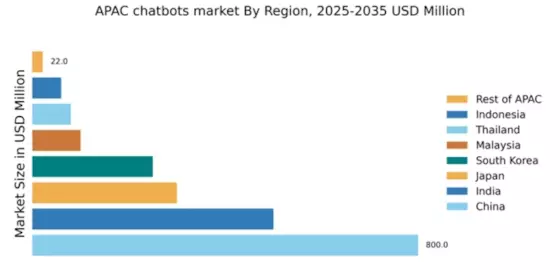
China holds a commanding market share of 40% in the APAC chatbot market, valued at $800.0 million. Key growth drivers include rapid digital transformation, increasing demand for customer service automation, and government support for AI technologies. The Chinese government has implemented favorable policies to promote AI development, while significant investments in infrastructure bolster the tech ecosystem. The rise of e-commerce and mobile payments further fuels chatbot adoption, enhancing consumer engagement and operational efficiency.
India : AI Adoption in Diverse Sectors
India's chatbot market is valued at $500.0 million, capturing 25% of the APAC share. The growth is driven by increasing smartphone penetration, a burgeoning startup ecosystem, and a strong push towards digitalization across sectors like banking, retail, and healthcare. Government initiatives like Digital India promote technology adoption, while regulatory frameworks are evolving to support AI integration. The demand for multilingual chatbots is also rising, catering to India's diverse linguistic landscape.
Japan : AI Integration in Business Processes
Japan's chatbot market is valued at $300.0 million, representing 15% of the APAC market. The growth is fueled by the country's focus on automation and efficiency in industries such as manufacturing and customer service. Government policies encourage AI research and development, while the aging population drives demand for automated solutions. Japanese companies are increasingly adopting chatbots to enhance customer interactions and streamline operations, reflecting a strong trend towards digital transformation.
South Korea : AI-Driven Customer Engagement
South Korea's chatbot market is valued at $250.0 million, accounting for 12.5% of the APAC share. The market is driven by high internet penetration and a tech-savvy population. Government initiatives support AI development, while local companies are investing in chatbot solutions to improve customer service and operational efficiency. Major cities like Seoul and Busan are key markets, with significant presence from global players like IBM and local startups, creating a competitive landscape rich in innovation.
Malaysia : AI Adoption in Diverse Industries
Malaysia's chatbot market is valued at $100.0 million, capturing 5% of the APAC market. The growth is driven by increasing digitalization across sectors such as finance, retail, and telecommunications. Government initiatives like the Malaysia Digital Economy Corporation promote AI adoption, while local businesses are recognizing the value of chatbots for customer engagement. The competitive landscape includes both local startups and international players, fostering a dynamic business environment.
Thailand : Chatbots in Customer Service
Thailand's chatbot market is valued at $80.0 million, representing 4% of the APAC share. The growth is driven by the increasing adoption of digital solutions in sectors like tourism, retail, and banking. Government policies support digital transformation, while local businesses are leveraging chatbots to enhance customer service and streamline operations. Key cities like Bangkok are central to market activities, with a mix of local and international players competing for market share.
Indonesia : AI Solutions for Diverse Needs
Indonesia's chatbot market is valued at $60.0 million, accounting for 3% of the APAC market. The growth is driven by a young, tech-savvy population and increasing smartphone usage. Government initiatives promote digital transformation, while local businesses are beginning to adopt chatbots for customer engagement and operational efficiency. Major cities like Jakarta are key markets, with a competitive landscape that includes both local startups and international companies.
Rest of APAC : Varied Adoption Across Regions
The Rest of APAC chatbot market is valued at $22.0 million, representing 1% of the overall market. Growth is uneven, with varying levels of digital adoption and regulatory support across countries. Some regions are experiencing rapid growth due to government initiatives promoting technology, while others face challenges such as infrastructure limitations. The competitive landscape includes a mix of local and international players, each adapting to unique market conditions and consumer needs.