×
Request Free Sample ×

Kindly complete the form below to receive a free sample of this Report

* Please use a valid business email

Leading companies partner with us for data-driven Insights

clients tt-cursor
Hero Background

Automotive Marketing and Advertising Market

ID: MRFR/Professional Services/64179-HCR
200 Pages
MRFR Team
December 2025

Automotive Marketing and Advertising Market Research Report By Vehicle Type (Passenger Vehicles, Commercial Vehicles, Electric Vehicles, Hybrid Vehicles, Luxury Vehicles), By Target Audience (Millennials, Generation Z, Baby Boomers, Families, Luxury Consumers), By Consumer Behavior (Brand Loyalty, Price Sensitivity, Eco-Consciousness, Technology Adoption, Performance Preference), By Marketing Channel (Digital Marketing, Traditional Marketing, Social Media Marketing, Content Marketing, Influencer Marketing), By Advertising Medium (Television, Print Media, Online Platforms, Radio, Outdoor Advertising) And By Region (North America, Europe, Asia-Pacific, And Rest Of The World) – Market Forecast Till 2035.

Share:
Download PDF ×

We do not share your information with anyone. However, we may send you emails based on your report interest from time to time. You may contact us at any time to opt-out.

Automotive Marketing and Advertising Market Infographic
Purchase Options

Automotive Marketing and Advertising Market Summary

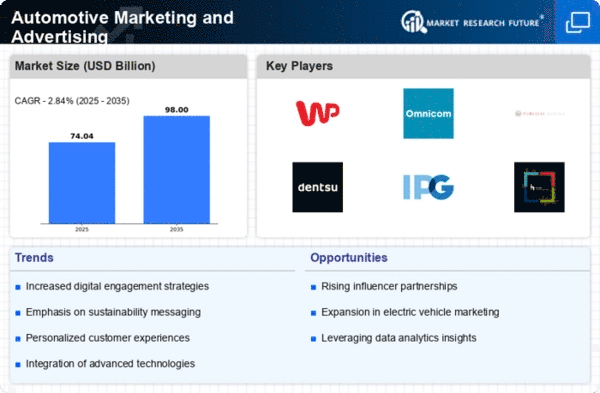
As per MRFR analysis, the Automotive Marketing and Advertising Size was estimated at 72.0 USD Billion in 2024. The Automotive Marketing and Advertising is projected to grow from 74.04 USD Billion in 2025 to 98.0 USD Billion by 2035, exhibiting a compound annual growth rate (CAGR) of 2.84 during the forecast period 2025–2035.

Key Market Trends & Highlights

The automotive marketing and advertising landscape is increasingly shaped by digital engagement and sustainability initiatives.

  • Digital engagement strategies dominate the North American market, reflecting a shift towards online consumer interactions.
  • Sustainability messaging resonates strongly with Millennials, who prioritize eco-friendly practices in their purchasing decisions.
  • Personalization through data analytics is becoming essential, particularly in the fast-growing Generation Z segment.
  • The emergence of electric vehicles and the integration of advanced technology are key drivers influencing marketing strategies across regions.

Market Size & Forecast

2024 Market Size 72.0 (USD Billion)
2035 Market Size 98.0 (USD Billion)
CAGR (2025 - 2035) 2.84%

Major Players

WPP (GB), Omnicom Group (US), Publicis Groupe (FR), Dentsu (JP), Interpublic Group (US), Havas Group (FR), Mediacom (GB), Zenith (GB), Carat (GB)

Our Impact
Enabled $4.3B Revenue Impact for Fortune 500 and Leading Multinationals
Partnering with 2000+ Global Organizations Each Year
30K+ Citations by Top-Tier Firms in the Industry

Automotive Marketing and Advertising Market Trends

The landscape of Automotive Marketing and Advertising is evolving rapidly, driven by technological advancements and shifting consumer preferences. As the industry embraces digital transformation, traditional marketing methods are increasingly supplemented by innovative strategies that leverage data analytics and social media engagement. This shift appears to enhance the ability of brands to connect with their target audiences more effectively, fostering a more personalized experience. Furthermore, the rise of electric vehicles and sustainability concerns is prompting automotive companies to adapt their messaging, emphasizing eco-friendliness and innovation in their campaigns. In December 2025, the focus on customer experience remains paramount, with brands striving to create seamless interactions across various platforms. The integration of artificial intelligence and machine learning into marketing strategies is likely to refine targeting efforts, enabling companies to deliver tailored content that resonates with individual consumers. As the market continues to evolve, it seems that adaptability and responsiveness to consumer trends will be crucial for success in Automotive Marketing and Advertising.

Digital Engagement Strategies

Automotive Marketing and Advertising increasingly relies on digital platforms to engage consumers. Brands are utilizing social media, influencer partnerships, and targeted online advertising to reach potential buyers. This trend suggests a shift from traditional media to more interactive and engaging formats, allowing for real-time feedback and community building.

Sustainability Messaging

With growing environmental awareness, automotive brands are emphasizing sustainability in their marketing efforts. This trend indicates a shift towards promoting eco-friendly vehicles and practices, appealing to a more conscious consumer base. Companies are likely to highlight their commitment to reducing carbon footprints and supporting green initiatives.

Personalization through Data Analytics

The use of data analytics in Automotive Marketing and Advertising is becoming more prevalent. Brands are leveraging consumer data to create personalized marketing campaigns that cater to individual preferences. This trend suggests a move towards more targeted advertising, enhancing customer engagement and loyalty.

Market Segment Insights

By Marketing Channel: Digital Marketing (Largest) vs. Traditional Marketing (Fastest-Growing)

In the automotive marketing landscape, Digital Marketing commands the largest share among various marketing channels, driven primarily by its efficiency and cost-effectiveness. This segment encompasses search engine marketing, online display advertising, and email marketing, all of which are increasingly relied upon by automotive brands to reach target audiences effectively. On the other hand, Traditional Marketing—while still significant—is witnessing a resurgence in specific demographics, as advertisers blend classic approaches with modern tactics to ensure their messages resonate across different consumer segments.

Digital Marketing: SEM (Dominant) vs. Social Media Marketing (Emerging)

In the realm of Digital Marketing, Search Engine Marketing (SEM) stands out as the dominant force, leveraging data-driven strategies to drive qualified traffic to automotive websites and enhance conversion rates. This segment utilizes advanced targeting techniques to cater to consumer preferences, making it a critical tool for automotive companies aiming for higher visibility and engagement. Conversely, Social Media Marketing is an emerging player that is rapidly gaining traction, as automotive brands harness platforms like Instagram and Facebook to connect with younger audiences through engaging content and targeted ads. This channel is characterized by its interactive nature, where brands can foster community engagement and loyalty, presenting unique opportunities for growth.

By Target Audience: Millennials (Largest) vs. Generation Z (Fastest-Growing)

In the automotive marketing and advertising sector, the target audience is heavily segmented. Among them, Millennials represent the largest portion, capitalizing on their established presence in the market. This generation embraces digital engagement, making them a focal point for brands targeting innovative and tech-focused marketing strategies. In contrast, Generation Z is emerging rapidly into the automotive space, capturing the attention of advertisers due to their unique preferences and behaviors. Their inclination towards sustainability and digital experiences drives new marketing trends that are reshaping the industry.

Millennials: Dominant vs. Generation Z: Emerging

Millennials are viewed as the dominant force in the automotive market, recognized for their substantial purchasing power and tendency to prioritize brands that resonate with their values. They favor vehicles that incorporate technology and eco-friendliness, with a strong preference for online research before making purchases. On the other hand, Generation Z is seen as an emerging audience that demands authenticity and transparency from brands. This group is digitally savvy and actively seeks information through social media and influencers. Their purchasing decisions are often influenced by peer recommendations, and they prioritize features that promote convenience and sustainability in their automotive choices.

By Advertising Medium: Online Platforms (Largest) vs. Television (Fastest-Growing)

In the dynamic landscape of Automotive Marketing and Advertising, Online Platforms dominate the advertising medium segment, significantly surpassing traditional channels in audience engagement. As consumers shift towards digital mediums, online advertising captures a substantial market share, leveraging advanced targeting capabilities and real-time analytics. Conversely, Television, once the stalwart of advertising, has been experiencing a resurgence with innovative campaigns and high-impact visuals, appealing to a diverse audience.

Television (Dominant) vs. Print Media (Emerging)

Television stands as the dominant force in automotive advertising, providing broad reach and high engagement through captivating visuals and storytelling. Its ability to produce memorable advertisements that resonate with a wide audience has kept it at the forefront despite the rise of digital alternatives. On the other hand, Print Media is often viewed as an emerging segment, adapting to a more niche audience. While its reach is declining in a digital-first world, print still holds value in targeted campaigns, especially among specific demographics that prefer tangible content, such as brochures and magazines. This juxtaposition highlights how traditional media is evolving alongside digital innovations.

By Vehicle Type: Passenger Vehicles (Largest) vs. Electric Vehicles (Fastest-Growing)

The automotive market is predominantly driven by the passenger vehicles segment, commanding the largest share due to their widespread demand and availability. Consumers prioritize these vehicles for personal use, resulting in a robust market presence. Meanwhile, electric vehicles, though currently smaller in market share compared to passenger or commercial vehicles, are rapidly gaining traction as consumers increasingly seek environmentally friendly options, marking them as a fast-growing segment in the automotive landscape.

Passenger Vehicles (Dominant) vs. Electric Vehicles (Emerging)

Passenger vehicles are characterized by their diverse offerings that cater to varying consumer preferences, ranging from compact cars to SUVs. This segment continues to be the backbone of the automotive industry, largely influenced by factors such as affordability, design, and fuel efficiency. On the other hand, electric vehicles represent an emerging segment fueled by the global push towards sustainability and innovation. As advancements in technology lead to enhanced performance and reduced charging times, electric vehicles are appealing more to environmentally conscious consumers, positioning themselves as crucial players in the future of automotive marketing.

By Consumer Behavior: Brand Loyalty (Largest) vs. Technology Adoption (Fastest-Growing)

Within the consumer behavior segment of automotive marketing, brand loyalty is established as the largest value, dominating the landscape as automotive consumers increasingly gravitate towards familiar brands that convey trust and reliability. Meanwhile, technology adoption is emerging as the fastest-growing value, catering to a consumer base that values innovation and connectivity. As automotive brands inject advanced technologies into their vehicles, marketing strategies must adapt to highlight these benefits to attract discerning customers.

Brand Loyalty: Dominant vs. Technology Adoption: Emerging

Brand loyalty in the automotive sector represents a critical and influential consumer behavior, where customers display a strong preference for manufacturers they've come to trust. This loyalty is bolstered through effective marketing strategies, enhancing emotional connections and brand narratives that resonate with consumers. Conversely, technology adoption is witnessing rapid growth as consumers increasingly demand features like connectivity, autonomous driving, and electric vehicles. This emerging trend indicates that consumers are now seeking advanced solutions that improve convenience and sustainability, compelling marketers to focus on promoting technological innovations to capture interest and foster loyalty among a new generation of eco-conscious and tech-savvy buyers.

Get more detailed insights about Automotive Marketing and Advertising Market

Regional Insights

North America : Market Leader in Innovation

North America continues to lead the automotive marketing and advertising sector, holding a significant market share of 36.0% as of 2024. The region's growth is driven by technological advancements, increasing consumer demand for personalized marketing, and robust regulatory support for digital advertising. The rise of electric vehicles (EVs) and sustainability initiatives further fuel demand, creating new opportunities for innovative marketing strategies. The competitive landscape is characterized by major players such as Omnicom Group and WPP, which dominate the market with their extensive portfolios. The U.S. remains the largest market, followed by Canada and Mexico, where local agencies are increasingly collaborating with global firms. The presence of key players ensures a dynamic environment, fostering creativity and strategic partnerships that enhance market offerings.

Europe : Emerging Trends in Advertising

Europe's automotive marketing and advertising sector is evolving, with a market share of 24.0% as of 2024. The region is witnessing a shift towards digital platforms, driven by changing consumer behaviors and stringent regulations on traditional advertising. The European Union's Green Deal and sustainability goals are also influencing marketing strategies, pushing brands to adopt eco-friendly messaging and practices. Leading countries such as Germany, France, and the UK are at the forefront of this transformation, with key players like Publicis Groupe and Havas Group leading the charge. The competitive landscape is marked by innovation, as agencies adapt to new technologies and consumer preferences. The presence of established firms alongside emerging startups creates a vibrant ecosystem that fosters creativity and collaboration.

Asia-Pacific : Rapid Growth and Innovation

The Asia-Pacific region is rapidly emerging as a significant player in automotive marketing and advertising, with a market share of 8.0% as of 2024. This growth is fueled by increasing urbanization, rising disposable incomes, and a growing middle class that demands innovative marketing solutions. Additionally, the region's regulatory environment is becoming more conducive to digital advertising, enhancing market opportunities for brands. Countries like Japan, China, and India are leading the charge, with key players such as Dentsu and Interpublic Group making substantial investments in local markets. The competitive landscape is characterized by a mix of global and local agencies, fostering a dynamic environment that encourages creativity and responsiveness to consumer needs. As the market matures, the focus on data-driven strategies and personalized marketing is expected to intensify.

Middle East and Africa : Untapped Potential in Marketing

The Middle East and Africa (MEA) region is gradually emerging in the automotive marketing and advertising sector, holding a market share of 4.0% as of 2024. The growth is driven by increasing vehicle ownership, urbanization, and a young population eager for innovative marketing approaches. Regulatory frameworks are also evolving, supporting digital transformation and enhancing advertising opportunities in the automotive sector. Leading countries such as South Africa, UAE, and Nigeria are witnessing a surge in automotive marketing activities, with local and international players vying for market share. The presence of key agencies like Mediacom and Zenith is fostering competition, while collaborations with global firms are enhancing local capabilities. As the market develops, the focus on digital channels and targeted advertising is expected to grow significantly.


Key Players and Competitive Insights

The Automotive Marketing and Advertising sector is currently characterized by a dynamic competitive landscape, driven by rapid technological advancements and evolving consumer preferences. Key players such as WPP (GB), Omnicom Group (US), and Publicis Groupe (FR) are strategically positioned to leverage digital transformation and data analytics to enhance their service offerings. WPP (GB) has focused on integrating AI-driven solutions into its marketing strategies, which appears to enhance client engagement and optimize advertising spend. Meanwhile, Omnicom Group (US) emphasizes a data-centric approach, utilizing consumer insights to tailor campaigns that resonate with target demographics. Publicis Groupe (FR) has been actively pursuing partnerships with tech firms to bolster its digital capabilities, indicating a trend towards collaborative innovation in the sector.The business tactics employed by these companies reflect a concerted effort to localize services and optimize supply chains, thereby enhancing operational efficiency. The market structure is moderately fragmented, with a mix of large multinational firms and smaller specialized agencies. This fragmentation allows for diverse strategies, yet the collective influence of major players like Dentsu (JP) and Interpublic Group (US) shapes competitive dynamics significantly, as they continuously adapt to market demands and technological shifts.

In November Dentsu (JP) announced a strategic partnership with a leading electric vehicle manufacturer to develop targeted advertising campaigns that emphasize sustainability. This move is particularly significant as it aligns with the growing consumer demand for eco-friendly products, positioning Dentsu as a frontrunner in promoting green initiatives within the automotive sector. Such partnerships not only enhance brand visibility but also reflect a broader industry trend towards sustainability in marketing practices.

In October Interpublic Group (US) launched a new AI-driven analytics platform designed to provide real-time insights into consumer behavior. This initiative is crucial as it enables clients to make data-informed decisions, thereby increasing the effectiveness of their marketing strategies. The integration of AI into advertising processes is likely to redefine how campaigns are developed and executed, suggesting a shift towards more personalized consumer interactions.

In September Publicis Groupe (FR) expanded its digital marketing capabilities by acquiring a tech startup specializing in augmented reality (AR) solutions. This acquisition is indicative of the increasing importance of immersive technologies in automotive advertising, as AR can enhance consumer experiences and engagement. By incorporating such innovative technologies, Publicis is positioning itself to meet the evolving expectations of consumers in a highly competitive market.

As of December the competitive trends in the Automotive Marketing and Advertising sector are increasingly defined by digitalization, sustainability, and the integration of AI technologies. Strategic alliances are becoming more prevalent, as companies recognize the need to collaborate to stay ahead in a rapidly changing environment. Looking forward, competitive differentiation is likely to evolve from traditional price-based competition to a focus on innovation, technological advancements, and supply chain reliability. This shift underscores the necessity for companies to adapt and innovate continuously to maintain a competitive edge in the marketplace.

Key Companies in the Automotive Marketing and Advertising Market include

Future Outlook

Automotive Marketing and Advertising Market Future Outlook

The global automotive marketing and advertising sector is projected to grow at 2.84% CAGR from 2025 to 2035, driven by digital transformation, consumer engagement, and data analytics.

New opportunities lie in:

  • Integration of AI-driven customer insights platforms
  • Expansion of personalized digital advertising strategies
  • Development of immersive virtual reality showrooms

By 2035, the market is expected to be robust, leveraging technology and consumer trends.

Market Segmentation

automotive-marketing-and-advertising Vehicle Type Outlook

  • Passenger Vehicles
  • Commercial Vehicles
  • Electric Vehicles
  • Hybrid Vehicles
  • Luxury Vehicles

automotive-marketing-and-advertising Target Audience Outlook

  • Millennials
  • Generation Z
  • Baby Boomers
  • Families
  • Luxury Consumers

automotive-marketing-and-advertising Consumer Behavior Outlook

  • Brand Loyalty
  • Price Sensitivity
  • Eco-Consciousness
  • Technology Adoption
  • Performance Preference

automotive-marketing-and-advertising Marketing Channel Outlook

  • Digital Marketing
  • Traditional Marketing
  • Social Media Marketing
  • Content Marketing
  • Influencer Marketing

automotive-marketing-and-advertising Advertising Medium Outlook

  • Television
  • Print Media
  • Online Platforms
  • Radio
  • Outdoor Advertising

Report Scope

MARKET SIZE 202472.0(USD Billion)
MARKET SIZE 202574.04(USD Billion)
MARKET SIZE 203598.0(USD Billion)
COMPOUND ANNUAL GROWTH RATE (CAGR)2.84% (2025 - 2035)
REPORT COVERAGERevenue Forecast, Competitive Landscape, Growth Factors, and Trends
BASE YEAR2024
Market Forecast Period2025 - 2035
Historical Data2019 - 2024
Market Forecast UnitsUSD Billion
Key Companies ProfiledWPP (GB), Omnicom Group (US), Publicis Groupe (FR), Dentsu (JP), Interpublic Group (US), Havas Group (FR), Mediacom (GB), Zenith (GB), Carat (GB)
Segments CoveredMarketing Channel, Target Audience, Advertising Medium, Vehicle Type, Consumer Behavior
Key Market OpportunitiesIntegration of artificial intelligence in targeted Automotive Marketing and Advertising strategies enhances consumer engagement.
Key Market DynamicsShifting consumer preferences towards digital platforms drive innovative strategies in automotive marketing and advertising.
Countries CoveredNorth America, Europe, APAC, South America, MEA
Leave a Comment
Download Free Sample

Kindly complete the form below to receive a free sample of this Report

Compare Licence

×
Features License Type
Single User Multiuser License Enterprise User
Price $4,950 $5,950 $7,250
Maximum User Access Limit 1 User Upto 10 Users Unrestricted Access Throughout the Organization
Free Customization
Direct Access to Analyst
Deliverable Format
Platform Access
Discount on Next Purchase 10% 15% 15%
Printable Versions