×
Request Free Sample ×

Kindly complete the form below to receive a free sample of this Report

* Please use a valid business email

Leading companies partner with us for data-driven Insights

clients tt-cursor
Hero Background

Automotive Powertrain Market

ID: MRFR/AT/66516-CR
100 Pages
Swapnil Palwe
February 2026

Automotive Powertrain Market Research Report Information by Vehicle Type (Passenger Cars (PCs), Commercial Vehicles [Light Commercial Vehicles (LCVs), Heavy Commercial Vehicles (HCVs)]) By Drive Type (Front Wheel Drive (FWD) Rear, Wheel Drive (RWD), All Wheel Drive (AWD) Services) By Propulsion Type (ICE, Electric Arabic) and By Region - Forecast to 2035

Share:
Download PDF ×

We do not share your information with anyone. However, we may send you emails based on your report interest from time to time. You may contact us at any time to opt-out.

Purchase Options

Automotive Powertrain Market Summary

As per Market Research Future analysis, the Automotive Powertrain Market size was valued at USD 652,092.1 million in 2024. The market is projected to grow from USD 692,521.8 million in 2025 to USD 1,269,609.9 million by 2035, exhibiting a compound annual growth rate (CAGR) of 6.2% during the forecast period (2025 - 2035).

Key Market Trends & Highlights

The Automotive Powertrain Market is undergoing rapid transformation, driven primarily by electrification, regulatory pressures, and technological integration.

  • Multi-energy platforms—flexible architectures supporting ICE, hybrid, and BEV on shared chassis—enable automakers to scale production and adapt to regional demands, reducing tooling costs.
  • Powertrain efficiency is evolving as a "system sport," stacking incremental gains: low-loss bearings, e-oil pumps, thermal management valves, and high-efficiency power electronics minimize energy waste.
  • Software-defined powertrains enable over-the-air (OTA) updates for diagnostics, torque strategies, and cybersecurity, turning vehicles into continuously optimizing systems.
  • North America innovates via mature ecosystems and policy incentives, though hybrids rise as BEV adoption stalls slightly due to range anxiety and costs.
  • Stringent emissions rules and total cost of ownership (TCO) advantages propel electrification, especially in city cycles where EVs excel. Infrastructure gaps and talent shortages for high-voltage expertise, balanced by tailwinds like software integration and AI-driven predictive maintenance

Market Size & Forecast

2024 Market Size 652,092.1 (USD Million)
2035 Market Size 1,269,609.9 (USD Million)
CAGR (2025 - 2035) 6.2%

Major Players

BorgWarner Inc, Magna International Inc., ZF Friedrichshafen AG, Marelli Holdings Co., Ltd., Robert Bosch, Mitsubishi Electric Corporation, NIDEC CORPORATION, Toyota Motor Corp, Hyundai Motor Corp Aisin GK Automotive, JTEKT Corporation, VALEO Company, Schaeffler AG, Denso Corporation.

Our Impact
Enabled $4.3B Revenue Impact for Fortune 500 and Leading Multinationals
Partnering with 2000+ Global Organizations Each Year
30K+ Citations by Top-Tier Firms in the Industry

Automotive Powertrain Market Trends

The rapid global expansion of the electric vehicle (EV) market is reshaping the automotive powertrain landscape and driving a wave of innovation. Unlike traditional vehicles, EVs require completely different powertrain architectures, relying on electric motors, battery packs, inverters, and electronic control units instead of internal combustion engines and multi-speed transmissions. As governments impose stricter emission standards and offer incentives for EV adoption, automakers are heavily investing in next-generation powertrain technologies to stay competitive. This transition is creating a vast opportunity for innovation, especially in developing compact, energy-efficient, and scalable electric powertrain systems.

Automakers and suppliers are responding to this demand by introducing advanced powertrain solutions such as integrated e-axles, modular electric drive units, and high-voltage (800V) systems that enable faster charging and better thermal efficiency. For instance, Hyundai’s E-GMP platform supports multiple EV models and includes an 800V powertrain architecture, allowing ultra-fast charging and high-speed performance. Similarly, Tesla continues to push boundaries with its custom designed electric motors and inverters that offer industry-leading efficiency and acceleration. 

These innovations not only improve vehicle performance but also reduce manufacturing complexity and costs, making EVs more accessible to the mass market. As the EV market continues to grow, especially in regions like Europe, China, and North America—so does the need for powertrains that are smarter, lighter, and more efficient. This creates strong opportunities for both traditional automakers and new entrants to introduce differentiated powertrain technologies. Companies specializing in electric propulsion, battery integration, and power electronics are particularly well-positioned to lead this transformation. The ongoing shift toward electrification is not a temporary trend but a long-term change, making powertrain innovation a central pillar of future mobility and a key driver of growth in the global automotive industry.

Automotive Powertrain Market Drivers

Growing adoption of electric and hybrid vehicles

The rising adoption of electric and hybrid vehicles is a major driver which propels the growth in the Automotive Powertrain Market. As environmental awareness is increasing and governments impose stricter emission regulations, consumers and automakers alike are shifting toward cleaner alternatives to traditional internal combustion engines (ICEs). Electric and hybrid vehicles rely on advanced powertrain systems that integrate electric motors, battery packs, regenerative braking, and smart control units, creating significant demand for new and innovative powertrain technologies. Automakers are accelerating this transition by expanding their electric and hybrid lineups. For instance, Toyota’s hybrid models, like the 2024 Prius, continue to gain popularity due to their fuel efficiency and low emissions. At the same time, Tesla’s EVs, including the Model 3 and Model Y, are seeing strong global sales, thanks to their efficient all-electric powertrains.
 
Additionally, many countries are offering tax incentives and subsidies to promote electric vehicle adoption, further boosting the demand for electric and hybrid powertrain systems. This widespread shift is not limited to passenger cars; commercial and fleet vehicles are also being electrified. As a result, the powertrain market is expanding rapidly, with companies investing heavily in R&D to meet the evolving needs of electric mobility. This trend is expected to accelerate in the coming years, solidifying the growing adoption of electric and hybrid vehicles as a primary growth driver for the automotive powertrain market.

Technological advancements in powertrain systems

The automotive powertrain market is undergrowing a major transformation which is driven by technological innovations aimed at improving performance, fuel efficiency, and sustainability. One of the most impactful advancements is the electrification of powertrains. Traditional internal combustion engine (ICE) is being replaced or supplemented with electric motors, resulting in hybrid, plug in hybrid, and fully electric vehicles. For instance, the Toyota Prius 2024 offers a refined hybrid system that allows for longer electric only diving, helping reduce the fuel consumption and emissions. Meanwhile, tesla’s model 3 Highland (2024), features a highly efficient electric powertrain with improved battery range and enhanced energy management. Another key advancement is the adoption of 800-volt electrical architectures which allows for much faster charging and improved efficiency. Vehicles like Porsche Taycan and Hyundai Ioniq 6 uses this technology to enable ultra-fast charging up to 80% in just around 18 minutes which makes EVs more practical for everyday use.
 
Additionally, the use of integrated electric axles (e-axles) has gained momentum. These combine the electric motor, transmission, and power electronics into a single unit which reduces the weight and complexity while improving all the overall drivetrain efficiency. Companies like ZF have developed such e-axles, which are now being adopted by leading automakers which includes Mercedes-Benz and Stellantis. Moreover, hydrogen fuel cell powertrains which are emerging as a clean alternative particularly for long-range and commercial vehicles. These innovations are not only transforming how vehicles are powered but are also reshaping the global automotive industry’s approach to sustainability and performance.

Rising demand for lightweight materials in powertrain manufacturing

 The increasing focus on fuel efficiency, emission reduction, and vehicle performance has led to a growing demand for lightweight materials in automotive powertrain manufacturing. Traditional powertrain components, often made of heavy metals like cast iron or conventional steel, add considerable weight to vehicles, reducing fuel economy. By replacing these with lightweight alternatives such as aluminum alloys, magnesium, and carbon fiber-reinforced plastics, automakers can significantly reduce vehicle mass, thereby improve efficiency and drive dynamics. This shift is not just an industry trend but a necessary step to meet global regulatory targets related to CO₂ emissions and fuel consumption. Automotive manufacturers are actively incorporating lightweight materials into powertrain components such as engine blocks, cylinder heads, transmission cases, and driveline systems. For example, Ford’s EcoBoost engines use aluminum alloy blocks and heads to reduce engine weight without sacrificing durability or performance. Similarly, BMW has utilized carbon fiber-reinforced plastic (CFRP) and lightweight aluminum in its i-series powertrain and chassis designs to enhance range and agility in electric vehicles. These innovations demonstrate how lightweighting isn't limited to the vehicle body but is becoming a critical area of development in powertrain design itself.
 
This rising demand creates significant opportunities for material suppliers, component manufacturers, and OEMs to collaborate on the development of next generation powertrain systems. Companies specializing in advanced metallurgy, composite materials, and precision engineering stand to benefit from this trend as automakers increasingly seek out lightweight, high-strength solutions. As electric and hybrid vehicles become more mainstream, where every kilogram of saved weight can extend range or reduce battery size, lightweight powertrain design will continue to gain importance. This ongoing shift opens up a growing market segment for innovation, investment, and strategic partnerships within the global powertrain industry

Market Segment Insights

By Commercial Vehicle: Light Commercial Vehicles (Largest) vs. Heavy Commercial Vehicles (Fastest-Growing)

On the basis of Commercial Vehicle, the Automotive Powertrain Market is segmented into Light Commercial Vehicles (LCVs), Heavy Commercial Vehicles (HCVs). The automotive powertrain market is growing steadily with Light Commercial Vehicles (LCVs) that are driven largely by the e-commerce, urban logistics, and last-mile delivery services boom. The segment is moving away to conventional diesel powertrains to more cost-efficient gasoline and electric powertrains due to cost-efficiency and environmental regulations. LCVs Fleet operators are switching to hybrid and electric LCVs to lower the overall cost of ownership and meet urban emission zones. Heavy commercial vehicles (HCVs) segment is a significant part of freight and industrial transportation, and it steadily contributes to the powertrain market. Though the segment has traditionally been dominated by diesel engines, it is also transforming as emission regulations are getting stricter and decarbonization pressure is increasing.

By Drive Type: Front Wheel Drive vs All Wheel Drive: Emerging

Based On Drive Type, the Automotive Powertrain Market is segmented into Front Wheel Drive (FWD), Rear Wheel Drive (RWD), All Wheel Drive (AWD). Front Wheel Drive (FWD) is the only powertrain engine that controls the world automotive powertrain market because it is affordable, lighter in weight, and consumes less fuel. Rear Wheel Drive (RWD) are mostly applied on performance cars and luxury vehicles as well as heavy-duty applications such as trucks and buses. All Wheel Drive (AWD) is gaining traction in the automotive powertrain market, particularly in SUVs, crossovers, and premium vehicles.

By Propulsion Type: ICE (largest) vs Electric (Fastest-Growing)

Based on Propulsion Type, the Automotive Powertrain Market is segmented into ICE (Internal Combustion Engine), Electric. Electric propulsion is the fastest-growing segment in the Automotive Powertrain Market, fueled by environmental concerns, advancing battery technology, and strong government incentives. Internal Combustion Engine (ICE) vehicles currently dominate the Automotive Powertrain Market, owing to their established infrastructure, lower upfront costs, and widespread availability.

By Vehicle Type: Passenger Cars (PCs) (Largest) vs. Commercial Vehicles (Fastest-Growing)

Based on Vehicle Type, Automotive Powertrain Market has been segmented into Passenger Cars (PCs) and Commercial Vehicles. Passenger cars segment is expected to be a large shareholder in the Automotive Powertrain Market due to the rising vehicle ownership, disposable incomes and the urban population. Development of internal combustion engines, coupled with a major thrust on electrification e.g. hybrid or electric cars are transforming this segment. Commercial vehicles including light and heavy commercial vehicles form an important part of the world automotive powertrain market. It is fuelled by growing logistics, construction and infrastructure industry.

Get more detailed insights about Automotive Powertrain Market

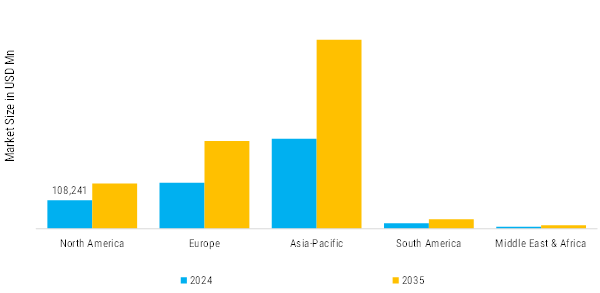
Regional Insights

North America: increased automotive powertrain

North American automotive powertrain market growth remains steadily robust owing largely to burgeoning technological prowess and surging electric vehicle sales nationwide. U. S. remains largest contributor driven heavily by robust automotive manufacturing base and unusually high consumer demand for gas-guzzling SUVs and pickup trucks. Automakers are plowing significant resources into diversifying powertrains by balancing ongoing ICE development with ramping up production of electric powertrains. Stringent fuel economy standards like CAFÉ regulations push OEMs toward adopting rather efficient combustion tech and super lightweight drivetrain systems.

Automotive Powertrain Market Regional Insights

Europe: Emerging automotive powertrain

Europe leads global transition toward clean mobility making it unusually swiftly one of fastest growing regions in automotive powertrain market. Tightening EU CO₂ emission regs and swelling eco-awareness among buyers have spurred a swift transition towards electric hybrid alternatives rapidly. Countries such as France and Norway are vigorously spearheading electric vehicle adoption with government subsidies and expanding charging infrastructure nationwide rapidly

Asia-Pacific: Rapidly Growing Automotive Powertrain

Asia Pacific dominates Automotive Powertrain Market largely due to vast vehicle production and strong supply chains in several countries. China stands as undisputed leader driven aggressively by policies favoring EVs subsidies and dominance of local OEMs in battery-electric vehicles. China's government has drastically altered powertrain landscape with its dual-credit policy and stringent NEV mandate quickly overseas. India is gradually shifting toward electrified powertrains with initiatives like FAME II offering tax benefits and other supportive measures now.

Middle East and Africa: Emerging Automotive Powertrain

Middle East and Africa region embodies a fledgling yet fecund terrain globally in automotive powertrain market with ostensibly great promise. Region begins shifting toward sustainable mobility solutions rapidly now largely abandoning reliance on imported vehicles and outdated ICE technologies. Saudi Arabia and United Arab Emirates spearhead transition energetically with national blueprints like Saudi Vision 2030 focusing on diversification hugely. Countries like these heavily invest in electric vehicle infrastructure and battery manufacturing locally fostering demand for mostly electric powertrains.

South America: Rapidly Develop Automotive

South American automotive powertrain market emerges gradually under economic flux and diverse fuel sources amidst regulatory upheaval. Brazil tops regional vehicle production and sales owing largely to a sturdy auto industry and an idiosyncratic flex fuel vehicle market reliant heavily on ethanol. Internal combustion engines still predominate largely owing to cheaper vehicle prices and woefully inadequate infrastructure for electric vehicles nationwide. Hybrid vehicles gain traction swiftly in urban centers as awareness of fuel economy and emissions rises steadily nowadays.

Key Players and Competitive Insights

Many global, regional, and local vendors characterize the Automotive Powertrain Market. The market is highly competitive, with all the players competing to gain market share. Intense competition, rapid advances in technology, frequent changes in government policies, and environmental regulations are key factors that confront market growth. The vendors compete based on cost, product quality, reliability, and government regulations. Vendors must provide cost-efficient, high-quality products to survive and succeed in an intensely competitive market.
 
The major players in the market include BorgWarner Inc, Magna International Inc., ZF Friedrichshafen AG, Marelli Holdings Co., Ltd., Robert Bosch, Mitsubishi Electric Corporation, NIDEC CORPORATION, Toyota Motor Corp, Hyundai Motor Corp Aisin GK Automotive, JTEKT Corporation, VALEO Company, Schaeffler AG, Denso Corporation.

Industry Developments

2025, Hyundai Motor Group (the Group) has unveiled its next-generation hybrid powertrain system, delivering a new standard for power and efficiency. With this advanced system, the Group plans to offer a range of industry leading new products within the hybrid vehicle segment. The Group unveiled this advanced system during its ‘Next-Gen Hybrid System Tech Day’, highlighting its significantly enhanced hybrid technology, which will improve the driving and ownership experience of future Group products, delivering customer-focused benefits.

Future Outlook

Automotive Powertrain Market Future Outlook

The Automotive Powertrain Market is projected to grow at a 6.2% % CAGR from 2025 to 2035, driven by growing geriatric population and technological advancements.

New opportunities lie in:

  • Rising demand for lightweight materials in powertrain manufacturing
  • Expansion of electric vehicle market boosting powertrain innovation
  • Emergence of smart powertrain technologies enhancing vehicle performance

Market Segmentation

Automotive Powertrain Market by Drive Type Outlook

  • Front Wheel Drive (FWD) Rear
  • Wheel Drive (RWD)
  • All Wheel Drive (AWD) Services

Automotive Powertrain Market by Vehicle Type Outlook

  • Passenger Cars (PCs)
  • Commercial Vehicles [Light Commercial Vehicles (LCVs)
  • Heavy Commercial Vehicles (HCVs)]

Automotive Powertrain Market by Commercial Type Outlook

  • Light Commercial Vehicles
  • Heavy Commercial Vehicles

Automotive Powertrain Market by Propulsion Type Outlook

  • ICE
  • Electric Arabic

Report Scope

Market Size 2024

652,092.1 (USD Million)

Market Size 2025

692,521.8 (USD Million)

Market Size 2035

1,269,609.9 (USD Million)

Compound Annual Growth Rate (CAGR)

6.2% (2025 - 2035)

Report Coverage

Revenue Forecast, Competitive Landscape, Growth Factors, and Trends

Base Year

2024

Market Forecast Period

2025 - 2035

Historical Data

2019 - 2023

Market Forecast Units

USD Million

Key Companies Profiled

BorgWarner Inc, Magna International Inc., ZF Friedrichshafen AG, Marelli Holdings Co., Ltd., Robert Bosch, Mitsubishi Electric Corporation, NIDEC CORPORATION, Toyota Motor Corp, Hyundai Motor Corp Aisin GK Automotive, JTEKT Corporation, VALEO Company, Schaeffler AG, Denso Corporation

Segments Covered

·         By Vehicle Type, By Drive Type, By Commercial Vehicle, By Propulsion Type

Key Market Opportunities

·         Rising demand for lightweight materials in powertrain manufacturing

·         Expansion of electric vehicle market boosting powertrain innovation

·         Emergence of smart powertrain technologies enhancing vehicle performance

Key Market Dynamics

·      Technological advancements in powertrain systems

·      Growing adoption of electric and hybrid vehicles

·      Increasing demand for fuel-efficient vehicles

Regional Covered

North America, Europe, Asia Pacific, Latin America, Middle East & Africa.

Leave a Comment

FAQs

How much is the Automotive Powertrain Market?

Automotive Powertrain Market size is expected to be valued at USD 692,521.8 million in 2025.

What is the growth rate of the Automotive Powertrain Market?

The global market is projected to grow at a CAGR of 6.2% during the forecast period, 2025-2035.

Which region held the largest market share in the Automotive Powertrain Market?

Asia-Pacific had the largest share of the global market.

Who are the key players in the Automotive Powertrain Market?

The key players in the market are BorgWarner Inc, Magna International Inc., ZF Friedrichshafen AG, Marelli Holdings Co., Ltd., Robert Bosch, Mitsubishi Electric Corporation, NIDEC CORPORATION, Toyota Motor Corp, Hyundai Motor Corp Aisin GK Automotive, JTEKT Corporation, VALEO Company, Schaeffler AG, Denso Corporation.

Which a Propulsion segment led the Automotive Powertrain Market?

The Electric fast-growing the market in 2024.

Download Free Sample

Kindly complete the form below to receive a free sample of this Report

Compare Licence

×
Features License Type
Single User Multiuser License Enterprise User
Price $4,950 $5,950 $7,250
Maximum User Access Limit 1 User Upto 10 Users Unrestricted Access Throughout the Organization
Free Customization
Direct Access to Analyst
Deliverable Format
Platform Access
Discount on Next Purchase 10% 15% 15%
Printable Versions