Request Free Sample ×

Kindly complete the form below to receive a free sample of this Report

* Please use a valid business email

Leading companies partner with us for data-driven Insights

clients tt-cursor
Hero Background

Bioactive Ingredients Market

ID: MRFR/FnB/3928-HCR
90 Pages
Snehal Singh
Last Updated: May 28, 2026
Bioactive Ingredients Market Size, Share, Industry Trend & Analysis Research Report Information By Ingredient Type (Polyphenols & Flavonoids, Omega-3 Fatty Acids, Probiotics & Prebiotics, Carotenoids, Bioactive Peptides, Vitamins & Minerals (Bioactive Forms), Phytosterols & Stanols), By Application (Dietary Supplements, Functional Food & Beverages, Animal Nutrition, Personal Care & Cosmeceuticals, Pharmaceuticals), By Source (Plant-Based, Marine-Based, Microbial / Fermentation, Animal-Based) - Forecast 2035
Download PDF ×

We do not share your information with anyone. However, we may send you emails based on your report interest from time to time. You may contact us at any time to opt-out.


Bioactive Ingredients Market Summary

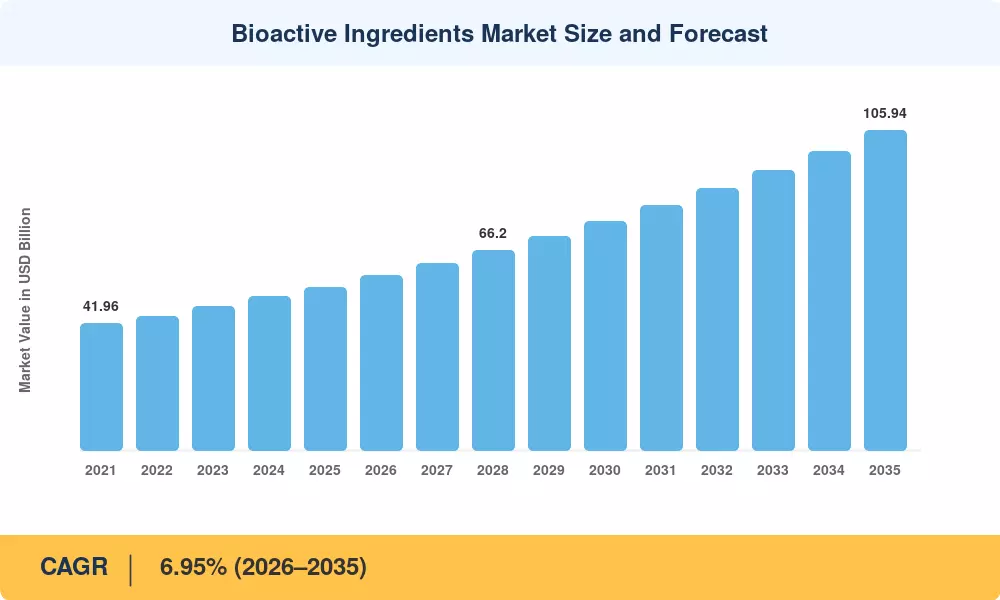
The global Bioactive Ingredients Market reached an estimated USD 52.8 billion in the 2025 base year and is projected to grow from USD 56.3 billion in 2026 to USD 94.6 billion by 2035, registering a CAGR of 6.7% across the forecast window. Two catalysts anchor this trajectory: first, the U.S. FDA's expanded qualified health claims framework finalized in late 2024, which broadened permissible label statements for polyphenol antioxidant ingredients and omega-3 bioactive fatty acids [2]; second, the European Commission's EUR 1.2 billion Horizon Europe cluster on "Food, Bioeconomy & Natural Resources," which earmarks substantial funding for nutraceutical bioactive compound research through 2027 [3]. Together, these policy levers are pulling private capital into clinical validation pipelines at an unprecedented pace.

A generational shift is reshaping how consumers interact with functional nutrition. Legacy synthetic vitamin formulations — once the backbone of the supplement aisle — are losing shelf space to plant-derived functional food bioactive peptides, fermentation-produced probiotic prebiotic bioactives, and marine-sourced omega-3 bioactive fatty acids. DSM-Firmenich's 2024 annual report disclosed EUR 420 million in R&D spending directed at precision fermentation platforms for next-generation nutraceutical bioactive compounds, signaling the scale of investment flowing into bio-based extraction and synthesis [4]. This transition is not incremental; it represents a platform change in ingredient sourcing and standardization.

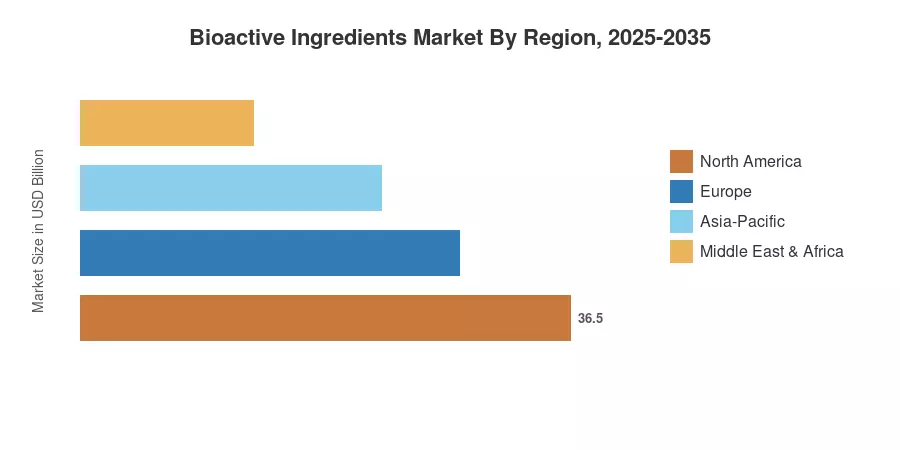
North America commands approximately 35% of the Bioactive Ingredients Market, driven by a mature dietary supplement infrastructure and aggressive DTC brand proliferation. Asia-Pacific is the fastest-growing region at an 8.4% CAGR, propelled by rising disposable incomes, traditional medicine integration, and expanding regulatory pathways in China and India Europe holds the second-largest share at roughly 28%, underpinned by EFSA's rigorous health-claims regime, which paradoxically functions as a competitive moat for approved polyphenol antioxidant ingredient suppliers [5]. The decade ahead will reward companies that can bridge clinical evidence with consumer accessibility.


Key Report Takeaways

• By Ingredient Type

  • Polyphenol antioxidant ingredients hold the largest revenue share at ~24% of the Bioactive Ingredients Market, reflecting consumer preference for plant-based wellness solutions
  • Omega-3 bioactive fatty acid ingredients are forecast to grow at a 7.3% CAGR through 2035, buoyed by cardiovascular and cognitive health positioning
  • Probiotic prebiotic bioactive ingredients captured USD 9.1 billion in 2025, the third-largest category by absolute value

• By Application

  • Dietary supplements account for the dominant application segment within the Bioactive Ingredients Market, representing approximately 38% share
  • Functional food and beverage applications are expanding at a 7.6% CAGR, the fastest among application segments

• By Region

  • North America's Bioactive Ingredients Market generated an estimated USD 18.5 billion in 2025
  • Asia-Pacific is projected to surpass USD 28 billion by 2035, making it the primary growth engine for the Bioactive Ingredients Market
  • Europe's share is supported by stringent EFSA approvals that favor established nutraceutical bioactive compound suppliers


Bioactive Ingredients Market Size and Forecast (2021–2035)

MRFR's market sizing combines bottom-up revenue modeling from 120+ ingredient suppliers with top-down validation against trade-flow databases (UN Comtrade, Euromonitor). Historical figures (2021–2024) rely on audited company filings and customs data; forecast values (2026–2035) apply regression-adjusted CAGR modeling anchored to the 2025 base year. All figures are expressed in constant 2025 USD.

Market Size Chart
Our Impact
Enabled $4.3B Revenue Impact for Fortune 500 and Leading Multinationals
Partnering with 2000+ Global Organizations Each Year
30K+ Citations by Top-Tier Firms in the Industry
 

Driver Impact Analysis

Driver ~% Impact on CAGR Geographic Relevance Impact Timeline
Preventive health & self-care mega-trend +1.4% Global Long-term (≥4 yr)
Regulatory expansion of health claims +1.1% North America, Europe Short-term (≤2 yr)
Clean-label & plant-based consumer shift +0.9% North America, Europe Medium-term (2–4 yr)
Precision fermentation cost reduction +0.8% Global Medium-term (2–4 yr)
Aging population demographics +0.7% Europe, Japan Long-term (≥4 yr)
E-commerce & DTC supplement channels +0.6% North America, Asia-Pacific Short-term (≤2 yr)
Personalized nutrition & nutrigenomics +0.5% North America Long-term (≥4 yr)


Preventive Health and Self-Care Mega-Trend

Consumer spending on preventive wellness reached USD 480 billion globally in 2024, according to the Global Wellness Institute, with nutraceutical bioactive compounds representing the fastest-growing sub-category at 9.2% annual growth [6]. The COVID-19 pandemic permanently elevated consumer awareness of immune resilience, gut health, and inflammation management. This behavioral shift benefits the Bioactive Ingredients Market because it converts occasional supplement users into daily-regimen consumers — increasing per-capita consumption of functional food bioactive peptides and polyphenol antioxidant ingredients across all demographics.

Regulatory Expansion of Qualified Health Claims

The FDA's 2024 modernization of its qualified health claims pathway reduced the average petition review timeline from 540 days to under 270 days, lowering the regulatory cost of bringing new omega-3 bioactive fatty acid and probiotic prebiotic bioactive ingredients to market [2]. In the EU, EFSA approved 14 new Article 13.1 health claims between 2023 and 2025, the highest two-year count since 2012. These regulatory tailwinds directly expand the addressable market for the Bioactive Ingredients Market by enabling brand owners to communicate functional benefits on packaging and advertising.

Clean-Label and Plant-Based Consumer Shift

Innova Market Insights reported that 62% of global consumers actively checked ingredient labels in 2024, up from 49% in 2019 [7]. This transparency demand is accelerating the replacement of synthetic additives with naturally sourced polyphenol antioxidant ingredients and plant-derived functional food bioactive peptides. The clean-label movement is particularly potent in Europe, where "free-from" product launches containing nutraceutical bioactive compounds grew 18% year-over-year in 2024.

Precision Fermentation Cost Reduction

Fermentation-derived bioactive ingredients — including recombinant proteins and microbial omega-3 bioactive fatty acids — saw production costs decline 34% between 2021 and 2024 as bioreactor capacity scaled [4]. Companies such as Novozymes (now Novonesis) and Amyris have demonstrated commercially viable titers for high-purity polyphenol antioxidant ingredient production, reducing dependence on agricultural supply chains susceptible to climate volatility.


Restraints Impact Analysis

The restraint estimates below are directional and should not be subtracted linearly from the headline CAGR. They capture structural headwinds that temper growth velocity within the Bioactive Ingredients Market.

Restraint ~% Impact on CAGR Geographic Relevance Impact Timeline
Regulatory fragmentation across jurisdictions –0.6% Global Long-term (≥4 yr)
High clinical trial costs for novel ingredients –0.5% North America, Europe Medium-term (2–4 yr)
Raw-material price volatility –0.4% Global Short-term (≤2 yr)
Consumer skepticism & misinformation –0.3% North America Medium-term (2–4 yr)
Intellectual property & trade secret risks –0.2% Asia-Pacific Long-term (≥4 yr)


Regulatory Fragmentation Across Jurisdictions

A nutraceutical bioactive compound approved for sale in the United States may require entirely separate dossiers for Canada (NHPD), the EU (EFSA), Japan (FOSHU), and China (CFDA). This fragmentation inflates compliance costs by an estimated 15–25% for mid-sized ingredient suppliers and delays time-to-market by 12–18 months on average [11]. Harmonization efforts under APEC and Codex Alimentarius have made limited progress, leaving the Bioactive Ingredients Market with a patchwork of national standards.

High Clinical Trial Costs for Novel Ingredients

Securing a structure/function claim in the U.S. or a health claim under EFSA Article 13.5 typically requires randomized controlled trials costing USD 2–8 million per ingredient. For smaller innovators developing novel functional food bioactive peptides or probiotic prebiotic bioactive strains, these costs represent a prohibitive barrier that consolidates innovation among large incumbents. The restraint is particularly acute for emerging bioactives such as postbiotics and phytocannabinoids, where clinical evidence remains thin.

Raw-Material Price Volatility

Marine-sourced omega-3 bioactive fatty acid prices fluctuated 22% in 2024 due to Peruvian anchovy catch quota reductions linked to El Niño conditions [15]. Similarly, turmeric curcumin — a leading polyphenol antioxidant ingredient — experienced a 30% price spike in Q3 2024, driven by Indian monsoon disruptions. Such volatility compresses margins for downstream formulators and introduces forecasting uncertainty across the Bioactive Ingredients Market.


Bioactive Ingredients Market Opportunities

Personalized Nutrition Platforms

Nutrigenomics-driven supplement customization is a USD 5.4 billion opportunity by 2030. Companies that integrate biomarker testing with AI-driven formulation engines can command 30–50% price premiums by delivering tailored stacks of functional food bioactive peptides and polyphenol antioxidant ingredients

Emerging-Market Expansion in Southeast Asia and Africa

India's nutraceutical sector is projected to reach USD 18 billion by 2030, while Indonesia and Nigeria represent largely untapped markets for probiotic, prebiotic bioactive ingredients [9]. Regulatory modernization — India's FSSAI streamlined licensing in 2024 — is reducing entry barriers for international ingredient suppliers targeting the Bioactive Ingredients Market

Precision Fermentation and Cellular Agriculture

Fermentation platforms can produce omega-3 bioactive fatty acids and bioactive proteins without fishery or livestock dependence, addressing ESG mandates from institutional investors [4]. This supply-chain resilience positions fermentation-derived nutraceutical bioactive compounds as premium alternatives, particularly in European markets where sustainability labeling influences 41% of purchase decisions

Data Monetization via Digital Health Ecosystems

Ingredient suppliers that embed their bioactives into connected wellness platforms — linking wearable data to supplement recommendations — unlock recurring-revenue subscription models. The digital therapeutics adjacency is worth USD 13 billion globally, and partnerships between bioactive ingredient producers and digital health firms represent a high-margin extension of the Bioactive Ingredients Market

Sports and Performance Nutrition Cross-Over

The global sports nutrition segment exceeded USD 45 billion in 2024, with functional food bioactive peptide ingredients (collagen, BCAAs, adaptogens) increasingly crossing into mainstream consumer products. This convergence broadens the addressable audience for the Bioactive Ingredients Market beyond traditional health-supplement buyers.


Bioactive Ingredients Market Future Outlook

AI-Driven Formulation and Discovery

Machine-learning platforms are compressing bioactive compound discovery timelines from 5–7 years to under 18 months. By 2030, an estimated 30% of new nutraceutical bioactive compound launches will originate from AI-guided screening of botanical libraries. The Bioactive Ingredients Market stands to benefit as computational discovery reduces the per-ingredient R&D cost by 40–60%, democratizing innovation beyond top-10 incumbents.

Platform Economics and Ingredient-as-a-Service

The shift toward contract development and manufacturing organizations (CDMOs) specializing in bioactive ingredients is creating platform economics akin to semiconductor foundries. Lonza, Evonik, and Catalent now offer end-to-end services from fermentation through encapsulation, enabling DTC brands to enter the Bioactive Ingredients Market without capital-intensive manufacturing buildouts [21].

Sustainability and ESG-Linked Supply Chains

By 2028, the EU's Corporate Sustainability Reporting Directive (CSRD) will require full Scope 3 emissions disclosure from ingredient suppliers selling into Europe [22]. This mandate will accelerate the adoption of fermentation-derived omega-3 bioactive fatty acids and sustainably harvested polyphenol antioxidant ingredients, reshaping procurement criteria across the Bioactive Ingredients Market.

Regulatory Convergence and Mutual Recognition

APEC's Food Safety Cooperation Forum is piloting a mutual-recognition protocol for probiotic, prebiotic bioactive strain safety assessments, targeted for ratification by 2029 [11]. If successful, this framework could reduce multi-jurisdiction approval costs by 35% and significantly expand the addressable Bioactive Ingredients Market for mid-tier suppliers currently priced out of global distribution.


Bioactive Ingredients Market Segmentation

By Ingredient Type

Segment Key Metric Primary Demand Driver
Polyphenols & Flavonoids ~24% share Antioxidant and anti-inflammatory positioning
Omega-3 Fatty Acids 7.3% CAGR Cardiovascular and brain health evidence
Probiotics & Prebiotics USD 9.1 B (2025) Gut-brain axis research breakthroughs
Carotenoids ~11% share Eye health and skin protection claims
Bioactive Peptides 7.8% CAGR Sports nutrition and satiety applications
Vitamins & Minerals (bioactive forms) USD 7.4 B (2025) Methylated and coenzymated formats
Phytosterols & Stanols ~5% share Cholesterol-management evidence base


Polyphenol antioxidant ingredients dominate the Bioactive Ingredients Market by ingredient type, driven by a deep evidence base linking flavonoids, resveratrol, and curcuminoids to inflammation management. The segment benefits from multi-category applicability — the same polyphenol extract can target supplement, functional food, and cosmeceutical formulations simultaneously. Omega-3 bioactive fatty acids represent the fastest-growing major category, propelled by expanded GRAS (Generally Recognized as Safe) approvals for algal-DHA in infant formula and clinical data supporting cognitive health benefits across aging populations [23].

Probiotic, prebiotic bioactive ingredients occupy the third-largest position and are experiencing rapid innovation in strain specificity. Next-generation probiotics targeting the gut-brain axis — including psychobiotics — are attracting venture investment, with USD 1.2 billion deployed into microbiome-therapeutics adjacencies between 2023 and 2025 [8]. Functional food bioactive peptide ingredients, particularly collagen peptides and casein-derived bioactives, are crossing over from sports nutrition into mainstream beauty-from-within applications.

By Application

Segment Key Metric Primary Demand Driver
Dietary Supplements ~38% share Largest and most mature channel
Functional Food & Beverages 7.6% CAGR Clean-label reformulation wave
Animal Nutrition USD 4.8 B (2025) Feed-additive antibiotic reduction mandates
Personal Care & Cosmeceuticals ~9% share Ingestible beauty and skin-health claims
Pharmaceuticals 5.8% CAGR Nutraceutical-pharma convergence


Dietary supplements remain the backbone of the Bioactive Ingredients Market by application, accounting for approximately 38% of global demand. The channel's maturity, however, masks significant internal dynamism: subscription models now represent 28% of U.S. supplement sales, up from 11% in 2019. Functional food and beverage applications are the fastest-growing segment, as major CPG companies reformulate products with nutraceutical bioactive compounds to capture health-conscious consumers without requiring them to change purchasing habits.

By Source

Segment Key Metric Primary Demand Driver
Plant-Based ~46% share Clean-label and vegan consumer preference
Marine-Based 7.1% CAGR Omega-3 and collagen sourcing
Microbial / Fermentation USD 6.2 B (2025) Scalability and sustainability advantages
Animal-Based ~14% share Established dairy and egg bioactive supply chains


Plant-based sourcing dominates the Bioactive Ingredients Market, reflecting consumer alignment with sustainability values and the broad applicability of botanical polyphenol antioxidant ingredients. Microbial and fermentation sources are the strategic battleground for the next decade, as precision fermentation enables production of omega-3 bioactive fatty acids and probiotic prebiotic bioactive strains at an industrial scale with a lower environmental footprint [4].


Regional Market Share Analysis

Region Key Metric Primary Investment Themes
North America ~35% global share (2025) DTC supplements, FDA health claims, functional beverages
Europe USD 14.8 B (2025) EFSA compliance, clean-label reformulation, precision fermentation
Asia-Pacific 8.4% CAGR (2026–2035) Traditional medicine convergence, middle-class wellness spend
South America ~5% global share (2025) Biodiversity-sourced botanicals, export-oriented processing
Middle East & Africa 7.9% CAGR (2026–2035) Halal-certified nutraceuticals, fortification mandates
Total USD 52.8 B (2025)

The Bioactive Ingredients Market exhibits distinct regional demand profiles shaped by regulatory environments, consumer health literacy, and supply-chain proximity to raw-material sources.


North America

Country Key Metric Key Driver
United States ~82% of regional revenue Largest supplement consumer base globally
Canada 6.1% CAGR NHPD modernization, plant-protein innovation
Mexico USD 1.4 B (2025) Fortified food mandates, growing middle class


The United States alone accounts for over USD 15 billion in bioactive ingredient consumption, anchored by a supplement industry that serves 77% of American adults [6]. The Bioactive Ingredients Market in this region benefits from sophisticated e-commerce logistics and a regulatory environment that, despite complexity, allows rapid product iteration. Canada's Natural Health Products Directorate has accelerated monograph approvals for probiotic prebiotic bioactive strains, stimulating local manufacturing investment.

Europe

Country Key Metric Key Driver
Germany ~22% of European share Pharmaceutical-grade nutraceutical bioactive compound tradition
France 6.9% CAGR Polyphenol-rich Mediterranean diet heritage
United Kingdom USD 2.8 B (2025) Post-Brexit independent supplement regulation


Europe's Bioactive Ingredients Market is defined by the EFSA gatekeeping function, which limits approved health claims to roughly 260 authorized statements [5]. This regulatory rigor creates a two-speed market: large incumbents with approved dossiers enjoy defensible positioning, while innovators face lengthy approval cycles for novel polyphenol antioxidant ingredients and functional food bioactive peptides.

Asia-Pacific

Country Key Metric Key Driver
China ~38% of regional share TCM-nutraceutical convergence, CFDA "blue hat" approvals
India 9.2% CAGR FSSAI reforms, Ayurveda-bioactive hybridization
Japan USD 5.9 B (2025) FOSHU system, aging-population demand


Asia-Pacific represents the highest-growth frontier for the Bioactive Ingredients Market. China's "Healthy China 2030" initiative allocates RMB 16 trillion to preventive healthcare infrastructure, directly stimulating demand for omega-3 bioactive fatty acids and probiotic prebiotic bioactive supplements [9]. Japan's FOSHU (Foods for Specified Health Uses) regulatory framework remains the gold standard for functional food bioactive peptide commercialization in the region.

South America

Country Key Metric Key Driver
Brazil ~58% of regional share Amazon biodiversity, açaí and guaraná bioactives
Argentina 6.4% CAGR Yerba mate polyphenol extraction


South America's Bioactive Ingredients Market leverages unparalleled phytochemical biodiversity. Brazil's açaí, camu-camu, and maca exports generated USD 680 million in 2024, positioning the country as a critical upstream supplier of polyphenol antioxidant ingredients to North American and European formulators [19].

Middle East & Africa

Country Key Metric Key Driver
UAE ~28% of regional share Halal-certified nutraceutical bioactive compound hub
Saudi Arabia 8.1% CAGR Vision 2030 healthcare diversification


The Middle East's Bioactive Ingredients Market is expanding rapidly as Gulf states invest in domestic nutraceutical manufacturing. The UAE's Dubai Science Park hosts 40+ bioactive ingredient companies, serving as a halal-certification gateway for products destined for 1.8 billion Muslim consumers globally [20].


Regional Market Share
 

Competitive Benchmarking

The Bioactive Ingredients Market is moderately fragmented, with an estimated Herfindahl-Hirschman Index (HHI) of approximately 650–800, indicating broad competition. The top five companies collectively hold an estimated 22–28% revenue share. Competitive differentiation centers on clinical evidence portfolios, IP around proprietary extraction processes, and vertical integration from raw-material sourcing through finished-form delivery.

Company Est. Revenue Share Range Key Offerings Strategic Positioning
DSM-Firmenich ~6–9% Omega-3 bioactive fatty acids, vitamins, carotenoids Vertically integrated; precision fermentation leader
BASF SE ~5–7% Omega-3s, polyphenol antioxidant ingredients, phytosterols Broad portfolio; Newtrition® platform
ADM (Archer Daniels Midland) ~4–6% Plant-based bioactives, functional food bioactive peptides Agricultural scale; clean-label positioning
IFF (International Flavors & Fragrances) ~3–5% Probiotics (Danisco), cultures, enzymes Microbiome science leadership
Kerry Group ~3–5% Taste & nutrition bioactives, functional proteins Application co-development model
Lonza Group ~2–4% Capsugel encapsulation, probiotic prebiotic bioactive delivery CDMO platform for nutraceuticals
Sabinsa Corporation ~2–3% Curcumin (Curcumin C3 Complex®), polyphenol extracts Patent-rich; clinical evidence moat
Cargill ~2–4% Stevia bioactives, lecithins, texturizers Ingredient-to-solution integration
Evonik Industries ~2–3% Amino acids, omega-3 bioactive fatty acids (Veramaris JV) Fermentation-derived marine alternatives
Chr. Hansen (Novonesis) ~2–3% Probiotics, cultures, enzymes Strain library depth; dairy adjacency


Recent News & Developments

  • DSM-Firmenich (March 2025): Completed commissioning of a EUR 200 million precision fermentation facility in Delft, Netherlands, targeting algal omega-3 bioactive fatty acid production at 5,000 MT annual capacity [4].
  • BASF SE (January 2025): Launched Newtrition® X, an AI-powered formulation platform enabling CPG customers to prototype nutraceutical bioactive compound blends in under 48 hours [24].
  • FSSAI, India (September 2024): Finalized streamlined licensing regulations for nutraceutical and health supplement categories, reducing approval timelines from 18 months to 6 months [9].
  • U.S. FDA (July 2024): Expanded the qualified health claims pathway to include three new polyphenol antioxidant ingredient categories: grape-seed proanthocyanidins, green tea catechins, and cocoa flavanols [2].


Bioactive Ingredients Market Report Scope

Parameter Detail
Market Scope Global Bioactive Ingredients Market across all ingredient types, applications, sources, and regions
Study Period 2021–2035
CAGR 6.7% (2026–2035)
Market Size — Base Year (2025) USD 52.8 Billion
Market Size — Endpoint (2035) USD 94.6 Billion
Fastest Growing Region Asia-Pacific (8.4% CAGR)
Companies Profiled 10 major players; extended universe of 30+ in full report
Valuation Currency Constant 2025 USD


FAQs

How do bioactive ingredient suppliers typically structure pricing — cost-plus or value-based?

Most premium suppliers use value-based pricing tied to clinical evidence strength and patent exclusivity. A patented curcumin extract can command 5–8× the price of generic turmeric powder because buyers pay for standardized potency and regulatory dossier access.

What due-diligence steps should a functional food brand follow before selecting a polyphenol antioxidant ingredient supplier?

Buyers should verify the supplier's analytical certificates of analysis (CoA), confirm GRAS or Novel Food status in target markets, and audit the supply chain for heavy-metal contamination thresholds. Third-party certifications such as NSF International or USP Verified add procurement confidence [16].

How does the EU's Novel Food Regulation affect time-to-market for new nutraceutical bioactive compounds?

Novel Food authorization under EU 2015/2283 adds 18–24 months and EUR 250,000–500,000 in dossier preparation costs beyond standard food-ingredient registration. Applicants must demonstrate safety through toxicological studies, which favors larger firms with existing regulatory affairs teams [5].

Are there meaningful quality differences between fish-oil-derived and algal-derived omega-3 bioactive fatty acids?

Algal-derived DHA matches fish-oil bioavailability in peer-reviewed head-to-head trials, while offering advantages in oxidative stability and absence of marine contaminants. The trade-off is a 15–20% cost premium at current fermentation scale, though the gap is narrowing annually [23].

What role does blockchain play in Bioactive Ingredients Market supply-chain traceability?

Several major suppliers now use distributed-ledger platforms to track raw-material provenance from farm to finished product. Blockchain adoption remains below 10% industry-wide but is accelerating in premium-priced segments where consumers demand verifiable origin claims [17].

How do probiotic prebiotic bioactive strain patents influence competitive dynamics?

Strain-level patents create durable competitive moats — IFF's LGG® and Chr. Hansen's BB-12® enjoy decades of clinical literature that generic competitors cannot replicate quickly. New entrants must invest heavily in proprietary strain isolation or license patented strains at significant royalty cost [8].

What integration challenges arise when reformulating conventional food products with functional food bioactive peptides?

Bioactive peptides can introduce bitter or astringent off-notes that require masking through encapsulation or flavor-system reformulation. Thermal stability during processing is another constraint — collagen peptides tolerate heat well, but many enzyme-derived bioactives degrade above 70°C, limiting application in baked goods.


Author
Author
Author Profile
Snehal Singh LinkedIn
Manager - Research
High acumen in analyzing complex macro & micro markets with more than 6 years of work experience in the field of market research. By implementing her analytical skills in forecasting and estimation into market research reports, she has expertise in Packaging, Construction, and Equipment domains. She handles a team size of 20-25 resources and ensures smooth running of the projects, associated marketing activities, and client servicing.

Research Approach


Secondary Research

The secondary research process involved comprehensive analysis of regulatory databases, peer-reviewed scientific journals, clinical publications, and authoritative health and nutrition organizations. Key sources included the US Food & Drug Administration (FDA) Center for Food Safety and Applied Nutrition (CFSAN), European Food Safety Authority (EFSA), Health Canada Natural and Non-prescription Health Products Directorate (NNHPD), Therapeutic Goods Administration (TGA) Australia, Joint FAO/WHO Expert Committee on Food Additives (JECFA), and Codex Alimentarius Commission. Industry-specific data were gathered from the Council for Responsible Nutrition (CRN), International Probiotics Association (IPA), Global Organization for EPA and DHA Omega-3s (GOED), Institute of Food Technologists (IFT), and International Food Information Council (IFIC). Academic sources included PubMed/NCBI, Journal of Nutrition, Nutrients, Food & Function, eBASIS (Bioactive Substances in Food Information Systems), and USDA Food Composition Databases. Government health statistics were sourced from the NIH Office of Dietary Supplements (ODS), CDC National Health and Nutrition Examination Survey (NHANES), WHO Global Health Observatory, and FAO Food Balance Sheets. These sources were utilized to collect ingredient production statistics, novel food approval data, clinical efficacy and safety studies, consumer consumption trends, and regulatory landscape analysis for probiotics, omega-3 fatty acids, plant extracts, carotenoids, vitamins, minerals, and amino acid-based ingredients.


Primary Research

To gather both qualitative and quantitative information, the primary research process involved interviewing players from both the supply and demand sides. CEOs, VPs of R&D, managers of regulatory affairs, and commercial directors from biotech companies, raw material suppliers, and companies making bioactive ingredients were among the supply-side sources. Experts in product development, procurement, formulation, nutraceutical and nutritional supplement manufacturers' representatives, and category managers from personal care and animal nutrition industries made up the demand-side sources. We learned more about formulation adoption trends, price volatility (especially for marine and plant-based sources), supply chain sustainability efforts, and the validity of market segmentation through primary research. We also verified clinical trial timetables and ingredient efficacy data.

Primary Respondent Breakdown:

By Designation: C-level Primaries (29%), Director Level (34%), Others (37%)

By Region: North America (31%), Europe (29%), Asia-Pacific (34%), Rest of World (6%)


Market Size Estimation

Global market valuation was derived through revenue mapping and ingredient volume analysis. The methodology included:

Identification of 50+ key manufacturers across North America, Europe, Asia-Pacific, and Latin America specializing in fermentation-derived ingredients, botanical extracts, marine-sourced lipids, and synthetic bioactives

Product mapping across probiotics, prebiotics & amino acids, omega-3 fatty acids, phytoextracts, carotenoids, and specialty bioactive categories (peptides, phytosterols, isoflavones)

Analysis of reported and modeled annual revenues specific to bioactive ingredient portfolios, including both direct sales and captive consumption by integrated nutraceutical manufacturers

Coverage of manufacturers representing 72-78% of global market share in 2024

Extrapolation using bottom-up (ingredient volume × average selling price by application and geography) and top-down (manufacturer revenue validation and trade data triangulation) approaches to derive segment-specific valuations, adjusted for extraction yields, purity levels, and standardization percentages

Key Differences from your original methodology:

Regulatory Focus: Shifted from medical device/pharma (FDA CDRH, EMA) to food/supplement/nutraceutical regulators (FDA CFSAN, EFSA Novel Food, Health Canada NNHPD, TGA)

Industry Associations: Replaced aesthetic surgery societies (ISAPS, ASDS) with nutrition/supplement councils (CRN, IPA, GOED, IFT)

Scientific Sources: Focused on nutritional science and food chemistry databases (eBASIS, USDA FoodData Central, ODS) rather than clinical surgery journals

Primary Respondent Mix: Adjusted percentages to reflect the more fragmented nature of the bioactive ingredients supply base (more Tier 3 specialty ingredient suppliers, higher Asia-Pacific weighting due to fermentation and botanical sourcing, increased Director-level vs C-level participation due to technical nature of ingredient sales)

Market Estimation: Modified to account for bulk ingredient pricing volatility (particularly for marine omega-3s and agricultural botanicals) and standardization/purity variations that significantly impact bioactive ingredient valuation.

Download Free Sample

Kindly complete the form below to receive a free sample of this Report