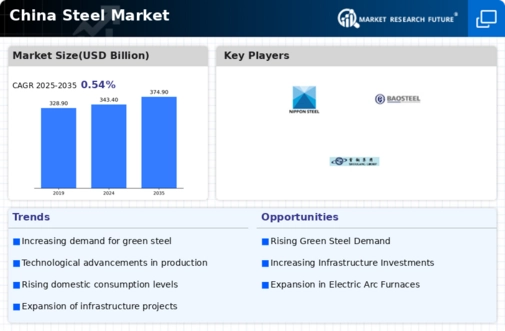
The steel market in China is characterized by a competitive landscape that is both dynamic and multifaceted. Key growth drivers include increasing domestic demand, infrastructure development, and a push towards sustainability. Major players such as China Baowu Steel Group (CN), Hebei Iron and Steel Group (CN), and Jiangsu Shagang Group (CN) are at the forefront, each adopting distinct strategies to enhance their market positioning. China Baowu Steel Group (CN) focuses on innovation and digital transformation, aiming to integrate advanced technologies into its production processes. In contrast, Hebei Iron and Steel Group (CN) emphasizes regional expansion and strategic partnerships to bolster its supply chain capabilities. Jiangsu Shagang Group (CN) is also investing in sustainability initiatives, reflecting a broader industry trend towards environmentally responsible practices. Collectively, these strategies contribute to a competitive environment that is increasingly shaped by technological advancements and sustainability imperatives.
Key business tactics within the market include localizing manufacturing and optimizing supply chains to enhance efficiency and reduce costs. The competitive structure appears moderately fragmented, with several key players exerting influence over market dynamics. This fragmentation allows for a variety of operational strategies, enabling companies to differentiate themselves through innovation and customer service. The collective influence of these major players fosters a competitive atmosphere where agility and responsiveness to market changes are paramount.
In November 2025, China Baowu Steel Group (CN) announced a partnership with a leading technology firm to develop AI-driven solutions for production optimization. This strategic move is likely to enhance operational efficiency and reduce waste, aligning with the company's commitment to sustainability. The integration of AI technologies may also position China Baowu as a leader in smart manufacturing, potentially setting new industry standards.
In October 2025, Hebei Iron and Steel Group (CN) completed the acquisition of a regional competitor, which is expected to expand its market share and enhance its production capacity. This acquisition reflects a strategic focus on consolidation within the industry, allowing Hebei to leverage synergies and improve its competitive stance. The move may also facilitate better resource allocation and operational efficiencies, further solidifying its position in the market.
In September 2025, Jiangsu Shagang Group (CN) launched a new line of eco-friendly steel products, targeting the growing demand for sustainable materials. This initiative underscores the company's commitment to environmental stewardship and positions it favorably among increasingly eco-conscious consumers. By diversifying its product offerings, Jiangsu Shagang is likely to capture a larger share of the market while enhancing its brand reputation.
As of December 2025, current competitive trends in the steel market are heavily influenced by digitalization, sustainability, and the integration of AI technologies. Strategic alliances are becoming increasingly important, as companies seek to enhance their capabilities and market reach. The competitive differentiation is expected to evolve, shifting from traditional price-based competition to a focus on innovation, technology, and supply chain reliability. This transition may redefine the competitive landscape, compelling companies to invest in advanced technologies and sustainable practices to maintain their market positions.




















Leave a Comment