×
Request Free Sample ×

Kindly complete the form below to receive a free sample of this Report

Leading companies partner with us for data-driven Insights

clients tt-cursor
Hero Background

Chocolate Beer Market

ID: MRFR/FnB/3559-HCR
110 Pages
Tejas Chaudhary
October 2025

Chocolate Beer Market Research Report By Product Type (Dark Chocolate Beer, Milk Chocolate Beer, White Chocolate Beer, Chocolate Stout, Chocolate Porter), By Packaging Type (Bottles, Cans, Kegs, Draft), By Distribution Channel (Online Retail, Supermarkets, Liquor Stores, Specialty Stores), By Alcohol Content (Low Alcohol, Medium Alcohol, High Alcohol) and By Regional (North America, Europe, South America, Asia Pacific, Middle East and Africa) - Forecast to 2035

Share:
Download PDF ×

We do not share your information with anyone. However, we may send you emails based on your report interest from time to time. You may contact us at any time to opt-out.

Chocolate Beer Market Infographic
Purchase Options

Chocolate Beer Market Summary

As per MRFR analysis, the Chocolate Beer Market Size was estimated at 1.109 USD Billion in 2024. The Chocolate Beer industry is projected to grow from 1.255 USD Billion in 2025 to 4.33 USD Billion by 2035, exhibiting a compound annual growth rate (CAGR) of 13.18 during the forecast period 2025 - 2035.

Key Market Trends & Highlights

The Chocolate Beer Market is experiencing dynamic growth driven by innovative flavors and premium offerings.

  • Flavor innovation continues to captivate consumers, with unique combinations enhancing the appeal of chocolate beer.
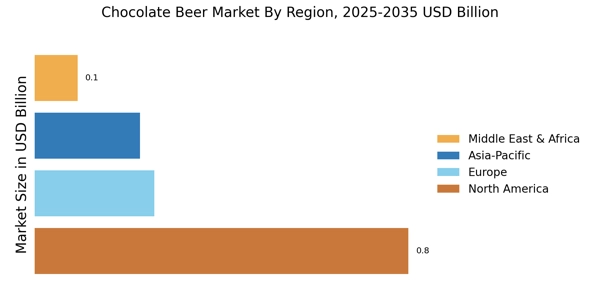
  • The North American market remains the largest, while the Asia-Pacific region is emerging as the fastest-growing market for chocolate beer.
  • Dark chocolate beer holds the largest market share, whereas chocolate stout is rapidly gaining traction among consumers.
  • Market drivers such as flavor diversity and the craft beer movement are significantly influencing the growth of chocolate beer.

Market Size & Forecast

2024 Market Size 1.109 (USD Billion)
2035 Market Size 4.33 (USD Billion)
CAGR (2025 - 2035) 13.18%

Major Players

Young's Brewery (GB), Samuel Adams (US), Sierra Nevada Brewing Co. (US), Brooklyn Brewery (US), Left Hand Brewing Company (US), Elysian Brewing Company (US), Mikkeller (DK), BrewDog (GB), Nøgne Ø (NO)

Chocolate Beer Market Trends

The Chocolate Beer Market is currently experiencing a notable evolution, characterized by a growing consumer interest in unique flavor profiles and innovative brewing techniques. This market appears to be driven by a blend of traditional brewing practices and modern culinary trends, leading to the emergence of diverse chocolate-infused beers. As consumers increasingly seek out distinctive taste experiences, breweries are responding by experimenting with various chocolate types, including dark, milk, and even white chocolate, which may enhance the overall sensory experience. Furthermore, the rise of craft breweries has contributed to a more personalized approach to beer production, allowing for small-batch creations that cater to niche markets. In addition to flavor innovation, the Chocolate Beer Market seems to be influenced by a broader trend towards premiumization. Consumers are increasingly willing to pay a premium for high-quality, artisanal products, which may lead to a surge in demand for gourmet chocolate beers. This trend is further supported by the growing popularity of pairing chocolate beers with gourmet foods, suggesting that the market could expand into new culinary territories. As the market continues to evolve, it is likely that sustainability and ethical sourcing will also play a crucial role in shaping consumer preferences, as environmentally conscious choices become more prevalent in the beverage industry.

Flavor Innovation

The Chocolate Beer Market is witnessing a surge in flavor experimentation, with breweries incorporating various chocolate types and complementary ingredients. This trend reflects a consumer desire for unique and diverse taste experiences.

Premiumization

There is a noticeable shift towards premium products within the Chocolate Beer Market, as consumers increasingly seek high-quality, artisanal options. This trend indicates a willingness to invest in gourmet experiences.

Sustainability Focus

The market appears to be moving towards sustainability, with an emphasis on ethically sourced ingredients and environmentally friendly practices. This focus may resonate with a growing segment of eco-conscious consumers.

Chocolate Beer Market Drivers

Seasonal Demand

Seasonal demand plays a crucial role in shaping the Chocolate Beer Market, particularly during festive periods such as winter holidays and Valentine's Day. During these times, consumers are more inclined to indulge in rich, chocolate-flavored beverages, leading to spikes in sales. Market analysis indicates that chocolate beers often see increased popularity during colder months, as they are perceived as comforting and indulgent. This seasonal trend presents opportunities for breweries to develop limited-edition offerings, thereby enhancing brand visibility and driving sales within the Chocolate Beer Market.

Flavor Diversity

The Chocolate Beer Market is experiencing a notable surge in flavor diversity, driven by consumer preferences for unique and innovative taste experiences. Breweries are increasingly experimenting with various chocolate types, such as dark, milk, and even white chocolate, to create distinctive flavor profiles. This trend is supported by data indicating that craft beer sales have risen significantly, with specialty beers, including chocolate-infused varieties, capturing a larger market share. As consumers seek out new and exciting flavors, the Chocolate Beer Market is likely to expand, catering to adventurous palates and enhancing overall market growth.

Craft Beer Movement

The ongoing craft beer movement has significantly impacted the Chocolate Beer Market, as consumers increasingly favor artisanal and locally produced beverages. This trend is characterized by a preference for small-batch brewing, where unique ingredients like chocolate are often incorporated to create distinctive flavors. Market data suggests that craft beer sales have outpaced those of mass-produced beers, indicating a shift in consumer preferences. As the craft beer movement continues to thrive, the Chocolate Beer Market is likely to benefit from this growing interest in innovative and high-quality products.

Health Consciousness

In recent years, there has been a growing trend towards health consciousness among consumers, which is influencing the Chocolate Beer Market. Many breweries are now focusing on producing lower-calorie and gluten-free chocolate beers, appealing to health-oriented consumers. This shift is reflected in market data showing that the demand for healthier alcoholic beverages is on the rise, with consumers increasingly scrutinizing ingredient lists. As the Chocolate Beer Market adapts to these health trends, it may attract a broader audience, potentially leading to increased sales and market penetration.

Sustainability Initiatives

Sustainability initiatives are becoming increasingly relevant within the Chocolate Beer Market, as consumers demonstrate a growing preference for environmentally friendly products. Breweries are adopting sustainable practices, such as sourcing organic chocolate and utilizing eco-friendly packaging, to appeal to environmentally conscious consumers. Market data indicates that brands emphasizing sustainability often enjoy a competitive advantage, as consumers are willing to pay a premium for products that align with their values. As the Chocolate Beer Market embraces sustainability, it may foster brand loyalty and attract a dedicated customer base.
Market Segment Insights

Chocolate Beer Market Product Type Insights   

The Chocolate Beer Market is currently experiencing notable growth within its Product Type segment. As of 2023, the overall market is valued at approximately 0.98 USD Billion and is expected to expand significantly by 2032. Each variety within this segment contributes uniquely to market dynamics.

Dark Chocolate Beer Market emerges as a leading contender, with a valuation of 0.39 USD Billion in 2023, projected to reach 1.15 USD Billion by 2032, indicating its majority holding within the market due to its rich flavor profile and wide consumer appeal.Milk Chocolate Beer Market, valued at 0.29 USD Billion in 2023, holds a significant position in the market as well, anticipated to increase to 0.85 USD Billion by 2032, as it appeals to consumers seeking a sweeter, more approachable option compared to its darker counterpart.

White Chocolate Beer Market, although smaller in market share, valued at 0.1 USD Billion in 2023 and expected to rise to 0.3 USD Billion in 2032, captures the curiosity of niche markets, particularly among consumers who prefer lighter flavors.

Chocolate Stout, drawing in a valuation of 0.15 USD Billion in 2023, is projected to grow to 0.45 USD Billion in 2032, supported by the stout's intrinsic richness and complexity, thus appealing to craft beer enthusiasts.Lastly, Chocolate Porter, currently valued at 0.05 USD Billion, with a growth trajectory toward 0.25 USD Billion by 2032, represents the least dominant segment but has a significant potential for growth as it attracts consumers interested in unique beer experiences that blend chocolate with traditional porter characteristics.

Overall, the Chocolate Beer Market segmentation illustrates a diverse product range, with each type having its own growth drivers, challenges, and opportunities, reflecting varying consumer preferences in the evolving landscape of flavored beers.The alignment toward innovative products, along with different flavor profiles, positions the market well for capturing a broad spectrum of consumers, which further underlines the importance of ongoing market research to track changes in consumer tastes and preferences.

Chocolate Beer Market Packaging Type Insights   

The Packaging Type segment within the Chocolate Beer Market has shown promising growth, with the market valued at 0.98 billion USD in 2023. Various types of packaging, including Bottles, Cans, Kegs, and Drafts, play crucial roles in the market dynamics. Bottles are particularly important, often preferred for their ability to enhance the aesthetic appeal and preserve flavor, making them highly chosen by consumers. Cans have gained traction due to their portability and convenience, appealing to younger demographics.

Kegs are significant within the craft beer segment, benefiting from the growing trend of draft beer consumption in bars and restaurants.The draft segment is gaining momentum as establishments seek unique offerings to attract customers. Overall, the Chocolate Beer Market revenue demonstrates a robust growth trend, fueled by increasing consumer interest in innovative flavors and experiences alongside sustainable packaging initiatives. The Chocolate Beer Market statistics point toward a diversified packaging landscape that continues to evolve as consumers’ preferences shift toward more convenient and environmentally friendly options.

Growth drivers include the rising trend of craft beer production and flavor experimentation, while challenges such as regulatory compliance and logistics must be managed effectively to sustain market expansion.

Chocolate Beer Market Distribution Channel Insights   

In 2023, the Chocolate Beer Market will be valued at approximately 0.98 billion USD, reflecting a growing consumer interest in innovative beer flavors. The Distribution Channel plays a crucial role in this market, accommodating a variety of purchasing preferences. Among these channels, Online Retail is gaining traction due to convenience and easy access to diverse brands, catering to a tech-savvy demographic. Supermarkets remain a key player, offering consumers a one-stop shopping experience and a broad selection.

Liquor Stores specializes in alcoholic beverages, creating a focused environment for chocolate beer enthusiasts, while Specialty Stores enhance the shopping experience by providing unique and often locally sourced chocolate beers.As the Chocolate Beer Market segmentation evolves, each channel's contribution demonstrates the dynamics of market growth driven by changing consumer habits.

Chocolate Beer Market Alcohol Content Insights   

The Chocolate Beer Market, valued at 0.98 billion USD in 2023, showcases a diverse landscape segmented by Alcohol Content, including Low Alcohol, Medium Alcohol, and High Alcohol categories. This segmentation plays a crucial role in catering to varying consumer preferences, with each category addressing distinct taste profiles and consumption occasions. Low Alcohol offerings are increasingly favored by health-conscious consumers seeking moderation without sacrificing flavor, contributing significantly to market growth.

Medium Alcohol content provides a balanced option appealing to casual drinkers, while High Alcohol varieties attract enthusiasts looking for richer, more intense experiences.The demand for unique flavor combinations and craft-style brews further fuels the expansion of the Chocolate Beer Market industry, reflected in rising Chocolate Beer Market revenue. As consumers continue to embrace diverse drinking experiences, these categories present challenges and opportunities for producers. The innovative approach to flavor and alcohol content reflects evolving market trends and consumer behaviors, underscoring the significance of each Alcohol Content variant in driving market dynamics and Chocolate Beer Market statistics.

Get more detailed insights about Chocolate Beer Market

Regional Insights

North America : Craft Beer Capital

North America leads the chocolate beer market, driven by a growing craft beer culture and innovative flavors. The U.S. holds approximately 70% of the market share, with Canada following at 15%. Regulatory support for craft breweries and increasing consumer interest in unique beer flavors are key growth drivers. The market is also influenced by health-conscious trends, with many breweries offering lower-calorie options. The U.S. is home to major players like Samuel Adams, Sierra Nevada, and Brooklyn Brewery, which contribute significantly to market dynamics. The competitive landscape is characterized by a mix of established brands and emerging craft breweries. The presence of key players fosters innovation, with new chocolate beer varieties being introduced regularly, appealing to diverse consumer preferences. This vibrant market is expected to continue its growth trajectory as more consumers seek unique and flavorful beer experiences.

Europe : Emerging Chocolate Beer Market Hub

Europe is witnessing a burgeoning interest in chocolate beer, with the market expanding due to innovative brewing techniques and flavor experimentation. The UK and Germany are the largest markets, holding approximately 30% and 25% of the market share, respectively. Regulatory frameworks supporting craft brewing and a growing consumer base seeking unique flavors are significant growth drivers in this region. Leading countries like the UK, Germany, and Denmark are at the forefront of this trend, with key players such as BrewDog and Mikkeller leading the charge. The competitive landscape is vibrant, with numerous craft breweries entering the market, enhancing the diversity of offerings. The presence of established brands alongside new entrants fosters a dynamic environment, encouraging continuous innovation and attracting adventurous consumers looking for novel beer experiences. The European chocolate beer market is poised for sustained growth as consumer preferences evolve.

Asia-Pacific : Emerging Market Potential

The Asia-Pacific region is emerging as a potential market for chocolate beer, driven by increasing disposable incomes and a growing interest in craft beverages. Countries like Australia and Japan are leading this trend, with Australia holding about 20% of the market share. The region's market is characterized by a youthful demographic eager to explore diverse flavors, supported by favorable regulations for craft breweries. Australia and Japan are home to several innovative breweries that are experimenting with chocolate beer flavors, attracting a new consumer base. The competitive landscape is evolving, with both local and international players entering the market. Key players like Young's Brewery and Left Hand Brewing Company are expanding their reach, contributing to the region's growth. As consumer preferences shift towards unique and artisanal products, the chocolate beer market in Asia-Pacific is expected to flourish in the coming years.

Middle East and Africa : Untapped Market Opportunities

The Middle East and Africa region presents untapped opportunities for the chocolate beer market, driven by a young population and increasing interest in craft beverages. South Africa is the leading market, holding approximately 15% of the market share, with other countries like Kenya and Nigeria showing potential for growth. Regulatory changes are gradually supporting craft brewing, paving the way for new entrants in the market. South Africa's craft beer scene is vibrant, with local breweries experimenting with chocolate flavors to cater to evolving consumer tastes. The competitive landscape is characterized by a mix of established and emerging players, fostering innovation. Key players are beginning to explore the chocolate beer segment, aiming to attract adventurous consumers. As awareness and acceptance of craft beer grow, the chocolate beer market in the Middle East and Africa is poised for significant expansion in the coming years.

Chocolate Beer Market Regional Image

Key Players and Competitive Insights

The Chocolate Beer Market has emerged as a distinctive segment within the broader beverage industry, characterized by its unique fusion of beer and chocolate flavors. This market has attracted a diverse range of producers aiming to cater to niche consumer preferences, indicating a growing trend toward innovative flavor profiles in traditional alcoholic beverages. As consumer palates evolve and quests for unique experiences become more prominent, the competitive landscape is continuously shaped by new entrants, established brands, and craft breweries.

The competition is vigorous, with companies leveraging creative marketing strategies and focusing on quality craftsmanship to differentiate their offerings in a crowded marketplace. As manufacturers increasingly experiment with various styles and brewing techniques to enhance the sensory appeal of chocolate beer, staying attuned to consumer trends, preferences, and industry standards is paramount.AnheuserBusch InBev stands as a leader in the Chocolate Beer Market, showcasing formidable strengths that contribute to its market presence. The company's extensive distribution network provides a significant advantage, ensuring its chocolate beer offerings reach consumers across a multitude of regions.

Leveraging its significant scale, AnheuserBusch InBev invests heavily in marketing and product innovation, expanding its portfolio to include unique chocolate-infused beers that resonate with consumers seeking novel flavor experiences. Additionally, with a reputation for quality and consistency, the company ensures that its chocolate beers not only meet consumer expectations but also enhance brand loyalty among its clientele.

The company's commitment to sustainability and responsible sourcing of ingredients further reflects positively on its brand image, aligning with the increasing consumer demand for ethically produced products.Deschutes Brewery, known for its craft brewing expertise, adds a unique flavor to the Chocolate Beer Market through its distinct approach to brewing. The company emphasizes quality and artistry, often incorporating locally sourced and premium ingredients into its chocolate beer recipes. This dedication to craft has garnered a fiercely loyal customer base, with enthusiasts often praising the rich and nuanced flavors that Deschutes Brewery delivers.

Their innovative brews not only fulfill the traditional expectations of a chocolate beer but also explore diverse taste profiles that appeal to a broad audience. The brewery’s reputation for experimenting with limited-release seasonal offerings keeps the brand fresh in the minds of consumers and enhances its competitive standing in the market. Furthermore, Deschutes Brewery engages actively with the community, cultivating a loyal following that values both the product and the ethos behind the brand, making it a considerable player in the competitive landscape of chocolate beer.

Key Companies in the Chocolate Beer Market market include

Industry Developments

Recent developments in the Chocolate Beer Market include notable activity from companies like BrewDog and Sierra Nevada Brewing Co., which have been innovative in launching new chocolate-infused beer varieties to capitalize on growing consumer preferences for unique flavors. The craft beer segment is witnessing significant interest, especially from breweries such as Deschutes Brewery and New Belgium Brewing, which are exploring collaborations to produce limited-edition chocolate beers. Market valuations are on the rise, driven by consumer demand for products that blend traditional beer flavors with chocolate, appealing particularly during seasonal festivities.

Additionally, strategic mergers and acquisitions, which have included companies like AnheuserBusch InBev acquiring niche craft brands, are reshaping the competitive landscape and amplifying distribution channels. Companies such as Lakewood Brewing Company and Sweetwater Brewing Company have also been focusing on sustainability in their production processes, which is becoming increasingly important to consumers. Overall, the increasing creativity in flavors combined with strategic business moves is influencing market dynamics, paving the way for continued growth in the Chocolate Beer Market.

Future Outlook

Chocolate Beer Market Future Outlook

The Chocolate Beer Market is projected to grow at a 13.18% CAGR from 2024 to 2035, driven by innovative flavors, increasing consumer interest, and expanding distribution channels.

New opportunities lie in:

  • Development of premium chocolate beer collaborations with artisanal chocolatiers.
  • Expansion into non-alcoholic chocolate beer segments for health-conscious consumers.
  • Implementation of direct-to-consumer online sales platforms for niche markets.

By 2035, the Chocolate Beer Market is expected to achieve robust growth and diversification.

Market Segmentation

Chocolate Beer Market Type Outlook

  • Dark Chocolate Beer
  • Milk Chocolate Beer
  • White Chocolate Beer
  • Chocolate Stout
  • Chocolate Porter

Chocolate Beer Market Packaging Type Outlook

  • Bottles
  • Cans
  • Kegs
  • Draft

Chocolate Beer Market Alcohol Content Outlook

  • Low Alcohol
  • Medium Alcohol
  • High Alcohol

Chocolate Beer Market Distribution Channel Outlook

  • Online Retail
  • Supermarkets
  • Liquor Stores
  • Specialty Stores

Report Scope

MARKET SIZE 20241.109(USD Billion)
MARKET SIZE 20251.255(USD Billion)
MARKET SIZE 20354.33(USD Billion)
COMPOUND ANNUAL GROWTH RATE (CAGR)13.18% (2024 - 2035)
REPORT COVERAGERevenue Forecast, Competitive Landscape, Growth Factors, and Trends
BASE YEAR2024
Market Forecast Period2025 - 2035
Historical Data2019 - 2024
Market Forecast UnitsUSD Billion
Key Companies ProfiledMarket analysis in progress
Segments CoveredMarket segmentation analysis in progress
Key Market OpportunitiesGrowing consumer interest in unique flavors creates opportunities in the Chocolate Beer Market.
Key Market DynamicsRising consumer interest in unique flavors drives innovation and competition in the chocolate beer market.
Countries CoveredNorth America, Europe, APAC, South America, MEA

Market Highlights

Author
Tejas Chaudhary
Research Analyst Level II

I have a degree in Engineering (Civil), with masters in Business Administration (Marketing). With more than 4 years of experience in market research and consulting, I am involved in end-to-end process of market research, proposals, project kickoffs and delivery. I have research knowledge and expertise in consumer goods/packaging domain. Also I have worked for various other domains like construction & equipment. Effectively managed and delivered more than 60 report studies for regional as well as global clientele.

Leave a Comment

FAQs

What is the current market valuation of the Chocolate Beer Market?

The Chocolate Beer Market was valued at 1.109 USD Billion in 2024.

What is the projected market size for the Chocolate Beer Market by 2035?

The market is projected to reach 4.33 USD Billion by 2035.

What is the expected CAGR for the Chocolate Beer Market during the forecast period?

The expected CAGR for the Chocolate Beer Market from 2025 to 2035 is 13.18%.

Which companies are considered key players in the Chocolate Beer Market?

Key players include Young's Brewery, Samuel Adams, Sierra Nevada Brewing Co., and BrewDog, among others.

What are the different types of chocolate beer segments and their valuations?

Dark Chocolate Beer is valued at 1.5 USD Billion, while Milk Chocolate Beer is at 1.2 USD Billion as of 2025.

How does the packaging type affect the market valuation of chocolate beer?

Bottles dominate the packaging type segment with a valuation of 1.67 USD Billion, followed by cans at 1.25 USD Billion.

What distribution channels are most effective for chocolate beer sales?

Supermarkets lead the distribution channel segment with a valuation of 1.7 USD Billion, indicating strong retail presence.

What is the valuation of chocolate beer based on alcohol content?

Medium Alcohol chocolate beer is valued at 1.67 USD Billion, suggesting a preference for this category among consumers.

How does the chocolate stout segment perform in the market?

Chocolate Stout is valued at 1.0 USD Billion, reflecting its popularity within the chocolate beer category.

What trends are emerging in the chocolate beer market?

The market appears to be shifting towards higher valuations in segments like dark chocolate and medium alcohol content.

Download Free Sample

Kindly complete the form below to receive a free sample of this Report

Compare Licence

×
Features License Type
Single User Multiuser License Enterprise User
Price $4,950 $5,950 $7,250
Maximum User Access Limit 1 User Upto 10 Users Unrestricted Access Throughout the Organization
Free Customization
Direct Access to Analyst
Deliverable Format
Platform Access
Discount on Next Purchase 10% 15% 15%
Printable Versions