Non-Alcoholic Beer Market Summary
Global Non-Alcoholic Beer Market, valued at USD 21.35 Billion in 2025, is projected to reach USD 43.72 Billion by 2035, growing at a CAGR of 7.43% during 2025-2035. Europe dominates with 42.5% market share, driven by established beer culture and wellness trends, while Asia-Pacific grows fastest at 8.1% CAGR, fueled by urbanization and premiumization. In contrast, the broader non-alcoholic beverages market stands at USD 1.29 Trillion in 2026, expanding to USD 1.69 trillion by 2031 at 5.57% CAGR, led by Asia-Pacific's functional drinks surge. Key differentiators include non-alcoholic beer's superior growth from health-conscious millennials, flavor innovations like fruity lagers, and e-commerce expansion outpacing the larger beverage category's maturity. North America shows robust 10%+ gains via craft NA brands, underscoring segment-specific momentum over general beverages.
Key Market Facts 2025-2035
| Metric | 2025 Value | 2035 Projection | CAGR |
|---|---|---|---|
| Global Market Size | USD 21.35 Bn | USD 43.72 Bn | 7.43% |
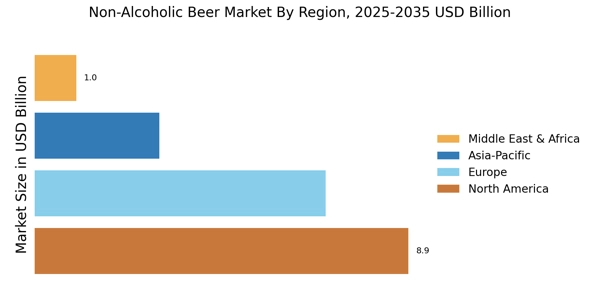
| Europe | USD 9.07 Bn (42.5%) | USD 18.55 Bn | 7.4% ← DOMINANT |
| North America | USD 4.27 Bn (20%) | USD 10.58 Bn | 9.5% ← FASTEST |
| Asia-Pacific | USD 4.27 Bn (20%) | USD 9.07 Bn | 8.1% |
Fastest Growing Segments
| Segment | 2025 Share | CAGR | Key Driver |
|---|---|---|---|
| Lager | 37.3% | 7.8% | Traditional appeal, health trends |
| Stout & Porter | 18.5% | 9.6% | Rich flavors, coffee crossover |
| Fruity Flavors | 22.1% | 8.5% | Innovation for millennials |
Regional Leadership
- Europe (42.5%): Germany/Spain lead with cultural integration, regulatory support for <0.5% ABV.
- North America (9.5% CAGR): USA fastest - craft boom (Athletic Brewing), 175% volume rise.
- Asia-Pacific: Urbanization drives premium NA options amid rising incomes.
Primary Growth Drivers
- Health consciousness (+1.8% CAGR impact): Wellness focus outpaces NAB's +1.1%.
- Flavor innovation (+1.2%): Diverse profiles vs. competitor's +0.8%
- Social moderation (+1.0%): Dry January, Gen Z trends beyond fitness culture (+0.9%).
Key Market Trends & Highlights
The Non-Alcoholic Beer Market is experiencing robust growth driven by health trends and evolving consumer preferences.
- The market is increasingly influenced by a health and wellness focus, appealing to health-conscious consumers.
- Flavor innovation is becoming a key differentiator, with brands experimenting to attract diverse palates.
- Social acceptance of non-alcoholic beverages is rising, particularly among younger demographics in North America.
- Health consciousness and flavor diversity are major drivers, with lager dominating the market while online retail emerges as the fastest-growing segment.
Market Size & Forecast
| 2024 Market Size | 19.87 (USD Billion) |
| 2035 Market Size | 43.72 (USD Billion) |
| CAGR (2025 - 2035) | 7.43% |
Major Players
Heineken (NL), Anheuser-Busch InBev (BE), Carlsberg (DK), Molson Coors Beverage Company (US), Diageo (GB), Asahi Group Holdings (JP), Krombacher Brauerei (DE), BrewDog (GB), Athletic Brewing Company (US)