Cling Films Market
Cling Films Market Summary
As per Market Research Future analysis, the Cling Films Market Size was estimated at 4.117 USD Billion in 2024. The Cling Films industry is projected to grow from USD 4.205 Billion in 2025 to USD 5.202 Billion by 2035, exhibiting a compound annual growth rate (CAGR) of 2.15% during the forecast period 2025 - 2035
Key Market Trends & Highlights
The Cling Films Market is experiencing a dynamic shift towards sustainability and innovation, driven by evolving consumer preferences and regulatory frameworks.
- North America remains the largest market for cling films, primarily due to its robust food packaging sector.
- The Asia-Pacific region is identified as the fastest-growing market, reflecting increasing urbanization and changing lifestyles.
- Food packaging continues to dominate the market, while the medical and pharmaceutical segment is witnessing rapid growth.
- Sustainability initiatives and consumer preferences for convenience are key drivers propelling market expansion.
Market Size & Forecast
| 2024 Market Size | 4.117 (USD Billion) |
| 2035 Market Size | 5.202 (USD Billion) |
| CAGR (2025 - 2035) | 2.15% |
Major Players
Berry Global (US), Amcor (AU), Sealed Air (US), Clondalkin Group (IE), Coveris (AT), Novolex (US), Intertape Polymer Group (CA), AEP Industries (US), Mondi Group (GB)
Cling Films Market Trends
The Cling Films Market is currently experiencing a notable transformation, driven by evolving consumer preferences and increasing awareness regarding food safety and preservation. As households and food service establishments seek more efficient packaging solutions, cling films are becoming a preferred choice due to their versatility and convenience. The market appears to be influenced by a growing trend towards sustainability, with manufacturers exploring eco-friendly materials and production methods. This shift not only addresses environmental concerns but also aligns with the rising demand for biodegradable and recyclable packaging options. Moreover, the expansion of the food and beverage sector is likely to further propel the Cling Films Market. As the global population continues to grow, the need for effective food storage and preservation methods becomes increasingly critical. Cling films are recognized for their ability to extend the shelf life of various products, thereby reducing food waste. Additionally, innovations in cling film technology, such as enhanced cling properties and improved barrier functions, may contribute to the market's growth. Overall, the Cling Films Market appears poised for continued expansion, driven by both consumer demand and technological advancements.
Sustainability Initiatives
The Cling Films Market is witnessing a shift towards sustainable practices, as manufacturers increasingly focus on developing eco-friendly products. This trend is characterized by the introduction of biodegradable and compostable cling films, which aim to reduce environmental impact. As consumers become more environmentally conscious, the demand for sustainable packaging solutions is likely to grow, prompting companies to innovate and adapt their offerings.
Technological Advancements
Innovations in cling film technology are shaping the Cling Films Market, with manufacturers investing in research and development to enhance product performance. New formulations and production techniques are being explored to improve cling properties, barrier functions, and overall durability. These advancements not only meet consumer expectations for quality but also contribute to the efficiency of food preservation.
Rising Demand in Food Service Sector
The food service industry is increasingly adopting cling films for various applications, driving growth in the Cling Films Market. Restaurants, catering services, and food delivery businesses are utilizing cling films for packaging and food storage, recognizing their convenience and effectiveness. This trend reflects a broader movement towards efficient food management practices, as businesses seek to maintain freshness and minimize waste.
Cling Films Market Drivers
Sustainability Initiatives
The Cling Films Market is increasingly influenced by sustainability initiatives. As consumers become more environmentally conscious, there is a growing demand for biodegradable and recyclable cling films. Manufacturers are responding by developing products that minimize environmental impact, which could potentially enhance brand loyalty and market share. According to recent data, the market for sustainable packaging solutions is projected to grow significantly, indicating a shift in consumer preferences. This trend suggests that companies investing in eco-friendly cling films may gain a competitive edge. Furthermore, regulatory pressures to reduce plastic waste are prompting innovations in the Cling Films Market, leading to the introduction of alternative materials that align with sustainability goals.
Technological Advancements
Technological advancements play a crucial role in shaping the Cling Films Market. Innovations in polymer technology have led to the development of cling films with enhanced properties, such as improved stretchability and barrier performance. These advancements not only improve product quality but also extend shelf life, which is particularly beneficial for the food industry. Data indicates that the market for advanced packaging solutions is expanding, driven by the need for better preservation of food products. As manufacturers adopt new technologies, they are likely to enhance their production efficiency and reduce costs, thereby increasing their competitiveness in the Cling Films Market. This trend suggests a continuous evolution in product offerings, catering to diverse consumer needs.
Health and Safety Regulations
Health and safety regulations are increasingly influencing the Cling Films Market. Stringent guidelines regarding food safety and hygiene are prompting manufacturers to ensure that their cling films meet specific standards. This regulatory environment is driving innovation, as companies invest in developing cling films that are not only safe for food contact but also enhance food preservation. Data indicates that compliance with health regulations can significantly impact market access and consumer trust. As a result, manufacturers that prioritize safety in their cling film products may gain a competitive advantage. This trend suggests that adherence to health and safety standards will continue to shape the Cling Films Market, influencing product development and marketing strategies.
Consumer Preferences for Convenience
Consumer preferences for convenience are significantly impacting the Cling Films Market. As lifestyles become busier, there is a growing inclination towards products that offer ease of use and time-saving benefits. Cling films, known for their quick application and effective sealing properties, align well with these consumer demands. Market data suggests that the convenience packaging segment is on the rise, indicating a shift in purchasing behavior. This trend may lead to increased sales of cling films, as consumers prioritize products that simplify food storage and preparation. Manufacturers that recognize and adapt to these changing preferences are likely to thrive in the Cling Films Market, potentially capturing a larger share of the market.
Rising Demand in Food Service Sector
The Cling Films Market is experiencing a surge in demand from the food service sector. As restaurants and catering services seek efficient packaging solutions, cling films are becoming a preferred choice for food preservation and presentation. The convenience of cling films, coupled with their ability to maintain food freshness, is driving their adoption in this sector. Recent statistics indicate that the food service industry is expanding, which correlates with increased usage of cling films for packaging and storage. This trend suggests that manufacturers focusing on the food service market may find lucrative opportunities within the Cling Films Market. Additionally, the rise of takeout and delivery services further amplifies the need for effective cling film solutions.
Market Segment Insights
By Application: Food Packaging (Largest) vs. Medical and Pharmaceutical (Fastest-Growing)
In the Cling Films Market, the Food Packaging segment commands a significant share, driven by its essential role in preserving food freshness and extending shelf life. This category encompasses a variety of products used in homes and industries alike, contributing greatly to the market's overall dynamics. Other important segments include Industrial Packaging, Retail Packaging, and Medical and Pharmaceutical applications, all of which make considerable contributions and cater to specific market needs, though at a smaller overall share compared to Food Packaging.
Food Packaging (Dominant) vs. Medical and Pharmaceutical (Emerging)
Food Packaging remains the dominant segment within the Cling Films Market, characterized by strong consumer demand for convenience and safety in food storage. This segment leverages cling films' ability to adhere tightly to various surfaces, preventing spoilage and contamination. On the other hand, Medical and Pharmaceutical applications, although emerging, are gaining momentum, driven by an increasing need for hygienic packaging solutions. The growth in healthcare facilities and demand for safe handling of medical products are pivotal in driving this segment's growth. Both categories highlight the versatility of cling films, addressing distinct market needs while evolving to meet changing consumer demands.
By Material Type: Polyvinyl Chloride (Largest) vs. Bio-based Cling Films (Fastest-Growing)
In the Cling Films Market, Polyvinyl Chloride (PVC) holds the largest share due to its widespread application in food packaging and safety features. This material is favored for its versatility, cost-effectiveness, and excellent barrier properties. On the other hand, Polyethylene and Polypropylene also contribute significantly to market share, primarily utilized for their flexibility and strength, which are essential in various packaging solutions. Meanwhile, Bio-based Cling Films are gaining traction as consumers increasingly demand sustainable and eco-friendly options, although they currently hold a smaller percentage compared to PVC. The growth trends within the material type segment are driven by expanding awareness of environmental issues and the rise of sustainable packaging solutions. Bio-based Cling Films are emerging as a preferred option for eco-conscious consumers, spurring manufacturers to innovate and invest in this area, aiming to combine functionality with sustainability. This trend signals a shift in consumer preferences, encouraging the industry to adapt its offerings alongside regulatory push for greener alternatives, paving the way for a dynamic and competitive market landscape.
Polyvinyl Chloride (Dominant) vs. Bio-based Cling Films (Emerging)
Polyvinyl Chloride (PVC) remains the dominant material in the Cling Films Market due to its practicality and reliability. Known for its durability and effective cling properties, PVC is extensively used in food packaging to preserve freshness and prevent contamination. Its affordability makes it a go-to choice for manufacturers. On the other hand, Bio-based Cling Films are emerging as a significant player in response to increasing consumer preference for sustainable products. Made from renewable resources, these films offer an eco-friendly alternative to traditional materials. Though they currently represent a smaller share, their growth is indicative of a broader market trend toward sustainability, prompting industry players to explore innovations that maintain performance while reducing environmental impact.
By Thickness: 10-20 Microns (Largest) vs. Below 10 Microns (Fastest-Growing)
In the Cling Films Market, the segment of 10-20 microns holds the largest share, catering to a wide range of applications in food preservation and packaging. This thickness range provides optimal cling and stretch properties, making it highly preferred among consumers and businesses alike. In contrast, the Below 10 Microns category represents the fastest-growing segment, driven by increasing demand in specialized applications like microwave-safe wraps and lightweight packaging solutions.
Thickness: 10-20 Microns (Dominant) vs. Below 10 Microns (Emerging)
The 10-20 microns thickness category in cling films is pivotal due to its dominant market position, offering excellent balance between flexibility and strength. This thickness is ideal for food storage, providing an effective barrier to moisture and air, which helps extend the shelf life of food products. Meanwhile, the Below 10 Microns segment is emerging rapidly, catering to niche markets where lightweight and disposable options are increasingly desired. This segment's growth is fueled by trends towards sustainable packaging and convenience, as consumers seek thinner films that reduce waste while still delivering protective qualities.
By End Use: Household (Largest) vs. Food Service (Fastest-Growing)
The Cling Films Market is primarily segmented into Household, Commercial, Food Service, and Healthcare end uses. Among these, the Household segment holds a significant share, indicating a strong consumer preference for cling films, especially for food preservation and storage in domestic settings. The Commercial segment also plays a crucial role, catering to various businesses that utilize cling films in packaging and storage solutions. Growth trends indicate that the Food Service segment is currently the fastest growing, driven by increasing demand for convenient and hygienic food storage options in restaurants and catering services. The Healthcare segment is also experiencing growth as cling films are utilized for medical applications, further diversifying market demand. As lifestyles change and convenience becomes a priority, these segments are poised for continued expansion.
Household (Dominant) vs. Food Service (Emerging)
The Household segment remains dominant in the Cling Films Market, as consumers continue to seek effective solutions for food storage and preservation. This preference is fueled by a growing awareness of food waste reduction and the need for convenience in everyday cooking and meal preparation. In contrast, the Food Service segment, though emerging, is gaining momentum rapidly as restaurants and catering businesses shift towards using cling films for efficient food handling and packaging. The rising trend of home delivery and takeout services in the food industry significantly contributes to this growth. Both segments exhibit distinct characteristics, with Household focusing on individual consumer needs while Food Service adapts to a more commercial and operational focus, reflecting their respective market demands.
Regional Insights
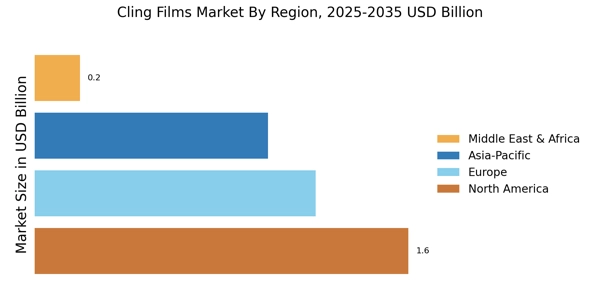
The Global Cling Films Market exhibits a diverse regional distribution, with North America, Europe, APAC, South America, and MEA contributing significantly to the overall performance. In 2024, the North American market was valued at 0.845 USD Billion, while Europe followed closely at 0.966 USD Billion. APAC emerged as a dominant player with a valuation of 1.288 USD Billion, showcasing strong demand due to its large population and growing food packaging sector.
South America and MEA represented smaller shares, valued at 0.483 USD Billion and 0.539 USD Billion respectively.By 2035, APAC is projected to reach 1.584 USD Billion, affirming its majority holding in the market. The growth in these regions is driven by increasing consumer demand for convenience in food storage and preservation, while challenges such as environmental concerns regarding plastic waste affect market dynamics. Opportunities lie in developing sustainable cling film alternatives, which can enhance the overall Global Cling Films Market revenue.
The Global Cling Films Market segmentation across different regions highlights varying growth rates and market sizes that reflect each area's unique consumption patterns and economic conditions, making it imperative to understand these dynamics in strategic planning.
Key Players and Competitive Insights
Key Companies in the Cling Films Market include
Industry Developments
Recent developments in the Global Cling Films Market have indicated robust growth, driven particularly by increased demand in the food packaging sector. Companies like Mondi Group and Berry Global have been innovating their product lines to include more sustainable options, aligning with consumer preferences for eco-friendly materials. SABIC and Dow Chemical Company are focusing on enhancing the performance characteristics of their cling films, investing in technologies that offer better stretch and durability. Additionally, Novolex has announced plans to expand its manufacturing capabilities to meet rising demand, which is expected to bolster its market position.
Notably, amidst these growth trends, Alpha Packaging and Sealed Air have engaged in discussions regarding potential collaborations aimed at leveraging each other’s strengths in product development. Recently, there have been rumors of merger and acquisition activities, particularly involving companies like Wipak and Coveris Holdings, although no formal agreements have been publicly confirmed. These dynamics suggest a rapidly evolving market landscape where innovation, sustainability, and strategic partnerships are at the forefront, with companies aiming to capitalize on increased consumer interest in cling films for various applications.
Future Outlook
Cling Films Market Future Outlook
The Cling Films Market is projected to grow at a 2.15% CAGR from 2025 to 2035, driven by increasing demand in food packaging and sustainability initiatives.
New opportunities lie in:
- Expansion into biodegradable cling film production
- Development of smart cling film with freshness indicators
- Partnerships with e-commerce platforms for direct-to-consumer sales
By 2035, the Cling Films Market is expected to achieve robust growth, reflecting evolving consumer preferences and technological advancements.
Market Segmentation
Cling Films Market End Use Outlook
- Household
- Commercial
- Food Service
- Healthcare
Cling Films Market Thickness Outlook
- Below 10 Microns
- 10-20 Microns
- 20-30 Microns
- Above 30 Microns
Cling Films Market Application Outlook
- Food Packaging
- Industrial Packaging
- Retail Packaging
- Medical and Pharmaceutical
Cling Films Market Material Type Outlook
- Polyvinyl Chloride
- Polyethylene
- Polypropylene
- Bio-based Cling Films
Report Scope
| MARKET SIZE 2024 | 4.117(USD Billion) |
| MARKET SIZE 2025 | 4.205(USD Billion) |
| MARKET SIZE 2035 | 5.202(USD Billion) |
| COMPOUND ANNUAL GROWTH RATE (CAGR) | 2.15% (2025 - 2035) |
| REPORT COVERAGE | Revenue Forecast, Competitive Landscape, Growth Factors, and Trends |
| BASE YEAR | 2024 |
| Market Forecast Period | 2025 - 2035 |
| Historical Data | 2019 - 2024 |
| Market Forecast Units | USD Billion |
| Key Companies Profiled | Berry Global (US), Amcor (AU), Sealed Air (US), Clondalkin Group (IE), Coveris (AT), Novolex (US), Intertape Polymer Group (CA), AEP Industries (US), Mondi Group (GB) |
| Segments Covered | Application, Material Type, Thickness, End Use, Regional |
| Key Market Opportunities | Growing demand for sustainable packaging solutions drives innovation in the Cling Films Market. |
| Key Market Dynamics | Rising consumer preference for sustainable packaging drives innovation and competition in the cling films market. |
| Countries Covered | North America, Europe, APAC, South America, MEA |
FAQs
What is the current valuation of the Cling Films Market as of 2024?
The Cling Films Market was valued at 4.117 USD Billion in 2024.
What is the projected market size for the Cling Films Market in 2035?
The market is projected to reach 5.202 USD Billion by 2035.
What is the expected CAGR for the Cling Films Market during the forecast period 2025 - 2035?
The expected CAGR for the Cling Films Market during 2025 - 2035 is 2.15%.
Which application segment holds the largest market share in 2024?
In 2024, the Food Packaging segment led the market with a valuation of 2.2 USD Billion.
How does the Industrial Packaging segment perform in terms of market valuation?
The Industrial Packaging segment was valued at 1.1 USD Billion in 2024.
What are the key materials used in the production of cling films?
The primary materials include Polyvinyl Chloride, Polyethylene, Polypropylene, and Bio-based Cling Films.
What is the market valuation for Bio-based Cling Films in 2024?
Bio-based Cling Films had a market valuation of 0.5 USD Billion in 2024.
Which thickness category of cling films is projected to grow the most by 2035?
The thickness category of 10-20 Microns is projected to grow, reaching 1.475 USD Billion by 2035.
What is the market size for the Healthcare end-use segment in 2024?
The Healthcare end-use segment was valued at 0.417 USD Billion in 2024.
Who are the key players in the Cling Films Market?
Key players include Berry Global, Amcor, Sealed Air, and Mondi Group, among others.
Kindly complete the form below to receive a free sample of this Report
Customer Stories
“This is really good guys. Excellent work on a tight deadline. I will continue to use you going forward and recommend you to others. Nice job”
“Thanks. It’s been a pleasure working with you, please use me as reference with any other Intel employees.”
“Thanks for sending the report it gives us a good global view of the Betaïne market.”
“Thank you, this will be very helpful for OQS.”
“We found the report very insightful! we found your research firm very helpful. I'm sending this email to secure our future business.”
“I am very pleased with how market segments have been defined in a relevant way for my purposes (such as "Portable Freezers & refrigerators" and "last-mile"). In general the report is well structured. Thanks very much for your efforts.”
“I have been reading the first document or the study, ,the Global HVAC and FP market report 2021 till 2026. Must say, good info! I have not gone in depth at all parts, but got a good indication of the data inside!”
“We got the report in time, we really thank you for your support in this process. I also thank to all of your team as they did a great job.”