×
Request Free Sample ×

Kindly complete the form below to receive a free sample of this Report

* Please use a valid business email

Leading companies partner with us for data-driven Insights

clients tt-cursor
Hero Background

Cycling Helmet Market

ID: MRFR/CG/6728-CR
128 Pages
Pradeep Nandi
February 2021

Cycling Helmet Market Research Report Information By Type (Road Helmets, Sports Helmets, MTB Helmets), By Application (Daily Transportation, Sports/Adventure) And By Region (North America, Europe, Asia-Pacific, And Rest Of The World) –Market Forecast Till 2035

Share:
Download PDF ×

We do not share your information with anyone. However, we may send you emails based on your report interest from time to time. You may contact us at any time to opt-out.

Cycling Helmet Market Infographic
Purchase Options

Cycling Helmet Market Summary

As per MRFR analysis, the Cycling Helmet Market Size was estimated at 743.05 USD Million in 2024. The Cycling Helmet industry is projected to grow from 766.85 in 2025 to 1050.97 by 2035, exhibiting a compound annual growth rate (CAGR) of 3.2 during the forecast period 2025 - 2035.

Key Market Trends & Highlights

The Cycling Helmet Market is experiencing a dynamic shift towards innovation and sustainability.

  • Technological integration is reshaping helmet designs, enhancing safety and user experience.
  • A growing focus on sustainability is driving manufacturers to adopt eco-friendly materials and practices.
  • Customization and personalization options are increasingly appealing to consumers, particularly in the road cycling segment.
  • The rise in cycling participation and increased awareness of safety standards are key drivers propelling market growth, especially in North America.

Market Size & Forecast

2024 Market Size 743.05 (USD Million)
2035 Market Size 1050.97 (USD Million)
CAGR (2025 - 2035) 3.2%

Major Players

Giro (US), Bell (US), Specialized (US), Kask (IT), Lazer (BE), Scott (CH), Trek (US), ABUS (DE), Met (IT)

Cycling Helmet Market Trends

The Cycling Helmet Market is currently experiencing a dynamic evolution, driven by a growing awareness of safety and an increasing number of cycling enthusiasts. As urban areas expand and the popularity of cycling as a mode of transportation rises, the demand for high-quality helmets appears to be on the rise. Manufacturers are responding to this trend by innovating with advanced materials and designs that enhance both protection and comfort. Furthermore, the integration of technology, such as smart features and connectivity, seems to be gaining traction among consumers, indicating a shift towards more sophisticated products. In addition to safety and technology, sustainability is becoming a focal point within the Cycling Helmet Market. Consumers are increasingly seeking eco-friendly options, prompting manufacturers to explore sustainable materials and production methods. This shift not only aligns with global environmental goals but also appeals to a demographic that values responsible consumption. As the market continues to evolve, it is likely that these trends will shape the future landscape of cycling helmets, influencing both consumer preferences and industry standards.

Technological Integration

The incorporation of smart technology into cycling helmets is becoming more prevalent. Features such as built-in lights, Bluetooth connectivity, and crash detection systems are appealing to tech-savvy cyclists. This trend suggests a growing demand for helmets that not only provide safety but also enhance the overall cycling experience.

Sustainability Focus

There is a noticeable shift towards eco-friendly materials and production processes within the Cycling Helmet Market. Consumers are increasingly prioritizing sustainable options, which encourages manufacturers to adopt greener practices. This trend reflects a broader societal movement towards environmental responsibility.

Customization and Personalization

The desire for unique and personalized products is influencing the Cycling Helmet Market. Consumers are seeking helmets that reflect their individual style and preferences. This trend indicates a potential for manufacturers to offer customizable designs, catering to a diverse range of tastes.

Cycling Helmet Market Drivers

Market Growth Projections

The Global Cycling Helmet Market Industry is projected to experience substantial growth over the next decade. With a market value of 0.74 USD Billion in 2024, it is anticipated to reach 1.05 USD Billion by 2035. This growth trajectory reflects a compound annual growth rate (CAGR) of 3.26% from 2025 to 2035, indicating a steady increase in demand for cycling helmets. Factors such as rising cycling participation, technological advancements, and regulatory support are expected to contribute to this growth. The market's expansion presents opportunities for manufacturers to innovate and cater to a diverse consumer base.

Technological Advancements

Technological innovations in helmet design and materials are significantly influencing the Global Cycling Helmet Market Industry. Manufacturers are increasingly incorporating advanced materials such as carbon fiber and expanded polystyrene, which enhance safety while reducing weight. Additionally, features like integrated lights, Bluetooth connectivity, and improved ventilation systems are becoming more common. These advancements not only improve user experience but also attract a broader demographic of cyclists. As the market evolves, it is anticipated that these innovations will drive the market value to 1.05 USD Billion by 2035, showcasing the potential for growth driven by technology.

Growing Awareness of Safety

The increasing awareness of safety among cyclists is a primary driver of the Global Cycling Helmet Market Industry. As more individuals engage in cycling for recreation and commuting, the emphasis on protective gear has intensified. This heightened awareness is reflected in various campaigns promoting helmet use, which has led to a notable increase in sales. In 2024, the market is projected to reach 0.74 USD Billion, indicating a robust demand for cycling helmets. Governments and organizations worldwide are advocating for helmet laws, further contributing to the growth of this market. As safety becomes a priority, the industry is likely to see sustained growth.

Rise in Cycling Participation

The surge in cycling participation globally is a crucial factor propelling the Global Cycling Helmet Market Industry. With urban areas increasingly promoting cycling as a sustainable mode of transportation, more individuals are taking to the roads on bicycles. This trend is supported by various government initiatives aimed at reducing traffic congestion and promoting healthier lifestyles. As cycling becomes more mainstream, the demand for helmets is expected to rise correspondingly. The projected compound annual growth rate (CAGR) of 3.26% from 2025 to 2035 suggests that the market will continue to expand as cycling gains popularity across diverse demographics.

Regulatory Support and Legislation

Regulatory support and legislation play a vital role in shaping the Global Cycling Helmet Market Industry. Many countries have implemented laws mandating helmet use for cyclists, particularly among children and young adults. These regulations not only enhance safety but also create a structured market environment that encourages compliance. As governments enforce stricter safety standards, manufacturers are compelled to innovate and improve their products. This regulatory landscape is likely to contribute to the market's growth, as compliance with safety standards becomes a priority for both consumers and manufacturers alike.

Environmental Concerns and Sustainability

Environmental concerns are increasingly influencing consumer behavior, thereby impacting the Global Cycling Helmet Market Industry. As awareness of climate change and pollution grows, more individuals are opting for cycling as an eco-friendly transportation alternative. This shift towards sustainable practices is driving demand for cycling helmets, as consumers seek products that align with their values. Manufacturers are responding by developing helmets using sustainable materials and processes, further appealing to environmentally conscious consumers. This trend is expected to bolster the market, as the intersection of cycling and sustainability continues to gain traction globally.

Market Segment Insights

By Application: Road Cycling (Largest) vs. Mountain Biking (Fastest-Growing)

In the Cycling Helmet Market, road cycling dominates the application segment, capturing a significant share due to its popularity among cycling enthusiasts and commuters alike. The prevalence of road cycling events and the push for cyclists' safety have catalyzed the demand for specialized helmets designed for this purpose. Meanwhile, mountain biking is rapidly gaining traction, especially with the rise of adventure tourism and outdoor activities. Its appeal is further boosted by technological innovations in helmet design that enhance safety and comfort features, making it an attractive option for both casual and competitive riders.

Road Cycling: Dominant vs. Mountain Biking: Emerging

Road cycling remains the dominant segment in the Cycling Helmet Market, characterized by a large base of avid cyclists and a diverse range of products catering to both casual riders and serious competitors. These helmets typically emphasize aerodynamics, lightweight materials, and advanced ventilation systems to accommodate long-distance rides. Conversely, mountain biking is an emerging segment, distinguished by features that prioritize impact resistance and all-terrain durability. Helmets in this category often include visors, adjustable fit systems, and additional coverage to enhance protection during rough rides. As the popularity of mountain biking continues to grow, manufacturers are responding with innovative designs that balance safety and usability, contributing to its status as the fastest-growing application.

By Material: Polycarbonate (Largest) vs. Carbon Fiber (Fastest-Growing)

The Cycling Helmet Market showcases a diverse distribution among various material types, with Polycarbonate leading the segment due to its favorable balance of cost, weight, and impact resistance. Fiberglass and Expanded Polystyrene also hold notable market shares, offering distinct advantages in terms of protection and weight. Polypropylene, while less common, is emerging as a viable option for certain market niches, appealing to eco-conscious consumers.

Polycarbonate (Dominant) vs. Carbon Fiber (Emerging)

Polycarbonate helmets dominate the market primarily due to their durability and affordability, making them the go-to choice for a wide range of cyclists. These helmets are known for providing excellent protection while being lightweight, thus ensuring comfort during rides. Conversely, Carbon Fiber helmets are capturing attention as an emerging choice among enthusiasts seeking high-performance gear. Though generally priced higher, Carbon Fiber offers superior strength-to-weight ratio, appealing to competitive cyclists and those prioritizing safety and advanced technology in their gear.

By Type: Bicycle Helmet (Largest) vs. Full Face Helmet (Fastest-Growing)

The Cycling Helmet Market is primarily dominated by the Bicycle Helmet segment, which accounts for a significant portion of total sales. This segment's popularity stems from its appeal to a broad range of consumers including casual riders, commuters, and professional cyclists, reflecting its versatility and safety features. In contrast, the Full Face Helmet segment, although smaller in market share, has been gaining traction among mountain bikers and downhill racers, highlighting a shift in consumer preferences towards more protective gear in extreme cycling sports. As health and safety awareness continues to grow, the demand for Cycling Helmets is on the rise, leading to increased innovation and design improvements. The Full Face Helmet segment is experiencing particularly rapid growth due to rising participation in extreme cycling sports, which demand higher safety standards. Additionally, the Multi-Sport Helmet segment is also witnessing rising popularity due to its flexibility across various activities, thereby contributing to overall market growth. This evolving landscape presents myriad opportunities for manufacturers to tap into more niche markets and create tailored products that meet the changing needs of consumers.

Bicycle Helmet (Dominant) vs. Full Face Helmet (Emerging)

The Bicycle Helmet remains the dominant type within the Cycling Helmet Market due to its widespread acceptance across multiple cycling disciplines and demographics. Known for comfort, lightweight design, and effectiveness in crash protection, Bicycle Helmets cater to a wide audience, ensuring they remain a top choice. Conversely, the Full Face Helmet represents an emerging segment that is increasingly favored by riders seeking enhanced safety during aggressive riding conditions, such as downhill mountain biking. Full Face Helmets offer advanced protection for the chin and jaw, addressing key safety concerns in high-risk environments. As trends towards more adventurous cycling continue, the Full Face Helmet is likely to gain further market share, appealing to a dedicated base of extreme sport enthusiasts.

By Gender: Male (Largest) vs. Female (Fastest-Growing)

The Cycling Helmet Market showcases a diverse gender segment with notable variations in market share. The Male segment holds the largest portion of the market, attributed to higher participation rates in cycling activities and a more extensive range of helmet designs catering to this demographic. The Female segment, while smaller, is rapidly growing due to increasing awareness of safety and the push for gender-specific designs tailored to female cyclists. This shift is being propelled by aggressive marketing strategies focusing on women's cycling apparel and accessories, fostering an inclusive cycling culture.

Male (Dominant) vs. Female (Emerging)

In the Cycling Helmet Market, the Male segment is currently dominant, capturing a significant share due to entrenched cycling habits. This segment benefits from a wide variety of helmet styles that suit different cycling preferences, from casual riders to competitive athletes. Concurrently, the Female segment is emerging quickly, driven by an increase in female participation in cycling, influenced by campaigns promoting fitness and outdoor activities. Female cyclists often seek helmets with enhanced features such as adjustable sizing, vibrant color options, and stylish designs. As brands continue to innovate and create female-specific lines, this segment is expected to witness substantial growth, enhancing its market presence further.

By Price Range: Mid (Largest) vs. Premium (Fastest-Growing)

The cycling helmet market showcases a diverse distribution across various price segments, with the mid-range category commanding the largest share. This segment appeals to a broad audience, combining quality and affordability, resulting in considerable sales volume. In contrast, the premium segment has been gaining significant traction, driven by consumer interest in advanced technology and enhanced safety features. These trends reflect a growing awareness of the importance of helmet quality and performance, pushing the premium category into a competitive position.

Mid (Dominant) vs. Premium (Emerging)

The mid-range cycling helmet segment is characterized by a balanced fusion of quality, comfort, and price, making it the most preferred choice for casual riders and avid cyclists alike. This segment thrives on offering essential features without overwhelming the budget. On the other hand, the premium segment caters to serious cyclists and enthusiasts seeking top-tier technology, innovative designs, and superior safety features. These helmets often incorporate advanced materials and aerodynamics, appealing to consumers willing to invest in their cycling experience. As the market evolves, the distinction between mid and premium segments will shape consumer purchasing decisions, influencing overall market dynamics.

Get more detailed insights about Cycling Helmet Market

Regional Insights

North America : Market Leader in Cycling Helmets

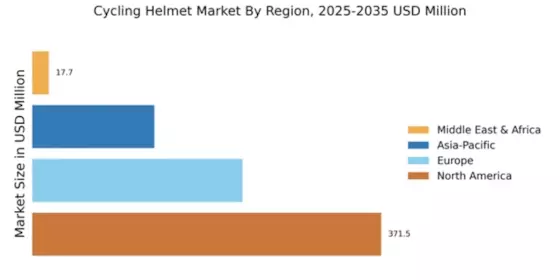
North America is poised to maintain its leadership in the cycling helmet market, holding a significant share of 371.52 million in 2025. The growth is driven by increasing cycling participation, heightened safety awareness, and supportive regulations promoting helmet use. Government initiatives aimed at improving cycling infrastructure further bolster demand, making it a vibrant market for cycling accessories. The competitive landscape is characterized by key players such as Giro, Bell, and Trek, which dominate the market with innovative designs and advanced safety features. The U.S. leads in sales, supported by a robust retail network and a growing trend towards outdoor activities. As cycling becomes more popular, the demand for high-quality helmets is expected to rise, ensuring North America's continued market dominance.

Europe : Emerging Market with Growth Potential

Europe's cycling helmet market is valued at 223.83 million, reflecting a growing trend towards cycling as a sustainable mode of transport. Factors such as urbanization, environmental awareness, and government policies promoting cycling safety are driving this growth. The European Union's regulations mandating helmet use in certain areas further enhance market demand, making it a key player in the global landscape. Leading countries like Germany, France, and the Netherlands are at the forefront, with a competitive market featuring brands like Kask and ABUS. The presence of established manufacturers and a focus on innovation in helmet technology contribute to a dynamic market environment. As cycling culture continues to flourish, Europe is set to experience significant growth in helmet sales, driven by both recreational and commuter cyclists.

Asia-Pacific : Rapid Growth in Cycling Adoption

The Asia-Pacific region, with a market size of 130.0 million, is witnessing rapid growth in cycling helmet adoption. Factors such as increasing urbanization, rising disposable incomes, and a growing focus on health and fitness are driving demand. Additionally, government initiatives promoting cycling as an eco-friendly transport option are catalyzing market expansion, making it a promising area for investment and development. Countries like China, Japan, and Australia are leading the charge, with a mix of local and international brands competing for market share. Companies like Scott and Lazer are gaining traction by offering innovative products tailored to regional preferences. As cycling becomes more mainstream, the demand for quality helmets is expected to surge, positioning Asia-Pacific as a key player in the global market.

Middle East and Africa : Emerging Market with Untapped Potential

The Middle East and Africa (MEA) region, with a market size of 17.7 million, presents significant growth opportunities in the cycling helmet market. Factors such as increasing health consciousness, urban development, and government initiatives promoting cycling are driving demand. The region's growing interest in outdoor activities and sports is also contributing to the rising popularity of cycling, making it a potential hotspot for helmet sales. Countries like South Africa and the UAE are leading the market, with a mix of local and international brands vying for consumer attention. The presence of key players such as Met and ABUS is enhancing competition, while the lack of stringent regulations presents both challenges and opportunities for market growth. As cycling culture develops, the MEA region is expected to see a gradual increase in helmet adoption and sales.

Key Players and Competitive Insights

The Cycling Helmet Market is currently characterized by a dynamic competitive landscape, driven by increasing consumer awareness regarding safety and the growing popularity of cycling as a recreational and commuting activity. Key players such as Giro (US), Bell (US), and Kask (IT) are strategically positioned to leverage innovation and sustainability in their product offerings. Giro (US) focuses on integrating advanced technology into their helmets, enhancing safety features while maintaining comfort. Bell (US) emphasizes a strong brand presence and partnerships with professional cycling teams, which bolsters their market visibility. Kask (IT) is recognized for its commitment to high-quality materials and design, appealing to both competitive cyclists and casual riders. Collectively, these strategies contribute to a competitive environment that prioritizes safety, performance, and brand loyalty.

In terms of business tactics, companies are increasingly localizing manufacturing to reduce lead times and optimize supply chains. This approach not only enhances responsiveness to market demands but also aligns with sustainability goals by minimizing transportation emissions. The market structure appears moderately fragmented, with several key players holding substantial market shares while numerous smaller brands cater to niche segments. The collective influence of these major companies shapes pricing strategies and product innovation, fostering a competitive yet collaborative atmosphere.

In November 2025, Giro (US) announced the launch of a new line of smart helmets equipped with integrated communication systems, allowing cyclists to connect with their devices seamlessly. This strategic move underscores Giro's commitment to innovation and positions them at the forefront of technological advancements in cycling safety. The introduction of smart features is likely to attract tech-savvy consumers, enhancing Giro's competitive edge in a rapidly evolving market.

In October 2025, Bell (US) entered into a partnership with a leading cycling advocacy group to promote helmet safety awareness through community events and educational campaigns. This initiative not only strengthens Bell's brand image but also aligns with broader public health objectives, potentially increasing helmet adoption rates. By engaging directly with consumers and promoting safety, Bell is likely to enhance its market presence and foster brand loyalty.

In September 2025, Kask (IT) unveiled a new sustainability initiative aimed at reducing the environmental impact of their production processes. This initiative includes the use of recycled materials and energy-efficient manufacturing techniques. Such a commitment to sustainability is increasingly resonating with consumers, particularly younger demographics who prioritize eco-friendly products. Kask's proactive approach may enhance its appeal in a market that is progressively leaning towards sustainable practices.

As of December 2025, current trends in the Cycling Helmet Market indicate a strong emphasis on digitalization, sustainability, and the integration of artificial intelligence in product development. Strategic alliances among key players are shaping the competitive landscape, fostering innovation and enhancing product offerings. The shift from price-based competition to a focus on technological advancements and supply chain reliability is evident. Companies that prioritize innovation and sustainability are likely to differentiate themselves in an increasingly crowded market, suggesting a future where competitive advantage hinges on the ability to adapt to evolving consumer preferences and technological advancements.

Key Companies in the Cycling Helmet Market market include

Industry Developments

In July 2019, Before the brand was officially launched, Giant-sponsored UCI WorldTeam teams (Team Sunweb in 2018, and CCC Pro Team in 2019) were seen wearing #Overachieve-branded components, which Giant claims were race-tested prototypes of the CADEX components. This line was created to "develop superior cycling components for pro racers" and compete directly with the Specialised S-Works range.

In August 2020, Hexr has announced the release of their new voronoi bicycle helmet, which features a parmetric design.

In March 2019, Trek and Bontrager have announced the release of a new cycling helmet that employs WaveCel technology.

Future Outlook

Cycling Helmet Market Future Outlook

The Cycling Helmet Market is projected to grow at a 3.2% CAGR from 2024 to 2035, driven by increasing safety awareness, urban cycling trends, and technological advancements.

New opportunities lie in:

  • Expansion of smart helmet technology integrating communication features.
  • Development of eco-friendly materials for sustainable helmet production.
  • Partnerships with cycling events for exclusive helmet branding opportunities.

By 2035, the market is expected to be robust, reflecting evolving consumer preferences and innovative product offerings.

Market Segmentation

Cycling Helmet Market Type Outlook

  • Full Face Helmet
  • Half Helmet
  • Bicycle Helmet
  • Skate Helmet
  • Multi-Sport Helmet

Cycling Helmet Market Gender Outlook

  • Male
  • Female
  • Unisex
  • Youth
  • Children

Cycling Helmet Market Material Outlook

  • Polycarbonate
  • Fiberglass
  • Carbon Fiber
  • Expanded Polystyrene
  • Polypropylene

Cycling Helmet Market Application Outlook

  • Road Cycling
  • Mountain Biking
  • Commuting
  • Recreational Cycling
  • Competitive Cycling

Cycling Helmet Market Price Range Outlook

  • Low
  • Mid
  • High
  • Premium
  • Luxury

Report Scope

MARKET SIZE 2024743.05(USD Million)
MARKET SIZE 2025766.85(USD Million)
MARKET SIZE 20351050.97(USD Million)
COMPOUND ANNUAL GROWTH RATE (CAGR)3.2% (2024 - 2035)
REPORT COVERAGERevenue Forecast, Competitive Landscape, Growth Factors, and Trends
BASE YEAR2024
Market Forecast Period2025 - 2035
Historical Data2019 - 2024
Market Forecast UnitsUSD Million
Key Companies ProfiledGiro (US), Bell (US), Specialized (US), Kask (IT), Lazer (BE), Scott (CH), Trek (US), ABUS (DE), Met (IT)
Segments CoveredApplication, Material, Type, Gender, Price Range
Key Market OpportunitiesIntegration of smart technology and safety features in the Cycling Helmet Market presents significant growth potential.
Key Market DynamicsRising consumer awareness of safety and sustainability drives innovation and competition in the cycling helmet market.
Countries CoveredNorth America, Europe, APAC, South America, MEA

Market Highlights

Author
Pradeep Nandi
Senior Research Analyst

I have a bachelor's degree in mechanical engineering and an MBA. I have more than two years of expertise in the retail, food, and beverage, chemical, and material industries, and hence have developed a sound cross-domain expertise. A firm believer in lifelong learning and sharing of knowledge. Having a proclivity for hatching ideas and trying to absorb as much information as possible in a short amount of time. Introducing corporates to the data and insight, which enables them to move from probability to possibility, has been my key areas of interest. 

Leave a Comment

FAQs

How much is the Cycling Helmet Market?

The Cycling Helmet Market size was valued at USD 0.72 Billion in 2023.

What is the growth rate of the Cycling Helmet Market?

The market is projected to grow at a CAGR of 3.2% during the forecast period, 2025-2034.

Which region held the largest market share in the Cycling Helmet Market?

Europe had the largest share of the market

Who are the key players in the Cycling Helmet Market?

The key players in the market are Trek Bicycle Corporation (US), MET-Helmets (Italy), Limar (Italy), Orbea (Spain), SCOTT Sports SA (Switzerland), KASK Sp.a. (Italy).

Which type led the Cycling Helmet Market?

The mountain bike helmets (MTB)category dominated the market in 2023.

Which application had the largest market share in the Cycling Helmet Market?

The sports had the largest share of the market.

Download Free Sample

Kindly complete the form below to receive a free sample of this Report

Compare Licence

×
Features License Type
Single User Multiuser License Enterprise User
Price $4,950 $5,950 $7,250
Maximum User Access Limit 1 User Upto 10 Users Unrestricted Access Throughout the Organization
Free Customization
Direct Access to Analyst
Deliverable Format
Platform Access
Discount on Next Purchase 10% 15% 15%
Printable Versions