The Dirt Bike Market is currently characterized by a dynamic competitive landscape, driven by innovation, regional expansion, and strategic partnerships. Major players such as Honda (JP), Yamaha (JP), and KTM (AT) are at the forefront, each adopting distinct strategies to enhance their market presence. Honda (JP) emphasizes technological advancements in electric dirt bikes, aiming to capture the growing eco-conscious consumer segment. Yamaha (JP) focuses on expanding its product line to include more versatile models, catering to both recreational and competitive riders. Meanwhile, KTM (AT) is leveraging its strong brand heritage in off-road racing to solidify its position in the premium segment, indicating a trend towards specialization in product offerings.
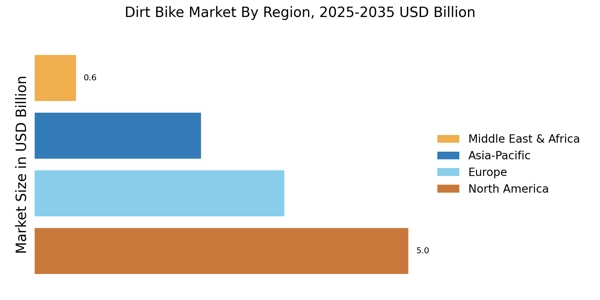
In terms of business tactics, companies are increasingly localizing manufacturing to reduce costs and enhance supply chain efficiency. This approach appears to be particularly effective in regions with high demand, such as North America and Europe. The market structure is moderately fragmented, with a mix of established brands and emerging players. The collective influence of key players shapes competitive dynamics, as they vie for market share through innovation and customer engagement strategies.
In August 2025, Honda (JP) announced the launch of its new electric dirt bike model, which is expected to set a benchmark in the industry for performance and sustainability. This strategic move not only aligns with global trends towards electrification but also positions Honda (JP) as a leader in the eco-friendly segment of the dirt bike market. The introduction of this model could potentially attract a new demographic of environmentally conscious consumers, thereby expanding Honda's market reach.
In September 2025, Yamaha (JP) unveiled a partnership with a leading technology firm to integrate advanced AI features into its dirt bikes. This collaboration aims to enhance rider safety and performance through real-time data analytics. The strategic importance of this partnership lies in its potential to differentiate Yamaha's offerings in a competitive market, appealing to tech-savvy consumers who prioritize innovation in their purchasing decisions.
In October 2025, KTM (AT) announced a strategic acquisition of a smaller competitor specializing in electric dirt bikes. This acquisition is likely to bolster KTM's product portfolio and accelerate its entry into the electric segment, which is gaining traction among consumers. By integrating the acquired company's technology and expertise, KTM (AT) may enhance its competitive edge and respond effectively to shifting market demands.
As of October 2025, current competitive trends in the Dirt Bike Market include a pronounced focus on digitalization, sustainability, and the integration of advanced technologies such as AI. Strategic alliances are increasingly shaping the landscape, enabling companies to pool resources and expertise to innovate more rapidly. Looking ahead, competitive differentiation is expected to evolve, with a shift from price-based competition towards a greater emphasis on innovation, technological advancements, and supply chain reliability. This transition suggests that companies that prioritize these aspects will likely emerge as leaders in the market.
In April 2025, Fantic Motor expanded its global presence into the U.S. with the launch of its XE300 and XEF250 TL off-road motorcycles. The move strengthens Fantic’s international distribution and positions the brand competitively in the American dirt-bike and enduro market. The expansion reflects rising demand for lightweight performance bikes.
In September 2025, Turborilla partnered with SX Global to launch a cross-over event for their Motocross 3 game, blending gaming and community engagement to reach a wider audience. The collaboration aims to attract motocross fans and mobile-gaming users alike. It reflects growing synergy between gaming studios and partner platforms.
Leave a Comment