Disposable Medical Sensors Market (2026 - 2035)

Disposable Medical Sensors Market Research Report: Size, Share, Trend Analysis By Applications (Patient Monitoring, Diagnostics, Wearable Devices, Therapeutics), By Sensor Type (Temperature Sensors, Pressure Sensors, Glucose Sensors, Heart Rate Sensors), By End Users (Hospitals, Home Care Settings, Diagnostic Laboratories, Research Institutions), By Technology (Electrochemical Sensors, Optical Sensors, Thermal Sensors, Biosensors) and By Regional (North America, Europe, South America, Asia Pacific, Middle East and Africa) - Growth Outlook & Industry Forecast 2025 To 2035
ID: MRFR/MED/10836-HCR
128 Pages
Vikita Thakur, Rahul Gotadki
Last Updated: July 09, 2026
Disposable Medical Sensors Market
Market Size
Forecast Period2026-2035
CAGR (2026-2035)10.3%
2025 Market SizeUSD 10.58 Billion
2035 Market SizeUSD 28.46 Billion
Key Players
Medtronic
Abbott Laboratories
GE HealthCare
Philips
Honeywell International
STMicroelectronics
Opportunities
  • Biodegradable Sensor Platforms
  • AI-Driven Sensor Analytics as a Service
  • Emerging-Market Hospital Modernization

Disposable Medical Sensors Market Summary

The Disposable Medical Sensors Market size was valued at USD 10.58 Billion in 2025, and the market is projected to grow from USD 11.78 Billion in 2026 to USD 28.46 Billion by 2035, registering a CAGR of 10.3% during the forecast period 2026–2035. Sustained regulatory pressure around infection prevention — highlighted by the U.S. FDA's updated Quality System Regulation amendments mandating single-use device traceability — and rising insurance reimbursement for home-based monitoring have propelled procurement budgets upward [1]. These forces are compounded by a global shift away from reusable sensors, where sterilization costs and cross-contamination risks erode long-term value.

A technological inflection point is reshaping the Disposable Medical Sensors Market. Legacy reusable electrodes and bulky wired transducers are giving way to ultra-thin, flexible printed sensor arrays built on biocompatible substrates. Governments across the EU and Asia have collectively earmarked over USD 3.2 billion in MedTech digitization grants through 2028, accelerating miniaturization and wireless connectivity in throwaway sensor platforms [2]. Biodegradable polymer substrates — still at pilot scale in 2023 — now figure in at least twelve FDA-cleared device families.

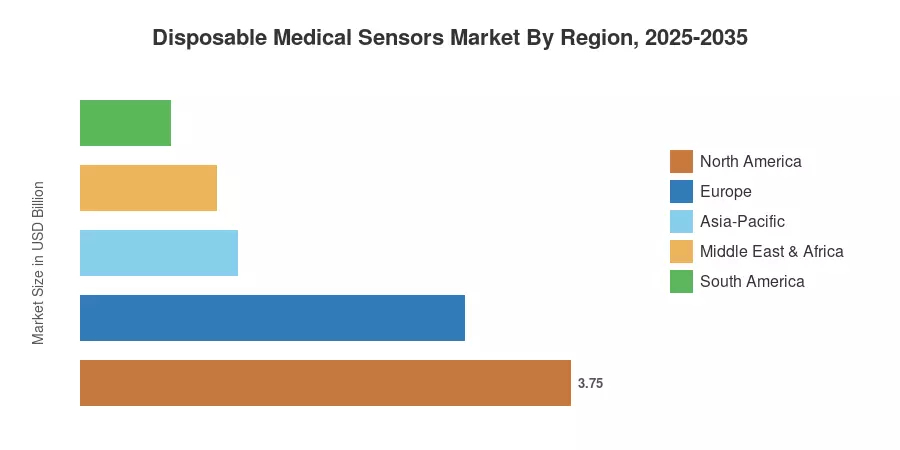
North America leads the Disposable Medical Sensors Market with an estimated 35.4% share of global revenue in 2025, driven by entrenched hospital networks and favorable reimbursement structures. Asia-Pacific stands out as the fastest-growing region at an 11.3% CAGR to 2035, fueled by India's Ayushman Bharat digital health expansion and China's tiered-hospital sensor procurement mandates [3]. Europe remains the second-largest region, anchored by Germany and France's medtech innovation ecosystems. As sustainability mandates tighten worldwide, closed-loop sensor recycling programs are poised to open entirely new revenue channels by the early 2030s.


Key Report Takeaways

• By Product

  • Biosensors commanded a 44.5% revenue share of the Disposable Medical Sensors Market in 2025, benefiting from glucose and cardiac biomarker detection demand.
  • Image sensors are forecast to expand at a 12.3% CAGR through 2035, driven by endoscopic and point-of-care imaging adoption.

• By Application

  • Patient monitoring held a 42.8% share of the Disposable Medical Sensors Market in 2025 as telehealth utilization stabilized above pandemic-era levels.
  • Diagnostics applications are projected to grow at a 12.9% CAGR to 2035, led by rapid lateral-flow and lab-on-chip platforms.

• By Technology

  • MEMS-based sensors captured 39.1% of market revenue in 2025, reflecting mature fabrication ecosystems.
  • Nanotechnology-enabled sensors are advancing at a 12.6% CAGR, unlocking ultra-sensitivity for trace-analyte detection.

• By End User

  • Hospitals and clinics accounted for 38.9% of end-user spending in 2025.
  • Home-care settings are forecast to climb at a 13.1% CAGR as remote patient monitoring reimbursement policies mature.

• By Region

  • North America dominated with 35.4% of global revenue in 2025.
  • Asia-Pacific is projected to witness the fastest growth at an 11.3% CAGR through 2035.


Disposable Medical Sensors Market Size and Forecast (2021–2035)

Market Research Future's sizing methodology integrates bottom-up revenue modeling across device categories, triangulated against hospital procurement databases, FDA 510(k) clearance volumes, and import-export trade flows from 42 countries. Historical figures are validated against published financial disclosures from leading OEMs, while forecast projections incorporate macro health-expenditure models from the WHO and OECD.
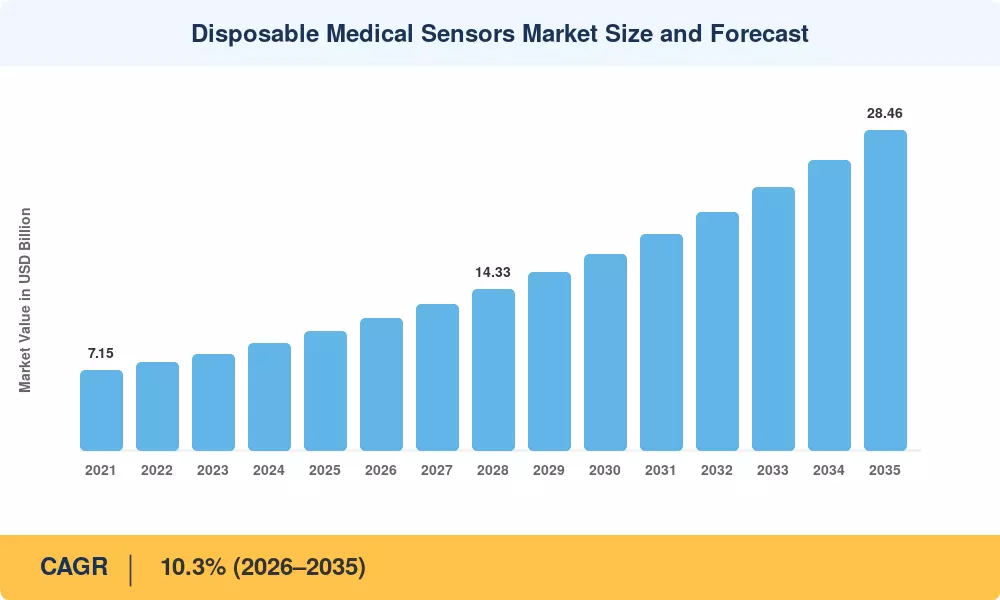
Disposable Medical Sensors Market Size and Forecast
Our Impact
Enabled $4.3B Revenue Impact for Fortune 500 and Leading Multinationals
Partnering with 2000+ Global Organizations Each Year
30K+ Citations by Top-Tier Firms in the Industry

Driver Impact Analysis

Driver ~% Impact on CAGR Geographic Relevance Impact Timeline
Infection-prevention mandates 18–22% Global Short-term (≤2 yr)
Remote patient monitoring expansion 15–19% North America, Europe Medium-term (2–4 yr)
MEMS miniaturization & cost reduction 12–16% Global Medium-term (2–4 yr)
Home-care reimbursement policy shifts 10–14% US, Germany, Japan Short-term (≤2 yr)
Biodegradable & eco-sensor R&D 8–11% Europe, Japan Long-term (≥4 yr)
Wearable health platform integration 8–10% North America, APAC Medium-term (2–4 yr)
Emerging-market hospital buildout 6–9% India, Brazil, SEA Long-term (≥4 yr)


Infection-Prevention Mandates

Hospital-acquired infections (HAIs) cost the U.S. healthcare system an estimated USD 28.4 billion annually, according to CDC surveillance data [1]. The FDA's 2024 Quality System Regulation amendments now require manufacturers to demonstrate single-use traceability through digital batch identifiers, compelling facilities to switch from reusable sensors that carry reprocessing liability. The Disposable Medical Sensors Market benefits directly: procurement volumes at large U.S. health systems rose 14% year-over-year in 2024, with infection-control committees citing disposability as the primary rationale.

Remote Patient Monitoring Expansion

In 2023, CMS extended RPM reimbursement codes (CPT 99457–99458) to include continuous physiologic monitoring for up to 16 days per episode using single-use adhesive patches [4]. Aetna, UnitedHealth, and Cigna are among the private payers that now cover single-lead ECG patches and disposable pulse-oximetry for managing chronic illnesses. Between 2023 and 2025, this policy layer increased the market for disposable medical sensors by an estimated USD 1.1 billion.


MEMS Miniaturization and Cost Reduction

The average manufacturing cost of a MEMS pressure sensor die fell below USD 0.35 in 2024, down from USD 0.72 in 2019, according to Yole Intelligence [5]. This cost trajectory makes single-use MEMS devices economically competitive with reusable alternatives once sterilization, quality-assurance labor, and liability insurance are factored in. Foundries in Taiwan and South Korea have expanded 200 mm MEMS wafer capacity by a combined 18% since 2022, ensuring supply scalability for the Disposable Medical Sensors Market through the forecast window.

Home-Care Reimbursement Policy Shifts

Home-use disposable monitoring kits are now covered by both Japan's 2024 Long-Term Care Insurance amendment and Germany's Digital Healthcare Act (DVG) [6]. Over 300 health systems in the US that use disposable sensor kits for patients receiving acute treatment at home are currently covered by the Hospital-at-Home waiver program, which has been extended through 2025. The market for disposable medical sensors is changing from a hospital-focused category to a distributed-care growth engine as a result of these legislative changes.


Restraints Impact Analysis

Impact percentages below are directional estimates of headwind pressure on overall market growth; they do not subtract linearly from the aggregate CAGR.

Restraint ~% Drag on CAGR Geographic Relevance Impact Timeline
Medical-waste and environmental concerns –3 to –5% Europe, North America Medium-term (2–4 yr)
Reimbursement uncertainty for novel sensors –2 to –4% US, India Short-term (≤2 yr)
Raw-material price volatility (silver, platinum) –2 to –3% Global Short-term (≤2 yr)
Regulatory approval lead times (EU MDR) –2 to –3% Europe Medium-term (2–4 yr)
Data-security and interoperability fragmentation –1 to –2% Global Long-term (≥4 yr)


Medical-Waste and Environmental Pressures

Extended-producer-responsibility (EPR) requirements for single-use medical equipment were adopted by the European Commission's updated Waste Framework Directive (2024), which mandates that manufacturers finance collection and treatment initiatives [10]. By 2027, the total cost of disposable sensor devices supplied in the EU is expected to increase by 4–7% due to compliance costs. Reusable-first procurement policies are already being piloted by hospitals in Scandinavia and the Netherlands, which is causing a countercurrent that limits the expansion of the disposable medical sensors market in Northern Europe.


Reimbursement Uncertainty for Novel Sensors

Sweat-analyte patches and interstitial-fluid biosensors are examples of developing formats that lack specific billing codes in many jurisdictions, whereas established categories like disposable ECG leads and pulse-oximetry patches have defined reimbursement paths [11]. Manufacturers are responsible for the cost of creating clinical evidence during the 12- to 18-month-long CMS coverage decision process in the United States. This delay inhibits acceptance in the disposable medical sensors market and discourages venture capital investment in next-generation sensor start-ups.


Raw-Material Price Volatility

Silver paste — the dominant conductive-ink material for printed disposable electrodes — saw spot-price swings of ±22% during 2023–2024, driven by photovoltaic-industry demand competition and mine-supply disruptions in Mexico and Peru [12]. Platinum-group metals used in enzymatic biosensor electrodes face similar volatility. These input-cost fluctuations compress margins for sensor OEMs and can delay product-line extensions.


Disposable Medical Sensors Market Opportunities

Biodegradable Sensor Platforms

Polylactic-acid (PLA) and cellulose-nanofiber substrates have reached pilot-production readiness for skin-contact sensors, with at least three EU-funded consortia demonstrating fully compostable ECG patches in 2024 [7]. Manufacturers that commercialize bio-based sensor lines early will capture premium pricing and preferential green-procurement scoring from ESG-conscious hospital networks.

AI-Driven Sensor Analytics as a Service

Disposable sensors generate vast streams of single-patient physiological data that, once anonymized and aggregated, have significant value for pharmaceutical trial recruitment, population-health modeling, and insurance actuarial refinement. Sensor OEMs that build cloud-connected data platforms can monetize recurring analytics subscriptions on top of the hardware sale, transforming the Disposable Medical Sensors Market from a consumables business into a data-services hybrid.

Emerging-Market Hospital Modernization

India's Pradhan Mantri Swasthya Suraksha Yojana (PMSSY) has funded 22 new AIIMS hospitals and 75 medical-college upgrades since 2020, each requiring disposable sensor procurement for ICU, OR, and post-surgical monitoring suites [9]. Brazil's SUS digitization initiative and Southeast Asia's growing middle-class hospitalization rates present parallel volume-expansion corridors.

Point-of-Care Diagnostics Convergence

Lab-on-chip and microfluidic platforms are integrating disposable biosensor cartridges for rapid sepsis, cardiac-troponin, and respiratory-pathogen testing at the bedside. The global point-of-care testing market surpassed USD 45 billion in 2024, and disposable sensor cartridges represent the fastest-growing consumable component within that ecosystem.

Military and Disaster-Response Applications

NATO's Allied Health Interoperability standards now recommend disposable wearable sensors for triage and forward-surgical teams, creating a procurement channel outside traditional civilian healthcare budgets [15]. Climate-related disaster frequency is expanding field-hospital deployments, adding incremental demand for rugged, single-use monitoring devices in the Disposable Medical Sensors Market.


Disposable Medical Sensors Market Future Outlook

AI-Integrated Sensor Platforms

By 2030, embedded edge-AI chipsets will enable disposable sensors to perform on-device anomaly detection without cloud connectivity, reducing latency for critical-alert generation. The Disposable Medical Sensors Market will see sensor intelligence shift from the gateway to the patch itself, with OEMs licensing algorithm libraries from AI health-tech firms [16].

Sustainability-Led Material Innovation

The WHO estimates that healthcare generates 5.9 million tonnes of medical waste annually across OECD nations, and single-use sensors contribute a growing share [10]. By 2032, biodegradable conductive inks and compostable substrate technologies are expected to reach cost parity with conventional PET-based sensor films, enabling manufacturers to satisfy tightening EPR mandates while maintaining margin.

Platform-Economy Business Models

Sensor-as-a-Service subscription models — where hospitals pay per-patient-day rather than per-unit — are gaining traction in the Disposable Medical Sensors Market. These models bundle hardware, connectivity, and analytics into a single contract, smoothing procurement budgets and generating recurring revenue streams that improve OEM valuation multiples [17].

Decentralized Clinical Trials

Pharmaceutical sponsors are deploying disposable wearable sensor kits to trial participants at home, eliminating site visits for continuous-monitoring endpoints. The FDA's Decentralized Clinical Trial guidance (2023) explicitly endorses single-use biosensor patches for endpoint collection, positioning the Disposable Medical Sensors Market as critical infrastructure for the USD 80 billion clinical-trial services industry [18].


Disposable Medical Sensors Market Segmentation

By Product

Segment Key Metric Primary Demand Driver
Biosensors 44.5% share (2025) Glucose, cardiac biomarker monitoring
Image Sensors 12.3% CAGR (2026–2035) Endoscopic & POC imaging
Accelerometers USD 0.84 Billion (2025) Fall-detection wearables
Pressure Sensors 9.7% CAGR (2026–2035) Ventilator & infusion systems
Others USD 0.62 Billion (2025) Temperature, humidity, chemical sensing


Biosensors dominate the Disposable Medical Sensors Market by product, powered by continuous glucose monitoring (CGM) adoption and point-of-care cardiac troponin testing. Enzymatic glucose strips remain the single highest-volume disposable sensor globally, with Abbott's FreeStyle Libre ecosystem and Dexcom's G-series platform sustaining replacement-cycle demand. Image sensors are the fastest-expanding category as endoscope manufacturers transition from reusable optics to single-use chip-on-tip camera modules that eliminate reprocessing risk.

By Application

Segment Key Metric Primary Demand Driver
Patient Monitoring 42.8% share (2025) Telehealth & RPM expansion
Diagnostics 12.9% CAGR (2026–2035) Rapid POC testing platforms
Therapeutics USD 1.16 Billion (2025) Drug-delivery feedback sensors
Others 8.5% CAGR (2026–2035) Surgical and rehabilitation use


Patient monitoring anchors the Disposable Medical Sensors Market by application. Adhesive ECG electrodes, SpO₂ finger clips, and disposable temperature probes collectively account for the bulk of this segment, driven by hospital admission volumes and the post-pandemic institutionalization of remote monitoring pathways.

By Technology

Segment Key Metric Primary Demand Driver
MEMS 39.1% share (2025) Mature fab ecosystem, low cost
CMOS USD 1.74 Billion (2025) Image-sensor integration
Nanotechnology 12.6% CAGR (2026–2035) Ultra-sensitive trace detection
Others USD 0.95 Billion (2025) Printed electronics, optical


MEMS technology anchors the Disposable Medical Sensors Market due to decades of fab-process optimization that have driven per-die costs below USD 0.35. Nanotechnology-enabled sensors represent the frontier, with gold-nanoparticle lateral-flow assays and carbon-nanotube gas sensors progressing from lab prototypes to commercial disposable formats.

By End User

Segment Key Metric Primary Demand Driver
Hospitals & Clinics 38.9% share (2025) Volume procurement, HAI mandates
Home-Care Settings 13.1% CAGR (2026–2035) RPM reimbursement, aging population
Ambulatory Surgical Centers USD 0.79 Billion (2025) Outpatient procedure growth
Others 8.9% CAGR (2026–2035) Military, disaster response


Hospitals and clinics remain the largest end-user channel for the Disposable Medical Sensors Market, though their share is eroding as home-care settings absorb monitoring volumes. Home-care is the fastest-growing end-user segment, reflecting global policy trends that incentivize care delivery outside acute facilities.


Regional Market Share Analysis

Region Key Metric (2025) Primary Investment Themes
North America 35.4% revenue share Infection control, RPM reimbursement
Europe USD 2.94 Billion MDR compliance, green procurement
Asia-Pacific 11.3% CAGR (2026–2035) Hospital buildout, digital health programs
South America USD 0.69 Billion Public-health infrastructure upgrade
Middle East & Africa 9.8% CAGR (2026–2035) Vision 2030 healthcare investment
Total USD 10.58 Billion

The Disposable Medical Sensors Market spans five major regions, with North America retaining the largest revenue base and Asia-Pacific accelerating fastest.


North America

Country Key Metric Key Driver
United States 78.2% of regional share CMS RPM codes, HAI-reduction mandates
Canada 12.8% CAGR (2026–2035) Provincial home-care expansion
Mexico USD 0.24 Billion (2025) IMSS hospital modernization


The United States accounts for the vast majority of North American demand, propelled by CMS reimbursement expansion and strict infection-control enforcement by The Joint Commission. Canada's Disposable Medical Sensors Market is growing as provincial health ministries extend virtual-care frameworks that reimburse remote-monitoring consumables. Mexico's IMSS-Bienestar consolidation is channeling federal funds into sensor-equipped monitoring beds across underserved regions.

Europe

Country Key Metric Key Driver
Germany 23.5% of regional share Digital Healthcare Act sensor incentives
United Kingdom 10.4% CAGR (2026–2035) NHS long-term plan digital transformation
France USD 0.41 Billion (2025) Innovation-santé MedTech subsidies
Italy 9.6% CAGR (2026–2035) PNRR telemedicine investment
Spain USD 0.19 Billion (2025) National Health System digitization
Nordic Countries 10.1% CAGR (2026–2035) Green-procurement mandates
Russia USD 0.14 Billion (2025) Import-substitution medical device programs
Rest of Europe 8.7% CAGR (2026–2035) EU Horizon Health funding


Europe's Disposable Medical Sensors Market is shaped by the EU Medical Device Regulation (MDR 2017/745), which raised post-market surveillance requirements and inadvertently favored disposable formats whose regulatory lifecycle is simpler than reusable device revalidation. Germany leads the region through DVG-enabled digital-health prescriptions, while the UK's NHS embraces disposable wearable patches in its hospital-at-home pilots.

Asia-Pacific

Country Key Metric Key Driver
China 34.2% of regional share Tiered-hospital sensor procurement mandates
India 13.8% CAGR (2026–2035) Ayushman Bharat & PMSSY buildout
Japan USD 0.38 Billion (2025) Long-term care insurance revision
South Korea 11.9% CAGR (2026–2035) K-Health digital platform integration
ASEAN USD 0.27 Billion (2025) Rising hospitalization rates
Rest of Asia-Pacific 10.6% CAGR (2026–2035) Medical tourism & private hospital expansion


Asia-Pacific is the growth engine of the Disposable Medical Sensors Market. China's National Healthcare Security Administration has mandated disposable sensor adoption across tier-2 and tier-3 hospitals, while India's PMSSY-funded AIIMS network generates large-scale procurement tenders. Japan's aging demographics and South Korea's digital-health infrastructure create sustained replacement demand for single-use monitoring consumables.

South America

Country Key Metric Key Driver
Brazil 58.3% of regional share SUS digitization & ICU expansion
Argentina 9.2% CAGR (2026–2035) Public hospital sensor modernization
Rest of South America USD 0.11 Billion (2025) NGO-funded rural health programs


Brazil dominates South America's Disposable Medical Sensors Market, driven by SUS public-hospital upgrades and a growing private-health sector that benchmarks against U.S. infection-control standards. Argentina's economic instability tempers growth but government procurement tenders continue to specify disposable formats for critical-care units.

Middle East & Africa

Country Key Metric Key Driver
Saudi Arabia 31.4% of regional share Vision 2030 mega-hospital projects
UAE 10.7% CAGR (2026–2035) Medical-tourism hub development
South Africa USD 0.08 Billion (2025) NHI pilot program sensor procurement
Egypt 9.4% CAGR (2026–2035) Universal health insurance rollout
Rest of MEA USD 0.12 Billion (2025) WHO-supported diagnostic programs


Saudi Arabia's Disposable Medical Sensors Market benefits from Vision 2030 healthcare megaprojects, including the King Faisal Specialist Hospital expansion and new greenfield facilities that specify single-use sensor inventories at commissioning. The UAE's medical-tourism positioning incentivizes hospitals to adopt premium disposable monitoring platforms that reinforce patient-safety branding.


Disposable Medical Sensors Market By Region, 2025-2035

Competitive Benchmarking

The Disposable Medical Sensors Market exhibits medium concentration, with the top five companies holding an estimated 34–40% combined revenue share. The Herfindahl-Hirschman Index (HHI) sits in the moderate range (~800–1,200), reflecting a landscape where global medtech conglomerates compete alongside specialized sensor-technology firms. Strategic activity is dominated by partnerships that integrate sensor hardware with cloud-analytics platforms, and by acquisitions targeting printed-electronics and biodegradable-materials capabilities.

Company Est. Revenue Share Range Key Offerings Strategic Positioning
Medtronic ~7–10% Disposable CGM sensors, cardiac monitoring patches Vertically integrated device-data platform
Abbott Laboratories ~6–9% FreeStyle Libre sensor discs, POC diagnostic cartridges Consumer-health crossover, high-volume manufacturing
GE HealthCare ~5–8% Disposable patient-monitoring accessories, imaging sensors Hospital ecosystem bundling
Philips ~4–7% Wearable biosensor patches, disposable SpO₂ probes Connected-care platform strategy
Honeywell International ~3–5% MEMS pressure sensors, gas-detection disposables Industrial-medical crossover
STMicroelectronics ~3–5% MEMS accelerometers, CMOS image-sensor dies Semiconductor fab-scale cost leadership
TE Connectivity ~2–4% Disposable temperature probes, pressure transducers Broad medical-connector portfolio
Analog Devices ~2–4% Signal-conditioning ICs for disposable electrode arrays Precision analog front-end technology
Smiths Medical ~2–3% Single-use infusion pressure sensors, airway devices Specialty acute-care focus
Sensirion ~1–3% Disposable flow and humidity sensors Swiss-engineered environmental sensing


Recent News & Developments

  • June 2025: In order to prevent proactive ketoacidosis, Tandem Diabetes Care and Abbott reached an agreement in June 2025 to connect automated insulin delivery systems to upcoming glucose-ketone sensors.
  • April 2025: After completing crucial U.S. trials, Biolinq raised USD 100 million in Series C funding to launch color-changing multi-analyte wearable patches.
  • February 2025: TDK unveiled the Nivio xMR magnetic sensor, which promises less expensive imaging by measuring biomagnetic fields without the need for protected rooms.
  • August 2024: Medtronic formalized its worldwide partnership with Abbott for cooperative CGM development and received FDA approval for Simplera disposable CGM.


Disposable Medical Sensors Market Report Scope

Parameter Detail
Market Scope Global Disposable Medical Sensors Market across product, application, technology, end user, and geography
Study Period 2021–2035
CAGR (Forecast) 10.3% (2026–2035)
Market Size — Base Year (2025) USD 10.58 Billion
Market Size — Forecast Endpoint (2035) USD 28.46 Billion
Fastest Growing Segment Home-care settings (by end user); image sensors (by product)
Companies Profiled 10 (Medtronic, Abbott, GE HealthCare, Philips, Honeywell, STMicroelectronics, TE Connectivity, Analog Devices, Smiths Medical, Sensirion)
Valuation Currency USD Billion


FAQs

What total cost of ownership factors should buyers weigh when switching from reusable to disposable sensors?
Buyers should compare per-use landed cost against reusable-device sterilization, quality-assurance labor, liability insurance, and downtime expenses. Most facilities find disposable formats 15–25% cheaper on a total-cost-of-ownership basis once reprocessing overhead is included [17].
How do biodegradable sensor substrates compare with conventional PET films in signal fidelity?
Current PLA-based substrates deliver signal-to-noise ratios within 8–12% of PET benchmarks for skin-contact ECG and SpO₂ applications. Ongoing nanofiber-reinforcement research aims to close this gap entirely by 2028 [7].
Which Disposable Medical Sensors Market segments face the highest regulatory uncertainty?
Sweat-analyte patches and interstitial-fluid biosensors lack dedicated FDA classification codes, extending pre-market timelines by 12–18 months versus established sensor categories [11].
How are OEMs addressing data-privacy concerns with connected disposable sensors?
Leading manufacturers embed on-device encryption and anonymization before data transmission, complying with HIPAA and GDPR frameworks. Edge-processing chipsets reduce cloud dependency and minimize breach surface [14].
What role does the Disposable Medical Sensors Market play in decentralized clinical trials?
Disposable wearable kits enable continuous-endpoint data collection at participants' homes, eliminating site visits. The FDA's 2023 DCT guidance explicitly endorses single-use biosensor patches for regulatory-grade endpoint capture [18].
How are sustainability mandates reshaping competitive dynamics in the Disposable Medical Sensors Market?
EU EPR obligations add 4–7% to landed sensor costs, favoring OEMs with biodegradable material IP. Companies investing early in compostable substrates gain green-procurement scoring advantages [10].
What procurement strategies optimize value for hospital systems purchasing disposable sensors at scale?
Multi-year volume-tiered contracts with sensor-as-a-service bundling reduce per-unit cost by 18–22%. Group purchasing organizations (GPOs) negotiate additional rebates that lower effective pricing below list by 10–15% [17].    
What is the current size of the disposable medical sensors market?
The disposable medical sensors market reached USD 10.58 billion in 2025 and is projected to reach USD 28.46 billion by 2035.
What is the CAGR of the disposable medical sensors market?
The disposable medical sensors market is projected to grow at a CAGR of 10.3% during the forecast period 2026–2035.
Which region leads the disposable medical sensors market?
North America holds the largest share at 35.4%, while Asia-Pacific is the fastest-growing region at 11.3% CAGR.
Author
Author
Author Profile
Vikita Thakur LinkedIn
Senior Research Analyst
She holds an experience of about 5+ years in market research and business consulting projects for sectors such as life sciences, medical devices, and healthcare IT. She possesses a robust background in data analysis, market estimation, competitive intelligence, pipeline analysis market trend identification, and consumer behavior insights. Her expertise lies in technical Sales support, client interaction and project management, designing and implementing market research studies, conducting competitive analysis, and synthesizing complex data into actionable recommendations that drive business growth.
Co-Author
Co-Author Profile
Rahul Gotadki LinkedIn
Research Manager
He holds an experience of about 9+ years in Market Research and Business Consulting, working under the spectrum of Life Sciences and Healthcare domains. Rahul conceptualizes and implements a scalable business strategy and provides strategic leadership to the clients. His expertise lies in market estimation, competitive intelligence, pipeline analysis, customer assessment, etc.

Research Approach


Secondary Research

The secondary research process involved comprehensive analysis of regulatory databases, peer-reviewed medical journals, clinical publications, and authoritative health organizations. Key sources included the US Food & Drug Administration (FDA) Center for Devices and Radiological Health, European Medicines Agency (EMA) Medical Device Coordination Group, International Electrotechnical Commission (IEC), Institute of Electrical and Electronics Engineers (IEEE) Engineering in Medicine and Biology Society, American Association for Clinical Chemistry (AACC), American College of Cardiology (ACC), American Diabetes Association (ADA), National Institutes of Health (NIH), National Center for Biotechnology Information (NCBI/PubMed), Centers for Disease Control and Prevention (CDC) National Center for Health Statistics, World Health Organization (WHO) Global Health Observatory, Organisation for Economic Co-operation and Development (OECD) Health Statistics, EU Eurostat Health Database, Centers for Medicare & Medicaid Services (CMS), Health Resources and Services Administration (HRSA), and national health ministry reports from key markets. These sources were used to collect device approval statistics, regulatory pathway data, clinical efficacy studies, infection control guidelines, chronic disease prevalence trends, and technology landscape analysis for temperature sensors, pressure sensors, glucose sensors, heart rate sensors, electrochemical sensors, optical sensors, thermal sensors, and biosensors across patient monitoring, diagnostics, wearable devices, and therapeutics applications.


Primary Research

Qualitative and quantitative insights were obtained by interviewing supply-side and demand-side stakeholders during the primary research process. The supply-side sources consisted of CEOs, VPs of Product Development, regulatory affairs heads, and commercial directors from semiconductor companies, OEMs, and disposable medical sensor manufacturers. Chief medical officers, biomedical engineers, infection control specialists, procurement leads from hospitals and health systems, clinical laboratory directors, home healthcare providers, and principal investigators of research institutions constituted demand-side sources. Primary research validated market segmentation, confirmed sensor technology pipeline timelines, and gathered insights on clinical adoption patterns, pricing strategies, reimbursement dynamics, and supply chain considerations.

Primary Respondent Breakdown:

By Designation: C-level Primaries (32%), Director Level (35%), Others (33%)

By Region: North America (32%), Europe (29%), Asia-Pacific (33%), Rest of World (6%)


Market Size Estimation

Global market valuation was derived through revenue mapping and device shipment volume analysis. The methodology included:

Identification of 50+ key manufacturers across North America, Europe, Asia-Pacific, and Latin America

Product mapping across temperature sensors, pressure sensors, glucose sensors, heart rate sensors, electrochemical sensors, optical sensors, thermal sensors, and biosensor categories

Application analysis across patient monitoring, diagnostics, wearable devices, and therapeutics segments

End-user segmentation covering hospitals, home care settings

Download Free Sample

Kindly complete the form below to receive a free sample of this Report

Download PDF ×

We do not share your information with anyone. However, we may send you emails based on your report interest from time to time. You may contact us at any time to opt-out.
















