Request Free Sample ×

Kindly complete the form below to receive a free sample of this Report

* Please use a valid business email

Leading companies partner with us for data-driven Insights

clients tt-cursor
Hero Background

Drug Repurposing Market

ID: MRFR/Pharma/20486-HCR
128 Pages
Nidhi Mandole, Rahul Gotadki
Last Updated: May 28, 2026
Drug Repurposing Market Research Report Information By Types (Disease-centric, Target-centric And Drug-centric), By Therapeutic Area (Same Therapeutic Area And Different Therapeutic Area), By Drug Molecules (Biologics, Small Molecule), And By Region (North America, Europe, Asia-Pacific, And Rest Of The World) –Market Forecast Till 2035
Download PDF ×

We do not share your information with anyone. However, we may send you emails based on your report interest from time to time. You may contact us at any time to opt-out.


Drug Repurposing Market Summary

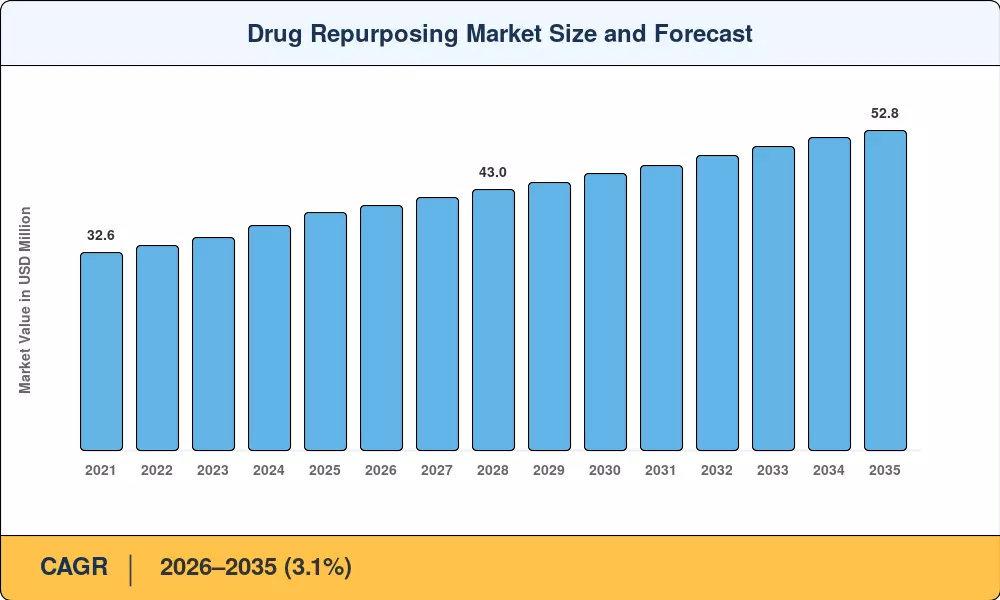
The Drug Repurposing Market reached an estimated USD 39.2 Billion in 2025, positioning it for steady expansion to USD 40.4 Billion in 2026 and a projected USD 52.8 Billion by 2035 at a 3.1% CAGR during the forecast period. This growth trajectory reflects a fundamental shift in pharmaceutical R&D strategy: with patent cliffs threatening an estimated USD 197 Billion in branded-drug revenue by 2031, innovators are accelerating efforts to find new therapeutic uses for existing drug new indication candidates rather than pursuing costly de novo discovery [2]. Regulatory pathways such as the FDA's 505(b)(2) route and the EMA's hybrid application procedure have formalized frameworks that reward therapeutic reprofiling strategies with shortened approval timelines.

A technology transformation is reshaping the Drug Repurposing Market at its core. Legacy trial-and-error screening approaches are giving way to computational drug repositioning platforms powered by machine learning and network pharmacology. The National Institutes of Health's NCATS program has committed over USD 750 Million in cumulative funding toward translational science initiatives that directly support off-label drug repositioning programs [3]. Pharma companies are integrating AI-driven target identification into their pipelines, compressing candidate selection from years to months and cutting preclinical costs by an estimated 40–60%.

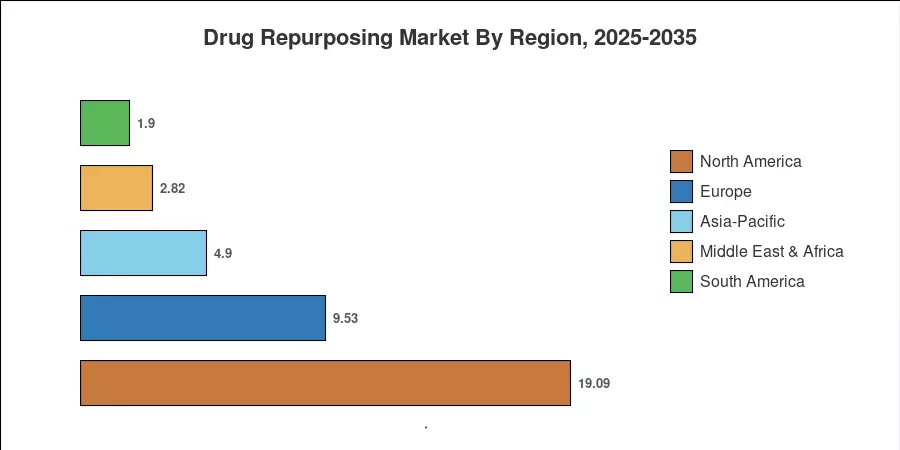
North America anchors global demand in the Drug Repurposing Market, commanding approximately 48.7% of 2024 revenue, driven by robust FDA-approved drug repurposing pathways and deep venture capital ecosystems. Asia-Pacific represents the fastest-growing region at a projected 12.5% CAGR through 2035, fueled by expanding clinical-trial infrastructure in China and India and favorable cost differentials. Europe holds the second-largest share at roughly 24.3%, with the EMA's adaptive licensing framework supporting accelerated approvals for repurposed molecules. The next decade will see computational drug repositioning and real-world evidence analytics redefine competitive advantage across every region.


Key Report Takeaways

• By Therapeutic Area

  • Oncology led the Drug Repurposing Market with a 40.1% revenue share in 2024, reflecting sustained pipeline investment in immuno-oncology combinations and off-label drug repositioning for treatment-resistant tumors
  • Rare and orphan diseases are projected to expand at a 15.9% CAGR through 2035, supported by orphan-drug incentive programs and venture funding surges
  • CNS disorders represent the third-largest therapeutic area, with computational drug repositioning accelerating candidate identification for neurodegenerative conditions

• By Molecule Type

  • Small-molecule drugs accounted for 69.4% of the Drug Repurposing Market in 2024, benefiting from well-characterized safety profiles and lower reformulation costs
  • Peptides and biologics are advancing at a 14.1% CAGR, as therapeutic reprofiling strategy extends to complex molecules with declining manufacturing costs

• By Region

  • North America commanded 48.7% of the 2024 Drug Repurposing Market revenue
  • Asia-Pacific is forecast to grow at a 12.5% CAGR through 2035, driven by cost-competitive clinical operations and rising government investment in existing drug new indication research


Market Size and Forecast (2021–2035)

MRFR's market sizing integrates bottom-up revenue modeling from company filings, regulatory approval databases, and pipeline analytics across all therapeutic reprofiling strategy segments. Top-down validation draws on national health expenditure data and patent-expiry calendars. The following table presents the Drug Repurposing Market trajectory across the full study period.
Market Size Chart
Our Impact
Enabled $4.3B Revenue Impact for Fortune 500 and Leading Multinationals
Partnering with 2000+ Global Organizations Each Year
30K+ Citations by Top-Tier Firms in the Industry
 

Driver Impact Analysis

Driver ~% Impact on CAGR Geographic Relevance Impact Timeline
Patent-cliff revenue pressure +0.7% Global Short-term (≤2 yr)
AI and computational drug repositioning platforms +0.6% North America, Europe Medium-term (2–4 yr)
Orphan-drug regulatory incentives +0.5% US, EU, Japan Medium-term (2–4 yr)
Real-world evidence acceptance by regulators +0.4% North America Long-term (≥4 yr)
Rising clinical-trial costs for new molecular entities +0.3% Global Short-term (≤2 yr)
Asia-Pacific clinical infrastructure expansion +0.3% China, India, South Korea Long-term (≥4 yr)
Public-sector translational research funding +0.2% US, UK, Germany Medium-term (2–4 yr)


Patent-Cliff Revenue Pressure

An estimated USD 197 Billion in branded-drug revenue faces generic erosion by 2031, according to EvaluatePharma data [2]. This unprecedented wave of patent expirations is forcing pharmaceutical companies to pursue a therapeutic reprofiling strategy as a lifecycle-extension mechanism. Companies like Pfizer and Novartis have established dedicated repurposing units that screen existing drug new indication opportunities across their portfolios, targeting the 505(b)(2) pathway to recapture revenue streams before generics fully commoditize their blockbusters.

AI-Driven Computational Drug Repositioning

Machine-learning platforms are compressing candidate identification from 3–5 years to under 12 months for the Drug Repurposing Market. Recursion Pharmaceuticals' AI platform has screened over 36 Billion biological relationships, while BenevolentAI's knowledge graph identified baricitinib for COVID-19 treatment in under 48 hours [5]. The convergence of multi-omics data, network pharmacology, and natural-language processing on biomedical literature is enabling computational drug repositioning at a scale that was unthinkable five years ago, with an estimated USD 2.4 Billion invested in AI-drug-discovery startups in 2024 alone [10].

Orphan-Drug Incentive Frameworks

The US Orphan Drug Act provides seven years of market exclusivity, 25% tax credits on clinical trial costs, and FDA fee waivers — a combination that makes existing drug new indication development for rare diseases financially attractive despite small patient populations [6]. Europe's parallel incentive structure offers ten years of market exclusivity under Regulation (EC) 141/2000. Japan's SAKIGAKE designation system fast-tracks orphan-disease repurposing candidates. These policies collectively channel investment toward a therapeutic reprofiling strategy for diseases that would otherwise lack commercial viability.

Real-World Evidence Integration

The FDA's Real-World Evidence Program, formalized under the 21st Century Cures Act, now permits real-world data from electronic health records and claims databases to support supplemental new drug applications for FDA-approved drug repurposing [7]. This regulatory shift is particularly transformative for off-label drug repositioning: retrospective analysis of prescribing patterns can generate efficacy signals that justify Phase II/III trials at significantly reduced cost and risk.


Restraints Impact Analysis

The impact estimates below are directional and represent headwinds to the Drug Repurposing Market growth rate. They are not directly subtractive from the CAGR figure.

Restraint ~% Impact on CAGR Geographic Relevance Impact Timeline
Intellectual property and exclusivity limitations –0.4% Global Long-term (≥4 yr)
Fragmented regulatory standards across jurisdictions –0.3% Emerging markets Medium-term (2–4 yr)
Reimbursement uncertainty for repurposed therapies –0.3% Europe, Asia-Pacific Medium-term (2–4 yr)
Clinical-trial design challenges for known compounds –0.2% Global Short-term (≤2 yr)
Limited data infrastructure in developing markets –0.2% Africa, South America Long-term (≥4 yr)


Intellectual Property Barriers

Repurposed drugs often lack strong patent protection because the original compound patent has expired, limiting the ability of developers to secure exclusivity for new indications [11]. While method-of-use patents and formulation patents offer partial protection, they are more easily challenged and provide narrower coverage. This IP gap discourages private investment in off-label drug repositioning for conditions where generic competition could quickly erode returns, particularly outside orphan-disease categories.

Regulatory Fragmentation

While the FDA and EMA have established relatively clear repurposing pathways, regulatory frameworks in many Asian, African, and South American jurisdictions remain underdeveloped or inconsistent [12]. A therapeutic reprofiling strategy approved through the FDA's 505(b)(2) route may require a full NDA-equivalent submission in markets such as Brazil or Indonesia, negating the cost and time advantages. This fragmentation adds complexity for companies seeking global commercialization of repurposed therapies within the Drug Repurposing Market.

Reimbursement Uncertainty

Payers in several European countries apply reference pricing based on the original indication, which can undervalue repurposed drugs when the new indication involves different dosing, patient populations, or treatment durations [13]. In Asia-Pacific markets, national drug formulary decisions often lag behind regulatory approvals by 12–24 months, creating cash-flow gaps that affect smaller biotechnology firms pursuing existing drug new indication strategies.


Drug Repurposing Market Opportunities

Rare-Disease Repurposing at Scale

There is significant whitespace in the Drug Repurposing Market for orphan indications. There are greater than 7,000 uncommon diseases and less than 5% have therapy options [6]. Systematic pairing of molecular targets across rare-disease pathways is possible with computational drug repositioning, while orphan-drug incentives de-risk the investment. Dedicated rare-disease repurposing platforms may offer companies a premium pricing and long exclusivity opportunity


AI-Powered Drug-Repositioning-as-a-Service

More and more, CROs and digital businesses are providing computational drug repositioning as subscription platforms for mid-size pharma companies. This Drug-Repositioning-as-a-Service approach offers democratized access to high-throughput screening and creates a recurring business potential projected at USD 1.8 Billion by 2030 [10]. The methodology is consistent with the larger trend of medicinal reprofiling strategy outsourcing


Emerging-Market Clinical Trial Hubs

Clinical trial expenditures in India are 50–65% lower than the US and China’s NMPA has developed fast-track review pathways for repurposed compounds [9]. Pharma companies can take advantage of these cost benefits by undertaking crucial studies in Asia-Pacific while simultaneously seeking regulatory approval in the Western markets. This geographic arbitrage opportunity underpins the growth of the Drug Repurposing Market and emerging-market healthcare access goals


Real-World Evidence Monetization

The increasing acceptance of real-world data to inform FDA-approved drug repurposing decisions presents an opportunity for heath-data firms and hospital networks to monetise de-identified electronic health records [7]. Companies that gather and standardize off-label prescribing data can sell curated datasets to pharmaceutical corporations looking for current drug new indication signals, forming a parallel data-economy within the Drug Repurposing Market


Pandemic Preparedness Repositioning Libraries

The COVID-19 experience demonstrated that pre-screened compound libraries accelerate therapeutic response times from years to months. Government agencies, including BARDA and CEPI, are funding curated repurposing libraries that can be rapidly deployed against emerging pathogens [16]. This preparedness-oriented approach creates sustainable public-private investment flows into the Drug Repurposing Market and computational drug repositioning infrastructure


Drug Repurposing Market Future Outlook

AI-Orchestrated Repositioning Ecosystems

By 2030, an estimated 60% of Drug Repurposing Market candidates will originate from AI-driven platforms that integrate genomic, proteomic, and clinical data [10]. Computational drug repositioning will evolve from single-target screening to multi-modal network analysis, enabling simultaneous evaluation of thousands of compound-indication pairs. Companies investing early in proprietary data lakes and federated learning architectures will establish durable competitive moats.

Platform Economics and Repositioning-as-a-Service

The Drug Repurposing Market is moving toward platform-based business models where CROs and AI firms offer end-to-end therapeutic reprofiling strategy services on a subscription or milestone-payment basis. McKinsey estimates that platform-enabled drug development could reduce per-program costs by 30–45% by 2032. This shift will lower entry barriers for smaller biotechnology firms and accelerate off-label drug repositioning across therapeutic areas.

Regulatory Convergence and Harmonization

The ICH (International Council for Harmonisation) is working toward global alignment on data-sharing standards for repurposed drugs, which could reduce duplicative regulatory submissions by up to 50% by 2035 [12]. FDA-EMA mutual-recognition agreements for specific FDA-approved drug repurposing categories are under discussion, and APEC's regulatory convergence initiatives will benefit the Drug Repurposing Market in Asia-Pacific by enabling simultaneous multi-market submissions.

Sustainability and Access-Oriented Repurposing

Global health organizations, including WHO and CEPI, are embedding existing drug new indication strategies into pandemic-preparedness and antimicrobial-resistance frameworks [16]. The Drug Repurposing Market will increasingly intersect with ESG priorities as pharmaceutical companies report on access-to-medicine metrics that reward therapeutic reprofiling strategy programs targeting low- and middle-income countries. IRENA-analogous frameworks for health-equity reporting may emerge by 2030.


Drug Repurposing Market Segmentation

By Therapeutic Area

Segment Key Metric Primary Demand Driver
Oncology 40.1% revenue share (2024) Immuno-oncology combination therapy demand
CNS Disorders USD 6.8 Billion (2025) Alzheimer's and Parkinson's pipeline activity
Rare & Orphan Diseases 15.9% CAGR (2026–2035) Orphan-drug incentive frameworks
Infectious Diseases USD 4.1 Billion (2025) Antimicrobial resistance concerns
Cardiovascular 8.3% of 2024 revenue Off-patent statin and antihypertensive repurposing
Others 5.7% CAGR (2026–2035) Autoimmune and metabolic indications


The Drug Repurposing Market remains anchored in oncology, where off-label drug repositioning of existing kinase inhibitors and immunomodulators into combination regimens generates the highest per-patient revenue. Computational drug repositioning has identified over 340 non-oncology compounds with anti-tumor activity currently in clinical evaluation [5]. Rare and orphan diseases represent the fastest-growing therapeutic reprofiling strategy opportunity, with approximately 85 FDA-approved drug repurposing candidates in active orphan-indication trials as of 2025 [6].

By Molecule Type

Segment Key Metric Primary Demand Driver
Small-Molecule Drugs 69.4% market share (2024) Established safety data, reformulation ease
Peptides & Biologics 14.1% CAGR (2026–2035) Declining biomanufacturing costs
Others (Nucleic Acids, Cell Therapies) USD 1.2 Billion (2025) Emerging therapeutic reprofiling strategy for advanced modalities


Small molecules continue to dominate the Drug Repurposing Market because their extensive existing drug new indication safety databases enable faster regulatory submissions through 505(b)(2) and similar abbreviated pathways [11]. Peptides and biologics are gaining momentum as computational drug repositioning extends to protein-protein interaction networks, and as biosimilar manufacturing capacity frees up production capacity for repurposed biologic formulations.

By Development Stage

Segment Key Metric Primary Demand Driver
Pre-Clinical 17.2% CAGR (2026–2035) AI-accelerated target identification
Phase I USD 5.4 Billion (2025) Safety re-characterization for new dosing
Phase II 31.4% of 2024 market Proof-of-concept validation stage
Phase III USD 8.7 Billion (2025) Pivotal efficacy trials for new indications
Approved/Marketed 22.6% of 2024 revenue Post-approval label expansion


Phase II trials represent the largest segment of the Drug Repurposing Market by development stage, as this is where therapeutic reprofiling strategy candidates demonstrate proof-of-concept for new indications [14]. The pre-clinical segment is growing fastest, powered by computational drug repositioning tools that compress early screening cycles from years to months.

By End User

Segment Key Metric Primary Demand Driver
Pharmaceutical & Biotechnology Companies 59.1% revenue share (2024) Internal pipeline lifecycle extension
Contract Research Organizations 13.4% CAGR (2026–2035) Outsourced repurposing services demand
Academic & Research Institutes USD 4.6 Billion (2025) Government translational funding
Others 4.8% of 2024 revenue Nonprofit and philanthropic drug access programs


Pharmaceutical and biotechnology companies remain the dominant end users in the Drug Repurposing Market, investing in off-label drug repositioning to offset patent-cliff losses and extend blockbuster product lifecycles [2]. CROs are the fastest-growing end-user category, driven by demand for outsourced computational drug repositioning expertise and regulatory filing support for existing drug new indication programs.


Regional Market Share Analysis

Region Key Metric Primary Investment Themes
North America 48.7% of 2024 revenue 505(b)(2) pathway, AI screening platforms
Europe 24.3% of 2024 revenue EMA adaptive licensing, academic repurposing consortia
Asia-Pacific 12.5% CAGR (2026–2035) Cost-competitive trials, NMPA reforms
South America USD 1.9 Billion (2025) Public-health repositioning programs
Middle East & Africa 7.2% CAGR (2026–2035) Infectious-disease repurposing, donor-funded research
Total USD 39.2 Billion (2025)

The Drug Repurposing Market exhibits significant geographic concentration, with North America and Europe together accounting for roughly 73% of global revenue. However, Asia-Pacific's rapid expansion is gradually redistributing market weight toward the east.


North America

Country Key Metric Key Driver
US 82.3% of regional revenue FDA 505(b)(2) filings, NIH/NCATS funding
Canada 10.8% of regional revenue CIHR translational grants
Mexico 5.4% CAGR (2026–2035) COFEPRIS regulatory modernization


The US drives the Drug Repurposing Market in North America, with NCATS disbursing over USD 750 Million cumulatively toward translational science programs that specifically support therapeutic reprofiling strategy [3]. The 505(b)(2) pathway processed a record 187 applications in 2024, reflecting growing industry confidence in FDA-approved drug repurposing routes. Canada's CIHR and provincial innovation funds support off-label drug repositioning research at major academic medical centers in Toronto, Montreal, and Vancouver.

Europe

Country Key Metric Key Driver
Germany 27.4% of regional revenue BfArM regulatory excellence
UK 22.1% of regional revenue MHRA Innovative Licensing pathway
France ANSM adaptive repurposing protocols National genomics initiative
Italy 8.3% CAGR (2026–2035) AIFA compassionate use programs
Spain 6.8% of regional revenue ISCIII translational research grants
Nordic Countries 9.1% CAGR (2026–2035) EHR-integrated repositioning analytics
Russia 4.2% of regional revenue Domestic pharmaceutical self-sufficiency
Rest of Europe 3.6% CAGR (2026–2035) EU Horizon Europe funding


Europe's Drug Repurposing Market benefits from the EMA's centralized procedure and adaptive-licensing framework, which allows conditional marketing authorizations based on smaller datasets for existing drug new indication submissions [12]. The UK's MHRA has emerged as a leader in computational drug repositioning facilitation through its Innovative Licensing and Access Pathway, while Germany's BfArM processes the highest volume of repurposing-related variations in the EU.

Asia-Pacific

Country Key Metric Key Driver
China 34.6% of regional revenue NMPA expedited review channels
India 13.7% CAGR (2026–2035) CDSCO fast-track and cost advantages
Japan 22.8% of regional revenue PMDA SAKIGAKE designation
South Korea 11.9% CAGR (2026–2035) MFDS biotech incentives
ASEAN 9.4% CAGR (2026–2035) Regional harmonization (ASEAN MRA)
Rest of Asia-Pacific 7.8% CAGR (2026–2035) Clinical infrastructure build-out


Asia-Pacific's Drug Repurposing Market is expanding rapidly as China's NMPA introduced expedited review pathways for repurposed molecules in 2023, cutting approval timelines by up to 40% [9]. India offers 50–65% cost savings on clinical trials compared to Western benchmarks, making it a hub for therapeutic reprofiling strategy validation studies. Japan's PMDA continues to lead in orphan-drug repurposing designations, with the SAKIGAKE system providing priority review for existing drug new indication candidates targeting rare diseases.

South America

Country Key Metric Key Driver
Brazil 58.2% of regional revenue ANVISA priority review for repurposed drugs
Argentina 7.6% CAGR (2026–2035) Academic-hospital repositioning networks
Rest of South America 5.9% CAGR (2026–2035) PAHO-funded infectious-disease programs


Brazil anchors the Drug Repurposing Market in South America, with ANVISA's 2024 guideline update establishing dedicated review tracks for off-label drug repositioning submissions [15]. The region's focus skews toward infectious-disease repurposing, particularly for Chagas disease, dengue, and tuberculosis, where computational drug repositioning on existing antiparasitic and antiviral libraries offers the fastest path to treatment access.

Middle East & Africa

Country Key Metric Key Driver
Saudi Arabia 31.5% of regional revenue Vision 2030 pharma localization
UAE 8.9% CAGR (2026–2035) MOHAP innovation licensing
South Africa 24.7% of regional revenue MRC translational research programs
Egypt 7.4% CAGR (2026–2035) EDA regulatory reform
Rest of MEA 5.8% CAGR (2026–2035) WHO prequalification pathway


The Drug Repurposing Market in the Middle East & Africa is nascent but accelerating, driven by Saudi Arabia's Vision 2030 initiative, which targets local pharmaceutical manufacturing capacity and therapeutic reprofiling strategy partnerships with global CROs [17]. South Africa's Medical Research Council funds repositioning studies focused on HIV-TB co-infection and neglected tropical diseases, where existing drugs' new indication approaches offer the most cost-effective route to expanded treatment access.


Regional Market Share
 

Competitive Benchmarking

The Drug Repurposing Market exhibits medium concentration, with the top five players collectively accounting for an estimated 28–35% of global revenue. The Herfindahl-Hirschman Index (HHI) sits below 1,200, reflecting a fragmented landscape where large pharma incumbents compete with specialized AI-driven biotechnology firms and CROs offering therapeutic reprofiling strategy services.

Company Est. Revenue Share Range Key Offerings for Drug Repurposing Market Strategic Positioning
Novartis AG ~6–9% Internal repurposing unit, AI partnerships Large-pharma lifecycle extension
Pfizer Inc. ~5–8% Broad pipeline of repurposed candidates Post-patent monetization strategy
Recursion Pharmaceuticals ~3–5% AI-driven biological screening platform Computational drug repositioning leader
BenevolentAI ~2–4% Knowledge-graph-based target identification Off-label drug repositioning via NLP
Teva Pharmaceutical ~4–6% Generic-to-repurposed conversion pipeline Cost-advantaged existing drug new indication focus
AbbVie Inc. ~3–5% Immunology and oncology repurposing Therapeutic reprofiling strategy for autoimmune portfolio
Mylan (Viatris) ~2–4% Off-patent molecule repositioning Emerging-market Drug Repurposing Market access
Charles River Laboratories ~2–3% CRO services for repurposing studies Full-service preclinical through Phase II support
Evotec SE ~2–4% Integrated drug discovery and repurposing platform Partnership-driven computational drug repositioning
Anthem Biosciences ~1–3% Contract development for biologics repurposing Asia-Pacific manufacturing cost advantage


Recent News & Developments

  • Recursion Pharmaceuticals (March 2025): Expanded its AI platform to screen over 40 Billion biological relationships, announcing three new oncology candidates identified through computational drug repositioning [10]
  • Novartis AG (January 2025): Established a dedicated Drug Repurposing Center of Excellence in Basel, committing USD 350 Million over five years to systematic therapeutic reprofiling strategy across its off-patent portfolio [19]
  • FDA (November 2024): Issued updated draft guidance on the use of real-world evidence for 505(b)(2) submissions, strengthening pathways for FDA-approved drug repurposing programs [7]


  • Teva Pharmaceutical (June 2024): Partnered with a South Korean CRO to advance existing drug new indication studies for three CNS compounds in Asia-Pacific markets [21]
  • EMA (April 2024): Finalized adaptive-licensing framework updates that streamline conditional marketing authorization for repurposed therapies in the EU Drug Repurposing Market [12]


Drug Repurposing Market Report Scope

Parameter Detail
Market Scope Global Drug Repurposing Market across all therapeutic areas, molecule types, development stages, and end users
Study Period 2021–2035
CAGR Window 2026–2035 (3.1%)
Market Size (2025) USD 39.2 Billion
Market Size (2035) USD 52.8 Billion
Fastest Growing Segment Rare & Orphan Diseases (by therapeutic area); Pre-Clinical (by development stage)
Companies Profiled 10 (Novartis, Pfizer, Recursion, BenevolentAI, Teva, AbbVie, Viatris, Charles River, Evotec, Anthem)
Valuation Currency USD Billion
CAGR Driver Disclaimer Impact percentages in Sections 4–5 are directional indicators, not additive to CAGR


FAQs

How does the 505(b)(2) pathway differ from a standard NDA for repurposed drugs?

The 505(b)(2) route lets sponsors reference published safety and efficacy data from prior approvals, eliminating the need for full preclinical programs. This typically cuts development costs by 40–60% and shortens timelines by 2–4 years compared to a standard NDA [4].

What role does intellectual property play in Drug Repurposing Market investment decisions?

Method-of-use patents and formulation patents offer 8–12 years of exclusivity for repurposed compounds, though they are narrower than composition-of-matter patents. Investors prioritize candidates where regulatory exclusivity supplements weak IP coverage [11].

How are CROs differentiating their Drug Repurposing Market service offerings?

Leading CROs now bundle AI-powered target screening with regulatory strategy and clinical-trial management into integrated platforms. This end-to-end approach reduces sponsor coordination costs by an estimated 25–35% compared to fragmented outsourcing.

What specific computational drug repositioning techniques show the highest clinical success rates?

Network pharmacology and transcriptomic signature matching currently achieve Phase II success rates of 18–24%, roughly double the rate for traditional phenotypic screening. Multi-omics integration is expected to push success rates above 30% by 2030 [5].

How does the Drug Repurposing Market address antimicrobial resistance?

Existing antivirals and antifungals are being systematically screened for activity against resistant bacterial strains using high-throughput assays. WHO's priority pathogen list guides screening priorities, with three repurposed candidates currently in Phase III for MDR tuberculosis [16].

What pricing strategies work best for repurposed therapies in the Drug Repurposing Market?

Value-based pricing tied to clinical outcomes outperforms cost-plus models for repurposed drugs, particularly in oncology and rare diseases. Payers increasingly accept premium pricing when supported by real-world evidence demonstrating superior outcomes versus standard of care [13].

How do emerging-market regulatory timelines affect Drug Repurposing Market commercialization?

Regulatory review in emerging markets typically adds 12–24 months beyond FDA or EMA approval. ASEAN mutual-recognition agreements and ANVISA's priority pathways are reducing this gap, making simultaneous multi-region launches feasible by 2028 [9][15].


Author
Author
Author Profile
Nidhi Mandole LinkedIn
Senior Research Analyst
She is an extremely curious individual currently working in Healthcare and Medical Devices Domain. Nidhi is comfortably versed in data centric research backed by healthcare educational background. She leverages extensive data mining and analytics tools such as Primary and Secondary Research, Statistical Analysis, Machine Learning, Data Modelling. Her key role also involves Technical Sales Support, Client Interaction and Project management within the Healthcare team. Lastly, she showcases extensive affinity towards learning new skills and remain fascinated in implementing them.
Co-Author
Co-Author Profile
Rahul Gotadki LinkedIn
Research Manager
He holds an experience of about 9+ years in Market Research and Business Consulting, working under the spectrum of Life Sciences and Healthcare domains. Rahul conceptualizes and implements a scalable business strategy and provides strategic leadership to the clients. His expertise lies in market estimation, competitive intelligence, pipeline analysis, customer assessment, etc.
Download Free Sample

Kindly complete the form below to receive a free sample of this Report