×
Request Free Sample ×

Kindly complete the form below to receive a free sample of this Report

* Please use a valid business email

Leading companies partner with us for data-driven Insights

clients tt-cursor
Hero Background

Fishmeal Market

ID: MRFR/Agri/4085-HCR
110 Pages
Snehal Singh
October 2025

Fishmeal Market Research Report Information By Source (Salmon & Trout, Marine Fish, Crustaceans, Tilapia, and Others), By Livestock (Ruminants, Poultry, Swine, Aquatic Animals, and Others), By Application (Fertilizers, Animal Feed, and Others), and By Region (North America, Europe, Asia-Pacific, And Rest Of The World) – Market Forecast Till 2035

Share:
Download PDF ×

We do not share your information with anyone. However, we may send you emails based on your report interest from time to time. You may contact us at any time to opt-out.

Fishmeal Market Infographic
Purchase Options

Fishmeal Market Summary

As per MRFR analysis, the Fishmeal Market Size was estimated at 10320.91 USD Billion in 2024. The Fishmeal industry is projected to grow from 10969.27 in 2025 to 20173.26 by 2035, exhibiting a compound annual growth rate (CAGR) of 6.28 during the forecast period 2025 - 2035.

Key Market Trends & Highlights

The Fishmeal Market is experiencing robust growth driven by sustainability and technological advancements.

  • North America remains the largest market for fishmeal, driven by increasing demand in aquaculture.
  • Asia-Pacific is the fastest-growing region, reflecting a surge in fishmeal consumption for animal feed.
  • The aquaculture segment continues to dominate the market, while the animal feed segment is witnessing rapid growth.
  • Rising demand for protein sources and sustainability initiatives are key drivers propelling market expansion.

Market Size & Forecast

2024 Market Size 10320.91 (USD Billion)
2035 Market Size 20173.26 (USD Billion)
CAGR (2025 - 2035) 6.28%

Major Players

Nutreco (NL), Austevoll Seafood (NO), Omega Protein (US), Pesquera Diamante (PE), Sambavanam (IN), Copeinca (PE), Fishmeal Co. (CL), Tasa (PE), Diana Group (PE)

Fishmeal Market Trends

The Fishmeal Market is currently experiencing a dynamic phase characterized by evolving demand patterns and shifting supply dynamics. The increasing global population and rising awareness regarding the nutritional benefits of fishmeal are driving its consumption across various sectors, particularly in aquaculture and animal feed. As sustainability becomes a focal point for consumers and producers alike, the Fishmeal Market is adapting to incorporate more eco-friendly practices. This transition is not merely a trend but appears to be a fundamental shift towards responsible sourcing and production methods, which could redefine industry standards in the coming years. Moreover, technological advancements in processing and production techniques are likely to enhance the efficiency and quality of fishmeal. Innovations in extraction methods and quality control are expected to improve yield and reduce waste, thereby potentially increasing profitability for producers. The Fishmeal Market seems poised for growth, with opportunities arising from both traditional and emerging markets. As stakeholders navigate these changes, the emphasis on quality, sustainability, and innovation will likely shape the future landscape of this sector.

Sustainability Initiatives

The Fishmeal Market is increasingly focusing on sustainable practices, driven by consumer demand for environmentally friendly products. Producers are adopting responsible sourcing methods and exploring alternative raw materials to minimize ecological impact.

Technological Advancements

Innovations in processing technologies are transforming the Fishmeal Market. Enhanced extraction methods and quality control measures are improving efficiency, potentially leading to higher yields and reduced production costs.

Growing Demand in Aquaculture

The rising The Fishmeal, particularly in aquaculture. As fish farming expands, the need for high-quality fishmeal as a feed ingredient is becoming more pronounced.

Fishmeal Market Drivers

Rising Demand for Aquaculture Feed

The Global Fishmeal Industry experiences a notable surge in demand for aquaculture feed, driven by the increasing global population and the corresponding need for protein-rich food sources. As aquaculture continues to expand, fishmeal serves as a critical ingredient in fish feed, providing essential nutrients for optimal growth. In 2024, the market is projected to reach 10.3 USD Billion, reflecting the industry's responsiveness to the growing aquaculture sector. This trend is expected to persist, with projections indicating a market value of 20.2 USD Billion by 2035, suggesting a robust compound annual growth rate of 6.28% from 2025 to 2035.

Market Segment Insights

By Application: Aquaculture (Largest) vs. Animal Feed (Fastest-Growing)

The Fishmeal Market is segmented primarily into four applications: Aquaculture, Animal Feed, Pet Food, and Nutraceuticals. Among these, Aquaculture holds the largest market share, driven by the increasing demand for fish and seafood products globally. The need for high-quality protein sources in aquaculture has made fishmeal a preferred choice among fish farmers, leading to its substantial share in the market. In contrast, Animal Feed has emerged as the fastest-growing segment due to rising livestock production and a greater emphasis on nutritional value in animal diets.

Aquaculture: Dominant vs. Nutraceuticals: Emerging

Aquaculture is recognized as the dominant application in the Fishmeal Market, driven by significant trends in sustainable seafood production and dietary preferences for high-quality fish. This segment relies heavily on fishmeal as a primary protein source for farmed fish, ensuring optimal growth and health. Additionally, the Nutraceuticals segment is emerging, propelled by a growing inclination toward health supplements and natural products. As consumers increasingly seek functional foods that enhance health and wellness, fishmeal's nutrient-dense profile positions it well within the nutraceuticals market. The increasing awareness of the health benefits associated with omega-3 fatty acids found in fishmeal is further contributing to its rise in this application.

By Type: Fishmeal (Largest) vs. Fish Oil (Fastest-Growing)

The fishmeal market is primarily dominated by fishmeal itself, which holds the largest share among the different types available. Fishmeal is favored for its high protein content and essential nutrients, making it a staple in aquaculture and animal feed. Fish oil follows as a significant player in this segment, attributed to its rich omega-3 fatty acids. While fishmeal remains dominant, fish oil has been gaining traction, especially with the increasing consumer awareness regarding health benefits, thereby altering market dynamics.

Fishmeal (Dominant) vs. Hydrolyzed Fish Protein (Emerging)

Fishmeal is recognized for its robust nutritional profile, making it a dominant ingredient in the animal feed sector. Rich in protein and fatty acids, it is extensively used in aquaculture, supporting the growth of various fish species. Conversely, hydrolyzed fish protein is emerging as a versatile alternative due to its higher digestibility and bioavailability. This segment appeals particularly to the pet food industry and is gaining momentum due to the rising demand for high-quality, protein-rich ingredients. As consumer trends evolve towards health-conscious diets, both fishmeal and hydrolyzed fish protein are likely to experience varying levels of demand.

By Source: Wild Caught Fish (Largest) vs. Farmed Fish (Fastest-Growing)

The Fishmeal Market has been substantially influenced by the source of raw materials. Among the different segments, Wild Caught Fish remains the largest contributor, leveraging its natural abundance and high nutritional quality. Conversely, Farmed Fish is rapidly emerging as a strong contender, reflecting a growing preference due to controlled breeding and sustainable practices. Bycatch and Processing Waste also play significant roles, though they do not match the market share of these two primary sources.

Wild Caught Fish (Dominant) vs. Farmed Fish (Emerging)

Wild Caught Fish is characterized by its natural sourcing from oceans and seas, making it a dominant player in the Fishmeal Market due to its superior nutritional profile and consumer preference for wild-sourced products. This segment thrives on traditional fishing practices and global demand for high-quality fishmeal. On the other hand, Farmed Fish represents an emerging market where controlled environments and innovative aquaculture practices enhance production efficiency. With sustainability becoming crucial, farmed fish is increasingly favored for its lower environmental impact and ability to meet rising demand without depleting wild fish stocks.

By Form: Pellets (Largest) vs. Powder (Fastest-Growing)

In the Fishmeal Market, the form segment is primarily characterized by three distinct categories: pellets, powder, and liquid. Pellets dominate the market share due to their versatility and ease of use in aquaculture and livestock feed. Powdered fishmeal is also significant but holds a smaller share relative to pellets. Liquids, while valuable for niche applications, represent a minor contribution to the overall segment distribution. Overall, the majority preference for pellets indicates their importance in a variety of feeding applications across multiple sectors.

Fishmeal: Pellets (Dominant) vs. Powder (Emerging)

Pellets are recognized as the dominant form of fishmeal, prized for their stability and digestibility, making them ideal for aquaculture, pet food, and livestock feeds. Their production process ensures optimal nutrient retention, appealing to both manufacturers and end consumers seeking quality feed solutions. Conversely, powdered fishmeal is emerging as a competitive option, offering enhanced nutrient absorption and flexibility for various formulations. This form is particularly favored in specific applications where fine particle sizes are crucial. The growing awareness of sustainable feed options is driving interest in powdered fishmeal, positioning it as a valuable component in a diversified feed strategy.

By Nutritional Content: High Protein (Largest) vs. Omega-3 Fatty Acids (Fastest-Growing)

The Fishmeal Market is predominantly characterized by its high protein content, which holds the largest share in terms of nutritional value. This segment appeals to a variety of industries, including aquaculture, livestock feed, and pet food, due to its essential amino acid profile. Omega-3 fatty acids, while smaller in share compared to protein, are rapidly gaining traction, backed by increasing awareness of their health benefits and pivotal role in dietary supplements. As consumers become more health-conscious, these two nutritional values are central to market positioning.

High Protein (Dominant) vs. Omega-3 Fatty Acids (Emerging)

High protein fishmeal is the cornerstone of the market, appealing strongly to sectors such as aquaculture and animal feed, where growth is driven by a demand for protein-rich, sustainable sources. The superior amino acid content makes it a preferred choice for those seeking effective nutritional solutions. In contrast, omega-3 fatty acids are emerging as a significant player, driven by rising health concerns about cardiovascular diseases and the growing popularity of supplementation products. This segment is evolving rapidly, particularly as manufacturers innovate in extraction processes and aim to enhance the bioavailability of omega-3 from fishmeal.

Get more detailed insights about Fishmeal Market

Regional Insights

North America : Growing Demand for Fishmeal

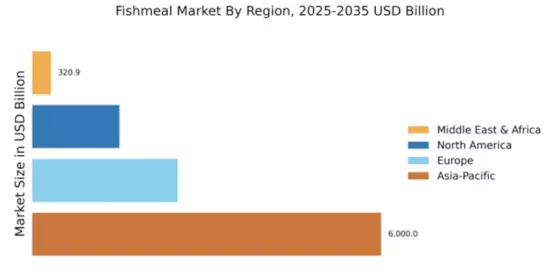
The North American fishmeal market is witnessing significant growth, driven by increasing demand for sustainable aquaculture and livestock feed. With a market size of $1500.0 million, the region is focusing on regulatory frameworks that promote eco-friendly practices. The rise in health-conscious consumers is also pushing demand for high-quality fishmeal products, which are rich in omega-3 fatty acids and protein. Leading countries like the US and Canada are at the forefront, with key players such as Omega Protein and Nutreco actively expanding their operations. The competitive landscape is characterized by innovation in production techniques and a focus on sustainability. As the market evolves, partnerships and collaborations among industry leaders are expected to enhance market penetration and product offerings.

Europe : Innovation and Sustainability Focus

Europe's fishmeal market, valued at $2500.0 million, is characterized by a strong emphasis on innovation and sustainability. The region is witnessing a shift towards eco-friendly production methods, driven by stringent regulations and consumer demand for sustainable seafood. This focus is expected to propel market growth as companies adapt to changing consumer preferences and regulatory requirements. Countries like Norway and the Netherlands are leading the charge, with major players such as Austevoll Seafood and Nutreco investing in sustainable practices. The competitive landscape is robust, with a mix of established companies and emerging players. The European market is poised for growth as it aligns with global sustainability goals, ensuring a steady supply of high-quality fishmeal products.

Asia-Pacific : Dominating The Fishmeal

The Asia-Pacific region dominates The Fishmeal, holding a substantial market size of $6000.0 million. This growth is fueled by rising aquaculture production and increasing demand for fishmeal in animal feed. The region's favorable climatic conditions and abundant marine resources contribute to its leading position. Regulatory support for sustainable fishing practices is also enhancing market dynamics, ensuring long-term viability. Countries like China, India, and Peru are key players in this market, with companies such as Tasa and Copeinca making significant contributions. The competitive landscape is marked by a mix of large-scale producers and smaller enterprises, all striving to meet the growing demand for high-quality fishmeal. As the market evolves, innovation in production techniques and sustainability practices will be crucial for maintaining leadership in the global arena.

Middle East and Africa : Emerging Market Potential

The Middle East and Africa fishmeal market, valued at $320.91 million, is emerging as a potential growth area. The region is witnessing an increase in aquaculture activities, driven by rising protein demand and a growing population. Regulatory frameworks are gradually evolving to support sustainable fishing practices, which is expected to enhance market growth. Countries like South Africa and Egypt are leading the way, with local players beginning to invest in fishmeal production. The competitive landscape is still developing, with opportunities for both local and international companies to enter the market. As awareness of the nutritional benefits of fishmeal increases, the region is likely to see a surge in demand, paving the way for future growth.

Key Players and Competitive Insights

The Fishmeal Market is characterized by a competitive landscape that is increasingly shaped by innovation, sustainability, and strategic partnerships. Key players such as Nutreco (NL), Austevoll Seafood (NO), and Omega Protein (US) are actively pursuing strategies that emphasize operational efficiency and market expansion. Nutreco (NL) focuses on enhancing its product offerings through research and development, while Austevoll Seafood (NO) is known for its vertical integration, which allows for better control over the supply chain. Omega Protein (US) has been investing in sustainable fishing practices, which not only align with global trends but also enhance its brand reputation. Collectively, these strategies contribute to a dynamic competitive environment where differentiation is increasingly based on innovation and sustainability rather than solely on price.

In terms of business tactics, companies are localizing manufacturing and optimizing supply chains to respond to regional demands effectively. The market structure appears moderately fragmented, with several players vying for market share. However, the influence of major companies is significant, as they set benchmarks for quality and sustainability that smaller firms often strive to meet. This competitive structure fosters an environment where collaboration and strategic alliances are becoming more common, as companies seek to leverage each other's strengths.

In November 2025, Nutreco (NL) announced a partnership with a leading biotechnology firm to develop fishmeal alternatives derived from plant-based sources. This strategic move is likely to position Nutreco (NL) at the forefront of the sustainability trend, catering to a growing consumer base that prioritizes environmentally friendly products. The collaboration may also enhance Nutreco's R&D capabilities, allowing for faster innovation cycles and a broader product portfolio.

In October 2025, Austevoll Seafood (NO) completed the acquisition of a regional fish processing company, which is expected to bolster its market presence in South America. This acquisition not only expands Austevoll's operational footprint but also enhances its supply chain efficiency by integrating local sourcing capabilities. Such strategic actions indicate a clear intent to strengthen market position through consolidation and localized operations.

In September 2025, Omega Protein (US) launched a new line of omega-3 enriched fishmeal products aimed at the aquaculture sector. This product line is designed to meet the increasing demand for high-quality feed ingredients that support sustainable aquaculture practices. The introduction of these products reflects Omega Protein's commitment to innovation and its proactive approach to addressing market needs.

As of December 2025, the Fishmeal Market is witnessing trends that emphasize digitalization, sustainability, and the integration of AI technologies. Companies are increasingly forming strategic alliances to enhance their competitive edge, focusing on shared resources and knowledge. The shift from price-based competition to a model that prioritizes innovation, technology, and supply chain reliability is evident. Moving forward, competitive differentiation will likely hinge on the ability to adapt to these trends, with companies that embrace sustainability and technological advancements poised to lead the market.

Key Companies in the Fishmeal Market market include

Industry Developments

April 2021: The international manufacturer of fish oil and fishmeal, Biomega AS, will expand its business by funding a biorefinery in Denmark. The company wants to strengthen its position in the fishmeal market by promoting the development of products derived from salmon with the help of this facility's expansion.

Sept 2021: Peru is reclaiming its position as the leading fishmeal producer among the other competitive nations worldwide. This is a significant step that will spur regional fishmeal demand, and excessive demand will help bring down the high rates of fishmeal prices ly. Due to a large decline in the region's fishmeal production over the previous projection period, these were increased.

Future Outlook

Fishmeal Market Future Outlook

The Fishmeal Market is projected to grow at a 6.28% CAGR from 2024 to 2035, driven by rising aquaculture demand, sustainable sourcing practices, and technological advancements.

New opportunities lie in:

  • Expansion into emerging aquaculture markets in Asia and Africa.
  • Development of high-protein, plant-based fishmeal alternatives.
  • Investment in automated processing technologies for efficiency gains.

By 2035, the Fishmeal Market is expected to achieve robust growth, driven by innovation and strategic market positioning.

Market Segmentation

Fishmeal Market Form Outlook

  • Pellets
  • Powder
  • Liquid

Fishmeal Market Type Outlook

  • Fishmeal
  • Fish Oil
  • Hydrolyzed Fish Protein
  • Fish Solubles

Fishmeal Market Source Outlook

  • Wild Caught Fish
  • Farmed Fish
  • Bycatch
  • Processing Waste

Fishmeal Market Application Outlook

  • Aquaculture
  • Animal Feed
  • Pet Food
  • Nutraceuticals

Fishmeal Market Nutritional Content Outlook

  • High Protein
  • Omega-3 Fatty Acids
  • Vitamins
  • Minerals

Report Scope

MARKET SIZE 202410320.91(USD Billion)
MARKET SIZE 202510969.27(USD Billion)
MARKET SIZE 203520173.26(USD Billion)
COMPOUND ANNUAL GROWTH RATE (CAGR)6.28% (2024 - 2035)
REPORT COVERAGERevenue Forecast, Competitive Landscape, Growth Factors, and Trends
BASE YEAR2024
Market Forecast Period2025 - 2035
Historical Data2019 - 2024
Market Forecast UnitsUSD Billion
Key Companies ProfiledNutreco (NL), Austevoll Seafood (NO), Omega Protein (US), Pesquera Diamante (PE), Sambavanam (IN), Copeinca (PE), Fishmeal Co. (CL), Tasa (PE), Diana Group (PE)
Segments CoveredApplication, Type, Source, Form, Nutritional Content
Key Market OpportunitiesGrowing demand for sustainable aquaculture practices drives innovation in the Fishmeal Market.
Key Market DynamicsRising demand for sustainable aquaculture drives innovation and competition in the fishmeal market.
Countries CoveredNorth America, Europe, APAC, South America, MEA

Market Highlights

Author
Snehal Singh
Assistant Manager - Research

High acumen in analyzing complex macro & micro markets with more than 6 years of work experience in the field of market research. By implementing her analytical skills in forecasting and estimation into market research reports, she has expertise in Packaging, Construction, and Equipment domains. She handles a team size of 20-25 resources and ensures smooth running of the projects, associated marketing activities, and client servicing.

Leave a Comment

FAQs

How much is the fishmeal market?

The fishmeal market size was valued at USD 9688.03 Million in 2023.

What is the growth rate of the fishmeal market?

The market is projected to register a CAGR of 6.28% during the forecast period 2025-2035.

Which region held the largest market share in the fishmeal market?

North America had the largest share of the market

Who are the key players in the fishmeal market?

The key players in the market are Empresas Copec S.A. (Chile), Biomega AS (Norway), Omega Protein Corporation (US), Calysta Inc. (U.S.), Oceana Group Limited (South Africa), FMC Corporation (US), Austevoll Seafood ASA (Norway), Pioneer Fishing (Pty) Ltd. (South Africa), Aker Biomarine, Croda International Plc. (UK) and Antarctic AS (Norway).

Which source type led the fishmeal market?

The Crustaceans category dominated the market in 2023.

Which livestock had the largest market share in the fishmeal market?

Swine had the largest share of the market.

Download Free Sample

Kindly complete the form below to receive a free sample of this Report

Compare Licence

×
Features License Type
Single User Multiuser License Enterprise User
Price $4,950 $5,950 $7,250
Maximum User Access Limit 1 User Upto 10 Users Unrestricted Access Throughout the Organization
Free Customization
Direct Access to Analyst
Deliverable Format
Platform Access
Discount on Next Purchase 10% 15% 15%
Printable Versions