Download Free Sample
Kindly complete the form below to receive a free sample of this Report
GCC Pharmacy Management System Market Research Report: Size, Share, Trend Analysis By Solution Type (Pharmacy Inventory Management System, Pharmacy Data Management System, Pharmacy Compounding Software System, Pharmacy Benefits Management System, Pharmacy Revenue Cycle Management System, Others), By Component (Software, Hardware, Services), By Deployment Mode (Web-Based, On-Premise) and By End Users (Inpatient Pharmacies, Outpatient Pharmacies) - Growth Outlook & Industry Forecast 2025 To 2035
As per analysis, the GCC pharmacy management system market is projected to grow from USD 2.26 Billion in 2025 to USD 5.62 Billion by 2035, exhibiting a compound annual growth rate (CAGR) of 9.65% during the forecast period (2025 - 2035).
The GCC pharmacy management system market is experiencing a transformative shift towards technological integration and patient-centric solutions.
| 2024 Market Size | 2.04 (USD Billion) |
| 2035 Market Size | 5.62 (USD Billion) |
| CAGR (2025 - 2035) | 9.65% |
Al Nahdi Medical Company (SA), United Pharmacies (AE), Al-Dawaa Pharmacies (SA), Aster DM Healthcare (AE), Tamimi Markets (SA), Al-Muhaidib Group (SA), Al-Faisaliah Group (SA), Gulf Pharmaceutical Industries (AE)
Our Impact
Enabled $4.3B Revenue Impact for Fortune 500 and Leading Multinationals
Partnering with 2000+ Global Organizations Each Year
30K+ Citations by Top-Tier Firms in the Industry
The gcc pharmacy management system market is currently experiencing a transformative phase, driven by advancements in technology and an increasing emphasis on efficiency within healthcare systems. The integration of digital solutions into pharmacy operations appears to enhance medication management, streamline workflows, and improve patient safety. As healthcare providers in the GCC region prioritize the adoption of innovative systems, the demand for comprehensive pharmacy management solutions is likely to rise. This shift may also be influenced by regulatory frameworks that encourage the digitization of health records and the implementation of electronic prescriptions, thereby fostering a more interconnected healthcare environment. Moreover, the growing focus on patient-centric care is reshaping the landscape of pharmacy management. Stakeholders in the GCC pharmacy management system market seem to recognize the importance of personalized services and tailored medication therapies. This trend may lead to the development of systems that not only manage inventory and prescriptions but also facilitate patient engagement and adherence to treatment plans. As the market evolves, it is essential for providers to remain agile and responsive to the changing needs of healthcare professionals and patients alike, ensuring that the solutions offered are both effective and user-friendly.
Regulatory compliance remains a pivotal driver in the GCC pharmacy management system market. Governments across the GCC are implementing stringent regulations to ensure the safety and efficacy of pharmaceutical products. This has led to an increased demand for pharmacy management systems that can facilitate compliance with local and international standards. For example, the Saudi Food and Drug Authority (SFDA) has established guidelines that pharmacies must adhere to, prompting the need for robust management systems that can track and report compliance metrics. The GCC pharmacy management system market is likely to see a rise in system implementations that prioritize regulatory adherence, thereby enhancing the overall quality of pharmaceutical services.
The GCC pharmacy management system market is experiencing a surge in technological advancements, which are reshaping the landscape of pharmacy operations. Innovations such as artificial intelligence, machine learning, and cloud computing are being integrated into pharmacy management systems, enhancing efficiency and accuracy. For instance, the adoption of AI-driven analytics allows pharmacies to optimize inventory management and streamline workflows. According to recent data, the GCC region is projected to witness a growth rate of approximately 12% in the adoption of advanced pharmacy management technologies over the next five years. This trend indicates a strong inclination towards leveraging technology to improve patient care and operational efficiency within the GCC pharmacy management system market.
The GCC pharmacy management system market is witnessing a rising demand for automation in pharmacy operations. As pharmacies strive to enhance operational efficiency and reduce human error, automated systems are becoming increasingly essential. Automation in prescription processing, inventory management, and billing can significantly reduce the time taken for these tasks, leading to improved customer satisfaction. Recent statistics indicate that pharmacies utilizing automated management systems report a 30% increase in operational efficiency. This trend is expected to continue, as more pharmacies in the GCC recognize the benefits of automation, thereby driving growth in the pharmacy management system market.
The emphasis on patient-centric care is a significant driver in the GCC pharmacy management system market. Pharmacies are increasingly adopting systems that prioritize patient engagement and personalized services. This shift is largely influenced by the growing awareness of the importance of patient satisfaction and outcomes. Pharmacy management systems that offer features such as medication therapy management and personalized health consultations are gaining traction. Data suggests that pharmacies implementing patient-centric solutions can enhance patient adherence to medication regimens, ultimately improving health outcomes. As a result, the GCC pharmacy management system market is likely to see a continued focus on developing solutions that cater to the needs of patients.
The integration of telehealth services is emerging as a crucial driver in the GCC pharmacy management system market. With the increasing acceptance of telemedicine, pharmacies are looking to incorporate telehealth functionalities into their management systems. This integration allows pharmacies to offer remote consultations, medication delivery, and follow-up services, thereby expanding their reach and improving patient access to care. Recent surveys indicate that over 60% of patients in the GCC are open to using telehealth services for their pharmaceutical needs. Consequently, the pharmacy management system market is likely to evolve, with a growing number of systems designed to support telehealth capabilities, enhancing the overall service delivery in the region.
The GCC pharmacy management system market showcases a diverse landscape segmented by application, with Retail Pharmacy leading in market share, primarily due to its established presence and continuous demand for prescription services. Retail pharmacies benefit from in-person consultations, fostering customer loyalty and sustained sales. Conversely, Online Pharmacy, while currently trailing in market share, is swiftly gaining traction as technology adoption increases, allowing consumers convenient access to medications and healthcare services.
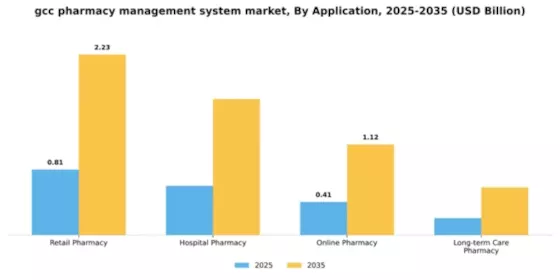
Retail Pharmacy (Dominant) vs. Online Pharmacy (Emerging)
Retail Pharmacy is a dominant force in the GCC pharmacy management system market, characterized by its extensive network of brick-and-mortar establishments that provide personalized care and readily available medications. This segment's longstanding trust and familiarity among consumers contribute to its sustained market position. In contrast, Online Pharmacy is on the rise as an emerging segment, appealing to a tech-savvy demographic seeking convenience and efficiency. This segment leverages digital platforms to optimize medication delivery and access, which is reshaping consumer expectations and driving growth in the overall pharmacy landscape.
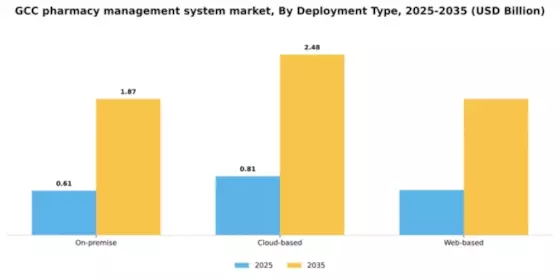
In the GCC pharmacy management system market, deployment types showcase a diverse landscape with cloud-based solutions currently holding the largest share. This segment has been embraced rapidly due to its ability to provide accessible and scalable services to pharmacies with varying operational sizes. Conversely, the on-premise deployment is witnessing heightened adoption rates as pharmacies look for solutions offering enhanced data security and control, marking it as the fastest-growing segment in this landscape. As the market evolves, the shift towards hybrid models is anticipated, combining the strengths of both cloud-based and on-premise systems. Accelerated digitization in the healthcare sector, coupled with a need for remote accessibility and streamlined operations, is propelling the growth of cloud-based systems. Additionally, factors such as regulatory pressures and a focus on compliance are driving pharmacies to integrate robust on-premise solutions to ensure security and data integrity.
Cloud-based (Dominant) vs. On-premise (Emerging)
Cloud-based pharmacy management systems are becoming increasingly dominant in the GCC market due to their flexibility, lower upfront costs, and ability to provide real-time data access. These systems allow pharmacies to streamline operations while enhancing patient care through better data management and automated processes. Moreover, the scalability of cloud solutions enables pharmacies to easily adjust their services according to changing demands. In contrast, on-premise systems are emerging as a critical option for those pharmacies prioritizing security and customization. These systems offer a high degree of control over data management, ensuring sensitive patient information is kept secure. However, they often require significant investments in IT infrastructure and ongoing maintenance. The combination of these two deployment types provides pharmacies with various options to align their management systems with their operational and strategic goals.
The GCC pharmacy management system market showcases a diverse end-user landscape, prominently featuring pharmacists, pharmacy technicians, healthcare providers, and patients. Among these segments, pharmacists hold the largest market share, playing a critical role in the operational workflow of pharmacies. Their expertise ensures patient safety and medication management, making their influence on this market significant. Following pharmacists, healthcare providers represent a rapidly evolving segment, reflecting an increased focus on integrated healthcare solutions. This increasing interdependency signifies a shift in dynamics where health professionals collaborate with pharmacy systems to enhance patient care. Growth trends within the GCC pharmacy management system market are largely driven by the digital transformation of the healthcare sector. Pharmacists are leveraging technology to streamline operations, manage prescriptions, and enhance customer service. Simultaneously, healthcare providers are embracing digital tools, signifying a growing trend towards interoperability between systems that cater to both pharmacy and healthcare settings. As the demand for efficient medication management rises, healthcare providers are emerging as one of the fastest-growing user segments, fostering a collaborative environment that enriches patient experiences.
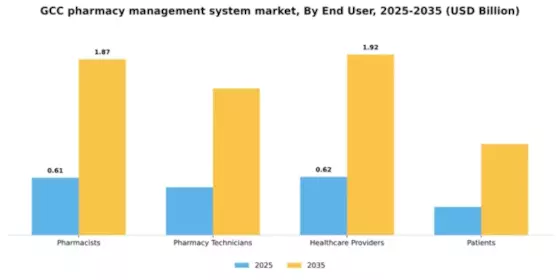
Pharmacists (Dominant) vs. Pharmacy Technicians (Emerging)
Pharmacists remain the dominant players within the GCC pharmacy management system market, showcasing extensive roles that encompass both clinical and managerial responsibilities. Their expertise not only helps in medication verification but also in providing patient consultations that enhance healthcare outcomes. In contrast, pharmacy technicians are stepping into an emerging role, characterized by a focus on operational efficiency and support functions. This shift is significant as technicians now engage more deeply in pharmacy workflows, assisting pharmacists with tasks that increase overall productivity. Both segments are integral to the successful functioning of pharmacy management systems, with pharmacists serving as the backbone of clinical decision-making while technicians drive operational excellence. The collaboration between these two roles highlights the evolving nature of pharmacy dynamics within the GCC.
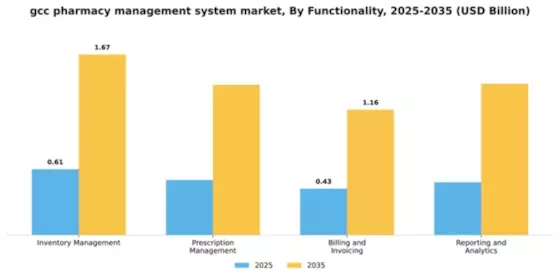
In the GCC pharmacy management system market, the functionality segment is primarily driven by inventory management, which accounts for the largest share. Inventory management solutions are essential for pharmacies, enabling them to track stock levels, manage reordering, and minimize wastage. Prescription management follows closely, supported by the increasing emphasis on efficient patient care and streamlined pharmacy operations. As pharmacies evolve, integrating these functionalities plays a vital role in overall efficiency and effectiveness. As the market progresses, prescription management is emerging as the fastest-growing area, propelled by the rising demand for digitized prescription processes and the need for compliance with regulatory standards. This growth is further fueled by technological advancements, such as telemedicine and e-prescribing, which are becoming increasingly prevalent. Such trends indicate a shift toward integrated solutions that enhance patient safety while optimizing pharmacy workflows.
Inventory Management: Dominant vs. Prescription Management: Emerging
Inventory Management stands as a dominant force in the GCC pharmacy management system market, effectively streamlining the supply chain and inventory processes for pharmacies. Its comprehensive functionalities offer real-time visibility into stock levels, which is crucial for ensuring that pharmacies can meet patient needs efficiently. On the other hand, Prescription Management is an emerging segment that focuses on enhancing the prescription workflow, ultimately contributing to improved patient outcomes. This segment is gaining momentum due to its ability to integrate with electronic health records and facilitate smoother communication between healthcare providers and pharmacists. Both functionalities are essential, yet they serve different aspects of pharmacy management, emphasizing the need for a balanced approach in adopting these systems.
The GCC pharmacy management system market showcases a diverse integration segment, led by Electronic Health Records (EHRs), which holds the largest share among the various segments. Insurance Systems and Supply Chain Management also contribute significantly, but EHRs dominate due to their comprehensive functionality and essential role in pharmacy operations. Laboratory Information Systems, while smaller in comparison, are emerging rapidly thanks to technological advancements and an increased demand for efficient lab data management.
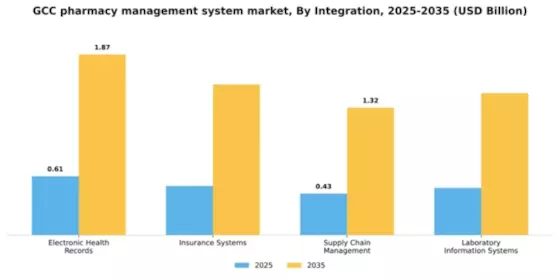
EHR (Dominant) vs. LIS (Emerging)
Electronic Health Records (EHR) systems are the cornerstone of the GCC pharmacy management system market, providing streamlined access to patient data, medications, and treatment histories. Their functionality supports healthcare efficiency, making them indispensable for pharmacies aiming to enhance service delivery and patient care. On the other hand, Laboratory Information Systems (LIS) represent the fastest-growing segment, driven by innovations in laboratory automation and the continuous need for integrated data solutions. As healthcare providers increasingly focus on precision medicine, the demand for LIS is surging, presenting opportunities for technological advancements and integration within the broader pharmacy management systems.
Get more detailed insights about GCC Pharmacy Management System Market Request Free Sample
The GCC pharmacy management system market is characterized by a dynamic competitive landscape, driven by factors such as increasing healthcare demands, technological advancements, and a growing emphasis on patient-centric services. Key players like Al Nahdi Medical Company (SA), Al-Dawaa Pharmacies (SA), and Aster DM Healthcare (AE) are strategically positioned to leverage these trends. Al Nahdi Medical Company (SA) focuses on digital transformation, enhancing its pharmacy management systems through innovative technologies to improve operational efficiency and customer engagement. Meanwhile, Al-Dawaa Pharmacies (SA) emphasizes regional expansion, aiming to increase its footprint across the GCC, thereby enhancing its market share. Aster DM Healthcare (AE) is also investing in partnerships with technology firms to integrate advanced analytics into its pharmacy operations, which collectively shapes a competitive environment that is increasingly reliant on technological innovation and strategic collaborations.
In terms of business tactics, companies are localizing manufacturing and optimizing supply chains to enhance responsiveness to market demands. The market structure appears moderately fragmented, with several key players exerting influence over their respective segments. This fragmentation allows for a diverse range of services and products, fostering competition that drives innovation and efficiency among the players.
In December 2025, Al Nahdi Medical Company (SA) announced a partnership with a leading tech firm to develop an AI-driven pharmacy management system aimed at streamlining inventory management and enhancing customer service. This strategic move is likely to position Al Nahdi at the forefront of technological adoption in the pharmacy sector, potentially setting new standards for operational excellence and customer satisfaction.
In November 2025, Al-Dawaa Pharmacies (SA) launched a new initiative to expand its telepharmacy services, allowing patients to consult pharmacists remotely. This initiative not only addresses the growing demand for accessible healthcare but also aligns with the broader trend of digital health solutions, indicating Al-Dawaa's commitment to enhancing patient engagement and convenience.
In October 2025, Aster DM Healthcare (AE) unveiled a comprehensive digital platform that integrates pharmacy management with patient health records. This integration is strategically significant as it enhances the continuity of care, allowing pharmacists to make informed decisions based on real-time patient data, thereby improving health outcomes and operational efficiency.
As of January 2026, the competitive trends in the GCC pharmacy management system market are increasingly defined by digitalization, sustainability, and the integration of AI technologies. Strategic alliances among key players are shaping the landscape, fostering innovation and enhancing service delivery. The shift from price-based competition to a focus on technological advancement and supply chain reliability is evident, suggesting that future competitive differentiation will hinge on the ability to innovate and adapt to evolving market demands.


Recent developments in the GCC Pharmacy Management System Market have seen significant advancements, particularly in digitization to enhance operational efficiency and patient care. Companies like Aster DM Healthcare and NMC Healthcare have been actively integrating advanced technologies in their pharmacy management systems. In August 2023, Al Nahdi Medical Company announced the successful implementation of a new digital management system aimed at improving service delivery and inventory management.
Notably, the expansion of Al Jazeera Pharmacy into new regional markets, including Saudi Arabia, has been a key focus recently, underscoring a growth in market presence. Significant mergers and acquisitions have also impacted the sector; in April 2023, AlDawaa Pharmacies announced its acquisition of a smaller pharmacy chain, strengthening its market share. The current valuation of the market is bolstered by the increasing adoption of e-prescribing and telepharmacy solutions, crucial for meeting the rising healthcare demands within the region.
With regulatory support from GCC governments advocating for innovation in healthcare, the market is expected to exhibit robust growth, driven by companies like Tamimi Markets and Gulf Drug pursuing diversified service offerings.
The GCC pharmacy management system market is projected to grow at a 9.65% CAGR from 2025 to 2035, driven by technological advancements, regulatory changes, and increasing healthcare demands.
New opportunities lie in:
By 2035, the market is expected to be robust, reflecting substantial growth and innovation.
| MARKET SIZE 2024 | 2.04(USD Billion) |
| MARKET SIZE 2025 | 2.26(USD Billion) |
| MARKET SIZE 2035 | 5.62(USD Billion) |
| COMPOUND ANNUAL GROWTH RATE (CAGR) | 9.65% (2024 - 2035) |
| REPORT COVERAGE | Revenue Forecast, Competitive Landscape, Growth Factors, and Trends |
| BASE YEAR | 2024 |
| Market Forecast Period | 2025 - 2035 |
| Historical Data | 2019 - 2024 |
| Market Forecast Units | USD Billion |
| Key Companies Profiled | Al Nahdi Medical Company (SA), United Pharmacies (AE), Al-Dawaa Pharmacies (SA), Aster DM Healthcare (AE), Tamimi Markets (SA), Al-Muhaidib Group (SA), Al-Faisaliah Group (SA), Gulf Pharmaceutical Industries (AE) |
| Segments Covered | Application, Deployment Type, End User, Functionality |
| Key Market Opportunities | Integration of artificial intelligence and automation in the gcc pharmacy management system market enhances operational efficiency. |
| Key Market Dynamics | Growing adoption of digital solutions in GCC pharmacy management systems driven by regulatory compliance and operational efficiency demands. |
| Countries Covered | GCC |
As of 2024, the market valuation was 2.04 USD Billion.
The market is projected to reach 5.62 USD Billion by 2035.
The expected CAGR for the market from 2025 to 2035 is 9.65%.
The market includes segments such as Retail Pharmacy, Hospital Pharmacy, Online Pharmacy, and Long-term Care Pharmacy.
The Retail Pharmacy segment is projected to grow from 0.81 USD Billion in 2024 to 2.23 USD Billion by 2035.
The Cloud-based deployment type is expected to grow from 0.81 USD Billion in 2024 to 2.25 USD Billion by 2035.
Key players include Al Nahdi Medical Company, United Pharmacies, Al-Dawaa Pharmacies, and Aster DM Healthcare.
The Healthcare Providers segment is anticipated to increase from 0.62 USD Billion in 2024 to 1.68 USD Billion by 2035.
Key functionalities include Inventory Management, Prescription Management, and Reporting and Analytics.
The Billing and Invoicing functionality is projected to grow from 0.43 USD Billion in 2024 to 1.16 USD Billion by 2035.



Kindly complete the form below to receive a free sample of this Report

“This is really good guys. Excellent work on a tight deadline. I will continue to use you going forward and recommend you to others. Nice job”


“Thanks. It’s been a pleasure working with you, please use me as reference with any other Intel employees.”


“Thanks for sending the report it gives us a good global view of the Betaïne market.”


“Thank you, this will be very helpful for OQS.”


“We found the report very insightful! we found your research firm very helpful. I'm sending this email to secure our future business.”


“I am very pleased with how market segments have been defined in a relevant way for my purposes (such as "Portable Freezers & refrigerators" and "last-mile"). In general the report is well structured. Thanks very much for your efforts.”


“I have been reading the first document or the study, ,the Global HVAC and FP market report 2021 till 2026. Must say, good info! I have not gone in depth at all parts, but got a good indication of the data inside!”


“We got the report in time, we really thank you for your support in this process. I also thank to all of your team as they did a great job.”


“The Automotive 48V ECU Components Procurement Intelligence Study” was a complex project, but the Market Research Future (MRFR) team handled it with quality, agility, and customer-centricity. They delivered all requested data on time and within the agreed scope. The team, including Shubhendra Anand and Rahul Gotadki, was always readily available to clarify questions and swiftly implement necessary adjustments, driving the project to a successful conclusion within a very demanding timeframe.
I would also like to specifically commend Akshay Agarwal for his responsiveness and support at every stage—from our initial inquiry on May 6th through to final delivery on June 18th. His dedication made the entire process seamless.”



