Expansion of Healthcare Infrastructure
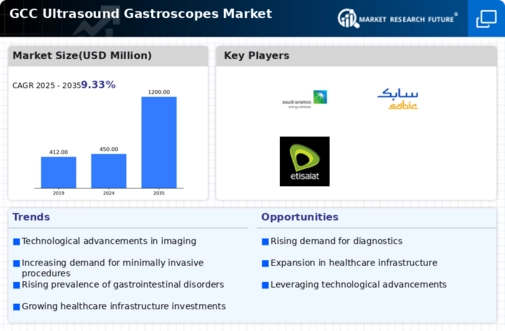
The expansion of healthcare infrastructure across the GCC is a crucial driver for the ultrasound gastroscopes market. Governments are investing heavily in healthcare facilities, aiming to improve access to advanced medical technologies. This investment includes the establishment of specialized clinics and hospitals equipped with the latest diagnostic tools, including ultrasound gastroscopes. As the number of healthcare facilities increases, so does the availability of ultrasound gastroscopes for diagnostic purposes. This trend is likely to enhance patient access to quality healthcare services, thereby driving the market forward. The ongoing development of healthcare infrastructure is expected to create a favorable environment for the growth of the ultrasound gastroscopes market.
Rising Demand for Outpatient Procedures
The rising demand for outpatient procedures is significantly impacting the ultrasound gastroscopes market. Patients increasingly prefer minimally invasive procedures that allow for quicker recovery times and reduced hospital stays. Ultrasound gastroscopes, known for their non-invasive nature, are becoming a preferred choice for diagnostic evaluations in outpatient settings. This trend is supported by healthcare policies promoting outpatient care as a cost-effective alternative to traditional inpatient procedures. As more healthcare providers adopt outpatient models, the ultrasound gastroscopes market is likely to experience substantial growth. The shift towards outpatient care reflects changing patient preferences and the evolving landscape of healthcare delivery in the GCC.
Growing Awareness of Preventive Healthcare
There is a notable increase in awareness regarding preventive healthcare among the population in the GCC. This shift in mindset is driving the demand for early diagnosis and screening of gastrointestinal conditions, thereby positively impacting the ultrasound gastroscopes market. Educational campaigns and health initiatives aimed at promoting regular check-ups are encouraging individuals to seek medical advice sooner. As a result, healthcare facilities are increasingly adopting ultrasound gastroscopes for routine examinations. The market is projected to grow as more patients recognize the importance of early detection in managing gastrointestinal health, leading to a potential increase in procedures performed using ultrasound gastroscopes.
Technological Innovations in Imaging Techniques
Technological advancements in imaging techniques are significantly influencing the ultrasound gastroscopes market. Innovations such as high-definition imaging, real-time visualization, and enhanced Doppler capabilities are improving diagnostic accuracy and patient safety. The introduction of portable ultrasound gastroscopes has also made these devices more accessible in various healthcare settings. As hospitals and clinics in the GCC invest in state-of-the-art equipment, the market is expected to expand. The integration of artificial intelligence in image analysis further enhances the capabilities of ultrasound gastroscopes, potentially increasing their adoption in routine clinical practice. This technological evolution is likely to drive market growth as healthcare providers seek to leverage these advancements for better patient care.
Increasing Prevalence of Gastrointestinal Disorders
The rising incidence of gastrointestinal disorders in the GCC region is a primary driver for the ultrasound gastroscopes market. Conditions such as gastroesophageal reflux disease (GERD), peptic ulcers, and inflammatory bowel disease are becoming more common, necessitating advanced diagnostic tools. According to recent health statistics, the prevalence of these disorders has increased by approximately 15% over the past five years. This trend indicates a growing need for effective diagnostic solutions, positioning ultrasound gastroscopes as a vital tool in clinical settings. As healthcare providers seek to enhance patient outcomes, the demand for ultrasound gastroscopes is likely to rise, reflecting the market's potential for growth in response to these health challenges.





















Leave a Comment