×
Request Free Sample ×

Kindly complete the form below to receive a free sample of this Report

* Please use a valid business email

Leading companies partner with us for data-driven Insights

clients tt-cursor
Hero Background

GCC Virtual Engineering Market

ID: MRFR/ICT/63488-HCR
200 Pages
Aarti Dhapte
October 2025

GCC Virtual Engineering Market Research Report By Software Type (Computer-Aided Designing (CAD), Computer-Aided Manufacturing (CAM), Computer-Aided Engineering (CAE), Architecture, Engineering and Construction (AEC), Electronic Design Automation (EDA)Others), By Deployment Type (On-premises, Cloud), By Organization Size (SME’s, Large Enterprises), By Application (Automation Design, Plant Design, Product Design, 3D MODELLING, Others) and By Industry Vertical (Commercial Industry Vertical, Defense Industry Vertical)- Forecast to 2035

Share:
Download PDF ×

We do not share your information with anyone. However, we may send you emails based on your report interest from time to time. You may contact us at any time to opt-out.

GCC Virtual Engineering Market Infographic
Purchase Options

GCC Virtual Engineering Market Summary

As per analysis, the GCC virtual engineering market is projected to grow from USD 20.33 Million in 2025 to USD 88.14 Million by 2035, exhibiting a compound annual growth rate (CAGR) of 15.64% during the forecast period (2025 - 2035).

Key Market Trends & Highlights

The GCC virtual engineering market is experiencing robust growth driven by technological advancements and increasing demand for sustainable practices.

  • The simulation segment remains the largest in the GCC virtual engineering market, reflecting a strong preference for advanced analytical tools.
  • Prototyping is identified as the fastest-growing segment, indicating a shift towards rapid development and testing methodologies.
  • The automotive sector continues to dominate the market, while the aerospace segment is emerging as the fastest-growing area due to innovation and demand for efficiency.
  • Government initiatives and investments, along with a rising emphasis on sustainability, are key drivers propelling market expansion.

Market Size & Forecast

2024 Market Size 17.82 (USD Million)
2035 Market Size 88.14 (USD Million)
CAGR (2025 - 2035) 15.64%

Major Players

Siemens (DE), General Electric (US), ABB (CH), Schneider Electric (FR), Honeywell (US), Dassault Systèmes (FR), Autodesk (US), Bentley Systems (US), ANSYS (US)

GCC Virtual Engineering Market Trends

The GCC virtual engineering market is currently experiencing a transformative phase, characterized by the integration of advanced technologies and innovative practices. This region has witnessed a growing emphasis on digitalization, which appears to be reshaping traditional engineering processes. The adoption of virtual engineering tools is becoming increasingly prevalent among various sectors, including construction, manufacturing, and energy. Stakeholders in the GCC are recognizing the potential benefits of these technologies, such as enhanced efficiency, reduced costs, and improved collaboration. As a result, organizations are investing in training and development to equip their workforce with the necessary skills to leverage these advancements effectively. Moreover, the GCC virtual engineering market is likely to benefit from supportive government initiatives aimed at fostering innovation and technological advancement. Various national strategies emphasize the importance of digital transformation in driving economic growth. This focus on technology is expected to create a conducive environment for the proliferation of virtual engineering solutions. Additionally, the collaboration between public and private sectors may further accelerate the adoption of these technologies, leading to a more competitive and resilient engineering landscape in the region. Overall, the GCC virtual engineering market is poised for substantial growth, driven by a combination of technological advancements and strategic initiatives.

Increased Adoption of Simulation Tools

The GCC virtual engineering market is witnessing a notable rise in the utilization of simulation tools. These technologies enable engineers to create virtual models of physical systems, allowing for thorough testing and analysis before actual implementation. This trend is particularly relevant in sectors such as construction and manufacturing, where precision and efficiency are paramount. By leveraging simulation tools, organizations can identify potential issues early in the design process, thereby reducing risks and enhancing project outcomes.

Focus on Sustainable Engineering Practices

Sustainability is becoming a central theme within the GCC virtual engineering market. Companies are increasingly adopting virtual engineering solutions that promote environmentally friendly practices. This shift is driven by both regulatory pressures and a growing awareness of the importance of sustainability among stakeholders. Virtual engineering tools facilitate the design of energy-efficient systems and the optimization of resource usage, aligning with the region's broader goals of sustainable development.

Collaboration through Cloud-Based Platforms

The trend towards cloud-based platforms is reshaping collaboration in the GCC virtual engineering market. These platforms allow for real-time sharing of information and resources among project teams, regardless of geographical location. This enhanced collaboration is crucial in a region characterized by diverse projects and stakeholders. By utilizing cloud technology, organizations can streamline workflows, improve communication, and foster innovation, ultimately leading to more successful project delivery.

Market Segment Insights

By Application: Simulation (Largest) vs. Prototyping (Fastest-Growing)

In the GCC virtual engineering market, the Application segment is primarily dominated by Simulation, which holds the largest market share due to its critical role in enhancing product performance and design validation. Following Simulation, Prototyping is emerging as a significant contributor to market dynamics, reflecting a shift towards more rapid and efficient design processes across various industries. The importance of these applications in reducing development time has created a competitive landscape that is increasingly favorable to innovative solutions. The growth trends in the Application segment of the GCC virtual engineering market are strongly influenced by technological advancements and the increasing adoption of virtual tools across sectors, including automotive and aerospace. The need for more streamlined processes has propelled Prototyping to gain traction at an accelerated pace, attracting investments and fostering collaborations aimed at refining product designs swiftly. Overall, the synergy between Simulation and Prototyping is likely to drive the market forward as companies seek efficiency and optimization in their engineering workflows.

Simulation (Dominant) vs. Testing (Emerging)

Simulation has established itself as the dominant player in the Application segment of the GCC virtual engineering market due to its ability to provide detailed insights into product behavior and performance under various conditions. Its widespread adoption across industries facilitates risk assessment, which enhances decision-making and product development strategies. On the other hand, Testing is emerging as an essential complement to virtual engineering. As companies increasingly rely on integrated development environments, Testing helps validate the engineered models against real-world conditions, thereby optimizing product reliability and performance. The dual focus on Simulation and Testing showcases a strategic shift towards comprehensive development processes that leverage the benefits of both methodologies, ensuring that the final outcomes meet quality standards and customer expectations.

By End Use: Automotive (Largest) vs. Aerospace (Fastest-Growing)

The GCC virtual engineering market is predominantly influenced by the automotive sector, which holds a significant share due to increasing production and technological advancements in vehicle design and manufacturing. Followed closely is the aerospace segment, experiencing rapid growth as nations in the region invest heavily in expanding their aerospace capabilities and infrastructure, responding to rising demands for aviation services and manufacturing capabilities.

Automotive (Dominant) vs. Aerospace (Emerging)

The automotive sector remains the dominant end use in the GCC virtual engineering market, driven by the region's focus on innovation and efficiency in vehicle design and production processes. This sector leverages advanced virtual engineering techniques for design optimization, enabling manufacturers to enhance vehicle performance and sustainability. Conversely, the aerospace sector is emerging as a significant player, fueled by strategic investments and a push for local manufacturing capability. This segment is characterized by rapid technological advancements, with a growing trend towards adopting virtual engineering for designing aircraft components and optimizing assembly processes, thereby accelerating product development cycles.

By Technology: Computer-Aided Design (Largest) vs. Virtual Reality (Fastest-Growing)

The GCC virtual engineering market showcases a diverse array of technologies, with Computer-Aided Design (CAD) commanding the largest share due to its established presence in the industry. CAD is widely adopted across various sectors, including architecture and engineering, thanks to its efficiency in designing and drafting. In contrast, Virtual Reality (VR) is rapidly gaining traction, harnessing immersive experiences that enhance design validation and client engagement, thus driving market dynamics.

Technology: CAD (Dominant) vs. VR (Emerging)

Computer-Aided Design (CAD) is a fundamental component of the GCC virtual engineering market, recognized for its precision and productivity. Dominating the segment, CAD tools have become integral in various industries, allowing for intricate designs that streamline processes. On the other hand, Virtual Reality (VR) is emerging as a transformative technology, providing immersive simulations that revolutionize how stakeholders interact with projects. Its rapid adoption is fueled by advancements in hardware and software, appealing to companies eager to leverage innovation for competitive advantage. Together, these technologies underscore the synergy between traditional and emerging solutions, shaping the future of virtual engineering.

By Service Type: Consulting (Largest) vs. Support (Fastest-Growing)

In the GCC virtual engineering market, the distribution of service types is diverse, with consulting emerging as the dominant segment. This service captures a significant portion of the market due to the increasing demand for expertise in implementing virtual engineering solutions. Support services, while currently smaller in share, are rapidly growing as more companies seek ongoing assistance to maintain and optimize their virtual systems. The shifting landscape indicates a shift in consumer preference towards comprehensive service offerings that include both consulting and support services. The growth trends indicate a robust increase in demand for support and maintenance services, driven by technological advancements and the growing complexity of virtual engineering systems. Companies are increasingly recognizing the importance of regular training and support to ensure optimal performance and integration of advanced technologies. This trend suggests that the GCC market is maturing, with businesses prioritizing sustained engagement with service providers to leverage the full potential of virtual engineering solutions.

Consulting (Dominant) vs. Training (Emerging)

Consulting stands out as the dominant service type in the GCC virtual engineering market, characterized by its focus on strategic insights and the provision of tailored solutions to diverse industries. Companies offering consulting services typically showcase a deep understanding of technological trends and operational needs, which allows them to address unique client challenges effectively. In contrast, training services are emerging as a vital counterpart, driven by the necessity to upgrade workforce skills in line with technological advancements. The demand for training highlights a shift towards empowering organizations with the knowledge needed to utilize virtual engineering tools effectively. This dual emphasis on consulting and training reflects an overall trend towards a more collaborative approach in the GCC, wherein organizations are keen to invest in both guidance and education to enhance their operational capabilities.

By Deployment Model: Cloud-Based (Largest) vs. Hybrid (Fastest-Growing)

In the GCC virtual engineering market, the deployment model segment is characterized by a diverse distribution among On-Premises, Cloud-Based, and Hybrid solutions. Currently, the Cloud-Based model holds the largest market share, driven by the increasing demand for flexibility and scalability among businesses. In contrast, the On-Premises model lags behind, reflecting a more traditional approach that is less favored in the current tech landscape. Additionally, the Hybrid model is gaining traction, appealing to organizations seeking a balanced approach that combines the strengths of both on-premises and cloud solutions. The growth trends within this segment reveal a significant shift towards the Cloud-Based deployment model, spurred by advancements in cloud technologies and the burgeoning digital transformation efforts in the GCC. With businesses increasingly recognizing the need for agile solutions, the Hybrid deployment model is emerging as the fastest-growing option, bridging the gap between conventional and modern infrastructure. This growth is further fueled by the desire for improved collaboration, cost management, and enhanced technological capabilities, making it a preferred choice for many enterprises in the region.

Deployment Models: Cloud-Based (Dominant) vs. Hybrid (Emerging)

The Cloud-Based deployment model has established itself as the dominant choice in the GCC virtual engineering market, offering unparalleled flexibility and cost-effectiveness for organizations. With its ability to scale resources on demand, businesses can manage their projects more efficiently and leverage advanced tools without hefty investments in infrastructure. Conversely, the Hybrid model is rapidly emerging as a strong contender, allowing organizations to combine the reliability of on-premises systems with the agility of cloud services. This integrated approach caters to varying business needs, particularly for companies looking to optimize their operational efficiencies while ensuring data security. As both models evolve, they continue to adapt to market pressures, with Hybrid solutions appealing to more enterprises looking for customizable options in their virtual engineering strategies.

Get more detailed insights about GCC Virtual Engineering Market

Key Players and Competitive Insights

The virtual engineering market is currently characterized by a dynamic competitive landscape, driven by rapid technological advancements and increasing demand for digital solutions across various sectors. Key players such as Siemens (DE), General Electric (US), and ABB (CH) are strategically positioning themselves through innovation and regional expansion. Siemens (DE) has focused on enhancing its digital twin technology, which allows for real-time simulations and optimizations, thereby improving operational efficiency. General Electric (US) has been investing heavily in AI-driven analytics to optimize asset performance, while ABB (CH) emphasizes sustainability through its electrification and automation solutions, collectively shaping a competitive environment that prioritizes technological integration and operational excellence.

In terms of business tactics, companies are increasingly localizing manufacturing and optimizing supply chains to enhance responsiveness to market demands. The competitive structure of the market appears moderately fragmented, with several key players exerting substantial influence. This fragmentation allows for niche players to emerge, yet the collective strength of major companies like Siemens (DE) and General Electric (US) continues to dominate market dynamics.

In November 2025, Siemens (DE) announced a strategic partnership with a leading cloud service provider to enhance its digital engineering capabilities. This collaboration aims to leverage cloud computing to improve data accessibility and collaboration across engineering teams, which is crucial for accelerating product development cycles. The strategic importance of this partnership lies in its potential to streamline operations and foster innovation, positioning Siemens (DE) as a frontrunner in the digital engineering space.

In October 2025, General Electric (US) launched a new AI-based predictive maintenance solution tailored for the energy sector. This initiative is designed to reduce downtime and maintenance costs for energy assets, reflecting a growing trend towards proactive asset management. The significance of this launch is underscored by the increasing reliance on AI technologies to enhance operational efficiency and reduce operational risks in the energy sector.

In September 2025, ABB (CH) unveiled its latest automation platform, which integrates advanced robotics and AI to optimize manufacturing processes. This platform is particularly relevant in the context of Industry 4.0, where automation and data exchange are paramount. The strategic importance of this development lies in ABB's commitment to driving digital transformation in manufacturing, thereby enhancing productivity and sustainability.

As of December 2025, the competitive trends in the virtual engineering market are increasingly defined by digitalization, sustainability, and AI integration. Strategic alliances are playing a pivotal role in shaping the landscape, as companies seek to combine their strengths to innovate and deliver comprehensive solutions. Looking ahead, competitive differentiation is likely to evolve from traditional price-based competition to a focus on innovation, technology, and supply chain reliability. This shift suggests that companies that prioritize technological advancements and sustainable practices will be better positioned to thrive in an increasingly competitive environment.


Key Companies in the GCC Virtual Engineering Market market include

Industry Developments

Siemens and Gulf Business Machines (GBM) formed a partnership in late 2024 to provide state-of-the-art solutions that were specifically designed for the digital industries of the Gulf Cooperation Council (GCC). Their partnership is directed toward cybersecurity, IT infrastructure, and automation, with a particular emphasis on Zero Trust architecture, Operational Technology (OT) security, and customized solutions for industries like utilities and power generation.

In April 2025, GE Aerospace executed a five-year SaaS agreement with Royal Jordanian to supply Fuel Insight and Safety Insight software. By enhancing operational data analytics, this deployment enhances the airline's digital transformation, thereby facilitating decision-making, safety, and fuel efficiency. 

In July 2024, Accenture made a strategic investment in ANSR, a company based in the GCC that specializes in the establishment of Global Capability Centers. Accenture participated in the alliance by becoming a member of ANSR's board, which enhanced its capacity to expand GCC operations throughout the region.


Future Outlook

GCC Virtual Engineering Market Future Outlook

The GCC virtual engineering market is poised for growth at 15.64% CAGR from 2024 to 2035, driven by technological advancements, increased automation, and demand for efficiency.

New opportunities lie in:

  • Integration of AI-driven simulation tools for enhanced design accuracy.
  • Development of virtual reality training programs for engineering professionals.
  • Expansion of cloud-based collaboration platforms for remote engineering teams.

By 2035, the GCC virtual engineering market is expected to be robust, driven by innovation and strategic investments.

Market Segmentation

GCC Virtual Engineering Market End Use Outlook

  • Automotive
  • Aerospace
  • Construction
  • Electronics
  • Energy

GCC Virtual Engineering Market Technology Outlook

  • Computer-Aided Design
  • Virtual Reality
  • Augmented Reality
  • Simulation Software
  • Cloud Computing

GCC Virtual Engineering Market Application Outlook

  • Product Design
  • Simulation
  • Prototyping
  • Testing
  • Manufacturing

GCC Virtual Engineering Market Service Type Outlook

  • Consulting
  • Training
  • Support
  • Maintenance
  • Integration

GCC Virtual Engineering Market Deployment Model Outlook

  • On-Premises
  • Cloud-Based
  • Hybrid

Report Scope

MARKET SIZE 202417.82(USD Million)
MARKET SIZE 202520.33(USD Million)
MARKET SIZE 203588.14(USD Million)
COMPOUND ANNUAL GROWTH RATE (CAGR)15.64% (2024 - 2035)
REPORT COVERAGERevenue Forecast, Competitive Landscape, Growth Factors, and Trends
BASE YEAR2024
Market Forecast Period2025 - 2035
Historical Data2019 - 2024
Market Forecast UnitsUSD Million
Key Companies ProfiledSiemens (DE), General Electric (US), ABB (CH), Schneider Electric (FR), Honeywell (US), Dassault Systèmes (FR), Autodesk (US), Bentley Systems (US), ANSYS (US)
Segments CoveredApplication, End Use, Technology, Service Type, Deployment Model
Key Market OpportunitiesIntegration of artificial intelligence in design processes enhances efficiency in the GCC virtual engineering market.
Key Market DynamicsRising demand for digital twin technology drives innovation in the GCC virtual engineering market.
Countries CoveredGCC

Leave a Comment

FAQs

What is the expected market size of the GCC Virtual Engineering Market in 2024?

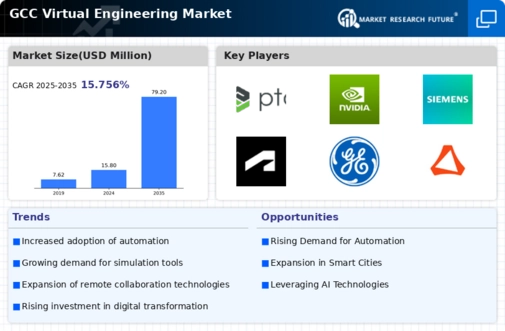
The GCC Virtual Engineering Market is expected to be valued at 15.84 USD Million in 2024.

What is the projected market size of the GCC Virtual Engineering Market by 2035?

By 2035, the market is projected to reach a value of 79.22 USD Million.

What is the expected CAGR for the GCC Virtual Engineering Market between 2025 and 2035?

The expected CAGR for the market during this period is 15.756%.

Which software segment is leading in the GCC Virtual Engineering Market?

The leading segment is Computer-Aided Designing (CAD), valued at 6.34 USD Million in 2024.

What is the expected market value for Computer-Aided Manufacturing (CAM) in 2035?

The market value for Computer-Aided Manufacturing (CAM) is expected to reach 19.42 USD Million by 2035.

Who are some key players in the GCC Virtual Engineering Market?

Major players include PTC, NVIDIA, Siemens, and Autodesk.

What is the expected market value for Architecture, Engineering and Construction (AEC) in 2024?

The market value for Architecture, Engineering and Construction (AEC) is expected to be 1.9 USD Million in 2024.

What growth opportunities exist in the GCC Virtual Engineering Market?

The market is expected to expand significantly with rising demand in various engineering applications.

How is the GCC Virtual Engineering Market segmented by software type?

The market is segmented into CAD, CAM, CAE, AEC, EDA, and others.

What is the projected value for Computer-Aided Engineering (CAE) by 2035?

Computer-Aided Engineering (CAE) is projected to reach a value of 13.85 USD Million by 2035.

Download Free Sample

Kindly complete the form below to receive a free sample of this Report

Compare Licence

×
Features License Type
Single User Multiuser License Enterprise User
Price $4,950 $5,950 $7,250
Maximum User Access Limit 1 User Upto 10 Users Unrestricted Access Throughout the Organization
Free Customization
Direct Access to Analyst
Deliverable Format
Platform Access
Discount on Next Purchase 10% 15% 15%
Printable Versions