Gene Panel Market

Key Players: Illumina, Inc., Thermo Fisher Scientific, F. Hoffmann-La Roche AG, QIAGEN N.V., Agilent Technologies, Bio-Rad Laboratories, BGI Genomics, Myriad Genetics

Gene Panel Market

Gene Panel Market Research Report Information By Technique (Amplicon Based Approach and Hybridization Based Approach) By Design (Predesigned Gene Panel and Customized Gene Panel) And By Region (North America, Europe, Asia-Pacific, And Rest Of The World) โ€“Market Forecast Till 2035
ID: MRFR/LS/4642-CR
220 Pages
Rahul Gotadki, Snehal Singh
Last Updated: June 22, 2026

Gene Panel Market Summary

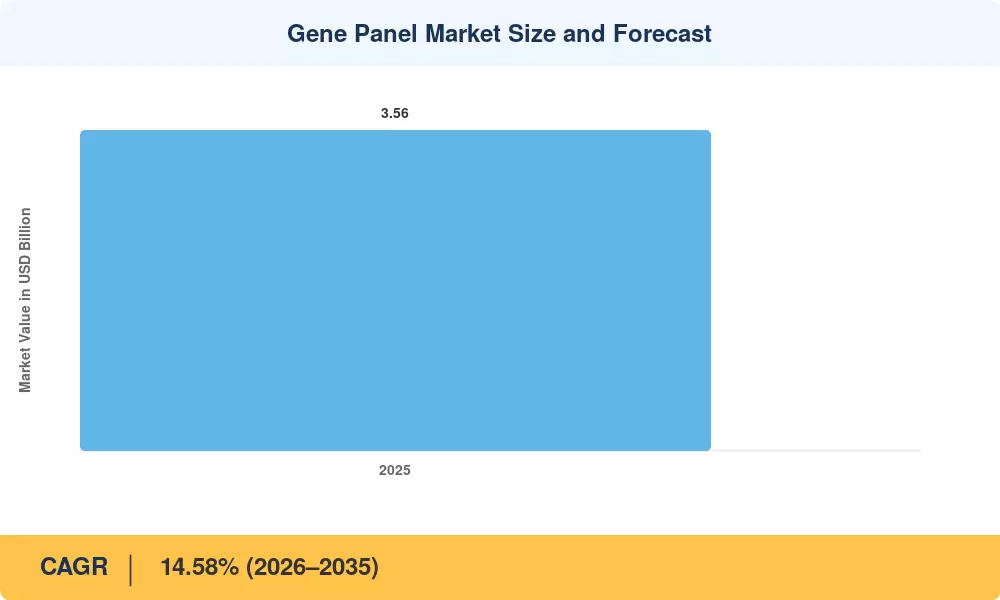
The Global Gene Panel Market size was valued at USD 3.56 Billion in 2025, and the market is projected to grow from USD 4.12 Billion in 2026 to USD 14.03 Billion by 2035, registering a CAGR of 14.58% during the forecast period 2026โ€“2035.ย This trajectory reflects a structural shift in precision medicine, driven by the Centers for Medicare & Medicaid Services (CMS) National Coverage Determination 90.2, which broadened reimbursement for next-generation sequencing panels across oncology indications [1]. Private insurers have followed suit, reducing out-of-pocket burdens and unlocking repeat testing volumes for multi-gene cancer testing workflows.

A quiet revolution is reshaping diagnostic laboratories worldwide. Legacy single-gene Sanger sequencing is giving way to massively parallel targeted genomic sequencing platforms that interrogate dozens to hundreds of genes simultaneously. The NIH All of Us Research Program alone committed over USD 1.4 Billion toward population-scale genomics, expanding the addressable universe for hereditary disease gene panels and pharmacogenomic profiling [2]. Full-stack providers are bundling sequencing hardware, bioinformatics pipelines, and clinical reporting into single-vendor solutions โ€” accelerating consolidation across the Gene Panel Market.

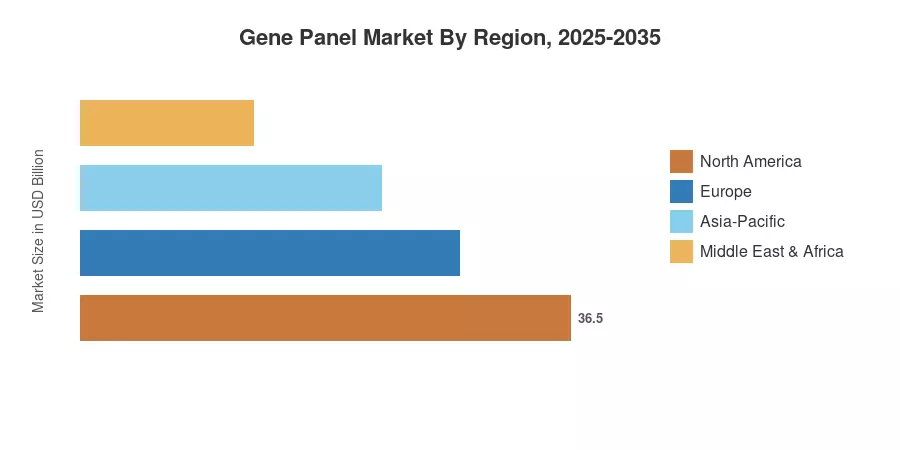
North America commanded a 38.95% revenue share of the Gene Panel Market in 2025, anchored by robust payer infrastructure and high oncology gene panel testing adoption. Asia-Pacific stands out as the fastest-growing region at a 15.25% CAGR through 2035, propelled by government-backed genomics programs in China, India, and Japan. Europe holds the second-largest share, benefiting from NHS Genomic Medicine Service expansion and the EU's 1+ Million Genomes Initiative. The decade ahead promises broader accessibility as next-generation sequencing panels penetrate community hospitals and emerging economies alike.

ย 

Key Report Takeaways

โ€ข By Product & Services

  • Test Kits dominated the Gene Panel Market with a 60.05% revenue share in 2025, reflecting strong demand for ready-to-use targeted genomic sequencing kits across clinical laboratories.
  • Testing Services are forecast to expand at a 15.23% CAGR through 2035, driven by outsourced oncology gene panel testing from smaller hospital systems.

โ€ข By Technique

  • Amplicon-based workflows captured 65.46% of the Gene Panel Market share in 2025, favored for their cost efficiency in multi-gene cancer testing applications.
  • Hybridization capture approaches are poised to grow at a 15.16% CAGR to 2035 as larger panels and hereditary disease gene panels demand higher uniformity of coverage.

โ€ข By Application

  • Cancer Risk Assessment accounted for 52.45% of the Gene Panel Market in 2025, reflecting widespread NCCN guideline adoption for tumor profiling.
  • Pharmacogenetics is projected to advance at a 15.11% CAGR through 2035, aided by growing preemptive prescribing programs.

โ€ข By End User

  • Hospitals & Clinics held a 51.98% share of the Gene Panel Market in 2025, anchored by in-house molecular pathology departments.
  • Diagnostic Laboratories are set to grow at a 14.99% CAGR to 2035 as reference labs scale high-throughput next-generation sequencing panels.

โ€ข By Region

  • North America led the Gene Panel Market with 38.95% revenue in 2025, supported by favorable CMS reimbursement policies.
  • Asia-Pacific is forecast to expand at a 15.25% CAGR to 2035, driven by national genomics initiatives and rising oncology gene panel testing demand.

ย 

Gene Panel Market Size and Forecast (2021โ€“2035)

MRFR's market sizing integrates primary interviews with laboratory directors, procurement managers, and sequencing platform vendors, supplemented by secondary analysis of company filings, CMS claims data, and regional genomics databases. Historical figures (2021โ€“2024) are validated against published revenues of leading manufacturers, while the forecast (2026โ€“2035) employs a bottom-up model calibrated to installed sequencing base, test volumes, and average selling prices across next-generation sequencing panels.
Gene Panel Market Size and Forecast
Our Impact
Enabled $4.3B Revenue Impact for Fortune 500 and Leading Multinationals
Partnering with 2000+ Global Organizations Each Year
30K+ Citations by Top-Tier Firms in the Industry

Driver Impact Analysis

Driver ~% Impact on CAGR Geographic Relevance Impact Timeline
Expanded payer coverage & reimbursement ~22% North America, Europe Short-term (โ‰ค2 yr)
Rising cancer incidence & hereditary screening ~20% Global Medium-term (2โ€“4 yr)
NGS cost reduction & throughput gains ~17% Global Long-term (โ‰ฅ4 yr)
AI-enabled variant interpretation ~14% North America, APAC Medium-term (2โ€“4 yr)
Population-scale genomics initiatives ~12% APAC, Europe Long-term (โ‰ฅ4 yr)
Pharmacogenomic clinical integration ~9% North America, Europe Medium-term (2โ€“4 yr)
Direct-to-consumer genetic awareness ~6% North America Short-term (โ‰ค2 yr)

ย 

Expanded Payer Coverage and Reimbursement

CMS's National Coverage Determination 90.2 eliminated prior authorization for next-generation sequencing panels in patients with advanced solid tumors, opening a reimbursement channel worth an estimated USD 680 Million annually in Medicare oncology gene panel testing claims [1]. Private payers, including UnitedHealthcare, Aetna, and Cigna, subsequently expanded coverage to include hereditary disease gene panels for breast, ovarian, and colorectal cancer risk assessment. This cascading effect reduced the financial barrier that historically limited targeted genomic sequencing adoption outside academic medical centers and accelerated panel ordering volumes in community oncology practices.

Rising Cancer Incidence and Hereditary Screening Mandates

The WHO Global Cancer Observatory projects 35 Million new cancer cases annually by 2050, a 77% increase over 2022 levels [3]. National screening guidelines from NCCN and ESMO now recommend multi-gene cancer testing for patients meeting family history criteria, moving away from single-gene approaches. In the United States alone, approximately 1.2 Million patients per year qualify for hereditary breast and ovarian cancer panel testing under updated ACMG recommendations, driving sustained demand across the Gene Panel Market [4].

NGS Cost Reduction and Throughput Gains

The cost of sequencing a human genome dropped below USD 200 in 2024, and targeted panel costs have fallen proportionally [6]. Illumina's NovaSeq X Plus and MGI's DNBSEQ-T20ร—2 platforms deliver multi-gene cancer testing at under USD 50 per sample in high-volume laboratory settings. These economics make targeted genomic sequencing viable for routine clinical use rather than specialized research, broadening the installed base for gene panel reagents and consumables. By 2030, MRFR anticipates panel sequencing costs to approach USD 25 per sample, further expanding market penetration.

AI-Enabled Variant Interpretation

Machine learning algorithms are compressing the variant classification bottleneck that once required weeks of manual curation. Companies such as Tempus and SOPHiA Genetics deploy AI engines that classify variants of uncertain significance with over 92% concordance to expert review panels [14]. This automation supports faster turnaround for oncology gene panel testing reports and reduces the dependency on scarce molecular geneticists, enabling smaller laboratories to offer comprehensive hereditary disease gene panels without building large in-house bioinformatics teams.

ย 

Restraints Impact Analysis

Restraint ~% Negative Impact on CAGR Geographic Relevance Impact Timeline
Complex regulatory pathways for IVD panels ~-10% Global Long-term (โ‰ฅ4 yr)
Genomic data privacy concerns ~-8% Europe, North America Medium-term (2โ€“4 yr)
Reimbursement variability across geographies ~-7% APAC, South America, MEA Long-term (โ‰ฅ4 yr)
Shortage of genetic counselors ~-6% Global Medium-term (2โ€“4 yr)
Variant of uncertain significance burden ~-4% Global Short-term (โ‰ค2 yr)

ย 

Complex Regulatory Pathways for Multi-Gene Panels

FDA's premarket approval and 510(k) pathways were designed for single-analyte diagnostics, creating friction for multi-gene cancer testing panels that interrogate 50 to 500 genes simultaneously. The average time-to-clearance for a next-generation sequencing panel exceeds 14 months, and post-market surveillance requirements add compliance costs of USD 2โ€“5 Million per assay [16]. In Europe, the In Vitro Diagnostic Regulation (IVDR) transition has further tightened conformity assessment, delaying market entry for several targeted genomic sequencing products and constraining innovation velocity within the Gene Panel Market.

Genomic Data Privacy and Security Risks

The EU General Data Protection Regulation classifies genomic data as a special category requiring explicit consent and enhanced safeguards. Similar frameworks in California (CCPA/CPRA) and China's Personal Information Protection Law add jurisdictional complexity for laboratories processing hereditary disease gene panels across borders [17]. High-profile breaches โ€” including the 2023 incident at a major direct-to-consumer genetics company affecting nearly 7 Million profiles โ€” have heightened consumer hesitancy and pressured providers to invest heavily in encryption, de-identification, and secure cloud infrastructure.

Shortage of Genetic Counselors

The National Society of Genetic Counselors estimates that only 6,000 certified professionals practice in the United States, against a projected need of 12,000 by 2030 [18]. This workforce gap creates a bottleneck between ordering a next-generation sequencing panel and delivering actionable clinical interpretation to patients. Telegenetics and AI-assisted pre-test counseling platforms are emerging solutions, but adoption remains uneven, particularly in rural and underserved communities where oncology gene panel testing volumes are growing fastest.

ย 

Gene Panel Market Opportunities

Pharmacogenomic Prescribing Integration

Preemptive pharmacogenomic testing programs like the St. Jude PG4KDS initiative and Vanderbilt's PREDICT program show that incorporating targeted genomic sequencing into electronic health records reduces adverse medication occurrences by as much as 30% [8]. As health systems mandate pharmacogenomic panels at the point of care, the Gene Panel Market has the potential to earn recurring revenue from medication management processes.

ย 

Newborn Screening Expansion

Pilot studies in the UK, Australia and several US states are testing inherited disease gene panels for additional newborn screening beyond established metabolic assays [12]. The Genomics England Newborn Genomes Programme is sequencing 100,000 newborns and may develop a model that can be replicated to expand the addressable test universe of the Gene Panel Market into the realm of population-level preventive medicine.

ย 

Emerging Market Penetration in Southeast Asia and Africa

The Genome India Project in India and the National GeneBank in China have stimulated regional genomics infrastructure, although Southeast Asian countries and sub-Saharan Africa remain underserved [7]. Low cost amplicon-based multi-gene cancer testing kits for less than USD 100 could unlock large volumes in countries with increasing cancer detection rates but fledgling molecular pathology capacity.

ย 

Liquid Biopsy Convergence

Combining circulating tumor DNA analysis and targeted genomic sequencing panel testing for non-invasive monitoring of oncology gene panel testing. FDA clearances have been secured for Guardant Health's Guardant360 and Roche's FoundationOne Liquid CDx, and next-generation panels are being increasingly built to work with both tissue and liquid biopsy inputs, tripling the testing occasions per patient.

ย 

Data Monetization and Real-World Evidence Platforms

De-identified genomic datasets aggregated from multi-gene cancer testing workflows hold value for pharmaceutical R&D, clinical trial matching, and payer outcomes analysis. Companies like Tempus and Flatiron Health have demonstrated that coupling panel testing with analytics platforms generates recurring SaaS-like revenue streams beyond the reagent sale, opening a secondary monetization layer within the Gene Panel Market.

ย 

Gene Panel Market Future Outlook

AI-Driven Autonomous Variant Classification

By 2030, artificial intelligence is expected to automate over 80% of variant classification tasks currently performed by molecular geneticists [14]. Large language models trained on curated variant databases โ€” such as ClinVar's 2.5 Million submissions โ€” will compress turnaround for hereditary disease gene panels from weeks to hours. This shift enables high-throughput reference laboratories to process next-generation sequencing panels at scale without proportional workforce expansion, fundamentally reshaping the Gene Panel Market cost structure.

Platform Economics and Single-Vendor Ecosystems

Leading sequencing companies are consolidating reagents, instruments, informatics, and clinical reporting into integrated platforms. Illumina's Connected Software suite and Thermo Fisher's Ion Torrent Genexus exemplify this trend, offering end-to-end multi-gene cancer testing workflows that reduce hands-on time by up to 60% [13]. Platform lock-in strengthens vendor economics but also lowers barriers for community-scale hospitals to adopt oncology gene panel testing without dedicated bioinformatics staff.

Liquid Biopsy and Minimal Residual Disease Monitoring

The convergence of circulating tumor DNA panels with established tissue-based targeted genomic sequencing assays is creating longitudinal monitoring paradigms. BloombergNEF projects the liquid biopsy segment to exceed USD 12 Billion globally by 2032 [11]. Gene panel providers that adapt their chemistries for cfDNA inputs will capture a share of this adjacent opportunity, extending the Gene Panel Market into post-treatment surveillance and recurrence detection.

ESG, Equity, and Global Access Mandates

WHO's Essential Diagnostics List and the Lancet Commission on Diagnostics have called for universal access to molecular testing in low- and middle-income countries [19]. Philanthropic funding from the Gates Foundation and Wellcome Trust is subsidizing targeted genomic sequencing infrastructure across sub-Saharan Africa and South Asia. These equity-driven investments will expand the Gene Panel Market's addressable footprint beyond high-income healthcare systems over the coming decade.

ย 

Gene Panel Market Segmentation

By Product & Services

Segment Key Metric Primary Demand Driver
Test Kits 60.05% share (2025) Standardized multi-gene cancer testing workflows
Testing Services 15.23% CAGR (2026โ€“2035) Outsourced oncology gene panel testing
Others USD 0.19 Billion (2025) Bioinformatics software and accessories

ย 

Test Kits continue to dominate the Gene Panel Market as clinical laboratories prefer validated, CE-marked kits that streamline regulatory compliance and reduce assay development timelines. Illumina's TruSight Oncology 500 and QIAGEN's QIAseq targeted genomic sequencing panels represent the leading commercial offerings, serving both academic research and clinical diagnostic applications.

Testing Services are accelerating as smaller hospital networks outsource complex hereditary disease gene panels to centralized reference laboratories. This segment benefits from economies of scale โ€” large commercial labs like Quest Diagnostics and Labcorp process tens of thousands of next-generation sequencing panels monthly, achieving lower per-test costs that smaller in-house operations cannot match.

By Technique

Segment Key Metric Primary Demand Driver
Amplicon-Based 65.46% share (2025) Low-cost, rapid-turnaround workflows
Hybridization Capture 15.16% CAGR (2026โ€“2035) Uniform coverage for large panels
Others USD 0.08 Billion (2025) Emerging probe-based technologies

ย 

Amplicon-based targeted genomic sequencing holds the largest share of the Gene Panel Market because of its speed, simplicity, and lower DNA input requirements โ€” critical advantages in oncology settings where biopsy material is limited. Hybridization capture methods are gaining ground for large panels exceeding 300 genes, where their superior uniformity of coverage reduces false-negative rates in multi-gene cancer testing.

By Application

Segment Key Metric Primary Demand Driver
Cancer Risk Assessment 52.45% share (2025) NCCN/ESMO guideline mandates
Pharmacogenetics 15.11% CAGR (2026โ€“2035) Preemptive prescribing programs
Others USD 0.25 Billion (2025) Rare disease, carrier screening

ย 

Cancer Risk Assessment remains the largest application segment within the Gene Panel Market, driven by guideline-mandated multi-gene cancer testing for hereditary breast, ovarian, colorectal, and prostate cancer syndromes. Pharmacogenetics is the fastest-growing application as health systems recognize that oncology gene panel testing paired with drug-gene interaction data reduces adverse events and optimizes therapeutic outcomes.

By End User

Segment Key Metric Primary Demand Driver
Hospitals & Clinics 51.98% share (2025) In-house molecular pathology labs
Diagnostic Laboratories 14.99% CAGR (2026โ€“2035) High-volume reference testing
Others USD 0.12 Billion (2025) Academic research, pharma sponsors

ย 

Hospitals & Clinics lead end-user adoption of the Gene Panel Market through embedded molecular pathology departments that run oncology gene panel testing alongside traditional histopathology. Diagnostic Laboratories represent the fastest-growing channel as next-generation sequencing panels shift toward centralized, high-throughput processing models that leverage automation and targeted genomic sequencing platforms.

ย 

Regional Market Share Analysis

Region Key Metric (2025) Primary Investment Themes
North America 38.95% revenue share CMS reimbursement, pharma co-development
Europe USD 0.91 Billion IVDR compliance, NHS Genomics expansion
Asia-Pacific 15.25% CAGR (2026โ€“2035) Government sequencing programs, lab buildout
South America 14.12% CAGR (2026โ€“2035) Public health cancer screening pilots
Middle East & Africa USD 0.14 Billion Genomic medicine centers of excellence
Total USD 3.56 Billion โ€”

The Gene Panel Market exhibits a pronounced geographic concentration, with North America and Europe collectively accounting for over two-thirds of global revenue in 2025. Asia-Pacific is reshaping the competitive landscape through government-funded population genomics programs and rapid laboratory infrastructure buildout. Regional dynamics for next-generation sequencing panels vary considerably based on reimbursement frameworks, regulatory maturity, and oncology burden.

ย 

North America

Country Key Metric Key Driver
United States 73% of regional share CMS NCD 90.2, commercial payer expansion
Canada USD 0.21 Billion Provincial genomics integration programs
Mexico 13.85% CAGR (2026โ€“2035) Rising oncology gene panel testing access

ย 

The United States remains the epicenter of the Gene Panel Market, powered by a mature payer ecosystem and concentrated demand from academic medical centers and large reference laboratories. CMS reimbursement for targeted genomic sequencing has expanded to encompass hereditary cancer syndromes, while Canada's provincial health systems are embedding multi-gene cancer testing into cancer care pathways through Canadian Partnership Against Cancer initiatives [1][5].

Europe

Country Key Metric Key Driver
Germany 23% of regional share Comprehensive cancer center network
United Kingdom USD 0.17 Billion NHS Genomic Medicine Service rollout
France 14.78% CAGR (2026โ€“2035) Plan France Mรฉdecine Gรฉnomique 2025
Italy 12% of regional share National oncology screening programs
Spain USD 0.07 Billion Regional genomic consortia
Nordic Countries 13.95% CAGR (2026โ€“2035) Population biobank integration
Russia 5% of regional share Federal genomics research funding
Rest of Europe USD 0.08 Billion EU 1+ Million Genomes Initiative

ย 

Europe's Gene Panel Market benefits from coordinated cross-border genomics strategies under the EU's 1+ Million Genomes Initiative and country-specific programs such as Genomics England and France's national genomic medicine plan. The IVDR transition has imposed higher compliance costs on manufacturers of hereditary disease gene panels, but it has also raised quality standards and accelerated clinical adoption of validated next-generation sequencing panels across the continent [10][16].

Asia-Pacific

Country Key Metric Key Driver
China 31% of regional share National GeneBank, BGI ecosystem
Japan USD 0.15 Billion Cancer Genome Atlas Japan initiative
India 16.10% CAGR (2026โ€“2035) Genome India Project, rising cancer burden
South Korea 13% of the regional share K-MASTER precision oncology program
ASEAN 15.42% CAGR (2026โ€“2035) Laboratory infrastructure investment
Rest of Asia-Pacific USD 0.04 Billion Emerging academic research centers

ย 

Asia-Pacific's rapid ascent in the Gene Panel Market is driven by ambitious national genomics initiatives. China's BGI-led sequencing infrastructure and India's Genome India Project collectively target over 100,000 whole genomes, generating downstream demand for targeted genomic sequencing panels in clinical settings. Japan's nationwide cancer genomic profiling reimbursement, introduced in 2019, has normalized oncology gene panel testing as standard of care in designated hospitals [7].

South America

Country Key Metric Key Driver
Brazil 53% of regional share SUS public health system adoption
Argentina USD 0.04 Billion Private laboratory expansion
Rest of South America 13.50% CAGR (2026โ€“2035) Cancer screening pilot programs

ย 

Brazil leads South American demand for multi-gene cancer testing through its Sistema รšnico de Saรบde (SUS) public health framework, which has begun incorporating hereditary cancer panels into national screening guidelines. Argentina's private diagnostic sector is investing in next-generation sequencing panels to serve growing oncology referral volumes from the Southern Cone region [9].

Middle East & Africa

Country Key Metric Key Driver
Saudi Arabia 29% of regional share Saudi Genome Project
UAE USD 0.03 Billion Dubai genomic medicine hub
South Africa 13.25% CAGR (2026โ€“2035) Academic research and NGO programs
Egypt 11% of regional share National Cancer Institute screening
Rest of MEA USD 0.02 Billion Development-funded laboratory projects

ย 

Saudi Arabia's national genome initiative and the UAE's investment in genomic medicine centers of excellence anchor the Gene Panel Market in the Middle East. Sub-Saharan Africa remains nascent but holds long-term potential as targeted genomic sequencing costs decline and international development organizations fund cancer diagnostic infrastructure [7][9].

ย 

Gene Panel Market By Region, 2025-2035

Competitive Benchmarking

The Gene Panel Market exhibits medium concentration, with the top five players commanding an estimated 55โ€“62% of global revenue. The Herfindahl-Hirschman Index (HHI) falls in the 1,200โ€“1,600 range, indicating a moderately competitive structure. Full-stack providers that integrate sequencing hardware, panel chemistries, and bioinformatics software hold pricing power, while pure-play reagent firms compete on breadth of hereditary disease gene panels and clinical validation depth.

Company Est. Revenue Share Range Key Offerings for Gene Panel Market Strategic Positioning
Illumina, Inc. ~18โ€“22% TruSight Oncology 500, TruSight Hereditary Cancer Dominant platform with broadest installed base
Thermo Fisher Scientific ~14โ€“17% Ion Torrent Oncomine panels, Genexus system Integrated benchtop-to-report workflows
F. Hoffmann-La Roche AG ~10โ€“13% FoundationOne CDx, AVENIO ctDNA panels Tissue + liquid biopsy convergence
QIAGEN N.V. ~7โ€“10% QIAseq targeted panels, Clinical Insight Flexible multi-gene cancer testing portfolio
Agilent Technologies ~5โ€“8% SureSelect XT panels, Alissa Interpret Hybridization capture expertise
Bio-Rad Laboratories ~4โ€“6% Droplet Digital PCR, QX600 platform Complementary validation technologies
BGI Genomics ~3โ€“5% MGIEasy panels, DNBSEQ platforms Cost-competitive APAC-focused provider
Myriad Genetics ~3โ€“5% myRisk Hereditary Cancer, GeneSight Direct clinician-facing testing services
Invivoscribe, Inc. ~2โ€“4% LymphoTrack, SureSeq panels Hematological malignancy specialization
Guardant Health ~2โ€“4% Guardant360, GuardantINFORM Liquid biopsy-first oncology gene panel testing

ย 

ย 

Recent News & Developments

  • Illumina (March 2025 ): Launched the MiSeq i100 Series with integrated targeted genomic sequencing panel automation, reducing library preparation time by 40% for clinical laboratories [20].

ย 

ย 

  • QIAGEN ( Oct 2025Partnered with the European Society for Medical Oncology (ESMO) to develop standardized next-generation sequencing panels for pan-European clinical trial enrollment [23].

ย 

ย 

ย 

ย 

ย 

Gene Panel Market Report Scope

Parameter Details
Market Scope Global Gene Panel Market โ€” Test Kits, Testing Services, Techniques, Applications, End Users
Study Period 2021โ€“2035
CAGR (Forecast Period) 14.58% (2026โ€“2035)
Base Year Market Size USD 3.56 Billion (2025)
Forecast Terminal Value USD 14.03 Billion (2035)
Fastest Growing Segment Testing Services (by product); Pharmacogenetics (by application)
Companies Profiled 10 (Illumina, Thermo Fisher, Roche, QIAGEN, Agilent, Bio-Rad, BGI, Myriad, Invivoscribe, Guardant Health)
Valuation Currency USD Billion

ย 

ย 

FAQs

How do turnaround-time differences between amplicon-based and hybridization capture panels affect clinical decision-making in the Gene Panel Market?

Amplicon-based next-generation sequencing panels typically deliver results in 3โ€“5 days, while hybridization capture workflows require 7โ€“10 days. Clinicians managing time-sensitive oncology cases often prefer amplicon methods to initiate targeted therapy faster [6].

What minimum sequencing depth should laboratories target when validating a new oncology gene panel testing assay?

Most accrediting bodies recommend a minimum of 500ร— mean coverage for somatic variant detection in multi-gene cancer testing. Laboratories targeting low-frequency variants below 5% allele fraction should aim for 1,000ร— or higher [4].

How does reimbursement for hereditary disease gene panels differ between Medicare Advantage and traditional fee-for-service Medicare?

Medicare Advantage plans may apply prior authorization and step-therapy requirements not present in fee-for-service Medicare. CMS local coverage determinations vary by jurisdiction, creating uneven access to targeted genomic sequencing [1].

What role do companion diagnostic approvals play in shaping the Gene Panel Market competitive dynamics?

FDA companion diagnostic approvals tie specific therapies to validated panels, creating durable revenue streams for approved assay manufacturers. Roche's FoundationOne CDx holds the most companion diagnostic indications among oncology gene panel testing products [22].

How are direct-to-consumer genetic testing trends influencing clinical-grade multi-gene cancer testing volumes?

Consumer awareness from services like 23andMe drives patient-initiated referrals for clinical hereditary disease gene panels. An estimated 15% of clinical panel orders now originate from consumer test follow-up [15].

What infrastructure investments are required for a mid-size hospital to launch in-house targeted genomic sequencing services?

A benchtop sequencer, wet-lab buildout, and bioinformatics pipeline typically cost USD 350,000โ€“600,000 upfront. Ongoing reagent and personnel costs average USD 200,000 annually for moderate-volume next-generation sequencing panels [13].

How might whole-genome sequencing price declines threaten the Gene Panel Market over the next decade?

Panels retain advantages in turnaround time, interpretive simplicity, and regulatory clarity. Even at sub-USD 200 genome costs, oncology gene panel testing remains preferred for actionable clinical decisions requiring validated assays [6]. ย  ย 
Author
Author
Author Profile
Rahul Gotadki LinkedIn
Research Manager
He holds an experience of about 9+ years in Market Research and Business Consulting, working under the spectrum of Life Sciences and Healthcare domains. Rahul conceptualizes and implements a scalable business strategy and provides strategic leadership to the clients. His expertise lies in market estimation, competitive intelligence, pipeline analysis, customer assessment, etc.
Co-Author
Co-Author Profile
Snehal Singh LinkedIn
Manager - Research
High acumen in analyzing complex macro & micro markets with more than 6 years of work experience in the field of market research. By implementing her analytical skills in forecasting and estimation into market research reports, she has expertise in Packaging, Construction, and Equipment domains. She handles a team size of 20-25 resources and ensures smooth running of the projects, associated marketing activities, and client servicing.

Research Approach

ย 

Secondary Research

The secondary research process involved comprehensive analysis of genomic databases, peer-reviewed molecular diagnostics journals, clinical sequencing publications, and authoritative biotechnology organizations. Key sources included the US Food & Drug Administration (FDA) Center for Devices and Radiological Health, European Medicines Agency (EMA), National Human Genome Research Institute (NHGRI), National Center for Biotechnology Information (NCBI/GenBank), European Molecular Biology Laboratory-European Bioinformatics Institute (EMBL-EBI), Centers for Medicare & Medicaid Services (CMS) for molecular diagnostic reimbursement codes, Clinical Laboratory Improvement Amendments (CLIA) regulatory databases, College of American Pathologists (CAP) proficiency testing data, European Society of Human Genetics (ESHG), American College of Medical Genetics and Genomics (ACMG), World Health Organization (WHO) Genomic Resource Centre, OECD Health Statistics, and national genome institute reports from key markets (UK Genomics England, China National Genomics Data Center, Genome Canada). These sources were used to collect sequencing adoption statistics, regulatory clearance data for NGS-based assays, clinical utility studies, reimbursement policy evolution, and competitive landscape analysis for amplicon-based panels, hybridization capture systems, targeted oncology panels, and pharmacogenomic screening arrays.

ย 

Primary Research

Qualitative and quantitative insights were obtained by interviewing supply-side and demand-side stakeholders during the primary research process. CEOs, Vice Presidents of R&D, chief scientific officers, regulatory affairs specialists, and commercial leaders from NGS platform manufacturers, gene panel developers, oligonucleotide synthesis providers, and clinical diagnostic laboratories comprised supply-side sources. Demand-side sources included molecular pathologists, laboratory directors from CLIA-certified genetic testing facilities, clinical geneticists, oncology specialists who use somatic testing, genetic counselors, procurement officers from hospital systems, and research principal investigators from academic genomics centers. Market segmentation was validated in primary research based on predesigned versus customized panels, product development pipelines for expanded carrier screening and liquid biopsy panels were confirmed, and insights were gathered on clinical adoption barriers, bioinformatics integration challenges, pricing dynamics for bundled versus per-sample testing, and payer reimbursement strategies.

Primary Respondent Breakdown:

By Designation: C-level Executives (28%), Director Level (42%), Others (30%)

By Region: North America (40%), Europe (25%), Asia-Pacific (28%), Rest of World (7%)

ย 

Market Size Estimation

Global market valuation was derived through revenue mapping and testing volume analysis. The methodology included:

Identification of 50+ key manufacturers across North America, Europe, Asia-Pacific, and Latin America specializing in gene panel technologies

Product mapping across hybridization-based capture panels, amplicon-based targeted sequencing, whole exome sequencing (WES) workflows, whole genome sequencing (WGS) solutions, and PCR-based targeted panels

Analysis of reported and modeled annual revenues specific to gene panel portfolios, including instrument sales (NGS sequencers), consumables (library prep kits, target capture reagents), and service revenues (CLIA-certified testing)

Coverage of manufacturers representing 75-80% of global market share in 2024, spanning dominant players in sequencing platforms (Illumina, Thermo Fisher), emerging long-read sequencing technologies (PacBio, Oxford Nanopore), and specialized panel developers (Myriad Genetics, Fulgent Genetics, BGI Genomics)

Extrapolation using bottom-up (procedure volume ร— average selling price by country, segmented by test type: somatic oncology testing, germline hereditary screening, carrier screening, pharmacogenomic profiling) and top-down (manufacturer revenue validation across predesigned versus customized panel offerings) approaches to derive segment-specific valuations for clinical diagnostics versus research applications

Download Free Sample

Kindly complete the form below to receive a free sample of this Report

Download PDF ×

We do not share your information with anyone. However, we may send you emails based on your report interest from time to time. You may contact us at any time to opt-out.
















