Download Free Sample
Kindly complete the form below to receive a free sample of this Report
US Gene Synthesis Market Research Report: Size, Share, Trend Analysis By Method (Solid-phase Synthesis, Chip-based DNA Synthesis, PCR Based Enzyme Synthesis), by Services (Antibody DNA Synthesis, Viral DNA Synthesis, Others), By Applications (Protein Engineering, Vaccine Design & Development, Disease Diagnosis, Therapeutic Antibodies, Others), By End Users (Biotechnology & Pharmaceutical Companies, Academic & Government Research Institutes, Contract Research Organizations), and by Region (North America, Europe, Asia-Pacific, Rest of the World) - Growth Outlook & Industry Forecast 2025 To 2035
As per Market Research Future analysis, the US Gene Synthesis Market Size was estimated at 1.901 USD Million in 2024. The US Gene Synthesis industry is projected to grow from 2.125 USD Million in 2025 to 6.484 USD Million by 2035, exhibiting a compound annual growth rate (CAGR) of 11.8% during the forecast period 2025 - 2035
The US Gene Synthesis Market is poised for substantial growth driven by advancements in technology and increasing applications across various sectors.
| 2024 Market Size | 1.901 (USD Million) |
| 2035 Market Size | 6.484 (USD Million) |
| CAGR (2025 - 2035) | 11.8% |
Thermo Fisher Scientific (US), Integrated DNA Technologies (US), GenScript (US), Twist Bioscience (US), Eurofins Genomics (US), Synthetic Genomics (US), DNA2.0 (US), LGC Biosearch Technologies (US)
Our Impact
Enabled $4.3B Revenue Impact for Fortune 500 and Leading Multinationals
Partnering with 2000+ Global Organizations Each Year
30K+ Citations by Top-Tier Firms in the Industry
The US Gene Synthesis Market is currently experiencing a dynamic evolution, driven by advancements in biotechnology and increasing demand for synthetic genes across various applications. This market appears to be influenced by the growing need for personalized medicine, agricultural biotechnology, and synthetic biology. As researchers and companies seek to develop innovative solutions, the synthesis of genes has become a crucial component in the development of new therapies and products. Furthermore, the rise of CRISPR technology and other gene-editing tools seems to be propelling the market forward, as these technologies require precise and efficient gene synthesis methods. In addition, the US Gene Synthesis Market is likely to benefit from collaborations between academic institutions and private enterprises. These partnerships may foster innovation and accelerate the commercialization of gene synthesis technologies. Moreover, the increasing focus on genetic research and development in healthcare and agriculture suggests a promising outlook for the market. As the landscape continues to evolve, stakeholders must remain vigilant to emerging trends and technologies that could shape the future of gene synthesis in the United States.
The demand for personalized medicine is on the rise, as healthcare providers seek tailored treatments for patients. This trend is likely to drive the need for custom gene synthesis, enabling the development of specific therapies that cater to individual genetic profiles.
Innovations in agricultural biotechnology are influencing the US Gene Synthesis Market. The synthesis of genes for crop improvement and pest resistance appears to be a priority, as the agricultural sector aims to enhance yield and sustainability.
The field of synthetic biology is expanding rapidly, with applications ranging from biofuels to pharmaceuticals. This growth may lead to increased demand for gene synthesis services, as researchers explore new ways to engineer biological systems.
The US Gene Synthesis Market is increasingly influenced by the emergence of personalized therapeutics. As the healthcare landscape shifts towards individualized treatment approaches, the demand for gene synthesis services is expected to rise. Personalized therapeutics often require specific genetic modifications tailored to the unique genetic makeup of patients. This trend is particularly evident in oncology, where targeted therapies are becoming more prevalent. The market for personalized medicine is projected to reach approximately 3.5 billion USD by 2026, indicating a robust growth trajectory. This shift towards personalized therapeutics is likely to drive further advancements in gene synthesis technologies, enhancing the overall capabilities of the US Gene Synthesis Market.
The US Gene Synthesis Market is experiencing a notable increase in demand for custom gene synthesis services. This trend is largely driven by the growing need for tailored genetic solutions in various sectors, including pharmaceuticals and biotechnology. As researchers and companies seek to develop specific genetic constructs for therapeutic applications, the market is projected to expand significantly. According to recent estimates, the market could reach a valuation of over 2 billion USD by 2026, reflecting a compound annual growth rate of approximately 15%. This surge in demand is indicative of the broader shift towards personalized medicine, where customized genetic solutions are becoming essential for effective treatment strategies.
The US Gene Synthesis Market is poised for growth due to advancements in gene editing technologies such as CRISPR and TALEN. These innovations have revolutionized the way genes are synthesized and manipulated, allowing for more precise and efficient genetic modifications. As these technologies become more accessible, researchers are increasingly utilizing gene synthesis to create novel genetic constructs for various applications, including gene therapy and agricultural improvements. The integration of these advanced technologies is expected to enhance the capabilities of gene synthesis providers, potentially leading to a market expansion that could exceed 3 billion USD by 2027. This evolution in gene editing is likely to drive further investment and interest in the US Gene Synthesis Market.
The US Gene Synthesis Market is witnessing a surge in applications within the field of synthetic biology. This interdisciplinary area combines biology, engineering, and computer science to design and construct new biological parts and systems. As synthetic biology continues to evolve, the demand for gene synthesis services is expected to rise, driven by applications in healthcare, agriculture, and environmental sustainability. The market for synthetic biology is projected to grow significantly, with estimates indicating a potential market size of over 4 billion USD by 2025. This growth is likely to create new opportunities for gene synthesis providers, as they play a crucial role in enabling the development of innovative synthetic biological solutions.
The US Gene Synthesis Market is benefiting from increased investment in biotechnology research and development. Government funding, along with private sector investments, is fueling innovation in genetic research, which in turn drives demand for gene synthesis services. The National Institutes of Health (NIH) and other funding bodies have allocated substantial resources to support genetic research initiatives, which are expected to grow in the coming years. This influx of capital is likely to enhance the capabilities of gene synthesis companies, enabling them to offer more advanced and diverse services. As a result, the market is projected to grow steadily, with estimates suggesting a potential market size of around 2.5 billion USD by 2028.
The market share distribution in the US gene synthesis market reveals that synthetic biology is the largest segment, driven by its wide-ranging applications across various fields, including biotech research and industrial processes. Therapeutics is rapidly gaining traction, expanding its share as innovations in gene therapy and personalized medicine continue to evolve. The increasing reliance on genetic manipulation technologies also contributes to the overall growth of these segments, underscoring their importance in the marketplace. Growth trends indicate a robust expansion in the US gene synthesis market, particularly for therapeutics, which is emerging as the fastest-growing segment. This growth is fueled by advancements in CRISPR technology, increased investment in research and development, and a rising demand for customized genetic solutions. Agricultural biotechnology continues to gain momentum as sustainability becomes a priority, while vaccines are bolstered by the need for rapid responses to global health challenges. The synergy among these segments is expected to drive further innovation and market development.
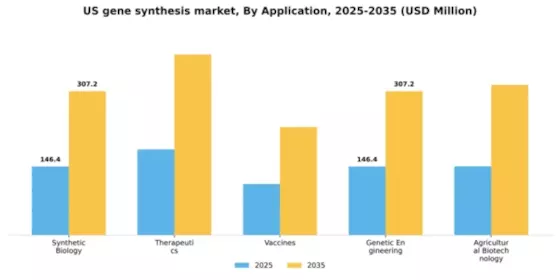
Synthetic Biology: Synthetic Biology (Dominant) vs. Agricultural Biotechnology (Emerging)
Synthetic biology is regarded as the dominant segment due to its foundational role in various biotechnological applications, enabling innovations in gene editing, metabolic engineering, and synthetic genome construction. It encompasses a broad array of applications, including drug development and biofuels, positioning itself as an integral part of modern biotechnology. Conversely, agricultural biotechnology is viewed as an emerging segment, targeting enhancements in crop yield and resistance to pests through genetic modifications. This sector is gaining importance, particularly with the growing global focus on sustainable agricultural practices. As consumers become increasingly aware of food security and bioproducts that promote eco-friendliness, agricultural biotechnology is poised for significant growth, paving the way for a more resilient food supply.
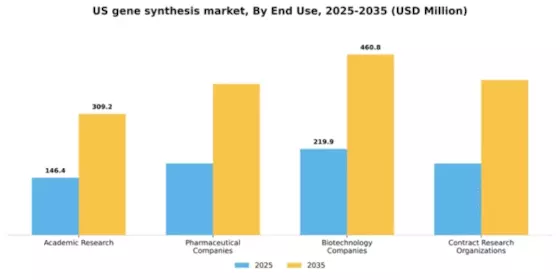
In the US gene synthesis market, the product type segment is diverse, with significant contributions from various categories. Oligonucleotides have secured the largest market share, driven by their extensive applications in research and diagnostics. Gene Libraries and Plasmids are also notable, but they hold smaller portions compared to Oligonucleotides. Gene Fragments, while currently at a lower share, are seeing an increasing interest due to advancements in synthetic biology. The growth trends within the product type segment indicate a promising trajectory for Gene Fragments as they become central to novel research endeavors. Oligonucleotides are likely to maintain their stronghold thanks to their established presence and demand in areas like therapeutics and genetic engineering. Innovations in synthesis technologies and increased funding for gene-related research are pivotal drivers for growth in this segment, positioning it well for the foreseeable future.
Oligonucleotides (Dominant) vs. Gene Fragments (Emerging)
Oligonucleotides represent the dominant force in the product type segment of the US gene synthesis market, favored for their versatility and applicability across various fields, including molecular biology, genomics, and diagnostics. Their robustness in commercial applications underpins their market dominance. In contrast, Gene Fragments are emerging as a vital segment, gaining traction due to rising interest in gene-editing technologies and personalized medicine. While they currently occupy a smaller market share, the increasing focus on synthetic biology is expected to bolster their position, creating opportunities for innovative applications. The distinct characteristics of each segment cater to different needs within the market, fostering a dynamic environment for growth.
DNA Sequencing holds the largest share in the segment of the US gene synthesis market, as it continues to be a critical tool in genomic research and applications. Its robust capabilities enable precise and extensive analysis of genetic material, making it indispensable in various fields such as personalized medicine, diagnostics, and genetic engineering. Following closely, the Polymerase Chain Reaction (PCR) technology is witnessing rapid growth due to its essential role in amplifying DNA, which is crucial for numerous applications like disease detection and genetic testing. The growth trends in the Technology segment are largely driven by advancements in sequencing technologies and the increasing demand for genetic analysis in research and clinical applications. Moreover, the need for rapid and accurate diagnostic tools, particularly in the wake of global health challenges, is propelling the adoption of PCR. As researchers and healthcare providers prioritize efficiency and precision, these technologies are expected to thrive, with the PCR segment emerging as the fastest-growing area due to its versatility and rapid innovation.
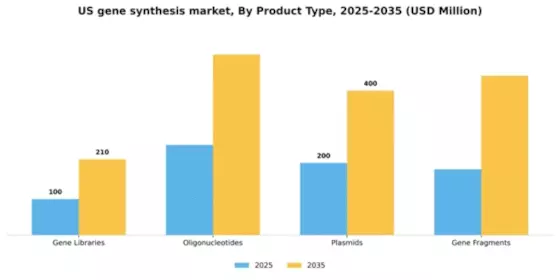
Technology: DNA Sequencing (Dominant) vs. Polymerase Chain Reaction (Emerging)
DNA Sequencing is recognized as the dominant force within the Technology segment of the US gene synthesis market. Its ability to provide detailed insights into genetic structures positions it as a preferred choice for researchers. On the other hand, Polymerase Chain Reaction (PCR) stands out as an emerging technology that is experiencing significant growth. PCR is favored for its efficiency in amplifying specific DNA sequences, making it vital for various applications, including medical diagnostics and forensic analysis. While DNA Sequencing is essential for comprehensive genetic studies, PCR's rapid turnaround and adaptability in diverse scenarios contribute to its rising popularity as a transformative tool in genetic analysis.
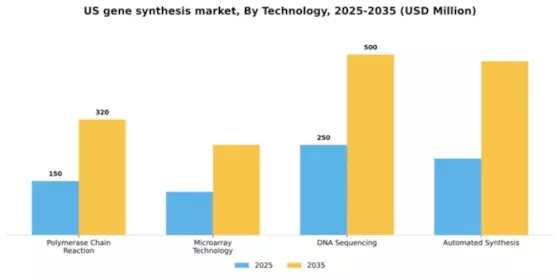
In the US gene synthesis market, the segment distribution shows that Academic Research is the largest end-user, commanding a significant share due to the ongoing demand for synthetic genes in various research applications. Following closely, Pharmaceutical Companies are experiencing rapid growth, leveraging gene synthesis for drug development and therapeutic interventions, indicating a strong shift towards personalized medicine and biotechnology innovation. The growth trends within these segments are largely driven by advancements in genetic research, increased funding for biotechnology initiatives, and a rise in collaborations between academic institutions and pharmaceutical companies. The growing interest in gene therapies and molecular diagnostics is fueling demand, particularly within pharmaceutical firms, while academic research continues to push the boundaries of genetic knowledge and applications.
Academic Research (Dominant) vs. Pharmaceutical Companies (Emerging)
The Academic Research segment remains the dominant force within the US gene synthesis market, driven by extensive funding from both government and private sectors for innovative research in genetics and genomics. Academic institutions leverage gene synthesis for a wide range of studies, including gene function analysis and development of synthetic biology applications. Conversely, Pharmaceutical Companies, characterized as an emerging segment, are witnessing rapid growth through the integration of gene synthesis in drug discovery and development processes. They are increasingly focused on utilizing synthesized genes for creating novel therapeutics, thus representing a significant trend towards personalized healthcare solutions, position them strategically within the evolving landscape of the biotechnology sector.
Get more detailed insights about US Gene Synthesis Market Request Free Sample
The gene synthesis market is characterized by a dynamic competitive landscape, driven by advancements in biotechnology and increasing demand for synthetic genes across various applications, including pharmaceuticals, agriculture, and industrial biotechnology. Key players such as Thermo Fisher Scientific (US), Integrated DNA Technologies (US), and Twist Bioscience (US) are at the forefront, leveraging their technological capabilities and extensive product portfolios to capture market share. These companies focus on innovation and strategic partnerships to enhance their service offerings and expand their market presence, thereby shaping a competitive environment that is both collaborative and competitive. In terms of business tactics, companies are increasingly localizing manufacturing and optimizing supply chains to enhance efficiency and reduce lead times. The market structure appears moderately fragmented, with several players vying for dominance. However, the collective influence of major companies like GenScript (CN) and Eurofins Genomics (DE) is notable, as they contribute to a competitive atmosphere that encourages innovation and responsiveness to market needs. In October 2025, Thermo Fisher Scientific (US) announced the launch of a new platform designed to streamline gene synthesis workflows, which is expected to significantly reduce turnaround times for customers. This strategic move not only enhances their product offering but also positions the company as a leader in efficiency within the market, potentially attracting a broader customer base seeking rapid solutions. In September 2025, Integrated DNA Technologies (US) expanded its operations by opening a new facility focused on high-throughput gene synthesis. This expansion is strategically important as it allows the company to meet the growing demand for custom DNA products, thereby solidifying its market position and enhancing its capacity to serve large-scale projects. In August 2025, Twist Bioscience (US) entered into a partnership with a leading pharmaceutical company to develop synthetic genes for therapeutic applications. This collaboration underscores the increasing trend of strategic alliances in the market, as companies seek to combine expertise and resources to accelerate product development and innovation. As of November 2025, current competitive trends indicate a strong emphasis on digitalization, sustainability, and the integration of artificial intelligence in gene synthesis processes. Strategic alliances are increasingly shaping the landscape, fostering innovation and collaboration among key players. Looking ahead, competitive differentiation is likely to evolve from traditional price-based competition to a focus on technological advancements, innovative solutions, and reliable supply chains, reflecting the market's shift towards quality and efficiency.






The US Gene Synthesis Market is projected to grow at an 11.8% CAGR from 2025 to 2035, driven by advancements in synthetic biology, personalized medicine, and biopharmaceutical innovations.
New opportunities lie in:
By 2035, the US Gene Synthesis Market is poised for robust growth, reflecting its critical role in biotechnology advancements.
| MARKET SIZE 2024 | 1.901(USD Million) |
| MARKET SIZE 2025 | 2.125(USD Million) |
| MARKET SIZE 2035 | 6.484(USD Million) |
| COMPOUND ANNUAL GROWTH RATE (CAGR) | 11.8% (2025 - 2035) |
| REPORT COVERAGE | Revenue Forecast, Competitive Landscape, Growth Factors, and Trends |
| BASE YEAR | 2024 |
| Market Forecast Period | 2025 - 2035 |
| Historical Data | 2019 - 2024 |
| Market Forecast Units | USD Million |
| Key Companies Profiled | Thermo Fisher Scientific (US), Integrated DNA Technologies (US), GenScript (US), Twist Bioscience (US), Eurofins Genomics (US), Synthetic Genomics (US), DNA2.0 (US), LGC Biosearch Technologies (US) |
| Segments Covered | Method, Services, Applications, End Users, Region |
| Key Market Opportunities | Advancements in synthetic biology drive demand for customized gene synthesis solutions in the US Gene Synthesis Market. |
| Key Market Dynamics | Rising demand for personalized medicine drives innovation and competition in the US Gene Synthesis Market. |
| Countries Covered | North America, Europe, APAC, South America, MEA |
The projected market valuation for the US gene synthesis market in 2035 is $1551.5 Million.
The overall market valuation for the US gene synthesis market in 2024 was $732.25 Million.
The expected CAGR for the US gene synthesis market during the forecast period 2025 - 2035 is 7.06%.
Key players in the US gene synthesis market include Thermo Fisher Scientific, Integrated DNA Technologies, GenScript, Eurofins Genomics, Twist Bioscience, Synthetic Genomics, DNA2.0, Bioneer, and LGC Biosearch Technologies.
The main application segments of the US gene synthesis market include Synthetic Biology, Therapeutics, Vaccines, Genetic Engineering, and Agricultural Biotechnology.
The market size for oligonucleotides in the US gene synthesis market is projected to grow from $250.0 Million to $500.0 Million.
The market for gene libraries is expected to grow from $100.0 Million to $210.0 Million, whereas the market for plasmids is projected to increase from $200.0 Million to $400.0 Million.
The DNA Sequencing technology segment is expected to have the highest market size, projected to grow from $250.0 Million to $500.0 Million.
The Biotechnology Companies end-use segment is anticipated to dominate the US gene synthesis market, with a projected growth from $219.9 Million to $460.75 Million.
The vaccines application segment is expected to grow from $109.35 Million to $230.75 Million, indicating a robust growth trend.



Kindly complete the form below to receive a free sample of this Report

“This is really good guys. Excellent work on a tight deadline. I will continue to use you going forward and recommend you to others. Nice job”


“Thanks. It’s been a pleasure working with you, please use me as reference with any other Intel employees.”


“Thanks for sending the report it gives us a good global view of the Betaïne market.”


“Thank you, this will be very helpful for OQS.”


“We found the report very insightful! we found your research firm very helpful. I'm sending this email to secure our future business.”


“I am very pleased with how market segments have been defined in a relevant way for my purposes (such as "Portable Freezers & refrigerators" and "last-mile"). In general the report is well structured. Thanks very much for your efforts.”


“I have been reading the first document or the study, ,the Global HVAC and FP market report 2021 till 2026. Must say, good info! I have not gone in depth at all parts, but got a good indication of the data inside!”


“We got the report in time, we really thank you for your support in this process. I also thank to all of your team as they did a great job.”


“The Automotive 48V ECU Components Procurement Intelligence Study” was a complex project, but the Market Research Future (MRFR) team handled it with quality, agility, and customer-centricity. They delivered all requested data on time and within the agreed scope. The team, including Shubhendra Anand and Rahul Gotadki, was always readily available to clarify questions and swiftly implement necessary adjustments, driving the project to a successful conclusion within a very demanding timeframe.
I would also like to specifically commend Akshay Agarwal for his responsiveness and support at every stage—from our initial inquiry on May 6th through to final delivery on June 18th. His dedication made the entire process seamless.”



