×
Request Free Sample ×

Kindly complete the form below to receive a free sample of this Report

Leading companies partner with us for data-driven Insights

clients tt-cursor
Hero Background

Chemical Synthesis Methyl Salicylate Market

ID: MRFR/CnM/24393-HCR
111 Pages
Chitranshi Jaiswal
October 2025

Chemical Synthesis Methyl Salicylate Market Research Report By Application (Pharmaceuticals, Personal Care, Cosmetics, Aromatherapy, Food and Beverages), By Purity (>99%, 98-99%, 95-98%, 90-95%), By Source (Natural, Synthetic), By Grade (Pharmaceutical, Cosmetic, Technical), By End User (Pharmaceutical Companies, Cosmetics Companies, Food and Beverage Companies, Hospitals, Research Institutions) and By Regional (North America, Europe, South America, Asia Pacific, Middle East and Africa) - Forecast to 2035

Share:
Download PDF ×

We do not share your information with anyone. However, we may send you emails based on your report interest from time to time. You may contact us at any time to opt-out.

Chemical Synthesis Methyl Salicylate Market Infographic
Purchase Options

Chemical Synthesis Methyl Salicylate Market Summary

As per MRFR analysis, the Chemical Synthesis Methyl Salicylate Market Size was estimated at 0.4364 USD Billion in 2024. The Chemical Synthesis Methyl Salicylate industry is projected to grow from 0.4531 in 2025 to 0.6594 by 2035, exhibiting a compound annual growth rate (CAGR) of 3.82 during the forecast period 2025 - 2035.

Key Market Trends & Highlights

The Chemical Synthesis Methyl Salicylate Market is poised for growth driven by sustainability and technological advancements.

  • North America remains the largest market for methyl salicylate, driven by robust pharmaceutical applications.
  • Asia-Pacific is emerging as the fastest-growing region, fueled by increasing demand in personal care products.
  • The pharmaceutical segment dominates the market, while the personal care segment exhibits the highest growth potential.
  • Rising demand in pharmaceuticals and expansion in aromatherapy are key drivers propelling market growth.

Market Size & Forecast

2024 Market Size 0.4364 (USD Billion)
2035 Market Size 0.6594 (USD Billion)
CAGR (2025 - 2035) 3.82%

Major Players

BASF SE (DE), Eastman Chemical Company (US), Huntsman Corporation (US), Solvay SA (BE), SABIC (SA), Mitsubishi Chemical Corporation (JP), Albemarle Corporation (US), Kraton Corporation (US), Wacker Chemie AG (DE)

Chemical Synthesis Methyl Salicylate Market Trends

The Chemical Synthesis Methyl Salicylate Market is currently experiencing a notable evolution, driven by various factors that influence demand and supply dynamics. This market, characterized by its applications in the fragrance, pharmaceutical, and cosmetic industries, appears to be expanding as consumer preferences shift towards natural and organic products. The increasing awareness regarding the benefits of methyl salicylate, particularly in pain relief formulations, suggests a growing acceptance among manufacturers and consumers alike. Furthermore, the rise in disposable income in emerging economies may contribute to heightened consumption of products containing this compound, thereby fostering market growth. In addition to changing consumer preferences, regulatory frameworks surrounding chemical production and usage are evolving. Stricter environmental regulations may compel manufacturers to adopt more sustainable practices in the synthesis of methyl salicylate. This shift could lead to innovations in production techniques, potentially enhancing efficiency and reducing waste. As the Chemical Synthesis Methyl Salicylate Market continues to adapt to these trends, stakeholders must remain vigilant to navigate the complexities of this landscape, ensuring compliance while meeting the demands of a discerning consumer base.

Sustainability Initiatives

The Chemical Synthesis Methyl Salicylate Market is witnessing a shift towards sustainability, as manufacturers increasingly prioritize eco-friendly production methods. This trend reflects a broader commitment to reducing environmental impact, which resonates with consumers who favor products that align with their values.

Technological Advancements

Innovations in chemical synthesis techniques are emerging, enhancing the efficiency and cost-effectiveness of methyl salicylate production. These advancements may lead to improved product quality and reduced production times, positioning companies to better meet market demands.

Growing Demand in Personal Care

The personal care sector is increasingly incorporating methyl salicylate due to its desirable properties. This trend indicates a potential expansion of applications, as consumers seek products that offer both efficacy and sensory appeal.

Chemical Synthesis Methyl Salicylate Market Drivers

Expansion in Aromatherapy

The Chemical Synthesis Methyl Salicylate Market is witnessing a surge in interest from the aromatherapy sector. Methyl salicylate is recognized for its soothing properties and is often used in essential oil blends. As consumers increasingly prioritize wellness and holistic health, the demand for aromatherapy products is expected to rise. Market analysis suggests that the aromatherapy segment could contribute significantly to the overall market growth, with projections indicating a compound annual growth rate of around 5% through 2027. This expansion reflects a broader trend towards natural and therapeutic products, positioning the Chemical Synthesis Methyl Salicylate Market favorably.

Rising Demand in Pharmaceuticals

The Chemical Synthesis Methyl Salicylate Market is experiencing a notable increase in demand from the pharmaceutical sector. Methyl salicylate is utilized as a key ingredient in various topical analgesics and anti-inflammatory medications. The growing prevalence of chronic pain conditions and the aging population are driving this demand. According to recent data, the pharmaceutical segment is projected to account for a substantial share of the market, potentially exceeding 30% by 2026. This trend indicates a robust growth trajectory for the Chemical Synthesis Methyl Salicylate Market, as manufacturers seek to meet the rising needs of healthcare providers and patients alike.

Increased Use in Food and Beverage

The Chemical Synthesis Methyl Salicylate Market is also benefiting from its applications in the food and beverage sector. Methyl salicylate is employed as a flavoring agent, particularly in products such as candies and beverages. The growing consumer preference for unique and natural flavors is likely to bolster this segment. Recent estimates indicate that the food and beverage industry could represent approximately 15% of the total market share by 2026. This trend underscores the versatility of methyl salicylate and its potential to enhance product offerings within the Chemical Synthesis Methyl Salicylate Market.

Regulatory Support for Chemical Innovations

The Chemical Synthesis Methyl Salicylate Market is poised to benefit from favorable regulatory frameworks that encourage chemical innovations. Governments are increasingly promoting the development of sustainable and eco-friendly chemical processes. This regulatory support is likely to facilitate research and development efforts, leading to more efficient synthesis methods for methyl salicylate. As a result, manufacturers may experience reduced production costs and improved product quality. The emphasis on sustainability could further enhance the market's appeal, attracting investments and fostering growth within the Chemical Synthesis Methyl Salicylate Market.

Technological Advancements in Synthesis Methods

The Chemical Synthesis Methyl Salicylate Market is being transformed by technological advancements in synthesis methods. Innovations in chemical engineering and process optimization are enabling more efficient and cost-effective production of methyl salicylate. These advancements not only enhance yield but also reduce environmental impact, aligning with the growing emphasis on sustainability. Market participants are increasingly adopting these technologies to remain competitive. It is anticipated that the integration of advanced synthesis techniques could lead to a market growth rate of approximately 6% annually over the next few years, further solidifying the Chemical Synthesis Methyl Salicylate Market's position in the chemical sector.
Market Segment Insights

By Application: Pharmaceuticals (Largest) vs. Personal Care (Fastest-Growing)

The Chemical Synthesis Methyl Salicylate Market sees a healthy distribution of applications across various sectors. Pharmaceuticals holds the largest share in this market, driven by the compound’s effectiveness in formulations for pain relief and anti-inflammatory products. The other applications like personal care, cosmetics, aromatherapy, and food and beverages together capture the remaining market share, illustrating the diverse uses of methyl salicylate across industries. Among these, personal care is emerging rapidly, reflecting growing consumer trends and innovations in the sector. Growth trends in this segment are largely influenced by the rising demand for natural and organic products in pharmaceuticals and personal care. The growing awareness of health and wellness is pushing the pharmaceutical industry to seek effective ingredients like methyl salicylate, while the personal care market is benefiting from increased consumer interest in natural fragrances and effective topical applications. This trajectory hints at a robust future for both sectors as they evolve and innovate further to meet consumer needs.

Pharmaceuticals: Dominant vs. Personal Care: Emerging

Pharmaceuticals represents the dominant application in the Chemical Synthesis Methyl Salicylate Market, characterized by its integral role in the development of various medicinal formulations, particularly for pain relief and topical treatments. Manufacturers in this sector focus on high-quality methyl salicylate to enhance product efficacy and safety, establishing strong brand loyalty among healthcare providers. In contrast, the personal care sector is an emerging player, fueled by market trends favoring natural ingredients and effective formulations. With increasing consumer interest in products that offer both functionality and pleasant fragrance, personal care brands are rapidly incorporating methyl salicylate into their offerings. This dynamic creates a competitive landscape where traditional pharmaceutical applications coexist with innovative personal care products, driving overall market growth.

By Purity: >99% (Largest) vs. 90-95% (Fastest-Growing)

In the Chemical Synthesis Methyl Salicylate Market, purity levels are essential for industrial applications and consumer preferences. The '>99%' purity segment accounts for the largest share, catering to demanding applications in pharmaceuticals and personal care products. Additionally, segments like '98-99%' and '95-98%' also hold significant market shares but do not outpace the dominant '>99%' segment in terms of market presence. The '90-95%' segment, while the least dominant, is rapidly gaining traction among price-sensitive markets and less stringent applications.

Purity Level: >99% (Dominant) vs. 90-95% (Emerging)

The '>99%' purity level in the Chemical Synthesis Methyl Salicylate Market is characterized by its high demand in high-stakes industries such as pharmaceuticals, where product efficacy is paramount. This segment is considered dominant due to its wide acceptance and application in premium formulations. On the other hand, the '90-95%' purity level is emerging as a viable competitive alternative, particularly among manufacturers producing cost-effective solutions for non-critical applications. Its growth is fueled by increased acceptance in various sectors where ultra-high purity is not indispensable, enabling broader market penetration.

By Source: Natural (Largest) vs. Synthetic (Fastest-Growing)

In the Chemical Synthesis Methyl Salicylate Market, the share distribution reveals that the Natural source segment holds a commanding position, driven by rising consumer preferences for organic and bio-based products. This segment appeals particularly to manufacturers seeking to align with sustainability goals, thereby enhancing their market competitiveness. Conversely, the Synthetic source segment, while currently smaller in share, is witnessing rapid growth due to advancements in chemical synthesis technologies and the increasing demand for high-purity Methyl Salicylate in various applications.

Source: Natural (Dominant) vs. Synthetic (Emerging)

The Natural source segment is characterized by its ability to derive Methyl Salicylate from plant-based sources, making it the dominant choice among environmentally conscious consumers and manufacturers. This segment benefits from a strong brand loyalty as buyers often perceive products derived from natural sources as safer and more beneficial. On the other hand, the Synthetic segment is emerging rapidly, driven by innovations that enhance production efficiency and cost-effectiveness. Companies are increasingly focusing on synthetic methods to meet the growing demand, especially in specialty chemicals where precision and performance are critical. The competition between these two segments continues to shape market dynamics as industry players strive to cater to diverse consumer preferences.

By Grade: Pharmaceutical (Largest) vs. Cosmetic (Fastest-Growing)

The Grade segment of the Chemical Synthesis Methyl Salicylate Market is predominantly led by the Pharmaceutical grade, which holds the largest market share thanks to its widespread application in medicinal products. The demand for this grade is influenced by its effectiveness in formulations including analgesics and anti-inflammatory agents. Meanwhile, the Cosmetic grade is rapidly gaining traction, primarily driven by the increasing consumer preference for natural and effective skincare products. As these segments evolve, they reflect distinct consumer needs and industry dynamics.

Pharmaceutical (Dominant) vs. Cosmetic (Emerging)

The Pharmaceutical grade of methyl salicylate is renowned for its high purity and efficacy, dominating the market with its extensive use in pharmaceutical formulations. This grade meets stringent regulatory standards, ensuring safety and reliability in health applications. In contrast, the Cosmetic grade is emerging as a significant player, appealing to the beauty industry with its role in formulating lotions, creams, and therapeutic cosmetics. While the Pharmaceutical segment focuses on efficacy and regulatory compliance, the Cosmetic segment leverages trends in natural ingredients and consumer wellness, showcasing the versatility of methyl salicylate across diverse applications.

By End User: Pharmaceutical Companies (Largest) vs. Cosmetics Companies (Fastest-Growing)

The Chemical Synthesis Methyl Salicylate Market demonstrates a diverse distribution among its end users, with pharmaceutical companies accounting for the largest share. This sector utilizes methyl salicylate primarily for its analgesic properties in topical formulations, thereby securing a significant foothold in the market. Conversely, cosmetics companies are rapidly expanding their usage of methyl salicylate due to its fragrance and skin-conditioning benefits, making them a pivotal player in the market's growth.

Pharmaceutical Companies (Dominant) vs. Cosmetics Companies (Emerging)

Pharmaceutical companies remain the dominant end user of methyl salicylate, leveraging its therapeutic properties to create effective pain relief medications. Their robust R&D initiatives and established distribution networks enable them to capitalize on the active demand within this sector. In contrast, cosmetics companies emerge as a vibrant segment, utilizing methyl salicylate not just for fragrance but also for its anti-inflammatory features, catering to a growing consumer preference for multifunctional products. This emerging trend indicates an evolution in product formulations, aligned with consumer demands for innovative and natural ingredients.

Get more detailed insights about Chemical Synthesis Methyl Salicylate Market

Regional Insights

North America : Innovation and Demand Surge

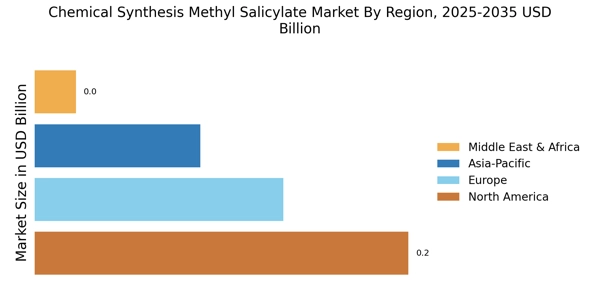
North America is the largest market for chemical synthesis methyl salicylate, holding approximately 45% of the global market share. The region's growth is driven by increasing demand in the pharmaceutical and cosmetic industries, alongside stringent regulations promoting the use of bio-based chemicals. The U.S. is the primary contributor, supported by favorable government policies and investments in R&D. The competitive landscape in North America features key players such as Eastman Chemical Company and Albemarle Corporation, which are leveraging advanced technologies to enhance production efficiency. The presence of established companies fosters innovation, while collaborations with research institutions further strengthen the market. The region's focus on sustainability and eco-friendly products is expected to drive future growth.

Europe : Regulatory Framework and Growth

Europe is the second-largest market for chemical synthesis methyl salicylate, accounting for around 30% of the global share. The region's growth is propelled by stringent regulations aimed at reducing environmental impact and promoting sustainable practices. The European Union's REACH regulations encourage the use of safer chemicals, which is a significant driver for market expansion in the region. Leading countries in Europe include Germany, France, and the UK, where major players like BASF SE and Solvay SA are actively involved. The competitive landscape is characterized by innovation and collaboration among companies to meet regulatory standards. The focus on green chemistry and sustainable production methods positions Europe as a leader in the methyl salicylate market.

Asia-Pacific : Emerging Markets and Opportunities

Asia-Pacific is witnessing rapid growth in the chemical synthesis methyl salicylate market, holding approximately 20% of the global share. The region's expansion is driven by increasing industrialization, rising disposable incomes, and growing demand for personal care products. Countries like China and India are at the forefront, supported by government initiatives to boost manufacturing and exports. The competitive landscape in Asia-Pacific is evolving, with local players emerging alongside established global companies like Mitsubishi Chemical Corporation. The region's focus on innovation and cost-effective production methods is attracting investments, while collaborations between companies and research institutions are enhancing product development. The growing awareness of health and wellness is further propelling market growth.

Middle East and Africa : Resource-Rich and Developing Markets

The Middle East and Africa region is gradually emerging in the chemical synthesis methyl salicylate market, holding about 5% of the global share. The growth is primarily driven by the availability of natural resources and increasing investments in the chemical sector. Countries like Saudi Arabia and South Africa are focusing on expanding their chemical manufacturing capabilities to meet local and international demand. The competitive landscape is characterized by a mix of local and international players, with companies like SABIC leading the market. The region's strategic location and access to raw materials provide a competitive advantage. As the market matures, there is a growing emphasis on sustainability and innovation, which is expected to attract further investments and enhance market dynamics.

Chemical Synthesis Methyl Salicylate Market Regional Image

Key Players and Competitive Insights

Major players in the Chemical Synthesis Methyl Salicylate Market are constantly innovating and developing new products to meet the changing demands of the market.

Leading Chemical Synthesis Methyl Salicylate Market players are investing heavily in research and development to improve the quality and efficiency of their products.

The Chemical Synthesis Methyl Salicylate Market is highly competitive, with several established players. Some of the key players in the market include BASF, Merck, DSM, and Lanxess.

These companies are constantly investing in new technologies and expanding their product portfolios to maintain their competitive edge. The market is also characterized by the presence of several smaller regional players.

BASF is a leading chemical company with a strong presence in the Chemical Synthesis Methyl Salicylate Market. The company offers a wide range of methyl salicylate products, including both bulk and specialty grades.

BASF is also a major supplier of raw materials to produce methyl salicylate. The company's strong financial position and reach give it a competitive advantage in the market.

Lanxess is another major player in the Chemical Synthesis Methyl Salicylate Market. The company offers a comprehensive portfolio of methyl salicylate products, including both standard and custom grades.

Lanxess is known for its high-quality products and its commitment to customer service. The company has a strong presence in Europe and Asia and is expanding its reach into other regions.

Key Companies in the Chemical Synthesis Methyl Salicylate Market market include

Industry Developments

The rising demand for methyl salicylate in the pharmaceutical and personal care industries is driving market growth. It exhibits anti-inflammatory and analgesic properties, making it a common ingredient in topical pain relievers, muscle rubs, and skincare products.

Moreover, increasing health consciousness among consumers is propelling the demand for natural and organic personal care products, further boosting market growth.

Recent advancements in extraction and purification technologies have improved the efficiency and cost-effectiveness of methyl salicylate production, making it more accessible to manufacturers.

Ongoing research on the development of novel drug delivery systems for methyl salicylate is expected to create new opportunities in the market.

Future Outlook

Chemical Synthesis Methyl Salicylate Market Future Outlook

The Chemical Synthesis Methyl Salicylate Market is projected to grow at 3.82% CAGR from 2024 to 2035, driven by increasing demand in pharmaceuticals, cosmetics, and food industries.

New opportunities lie in:

  • Expansion into emerging markets with tailored product offerings.
  • Development of eco-friendly synthesis methods to attract sustainability-focused clients.
  • Strategic partnerships with pharmaceutical companies for innovative applications.

By 2035, the market is expected to solidify its position as a key player in specialty chemicals.

Market Segmentation

Chemical Synthesis Methyl Salicylate Market Grade Outlook

  • Pharmaceutical
  • Cosmetic
  • Technical

Chemical Synthesis Methyl Salicylate Market Purity Outlook

  • >99%
  • 98-99%
  • 95-98%
  • 90-95%

Chemical Synthesis Methyl Salicylate Market Source Outlook

  • Natural
  • Synthetic

Chemical Synthesis Methyl Salicylate Market End User Outlook

  • Pharmaceutical Companies
  • Cosmetics Companies
  • Food and Beverage Companies
  • Hospitals
  • Research Institutions

Chemical Synthesis Methyl Salicylate Market Application Outlook

  • Pharmaceuticals
  • Personal Care
  • Cosmetics
  • Aromatherapy
  • Food and Beverages

Report Scope

MARKET SIZE 20240.4364(USD Billion)
MARKET SIZE 20250.4531(USD Billion)
MARKET SIZE 20350.6594(USD Billion)
COMPOUND ANNUAL GROWTH RATE (CAGR)3.82% (2024 - 2035)
REPORT COVERAGERevenue Forecast, Competitive Landscape, Growth Factors, and Trends
BASE YEAR2024
Market Forecast Period2025 - 2035
Historical Data2019 - 2024
Market Forecast UnitsUSD Billion
Key Companies ProfiledMarket analysis in progress
Segments CoveredMarket segmentation analysis in progress
Key Market OpportunitiesGrowing demand for natural fragrances and cosmetics fuels opportunities in the Chemical Synthesis Methyl Salicylate Market.
Key Market DynamicsRising demand for natural fragrances drives innovation in Chemical Synthesis Methyl Salicylate production methods.
Countries CoveredNorth America, Europe, APAC, South America, MEA

Leave a Comment

FAQs

What is the projected market valuation for the Chemical Synthesis Methyl Salicylate Market in 2035?

The projected market valuation for the Chemical Synthesis Methyl Salicylate Market in 2035 is 0.6594 USD Billion.

What was the overall market valuation for the Chemical Synthesis Methyl Salicylate Market in 2024?

The overall market valuation for the Chemical Synthesis Methyl Salicylate Market in 2024 was 0.4364 USD Billion.

What is the expected CAGR for the Chemical Synthesis Methyl Salicylate Market during the forecast period 2025 - 2035?

The expected CAGR for the Chemical Synthesis Methyl Salicylate Market during the forecast period 2025 - 2035 is 3.82%.

Which companies are considered key players in the Chemical Synthesis Methyl Salicylate Market?

Key players in the Chemical Synthesis Methyl Salicylate Market include BASF SE, Eastman Chemical Company, Huntsman Corporation, and Solvay SA.

What are the projected valuations for the Pharmaceuticals segment in the Chemical Synthesis Methyl Salicylate Market by 2035?

The projected valuation for the Pharmaceuticals segment in the Chemical Synthesis Methyl Salicylate Market by 2035 is 0.2676 USD Billion.

How does the valuation of the Personal Care segment change from 2024 to 2035?

The valuation of the Personal Care segment is expected to increase from 0.1 USD Billion in 2024 to 0.15 USD Billion by 2035.

What is the expected market size for the Synthetic source of Methyl Salicylate by 2035?

The expected market size for the Synthetic source of Methyl Salicylate by 2035 is projected to be 0.3324 USD Billion.

What is the anticipated growth in the Cosmetic segment from 2024 to 2035?

The anticipated growth in the Cosmetic segment is from 0.109 USD Billion in 2024 to 0.164 USD Billion by 2035.

What is the projected valuation for the Technical grade of Methyl Salicylate in 2035?

The projected valuation for the Technical grade of Methyl Salicylate in 2035 is 0.2278 USD Billion.

Which end user segment is expected to see the highest growth by 2035?

The Pharmaceutical Companies end user segment is expected to see the highest growth, reaching 0.2671 USD Billion by 2035.

Download Free Sample

Kindly complete the form below to receive a free sample of this Report

Compare Licence

×
Features License Type
Single User Multiuser License Enterprise User
Price $4,950 $5,950 $7,250
Maximum User Access Limit 1 User Upto 10 Users Unrestricted Access Throughout the Organization
Free Customization
Direct Access to Analyst
Deliverable Format
Platform Access
Discount on Next Purchase 10% 15% 15%
Printable Versions