Oligonucleotide Synthesis Market

Key Players: Thermo Fisher Scientific, Agilent Technologies, Integrated DNA Technologies (IDT), Eurofins Genomics, GenScript Biotech, LGC Biosearch Technologies, Twist Bioscience, Ajinomoto Bio-Pharma

Oligonucleotide Synthesis Market

Oligonucleotide Synthesis Market Research Report: Size, Share, Trend Analysis By Product Type (DNA Oligonucleotides, RNA Oligonucleotides, Modified Oligonucleotides, ASO Oligonucleotides), By Applications (Diagnostics, Therapeutics, Research Development, Gene Synthesis), By End Users (Pharmaceutical Companies, Biotechnology Companies, Academic Research Institutions, Contract Research Organizations), By Technology (Solid-Phase Synthesis, Liquid-Phase Synthesis, Microarray Technology) and By Regional (North America, Europe, South America, Asia Pacific, Middle East and Africa) - Growth Outlook & Industry Forecast 2025 To 2035
ID: MRFR/LS/1721-HCR
200 Pages
Satyendra Maurya, Rahul Gotadki
Last Updated: June 22, 2026

Oligonucleotide Synthesis Market Summary

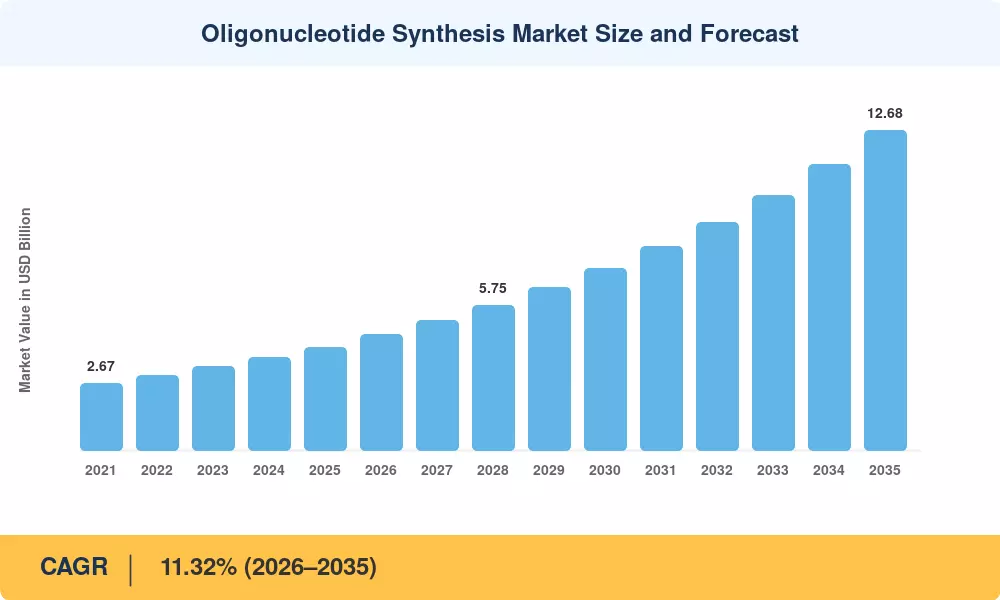
The Global Oligonucleotide Synthesis Market size was valued at USD 4.10 Billion in 2025, and the market is projected to grow from USD 4.60 Billion in 2026 to USD 12.68 Billion by 2035, registering a CAGR of 11.32% during the forecast period 2026–2035. This expansion draws fuel from accelerating clinical approvals of nucleic acid therapeutics — over 26 nucleic-acid drugs have cleared global regulators through 2024 — and from government-backed programs like the NIH's USD 16.4 million RNA-focused research initiative that are channeling fresh capital into custom oligo manufacturing infrastructure[2].

A generational shift in nucleic acid chemistry synthesis is underway. Enzymatic synthesis platforms now challenge four decades of phosphoramidite dominance by producing longer, cleaner DNA/RNA strand production runs without hazardous reagents. Contract manufacturers are scaling capacity aggressively as pharmaceutical companies outsource clinical-grade antisense oligonucleotide therapy production; at least three major CDMOs announced multi-hundred-million-dollar facility expansions during 2023–2024 [3][4]. Environmental regulations targeting PFAS-linked reagents add urgency, pushing even established players toward greener enzymatic alternatives.

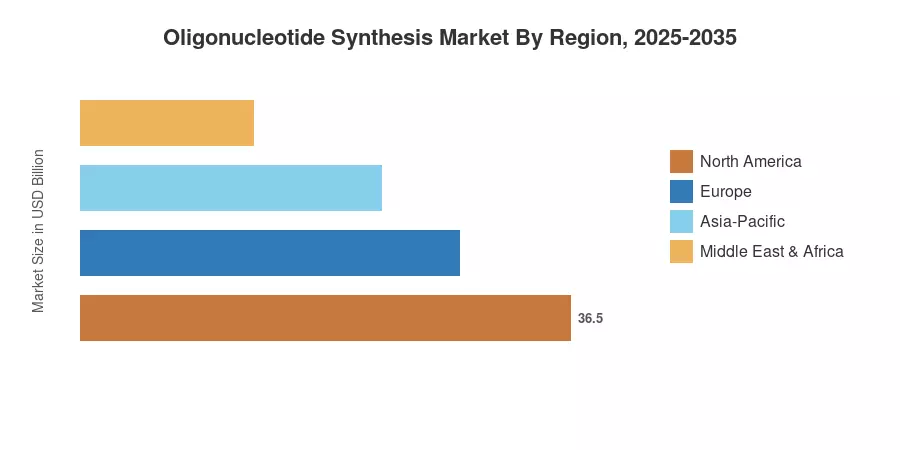
North America commands roughly 39% of the Oligonucleotide Synthesis Market, anchored by deep biopharma R&D spending and FDA fast-track designations for oligonucleotide candidates. Asia-Pacific is the fastest-growing region with a projected CAGR exceeding 13.8%, driven by over USD 4.3 billion in Chinese biotech funding rounds and India's expanding biosimilar ecosystem. Europe holds the second-largest share at approximately 27%, supported by EMA regulatory clarity and pan-European genomics programs As CRISPR guide RNA production pipelines mature and mRNA vaccine platforms diversify, the Oligonucleotide Synthesis Market is entering an industrial-scale era that reaches well beyond its traditional research-reagent roots [5][6].


Key Report Takeaways

• By Product Type

  • Services captured approximately 38% revenue share of the Oligonucleotide Synthesis Market in 2025, reflecting the outsourcing wave among mid-size pharma firms
  • Synthesized oligonucleotide products are poised to register the fastest growth through 2035, driven by demand for therapeutic-grade antisense oligonucleotide therapy and diagnostic probes

• By Chemistry

  • DNA dominated with roughly 40% of the Oligonucleotide Synthesis Market share in 2025, underpinned by legacy PCR primer and sequencing adapter demand
  • RNA-based synthesis is narrowing the gap as mRNA vaccine platforms and CRISPR guide RNA production applications expand clinical pipelines

• By Application

  • Research applications held about 49% share of the Oligonucleotide Synthesis Market in 2025 by volume, though therapeutics deliver premium pricing and the steepest growth curve
  • Diagnostics represent an emerging high-value segment fueled by molecular testing adoption post-pandemic

• By End-User

  • Academic research institutes generated approximately 68% of order volume in 2025, while pharmaceutical and biotechnology companies drove the highest value through clinical-grade custom oligo manufacturing contracts

• By Region

  • North America led with ~39% share of the Oligonucleotide Synthesis Market in 2025
  • Asia-Pacific shows the steepest upward trajectory, with China and India collectively attracting billions in nucleic acid chemistry synthesis infrastructure investment


Market Size and Forecast (2021–2035)

Market Research Future (MRFR)'s proprietary estimation framework combines primary interviews with oligo manufacturers, CDMOs, and end-users alongside secondary data from regulatory filings, trade publications, and patent databases. Historical figures reflect actual industry revenue; forecast values apply a calibrated compound growth model verified against quarterly order-book disclosures and capacity utilization data.
Oligonucleotide Synthesis Market Size and Forecast
Our Impact
Enabled $4.3B Revenue Impact for Fortune 500 and Leading Multinationals
Partnering with 2000+ Global Organizations Each Year
30K+ Citations by Top-Tier Firms in the Industry

Driver Impact Analysis

Driver ~% Impact on CAGR Geographic Relevance Impact Timeline
Expanding nucleic acid therapeutics pipeline ~22% Global Long-term (≥4 yr)
Enzymatic synthesis platform adoption ~18% North America, Europe Medium-term (2–4 yr)
CRISPR guide RNA production demand ~16% Global Medium-term (2–4 yr)
Government research funding (NIH, ERC) ~14% North America, Europe Short-term (≤2 yr)
Pharmaceutical outsourcing to CDMOs ~12% Asia-Pacific, North America Medium-term (2–4 yr)
Molecular diagnostics expansion ~10% Global Short-term (≤2 yr)
Environmental regulation of legacy reagents ~8% Europe, North America Long-term (≥4 yr)


Expanding Nucleic Acid Therapeutics Pipeline

With 14 different ASO medications receiving regulatory clearance through 2024, the antisense oligonucleotide (ASO) therapy category is a key component of the market. GMP-grade oligo demand is rising dramatically because of late-stage clinical trials for diseases like Huntington's disease and congenital transthyretin amyloidosis [3]. Ionis Pharmaceuticals said that it had more than 40 ongoing clinical projects in the works, many of which call for multi-kilogram synthesis batches. Ten years ago, this scale just did not exist. The Oligonucleotide Synthesis Market is under constant procurement pressure due to the FDA's fast approval pathway for rare-disease oligonucleotide candidates, which significantly shortens development durations [8].


Enzymatic Synthesis Platform Adoption

By eliminating the requirement for phosphoramidite reagents and organic solvents, enzymatic DNA/RNA strand manufacturing technology reduces the amount of hazardous waste produced by an estimated 85% each synthesis cycle [5]. In order to commercialize benchtop enzymatic synthesizers, leading pioneers like DNA Script and Nuclera have successfully raised millions of dollars in venture capital, hastening the decentralization of clinical facilities and research labs. Benchtop enzymatic systems are quickly taking over the rapid-turnaround research market for custom oligos up to 120-mers, while classic chemical phosphoramidite methods continue to dominate commercial long-mer and large-scale manufacture due to established per-cycle coupling efficiency [5][11].


CRISPR Guide RNA Production Demand

Each CRISPR-based therapeutic program requires hundreds of unique guide RNA sequences during screening, with lead candidates needing GMP-grade production at milligram-to-gram scale [7]. The approval of Casgevy (exa-cel) in late 2023 for sickle cell disease validated the commercial pathway, and at least 65 CRISPR clinical trials were active globally by Q3 2024 [12]. This expanding pipeline is a direct multiplier for custom oligo manufacturing volumes across the Oligonucleotide Synthesis Market.

Government Research Funding Programs

The NIH allocated USD 16.4 million specifically to RNA-focused synthesis innovation in its 2024 grant cycle, while the European Research Council channeled EUR 120 million into nucleic acid chemistry synthesis and delivery research under Horizon Europe [2][13]. These public investments de-risk early-stage platform development and accelerate the transition from bench-scale to commercial-scale DNA/RNA strand production.


Restraints Impact Analysis

Restraint ~% Drag on CAGR Geographic Relevance Impact Timeline
High cost of GMP-grade synthesis ~–18% Global Medium-term (2–4 yr)
Intellectual property barriers around modified nucleotides ~–15% North America, Europe Long-term (≥4 yr)
Quality consistency at the kilogram scale ~–14% Global Medium-term (2–4 yr)
Skilled workforce shortages in oligo chemistry ~–12% Asia-Pacific, MEA Short-term (≤2 yr)
Regulatory uncertainty for novel modifications ~–10% Global Long-term (≥4 yr)


High Cost of GMP-Grade Custom Oligo Manufacturing

Therapeutic-grade oligonucleotide production costs remain 15–20× higher than research-grade equivalents, with GMP synthesis of a single antisense oligonucleotide therapy candidate running USD 50,000–200,000 per gram depending on sequence length and modification complexity [14]. This pricing reality restricts smaller biotech firms from advancing clinical programs and concentrates demand among well-capitalized sponsors, limiting the addressable customer base for the Oligonucleotide Synthesis Market.

Intellectual Property Barriers

Although typical 2'-O-methyl linkages, phosphorothioate modifications, and basic phosphoramidite chemistry have mostly entered the public domain, complicated patent thickets still exist around targeted ligand conjugations and private next-generation alterations. For younger contract manufacturers, multi-layered intellectual property landscapes encompassing targeted GalNAc multimer designs, specific lipid nanoparticles, and advanced endosomal escape modifications generate substantial licensing obstacles. These specific intellectual property restrictions postpone the wider introduction of rival low-cost nucleic acid chemistry synthesis possibilities and slow down the erosion of generic costs.


Quality Consistency at Scale

Scaling oligo production from milligram research batches to multi-kilogram GMP lots introduces purity and truncation challenges that increase failure rates by an estimated 6–10% per production run [6]. Inconsistent coupling efficiencies at longer sequence lengths remain a technical bottleneck, particularly for DNA/RNA strand production exceeding 100-mers, constraining throughput expansion across the Oligonucleotide Synthesis Market.


Oligonucleotide Synthesis Market Opportunities

Enzymatic Synthesis Disruption for Point-of-Care Applications

For hospital molecular labs and point-of-care diagnostic facilities, benchtop enzymatic synthesizers around USD 150,000 could democratize on-site bespoke oligo synthesis, opening a market that is presently exclusively served by centralized CDMOs On-demand primer manufacture has been successfully piloted by early adopters in translational clinical research labs, reducing turnaround times from days to hours and proving the viability of decentralized diagnostic infrastructure [11].

Asia-Pacific Capacity Buildout

China's National Medical Products Administration streamlined GMP inspections for oligonucleotide facilities in 2024, while Indian CDMOs like Biocon and Laurus Labs signaled entry into nucleic acid chemistry synthesis contract services The region's lower labor costs and expanding biosimilar infrastructure position Asia-Pacific as a high-growth manufacturing hub for the Oligonucleotide Synthesis Market over the next decade [6].

Data Monetization Through Synthesis-as-a-Service Platforms

Subscription-based business models where clients pay per base instead of per instrument are made possible by cloud-connected synthesizers that log sequence data, yield metrics, and process parameters By synthesizing hundreds of thousands of custom oligos at once, Twist Bioscience's digital e-commerce and silicon-based synthesis platform manages enormous throughput. This scalable framework is being actively copied by rivals to generate recurring revenue from DNA/RNA strand production workflows [18].


mRNA Vaccine and Therapeutic Expansion

Post-pandemic investment in mRNA technology extends well beyond infectious disease: oncology, rare disease, and autoimmune programs require long RNA sequences synthesized under cGMP conditions. The mRNA therapeutics pipeline exceeded 200 active clinical trials by mid-2024, each consuming CRISPR guide RNA production reagents and modified nucleotides that feed directly into the Oligonucleotide Synthesis Market demand [12].

Sustainable Chemistry and Green Synthesis

Environmental regulations targeting PFAS and acetonitrile waste streams are driving investment in aqueous-phase and enzymatic alternatives that reduce solvent use by up to 90% [10]. Companies that commercialize green nucleic acid chemistry synthesis processes stand to capture regulatory premium pricing and preferred-vendor status with ESG-conscious pharmaceutical buyers


Oligonucleotide Synthesis Market Future Outlook

AI-Accelerated Sequence Design and Synthesis Optimization

Machine-learning algorithms are compressing oligo design cycles from weeks to hours by predicting optimal sequences, modification patterns, and coupling conditions before a single base is synthesized. DeepMind's AlphaFold-adjacent nucleic acid structure models and proprietary tools from Twist Bioscience are already reducing design-to-order timelines by 40%, directly boosting throughput across the Oligonucleotide Synthesis Market [21].

Platform Economics and Synthesis-as-a-Service

The shift from capital-intensive instrument ownership to per-base subscription pricing mirrors the broader SaaS transformation in life sciences. By 2030, MARKET RESEARCH FUTURE (MRFR) projects that over 35% of research-grade DNA/RNA strand production will flow through cloud-connected, automated platforms that bundle synthesis, quality control, and delivery logistics into a single digital workflow, reshaping custom oligo manufacturing economics [18].

Therapeutic Oligonucleotide Industrialization

As the antisense oligonucleotide therapy and siRNA clinical pipeline expands beyond rare diseases into cardiometabolic and oncology indications, the Oligonucleotide Synthesis Market must evolve from batch-mode to continuous-flow GMP manufacturing. MARKET RESEARCH FUTURE (MRFR) estimates that continuous-flow oligo production could reduce per-gram costs by 50–60% by 2032, unlocking blockbuster-scale nucleic acid drug commercialization [8][14].

ESG-Driven Green Chemistry Transition

Environmental pressure on acetonitrile, dichloromethane, and PFAS-containing reagents is accelerating the adoption of aqueous-phase and enzymatic nucleic acid chemistry synthesis methods. The EU's REACH regulation expansion, combined with pharmaceutical industry Scope 3 emissions targets, will make green synthesis capability a procurement prerequisite for CDMOs serving European and North American Oligonucleotide Synthesis Market buyers by 2028 [10][13].


Oligonucleotide Synthesis Market Segmentation

By Product Type

Segment Key Metric Primary Demand Driver
Services ~38% share (2025) Pharma outsourcing, CDMO expansion
Synthesized Oligonucleotide Products 13.1% CAGR (2026–2035) Therapeutic-grade oligo demand
Reagents & Consumables USD 0.72 Billion (2025) Research-grade primer and probe supply


The Oligonucleotide Synthesis Market services segment reflects the pharmaceutical industry's preference for outsourcing complex nucleic acid chemistry synthesis to specialized CDMOs rather than building in-house capacity. Companies like Ajinomoto Bio-Pharma and Agilent Technologies command premium pricing for GMP-certified custom oligo manufacturing, particularly for antisense oligonucleotide therapy candidates requiring multi-kilogram production runs [6][14]. Synthesized oligonucleotide products — including probes, primers, and therapeutic intermediates — are growing fastest as direct procurement of ready-to-use oligos replaces in-house synthesis at smaller research institutions.

By Chemistry

Segment Key Metric Primary Demand Driver
DNA ~40% share (2025) PCR primers, sequencing adapters, gene fragments
RNA 14.2% CAGR (2026–2035) mRNA therapeutics, CRISPR guide RNA production
Modified Chemistries (LNA, PNA, etc.) USD 0.55 Billion (2025) Antisense oligonucleotide therapy stability


DNA/RNA strand production for research applications remains the volume backbone of the Oligonucleotide Synthesis Market, with PCR primers and next-generation sequencing adapters accounting for the majority of DNA oligo orders. RNA synthesis is the fastest-growing chemistry segment, propelled by the mRNA vaccine platform buildout and expanding CRISPR guide RNA production needs across preclinical and clinical programs [7][12].

By Application

Segment Key Metric Primary Demand Driver
Research ~49% share (2025) Academic and industrial R&D volumes
Therapeutics 15.3% CAGR (2026–2035) Nucleic acid drug approvals
Diagnostics USD 0.57 Billion (2025) Molecular testing, companion diagnostics


Research applications dominate the Oligonucleotide Synthesis Market by volume, but therapeutic applications are capturing an outsized share of revenue growth. Clinical-grade oligo manufacturing commands 15–20× the per-base pricing of research-grade equivalents, and the accelerating antisense oligonucleotide therapy and siRNA approval pipeline is expanding this premium segment at nearly double the market-average CAGR [3][8].

By End-User

Segment Key Metric Primary Demand Driver
Academic Research Institutes ~68% of order volume (2025) Government grants, discovery research
Pharmaceutical & Biotechnology Companies 14.6% CAGR (2026–2035) Clinical-grade custom oligo manufacturing
Diagnostic Companies USD 0.29 Billion (2025) Probe and primer kit production


Academic institutes generate the highest order volume in the Oligonucleotide Synthesis Market, though individual order values tend to be modest. Pharma and biotech companies deliver the highest revenue per customer through multi-year CDMO contracts for nucleic acid chemistry synthesis at therapeutic scale, and their share of total market value continues to rise as more antisense oligonucleotide therapy candidates advance through clinical trials [6][8].


Regional Market Share Analysis

Region Key Metric Primary Investment Themes
North America ~39% share (2025) Biopharma R&D, FDA fast-tracks, CDMO consolidation
Europe ~27% share (2025) EMA regulatory clarity, Horizon Europe grants
Asia-Pacific 13.8% CAGR (2026–2035) Chinese biotech funding, Indian CDMO expansion
South America USD 0.17 Billion (2025) Diagnostic probe demand, agricultural genomics
Middle East & Africa USD 0.09 Billion (2025) Genomics center buildout, Saudi Vision 2030
Total USD 4.10 Billion (2025)

The Oligonucleotide Synthesis Market exhibits distinct regional dynamics, with North America leading in innovation spend, Asia-Pacific accelerating on capacity investment, and Europe anchoring regulatory-grade custom oligo manufacturing.


North America

Country Key Metric Key Driver
US ~82% of regional revenue NIH grants, the largest antisense oligonucleotide therapy pipeline
Canada 10.5% CAGR Genomics Canada investment, academic research hubs
Mexico USD 0.04 Billion (2025) Nearshoring of diagnostics manufacturing


The United States drives four-fifths of North American demand through its unmatched concentration of oligonucleotide drug developers, CDMOs, and federal research funding. The NIH's USD 16.4 million RNA-focused program and BARDA's pandemic preparedness stockpiling contracts underpin stable procurement volumes, while California and Massachusetts biotech clusters generate the bulk of custom oligo manufacturing purchase orders in the Oligonucleotide Synthesis Market [2][6].

Europe

Country Key Metric Key Driver
Germany ~24% of regional share BioNTech ecosystem, Fraunhofer institutes
UK 12.1% CAGR NHS Genomic Medicine, enzymatic synthesis pilots
France ~16% of regional share Sanofi RNA hub, Institut Pasteur programs
Italy USD 0.08 Billion (2025) Rare-disease therapy development
Spain 11.4% CAGR Genomics R&D expansion
Nordic Countries ~9% of regional share Academic oligo research excellence
Russia USD 0.03 Billion (2025) Domestic self-sufficiency programs
Rest of Europe ~12% of regional share Varied research and diagnostic demand


Europe's Oligonucleotide Synthesis Market benefits from Horizon Europe's EUR 120 million nucleic acid research allocation and the EMA's progressive approval framework for antisense oligonucleotide therapy candidates. Germany's BioNTech-anchored ecosystem and the UK's NHS genomic medicine initiative drive the highest per-capita DNA/RNA strand production demand on the continent [13][11].

Asia-Pacific

Country Key Metric Key Driver
China ~46% of regional revenue USD 4.3 B biotech funding, GenScript/Suzhou hubs
India 15.2% CAGR CDMO expansion, affordable custom oligo manufacturing
Japan ~18% of regional share Precision medicine programs, Takeda pipeline
South Korea 13.6% CAGR Samsung Biologics entry, K-Bio initiatives
ASEAN USD 0.06 Billion (2025) Molecular diagnostics adoption
Rest of Asia-Pacific ~5% of regional share Emerging research institutions


China's massive biotech funding rounds — exceeding USD 4.3 billion in 2023–2024 alone — and the emergence of domestic champions like GenScript and RiboBio are reshaping Asia-Pacific's role in the Oligonucleotide Synthesis Market from buyer to producer [6]. India's Laurus Labs and Biocon are pivoting existing CDMO infrastructure toward nucleic acid chemistry synthesis, targeting antisense oligonucleotide therapy contract manufacturing at 30–40% lower cost than Western providers [16].

South America

Country Key Metric Key Driver
Brazil ~58% of regional revenue FAPESP genomics grants, Butantan Institute
Argentina 10.8% CAGR Agricultural genomics probes
Rest of South America ~19% of regional share Diagnostic reagent imports


Brazil anchors South American demand through its FAPESP-funded genomics programs and the Butantan Institute's expanding role in vaccine-related CRISPR guide RNA production research. Market maturity remains low, and most DNA/RNA strand production reagents are still imported, presenting localization opportunities for the Oligonucleotide Synthesis Market [19].

Middle East & Africa

Country Key Metric Key Driver
Saudi Arabia ~34% of regional share Vision 2030 biotech investment
UAE 12.6% CAGR Dubai Healthcare City, genomics labs
South Africa ~21% of regional share Academic research, HIV diagnostics
Egypt USD 0.007 Billion (2025) Nascent molecular testing infrastructure
Rest of MEA ~22% of regional share Varied diagnostic demand


Saudi Arabia's Vision 2030 biotech pillar and the UAE's Dubai Healthcare City are catalyzing genomics lab buildouts that create new import channels for custom oligo manufacturing reagents. South Africa's established academic infrastructure and HIV molecular diagnostics programs sustain the region's highest per-capita consumption within the Oligonucleotide Synthesis Market [20].


Oligonucleotide Synthesis Market By Region, 2025-2035

Competitive Benchmarking

The Oligonucleotide Synthesis Market operates at moderate-to-high concentration, with the top five players capturing an estimated 45–52% of global revenue. The Herfindahl-Hirschman Index sits in the 900–1,200 range, reflecting a market that is consolidating around full-service CDMOs and integrated platform companies but retains meaningful participation from specialized niche providers. M&A activity intensified in 2023–2024 as larger players acquired enzymatic synthesis startups and regional contract manufacturers.

Company Est. Revenue Share Range Key Offerings Strategic Positioning
Thermo Fisher Scientific ~10–14% Custom oligo manufacturing, GMP synthesis, reagents Full-spectrum platform leader
Agilent Technologies ~8–11% Therapeutic-grade oligos, SurePrint arrays High-purity clinical focus
Integrated DNA Technologies (IDT) ~7–10% Research oligos, gBlocks, PrimeTime probes Volume research leader
Eurofins Genomics ~5–8% Custom DNA/RNA strand production, sequencing European market anchor
GenScript Biotech ~5–7% Gene synthesis, oligo pools, ClonExpress Asia-Pacific expansion leader
LGC Biosearch Technologies ~4–6% Therapeutic oligos, dual-labeled probes Antisense oligonucleotide therapy CDMO
Twist Bioscience ~3–5% Silicon-based synthesis, Oligo Pools Technology disruptor
Ajinomoto Bio-Pharma ~3–5% GMP oligo CDMO services Pharma outsourcing specialist
Bio-Synthesis Inc. ~2–4% Modified oligos, nucleic acid chemistry synthesis Niche modification expert
Nitto Denko Avecia ~2–4% Large-scale GMP oligonucleotide production Industrial-scale CDMO


Recent News & Developments

  • Thermo Fisher Scientific (March 2025): Opened a USD 200 million oligonucleotide GMP manufacturing facility in Carlsbad, California, doubling its custom oligo manufacturing capacity for the Oligonucleotide Synthesis Market [4].
  • FDA (August 2024): Granted accelerated approval to a fourth nucleic-acid therapeutic in 2024, reinforcing the regulatory tailwind for the Oligonucleotide Synthesis Market [3].
  • DNA Script (May 2024): Closed a USD 165 million Series D to scale enzymatic synthesis instruments for benchtop CRISPR guide RNA production and diagnostic probe manufacturing [11].
  • Nitto Denko Avecia (February 2024): Expanded its Manchester, UK, facility with a GBP 60 million investment to triple large-scale therapeutic oligo output [14].
  • European Commission (December 2023): Announced EUR 120 million in Horizon Europe funding for nucleic acid research and manufacturing infrastructure across the EU [13].


Oligonucleotide Synthesis Market Report Scope

Parameter Detail
Market Scope Global Oligonucleotide Synthesis Market covering products, services, reagents, and CDMO contracts
Study Period 2021–2035
CAGR 11.32% (2026–2035)
Market Size (2025) USD 4.10 Billion
Market Size (2035) USD 12.68 Billion
Fastest Growing Segment RNA chemistry (by type); Therapeutics (by application); Asia-Pacific (by region)
Companies Profiled 10 (Thermo Fisher, Agilent, IDT, Eurofins, GenScript, LGC Biosearch, Twist, Ajinomoto, Bio-Synthesis, Nitto Denko Avecia)
Valuation Currency USD Billion


FAQs

How do enzymatic synthesis platforms compare with phosphoramidite chemistry on per-base cost?

Enzymatic platforms currently run 2–3× higher per base than phosphoramidite for short oligos under 60-mers, but the cost gap narrows sharply for sequences above 150-mers, where chemical coupling efficiency drops [5]. Volume production and next-generation enzyme engineering should bring enzymatic costs to parity by 2029.

What quality certifications should buyers require from an oligo CDMO?

Buyers should insist on ISO 13485 for diagnostic-grade and FDA 21 CFR Part 211 compliance for therapeutic-grade custom oligo manufacturing [17]. Third-party audit reports and batch-level certificate of analysis documentation are essential procurement safeguards.

Which antisense oligonucleotide therapy indications offer the largest near-term synthesis volume?

Spinal muscular atrophy and hereditary transthyretin amyloidosis programs drive the bulk of current GMP oligo demand, collectively consuming an estimated 400+ kilograms annually [8]. Cardiometabolic indications entering Phase III will add significant volume by 2028.

How does the CRISPR guide RNA production scale differ from standard research oligo orders?

CRISPR screening campaigns require 10,000–100,000 unique guide sequences per project, each at microgram scale, making pooled array-based nucleic acid chemistry synthesis the preferred method [7]. Clinical candidates then shift to single-sequence GMP production at the gram scale.

What procurement strategies reduce lead-time risk in the Oligonucleotide Synthesis Market?

Dual-sourcing across geographies — pairing a North American CDMO with an Asia-Pacific provider — hedges against single-point disruptions [6]. Framework agreements with guaranteed capacity reservations reduce lead times from 8–12 weeks to under 4 weeks.

How are environmental regulations reshaping the Oligonucleotide Synthesis Market supply chain?

The EU's expanded REACH restrictions on PFAS and acetonitrile waste are forcing CDMOs to invest in solvent-recovery systems or pivot to enzymatic DNA/RNA strand production methods [10]. Facilities that cannot demonstrate green chemistry compliance risk losing European procurement contracts.

What role does AI play in reducing nucleic acid chemistry synthesis error rates?

Machine-learning models now predict coupling failure hotspots and optimize cycle parameters in real time, cutting truncation errors by up to 30% on sequences above 100-mers [21]. These AI tools also accelerate CRISPR guide RNA production design by screening millions of candidate sequences in hours.    
Author
Author
Author Profile
Satyendra Maurya LinkedIn
Research Analyst
An accomplished research analyst with high proficiency in market forecasting, data visualization, competitive benchmarking, and others. He holds a pronounced track record in research and consulting projects for sectors such as life sciences, medical devices, and healthcare IT. His capabilities in qualitative and quantitative analysis have resulted in positive client outcomes. Working on niche market trends, opportunities, sales, and forecasted value is part of his skill set.
Co-Author
Co-Author Profile
Rahul Gotadki LinkedIn
Research Manager
He holds an experience of about 9+ years in Market Research and Business Consulting, working under the spectrum of Life Sciences and Healthcare domains. Rahul conceptualizes and implements a scalable business strategy and provides strategic leadership to the clients. His expertise lies in market estimation, competitive intelligence, pipeline analysis, customer assessment, etc.

Research Approach


Secondary Research

The secondary research process involved comprehensive analysis of regulatory databases, peer-reviewed scientific journals, biotechnology publications, and authoritative life sciences organizations. Key sources included the US Food & Drug Administration (FDA) Center for Biologics Evaluation and Research (CBER), European Medicines Agency (EMA) Committee for Advanced Therapies (CAT), International Council for Harmonisation of Technical Requirements for Pharmaceuticals for Human Use (ICH), National Institutes of Health (NIH) National Center for Biotechnology Information (NCBI/PubMed), NIH National Human Genome Research Institute (NHGRI), National Institute of Standards and Technology (NIST) Genome Editing and Synthetic Biology Consortium, World Health Organization (WHO) International Nonproprietary Names (INN) Programme, ClinicalTrials.gov registry, European Directorate for the Quality of Medicines & HealthCare (EDQM), US Patent and Trademark Office (USPTO) and European Patent Office (EPO) patent databases, American Chemical Society (ACS) Chemical Abstracts Service, Biotechnology Innovation Organization (BIO) industry reports, International Society for Pharmaceutical Engineering (ISPE) good manufacturing practice guidelines, Pharmaceutical Research and Manufacturers of America (PhRMA) pipeline reports, and national health statistics from the CDC National Center for Health Statistics regarding cancer, genetic diseases, and infectious disease prevalence. These sources were used to collect therapeutic oligonucleotide pipeline data (antisense oligonucleotides, siRNA, miRNA, gene therapy raw materials), regulatory approval tracking for oligonucleotide therapeutics, genomic research funding metrics, synthesis technology patent landscapes, and market landscape analysis for synthetic DNA/RNA service providers, reagent manufacturers, and synthesis equipment vendors.


Primary Research

Qualitative and quantitative insights were obtained by interviewing supply-side and demand-side stakeholders during the primary research process. The supply-side sources comprised CEOs, General Managers of Oligonucleotide Business Units, Chief Scientific Officers (CSOs), Heads of Synthetic Biology, VPs of Manufacturing Sciences, regulatory affairs directors, and commercial leads from oligonucleotide synthesis companies, DNA/RNA contract manufacturers (CDMOs), sequencing technology providers, and synthetic biology platforms. Demand-side sources included Chief Scientific Officers of pharmaceutical and biotechnology companies, Heads of Oligonucleotide Therapeutics Discovery, Directors of Genomics at academic research institutions, principal investigators at genome editing research centers, procurement managers at molecular diagnostic laboratories, and supply chain directors at cell and gene therapy companies. Primary research has confirmed the adoption patterns of custom synthesis versus catalog products, validated market segmentation across therapeutic-grade vs. research-grade oligonucleotides, and gathered insights on manufacturing scale-up challenges, regulatory quality requirements (cGMP vs. research-only), pricing dynamics for phosphoramidite chemistries, and vendor consolidation trends.

Primary Respondent Breakdown:

By Designation: C-level Executives (28%), VP/Director Level (32%), Managers/Scientists/Others (40%)

By Region: North America (32%), Europe (30%), Asia-Pacific (25%), Rest of World (13%)


Market Size Estimation

Global market valuation was derived through revenue mapping and synthesis volume analysis. The methodology included:

Identification of 50+ key manufacturers and service providers across North America, Europe, Asia-Pacific, and emerging biotech hubs, including pure-play oligonucleotide synthesis companies, diversified life science tools providers, and oligonucleotide therapeutics developers with captive manufacturing

Product mapping across DNA oligonucleotides, RNA oligonucleotides (siRNA, miRNA, mRNA precursors), modified nucleotide chemistries, synthesis reagents (phosphoramidites, solid supports, fluorous reagents), and synthesis equipment (synthesizers, purification systems)

Analysis of reported and modeled annual revenues specific to oligonucleotide synthesis portfolios, including therapeutic API manufacturing, diagnostic probe synthesis, and research reagent segments

Coverage of manufacturers and service providers representing 75-80% of global market share in 2024

Extrapolation using bottom-up (synthesis volume × average selling price by application: research-grade vs. therapeutic-grade vs. diagnostic-grade, stratified by oligo length and modification complexity) and top-down (manufacturer revenue validation against public filings and modeled private company revenues) approaches to derive segment-specific valuations for custom oligonucleotides, predesigned/catalog oligonucleotides, synthesis reagents, and instrumentation

Download Free Sample

Kindly complete the form below to receive a free sample of this Report

Download PDF ×

We do not share your information with anyone. However, we may send you emails based on your report interest from time to time. You may contact us at any time to opt-out.
















