Gene Expression Analysis Market Research Report Information By End User (Pharmaceutical & Biotechnology Companies, Academic & Research Institutes, Contract Research Organizations and Others), By Product (Consumables and Instruments), By Application (Drug Discovery, Diagnosis, and Research), By Service (Gene Expression Profiling Services, Sequencing Services, Bioinformatics Solutions and Others), and By Region (North America, Europe, Asia-Pacific, And Rest Of The World) Market Forecast Till 2035
Forecast Period
2025 - 2035
CAGR
10.32%
2024 Market Size
$ 4,743.77 Million
2035 Market Size
$ 13,974.31 Million
Life Sciences● Updated May 4, 2026Report ID: MRFR/LS/6335-HCR|Pages: 90|Author: Vikita Thakur, Rahul Gotadki
Gene Expression Analysis Market Summary
As per MRFR analysis, the Gene Expression Analysis Market was estimated at 4743.77 USD Million in 2024. The Gene Expression Analysis industry is projected to grow from 5233.34 USD Million in 2025 to 13974.31 USD Million by 2035, exhibiting a compound annual growth rate (CAGR) of 10.32% during the forecast period 2025 - 2035.
Key Market Trends & Highlights
The Gene Expression Analysis Market is poised for substantial growth driven by technological advancements and increasing demand for personalized medicine.
Technological advancements in analysis tools are revolutionizing the Gene Expression Analysis Market, enhancing accuracy and efficiency.
North America remains the largest market, while the Asia-Pacific region is emerging as the fastest-growing area for gene expression technologies.
The Clinical Diagnostics segment leads the market, whereas Drug Discovery is witnessing the fastest growth due to rising research initiatives.
Key market drivers include the integration of AI and machine learning, alongside increasing research funding and collaborations.
Enabled $4.3B Revenue Impact for Fortune 500 and Leading Multinationals
Partnering with 2000+ Global Organizations Each Year
30K+ Citations by Top-Tier Firms in the Industry
Gene Expression Analysis Market Trends
The Gene Expression Analysis Market is currently experiencing a dynamic evolution, driven by advancements in biotechnology and an increasing focus on personalized medicine. Researchers and healthcare professionals are increasingly utilizing gene expression analysis to understand complex biological processes and disease mechanisms. The gene expression market is characterized by a diverse range of applications, including drug discovery, diagnostics, and therapeutic development. As the demand for precision medicine grows, the integration of innovative technologies such as next-generation sequencing and microarray analysis is becoming more prevalent, enhancing the capabilities of gene expression studies. Moreover, the Gene Expression Analysis Market is witnessing a surge in collaborations between academic institutions and biotechnology companies. These partnerships aim to foster innovation and accelerate the development of novel diagnostic tools and therapeutic strategies. Additionally, the rising prevalence of chronic diseases and genetic disorders is prompting a greater emphasis on research and development in this field. As a result, the gene expression market is poised for substantial growth, with ongoing advancements likely to shape its future landscape. The increasing accessibility of advanced analytical tools and techniques may further empower researchers to explore gene expression patterns, ultimately leading to improved patient outcomes and healthcare solutions.
Technological Advancements in Analysis Tools
The Gene Expression Analysis Market is witnessing rapid technological advancements, particularly in the development of high-throughput sequencing methods. These innovations enable researchers to analyze vast amounts of genetic data with greater precision and speed, thereby enhancing the overall efficiency of gene expression studies. As new tools emerge, they are likely to facilitate more comprehensive insights into gene regulation and expression patterns.
Rising Demand for Personalized Medicine
There is a growing emphasis on personalized medicine within the Gene Expression Analysis Market. As healthcare shifts towards tailored treatment approaches, gene expression analysis plays a crucial role in identifying biomarkers and understanding individual patient responses to therapies. This trend is likely to propel the gene expression market forward, as healthcare providers seek to implement more effective and targeted treatment strategies.
Integration of AI and Machine Learning
The incorporation of artificial intelligence and machine learning technologies into gene expression analysis is becoming increasingly prevalent. These advanced computational techniques appear to enhance data interpretation and predictive modeling, allowing for more accurate assessments of gene activity. This trend suggests a future where automated systems could significantly streamline research processes and clinical applications.
Gene Expression Analysis Market Drivers
Market Growth Projections
The Global Gene Expression Analysis Market Industry is projected to experience substantial growth, with estimates indicating a rise from 4.74 USD Billion in 2024 to 14.0 USD Billion by 2035. This growth trajectory reflects a compound annual growth rate (CAGR) of 10.33% from 2025 to 2035. Such projections highlight the increasing importance of gene expression analysis in various sectors, including healthcare, pharmaceuticals, and biotechnology. As advancements in technology and research continue to unfold, the market is likely to attract further investments, fostering innovation and expanding its applications across diverse fields.
Growing Prevalence of Chronic Diseases
The rising prevalence of chronic diseases globally significantly influences the Global Gene Expression Analysis Market Industry. Chronic conditions such as cancer, diabetes, and cardiovascular diseases necessitate a deeper understanding of the underlying genetic factors contributing to these ailments. Gene expression analysis provides critical insights into disease mechanisms, enabling the development of targeted therapies. As healthcare systems increasingly prioritize precision medicine to combat these diseases, the demand for gene expression analysis is expected to rise. This trend aligns with the overall market growth trajectory, as stakeholders seek effective solutions to address the global health burden.
Increased Funding for Genomic Research
The Global Gene Expression Analysis Market Industry benefits from increased funding directed towards genomic research initiatives. Governments and private organizations are recognizing the importance of genomics in advancing healthcare solutions. For instance, substantial investments in research grants and public-private partnerships are fostering innovation in gene expression analysis. This influx of funding supports the development of new technologies and methodologies, which in turn enhances the capabilities of researchers. As a result, the market is poised for growth, with funding initiatives likely to drive further exploration into the complexities of gene expression and its implications for health.
Emerging Applications in Drug Discovery
Emerging applications of gene expression analysis in drug discovery are reshaping the Global Gene Expression Analysis Market Industry. Pharmaceutical companies are increasingly leveraging gene expression data to identify potential drug targets and biomarkers, streamlining the drug development process. By understanding how genes are expressed in various disease states, researchers can develop more effective and tailored therapies. This trend is likely to contribute to the market's expansion, as the pharmaceutical industry recognizes the value of integrating gene expression analysis into their research pipelines, thereby enhancing the efficiency and success rates of drug discovery efforts.
Rising Demand for Personalized Medicine
The Global Gene Expression Analysis Market Industry experiences a notable surge in demand for personalized medicine, driven by advancements in genomics and biotechnology. As healthcare shifts towards individualized treatment plans, gene expression analysis plays a critical role in understanding patient-specific responses to therapies. This trend is underscored by the projected market growth from 4.74 USD Billion in 2024 to 14.0 USD Billion by 2035, reflecting a compound annual growth rate (CAGR) of 10.33% from 2025 to 2035. The integration of gene expression data into clinical practice enhances the efficacy of treatments, thereby fostering further investment in this sector.
Technological Advancements in Analytical Tools
Technological innovations significantly propel the Global Gene Expression Analysis Market Industry, as new analytical tools enhance the precision and efficiency of gene expression studies. The advent of high-throughput sequencing technologies and advanced bioinformatics platforms allows researchers to analyze vast amounts of genetic data rapidly. These advancements not only improve the accuracy of results but also reduce the time required for analysis. Consequently, the market is likely to expand as researchers and healthcare professionals increasingly adopt these sophisticated tools, thereby facilitating breakthroughs in disease understanding and treatment development.
Market Segment Insights
By Application: Research (Largest) vs. Clinical Diagnostics (Fastest-Growing)
The Gene Expression Analysis Market showcases a diverse range of applications, including Research, Clinical Diagnostics, Drug Discovery, and Agricultural Biotechnology. Among these, Research holds the largest share, serving as the cornerstone for advancements in this field. Clinical Diagnostics, while not the largest, is the fastest-growing segment, reflecting the increasing emphasis on personalized medicine and targeted therapies. As scientific and technological innovations continue to unfold, the application of gene expression analysis in these areas is poised to reshape various healthcare paradigms.
Research: Dominant vs. Clinical Diagnostics: Emerging
Research in the Gene Expression Analysis Market is the dominant force, often driving breakthroughs in genomics and molecular biology. It encompasses a broad spectrum of studies that enhance our understanding of genetic variations and expressions. Conversely, Clinical Diagnostics is rapidly emerging, spurred by advancements in diagnostic technologies and the need for precision medicine. This segment leverages gene expression data to improve disease detection and treatment options, demonstrating how emerging technologies can fundamentally change patient care. Companies focusing on Clinical Diagnostics benefit from collaborations with healthcare providers and regulatory bodies, ensuring their innovations meet clinical needs.
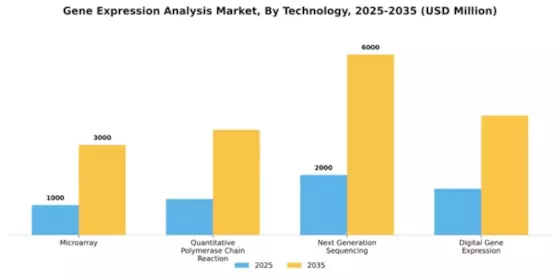
By Technology: Next Generation Sequencing (Largest) vs. Quantitative Polymerase Chain Reaction (Fastest-Growing)
The Gene Expression Analysis Market is marked by a diverse array of technologies, with Next Generation Sequencing (NGS) leading in market share. This advanced technology has become pivotal due to its ability to process large volumes of data efficiently and its cost-effectiveness compared to older methods. Following NGS, Quantitative Polymerase Chain Reaction (qPCR) holds a significant share, appealing to customers looking for relatively quick results and high sensitivity in gene expression analysis. Other technologies, including Microarray and Digital Gene Expression, continue to witness interest but lag behind in both adoption and market share.
Technology: Next Generation Sequencing (Dominant) vs. Quantitative Polymerase Chain Reaction (Emerging)
Next Generation Sequencing (NGS) is characterized by its unparalleled capability to process vast amounts of genomic data, making it dominant in the Gene Expression Analysis Market. With its high sensitivity and ability to analyze multiple genes simultaneously, NGS supports extensive research initiatives, particularly in cancer genomics and personalized medicine. Conversely, Quantitative Polymerase Chain Reaction (qPCR) is the fastest-growing component of the gene market. Its significance lies in its precision and reliability in quantifying gene expression levels. The increasing adoption of qPCR in clinical diagnostics and research is being propelled by its user-friendly nature and the immediacy of results it provides. While NGS is favored for high-throughput analysis, qPCR is essential for targeted applications, highlighting a strategic coexistence in this vital market.
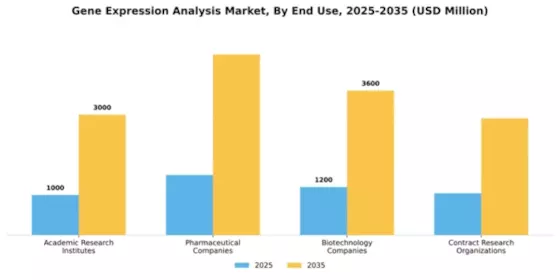
By End Use: Academic Research Institutes (Largest) vs. Pharmaceutical Companies (Fastest-Growing)
The Gene Expression Analysis Market shows a diverse distribution among its end-use segments, with Academic Research Institutes holding the largest share. They utilize gene expression analysis for fundamental research, contributing significantly to advancements in genomics. Following closely, Pharmaceutical Companies have been increasingly integrating these analyses into their drug development pipeline, gaining substantial traction in recent years. Growth in this segment is primarily driven by rising investments in biotechnology and personalized medicine approaches by Pharmaceutical Companies. These entities are increasingly employing gene expression analysis to enhance drug efficacy and patient outcomes. Additionally, advancements in technology and methodologies are stimulating growth, particularly in areas like CRISPR and RNA sequencing, which have attracted considerable attention in the research community.
Academic Research Institutes: Dominant vs. Pharmaceutical Companies: Emerging
Academic Research Institutes are at the forefront of the Gene Expression Analysis Market, leveraging advanced methodologies to explore genetic mechanisms. They play a crucial role in educational settings and collaborative research, often leading to groundbreaking discoveries. Their established infrastructure and focus on basic research provide a significant competitive advantage. On the other hand, Pharmaceutical Companies represent the emerging powerhouse within this market segment. They are increasingly adopting gene expression analysis to streamline drug development and optimize therapeutic strategies. This focus on clinical applications not only enhances their product offerings but also aligns well with the growing trend towards personalized medicine, ensuring their rapid ascent in the market.
By Product Type: Reagents (Largest) vs. Instruments (Fastest-Growing)
The Gene Expression Analysis Market shows a diverse distribution of market share across its product types. Reagents take the lead as the largest segment, driven by their essential role in facilitating accurate and efficient investigations of expression of a gene. Instruments and software also play crucial roles, though they currently hold smaller shares. Services, while important, tend to represent a smaller fraction of the overall market. As the demand for advanced genetic research continues to grow, the market dynamics among these product types will likely shift, with some segments gaining prominence over others.
Reagents (Dominant) vs. Instruments (Emerging)
Reagents are at the forefront of the Gene Expression Analysis Market, known for their critical function in experimental processes. They dominate the segment due to their extensive application in various assays and tests related to analysis of expression of a gene. In contrast, instruments are emerging as a significant factor in the market, with advancements in technology enhancing their capabilities. These include sophisticated platforms that automate and improve accuracy in gene experiments. Both segments are interconnected, with reagents relying on instruments for application, while innovative instruments are increasingly designed to work with the latest reagents, indicating a collaborative evolution in the market.
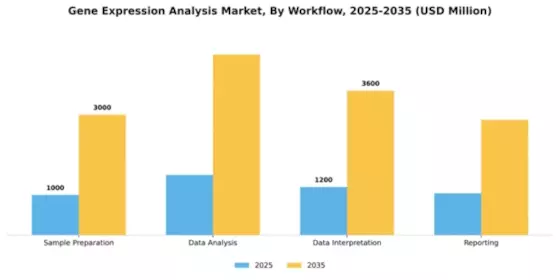
By Workflow: Data Analysis (Largest) vs. Sample Preparation (Fastest-Growing)
Within the Gene Expression Analysis Market, the workflow segment is categorized into Sample Preparation, Data Analysis, Data Interpretation, and Reporting. Among these, Data Analysis represents the largest share as it is fundamental to the understanding of gene expression patterns and regulatory elements. Sample Preparation, although smaller in share, is noted for its rapid expansion due to recent technological advancements that streamline the process and enhance quality.
Data Analysis (Dominant) vs. Sample Preparation (Emerging)
Data Analysis is recognized as the dominant value in the Gene Expression Analysis Market, driving insights into gene functionality and interactions. It employs sophisticated algorithms to handle massive datasets, offering researchers critical tools for understanding complex biological information. In contrast, Sample Preparation is the emerging value, gaining traction due to innovations that improve sample quality and throughput. With these advancements, labs can achieve faster turnaround times and more reliable results, making Sample Preparation increasingly crucial in the overall workflow of gene expression analysis.
Get more detailed insights about Gene Expression Analysis MarketRequest Free Sample
Regional Insights
North America : Market Leader in Innovation
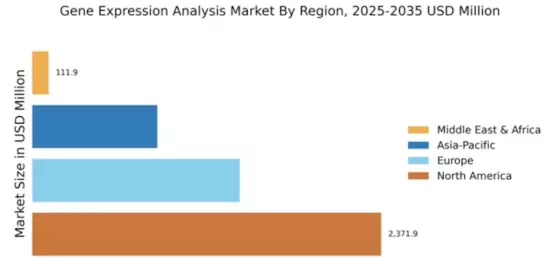
North America continues to lead the Gene Expression Analysis Market, holding a significant share of 2371.89 million in 2024. The region's growth is driven by advanced research facilities, increasing funding for genomics, and a robust regulatory framework that supports innovation. The demand for personalized medicine and advancements in biotechnology further catalyze market expansion, making it a hub for cutting-edge research and development. The United States is the primary contributor, with key players like Thermo Fisher Scientific, Illumina, and Bio-Rad Laboratories dominating the landscape. The competitive environment is characterized by continuous technological advancements and strategic collaborations among leading firms. This dynamic ecosystem fosters innovation, ensuring that North America remains at the forefront of gene expression analysis.
Europe : Emerging Market with Growth Potential
Europe's Gene Expression Analysis Market is poised for growth, with a market size of 1410.0 million in 2024. The region benefits from strong governmental support for research initiatives and a growing emphasis on personalized medicine. Regulatory bodies are increasingly focusing on harmonizing standards across member states, which is expected to enhance market accessibility and foster innovation in gene analysis technologies. Germany, the UK, and France are leading countries in this sector, hosting major players like Qiagen and Roche. The competitive landscape is marked by collaborations between academic institutions and biotech firms, driving advancements in gene expression technologies. The presence of a skilled workforce and robust research infrastructure further solidifies Europe's position in the global market.
Asia-Pacific : Rapidly Growing Market Segment
The Asia-Pacific region is rapidly emerging in the Gene Expression Analysis Market, with a market size of 850.0 million in 2024. Factors such as increasing investments in biotechnology, rising healthcare expenditures, and a growing focus on genomics research are driving this growth. Additionally, supportive government policies and initiatives aimed at enhancing research capabilities are expected to further propel market expansion in the coming years. Japan and China are the leading countries in this market, with significant contributions from companies like Takara Bio. The competitive landscape is evolving, with both established firms and startups innovating in gene expression technologies. The region's diverse population and increasing prevalence of genetic disorders are also contributing to the rising demand for gene analysis solutions.
Middle East and Africa : Niche Market with Growth Opportunities
The Middle East and Africa represent a niche market in the Gene Expression Analysis sector, with a market size of 111.88 million in 2024. The region is witnessing gradual growth driven by increasing investments in healthcare infrastructure and a rising focus on genomics research. Government initiatives aimed at improving healthcare access and quality are also contributing to the market's development, albeit at a slower pace compared to other regions. Countries like South Africa and the UAE are leading the way, with a growing number of research institutions and biotech firms emerging. The competitive landscape is characterized by collaborations between local and international players, which are essential for knowledge transfer and technology adoption. As awareness of genetic testing increases, the demand for gene expression analysis is expected to rise steadily.
Key Players and Competitive Insights
The Gene Expression Analysis Market is currently characterized by a dynamic competitive landscape, driven by advancements in technology and increasing demand for personalized medicine. Key players such as Thermo Fisher Scientific (US), Illumina (US), and Qiagen (DE) are at the forefront, leveraging their extensive portfolios and innovative capabilities to capture market share. Thermo Fisher Scientific (US) focuses on enhancing its product offerings through continuous innovation, while Illumina (US) emphasizes its leadership in sequencing technologies. Qiagen (DE) is strategically positioned with its robust bioinformatics solutions, which complement its gene expression analysis tools, thereby enhancing its competitive edge. Collectively, these strategies foster a competitive environment that is increasingly centered around technological advancements and customer-centric solutions.In terms of business tactics, companies are increasingly localizing manufacturing and optimizing supply chains to enhance operational efficiency. The market structure appears moderately fragmented, with several players vying for dominance. However, the collective influence of major companies like Roche (CH) and Agilent Technologies (US) is notable, as they continue to expand their global reach and product offerings, thereby shaping the competitive dynamics of the market.In November Roche (CH) announced a strategic partnership with a leading biotechnology firm to develop next-generation sequencing technologies. This collaboration is expected to enhance Roche's capabilities in gene expression analysis, allowing for more precise and efficient diagnostic solutions. The strategic importance of this partnership lies in its potential to accelerate innovation and improve patient outcomes, thereby solidifying Roche's position in the market.Similarly, in October 2025, Agilent Technologies (US) launched a new line of RNA sequencing products aimed at improving the accuracy and efficiency of gene expression analysis. This product launch is significant as it reflects Agilent's commitment to innovation and its ability to respond to the evolving needs of researchers and clinicians. By enhancing its product portfolio, Agilent is likely to strengthen its competitive position and attract a broader customer base.Moreover, in September 2025, Thermo Fisher Scientific (US) expanded its global distribution network by entering into a strategic alliance with a prominent logistics provider. This move is anticipated to optimize supply chain operations and improve product availability across various regions. The strategic importance of this expansion lies in its potential to enhance customer satisfaction and drive revenue growth, positioning Thermo Fisher as a leader in the market.As of December current competitive trends indicate a strong focus on digitalization, sustainability, and the integration of artificial intelligence (AI) in gene expression analysis. Strategic alliances are increasingly shaping the landscape, enabling companies to pool resources and expertise for enhanced innovation. Looking ahead, competitive differentiation is likely to evolve from traditional price-based competition to a focus on technological innovation, reliability in supply chains, and the ability to deliver personalized solutions. This shift underscores the importance of adaptability and forward-thinking strategies in maintaining a competitive edge in the Gene Expression Analysis Market.
Key Companies in the Gene Expression Analysis Market include
Industry Developments
Q2 2024: Thermo Fisher Scientific Launches New Ion Torrent Genexus System for Automated Gene Expression Analysis Market Thermo Fisher Scientific announced the commercial launch of its Ion Torrent Genexus System, an automated platform designed to streamline gene expression analysis workflows for clinical and research laboratories.
Q2 2024: Illumina and AstraZeneca Announce Strategic Partnership to Advance Genomic Research in Oncology Illumina and AstraZeneca entered a multi-year partnership to co-develop gene expression analysis solutions aimed at accelerating biomarker discovery and personalized cancer therapies.
Q3 2024: Bio-Rad Laboratories Introduces Droplet Digital PCR Solution for High-Throughput Gene Expression Analysis Market Bio-Rad Laboratories launched a new high-throughput Droplet Digital PCR platform, enabling more precise and scalable gene expression analysis for pharmaceutical and academic research.
Q3 2024: Qiagen Receives CE-IVD Mark for QIAseq Targeted RNA Panels for Clinical Gene Expression Profiling Qiagen announced that its QIAseq Targeted RNA Panels received CE-IVD certification, allowing their use in clinical diagnostics for gene expression profiling in Europe.
Q4 2024: Agilent Technologies Opens New Genomics Research Facility in Singapore Agilent Technologies inaugurated a state-of-the-art genomics research facility in Singapore, expanding its capacity for gene expression analysis product development and customer support in the Asia-Pacific region.
Q4 2024: 10x Genomics Acquires Single-Cell Analysis Startup Parse Biosciences for $350 Million 10x Genomics completed the acquisition of Parse Biosciences, a company specializing in scalable single-cell gene expression analysis, to strengthen its portfolio in spatial and single-cell genomics.
Q1 2025: Oxford Nanopore Technologies Secures $200 Million Funding to Expand Gene Expression Analysis Market Platform Oxford Nanopore Technologies raised $200 million in a new funding round to accelerate the development and commercialization of its next-generation gene expression analysis solutions.
Q1 2025: Roche Launches AVENIO Edge System for Automated Gene Expression Profiling in Clinical Labs Roche introduced the AVENIO Edge System, an automated platform designed to enhance the efficiency and accuracy of gene expression profiling in clinical laboratory settings.
Q2 2025: Pacific Biosciences Announces Partnership with Genentech for Long-Read Gene Expression Analysis Market Pacific Biosciences and Genentech formed a strategic partnership to develop long-read sequencing applications for advanced gene expression analysis in drug discovery.
Q2 2025: NanoString Technologies Appoints New CEO to Drive Growth in Spatial Gene Expression Market NanoString Technologies announced the appointment of a new Chief Executive Officer, aiming to accelerate innovation and market expansion in spatial gene expression analysis.
Q3 2025: Thermo Fisher Scientific Receives FDA Clearance for Oncomine Dx Target Test for Gene Expression Profiling Thermo Fisher Scientific received FDA clearance for its Oncomine Dx Target Test, enabling its use in clinical gene expression profiling for oncology applications in the United States.
Q3 2025: Becton Dickinson Announces $100 Million Investment in New Gene Expression Analysis Market Manufacturing Facility Becton Dickinson (BD) announced a $100 million investment to build a new manufacturing facility dedicated to producing advanced gene expression analysis instruments and reagents.
Future Outlook
Gene Expression Analysis Market Future Outlook
The Gene Expression Analysis Market is projected to grow at a 10.32% CAGR from 2025 to 2035, driven by advancements in technology, increasing research funding, and rising demand for personalized medicine.
New opportunities lie in:
Development of integrated bioinformatics platforms for data analysis. Expansion of gene expression profiling services in clinical diagnostics. Investment in next-generation sequencing technologies for enhanced accuracy.
By 2035, the market is expected to be robust, driven by innovation and strategic investments.
Market Segmentation
Gene Expression Analysis Market End Use Outlook
Academic Institutions
Pharmaceutical Companies
Biotechnology Companies
Contract Research Organizations
Gene Expression Analysis Market Workflow Outlook
Sample Preparation
Data Analysis
Data Interpretation
Reporting
Gene Expression Analysis Market Technology Outlook
Microarray
Quantitative Polymerase Chain Reaction
Next Generation Sequencing
Digital Gene Expression
Gene Expression Analysis Market Application Outlook
Research
Clinical Diagnostics
Drug Discovery
Agricultural Biotechnology
Gene Expression Analysis Market Product Type Outlook
Reagents
Instruments
Software
Services
Report Scope
MARKET SIZE 2024
4743.77(USD Million)
MARKET SIZE 2025
5233.34(USD Million)
MARKET SIZE 2035
13974.31(USD Million)
COMPOUND ANNUAL GROWTH RATE (CAGR)
10.32% (2025 - 2035)
REPORT COVERAGE
Revenue Forecast, Competitive Landscape, Growth Factors, and Trends
What is the current valuation of the Gene Expression Analysis Market as of 2024?
The Gene Expression Analysis Market was valued at approximately 4743.77 USD Million in 2024.
What is the projected market size for the Gene Expression Analysis Market by 2035?
The market is expected to reach a valuation of around 13974.31 USD Million by 2035.
What is the expected CAGR for the Gene Expression Analysis Market during the forecast period 2025 - 2035?
The anticipated CAGR for the Gene Expression Analysis Market during the forecast period is 10.32%.
Which application segment is projected to have the highest growth in the Gene Expression Analysis Market?
The Drug Discovery application segment is projected to grow significantly, with values ranging from 1500.0 to 4500.0 USD Million.
What are the leading technologies in the Gene Expression Analysis Market?
Next Generation Sequencing is expected to dominate, with projected values between 2000.0 and 6000.0 USD Million.
Which end-use sector is likely to drive the Gene Expression Analysis Market growth?
Pharmaceutical Companies are likely to be a major driver, with a projected market size of 1500.0 to 4500.0 USD Million.
What product type is expected to contribute most to the Gene Expression Analysis Market?
Reagents are anticipated to be the leading product type, with values projected between 1500.0 and 4500.0 USD Million.
How does the Gene Expression Analysis Market perform in terms of workflow segments?
Data Analysis is expected to be a key workflow segment, with projected values ranging from 1500.0 to 4500.0 USD Million.
Who are the key players in the Gene Expression Analysis Market?
Key players include Thermo Fisher Scientific, Illumina, Agilent Technologies, and Bio-Rad Laboratories, among others.
What is the significance of the agricultural biotechnology segment in the Gene Expression Analysis Market?
The Agricultural Biotechnology segment shows potential growth, with projected values between 543.77 and 1374.31 USD Million.
Author
Author
Vikita Thakur
Senior Research Analyst
She holds an experience of about 5+ years in market research and business consulting projects for sectors such as life sciences, medical devices, and healthcare IT. She possesses a robust background in data analysis, market estimation, competitive intelligence, pipeline analysis market trend identification, and consumer behavior insights. Her expertise lies in technical Sales support, client interaction and project management, designing and implementing market research studies, conducting competitive analysis, and synthesizing complex data into actionable recommendations that drive business growth.
read more
Co-Author
Rahul Gotadki
Research Manager
He holds an experience of about 9+ years in Market Research and Business Consulting, working under the spectrum of Life Sciences and Healthcare domains. Rahul conceptualizes and implements a scalable business strategy and provides strategic leadership to the clients. His expertise lies in market estimation, competitive intelligence, pipeline analysis, customer assessment, etc.
The secondary research process involved comprehensive analysis of genomic databases, peer-reviewed biotechnology journals, clinical genomics publications, and authoritative life sciences organizations. Key sources included the National Center for Biotechnology Information (NCBI/PubMed), National Human Genome Research Institute (NHGRI), National Institutes of Health (NIH) Genome Data Viewer, US Food & Drug Administration (FDA) Center for Devices and Radiological Health (CDRH) for in vitro diagnostic approvals, and the European Medicines Agency (EMA) Committee for Medicinal Products for Human Use (CHMP) for companion diagnostic regulations. Additional sources encompassed the World Health Organization (WHO) Genomics and Global Health Observatory, Centers for Disease Control and Prevention (CDC) Office of Genomics and Precision Public Health, European Molecular Biology Laboratory (EMBL-EBI) ArrayExpress and Gene Expression Atlas, National Cancer Institute (NCI) Genomic Data Commons, ClinicalTrials.gov for gene therapy and molecular diagnostic trials, NIH National Center for Advancing Translational Sciences (NCATS), International Society for Computational Biology (ISCB), Human Gene Mutation Database (HGMD), and national genomics initiatives from key markets including Genomics England, Genome Canada, China National GeneBank (CNGB), and the Japan Agency for Medical Research and Development (AMED). These sources were utilized to collect sequencing technology adoption statistics, regulatory approval data for NGS-based diagnostics, clinical biomarker validation studies, funding allocation trends for precision medicine initiatives, and competitive intelligence across sequencing platforms, qPCR systems, microarray technologies, and bioinformatics solutions.
Primary Research
Qualitative and quantitative insights were obtained by interviewing supply-side and demand-side stakeholders during the primary research process. The supply-side sources comprised CEOs, Chief Technology Officers, VPs of Research & Development, heads of Clinical Genomics, and commercial directors from next-generation sequencing (NGS) instrument manufacturers, real-time PCR system providers, microarray platform developers, reagent and consumable producers, and bioinformatics software companies. Medical Directors and Laboratory Operations Managers from molecular diagnostic laboratories, Chief Scientific Officers and Heads of Translational Medicine from pharmaceutical and biotechnology companies, Principal Investigators and Genomics Core Facility Directors from academic and research institutes, and Procurement and Outsourcing Leads from Contract Research Organizations (CROs) that specialize in genomic services comprised demand-side sources. Primary research has confirmed the product pipeline timelines for novel sequencing chemistries and automation platforms, validated market segmentation across instruments, consumables, and services, and gathered insights on adoption patterns for single-cell RNA sequencing, spatial transcriptomics, AI-driven data analysis, laboratory-developed test (LDT) regulations, and pricing dynamics for gene expression profiling contracts.
Primary Respondent Breakdown:
• By Designation: C-level Primaries (38%), Director Level (30%), Others (32%)
• By Region: North America (40%), Europe (25%), Asia-Pacific (28%), Rest of World (7%)
Market Size Estimation
Global market valuation was derived through revenue mapping and installation base analysis across sequencing platforms, qPCR instruments, and microarray systems. The methodology included:
• The identification of over 50 essential manufacturers and service providers in North America, Europe, Asia-Pacific, and Latin America, including NGS platform developers, qPCR instrument manufacturers, microarray technology providers, reagent and kit suppliers, and gene expression service laboratories.
• Product and service mapping across consumables (reagents, primers, probes, flow cells), instruments (sequencers, real-time PCR systems, hybridization stations), and bioinformatics/analysis services
• Analysis of reported and modeled annual revenues specific to gene expression analysis portfolios, including instrument placements, recurring consumables revenue per installed base, and contract research service revenues
• Coverage of manufacturers and service providers representing 75-80% of global market share in 2024
• Extrapolation using bottom-up (number of installed instruments × annual consumables spend per unit by application area; number of gene expression profiling services × average selling price by sample type and workflow complexity) and top-down (manufacturer revenue validation and segment allocation) approaches to derive segment-specific valuations for drug discovery, clinical diagnostics, and academic research applications
“This is really good guys. Excellent work on a tight deadline. I will continue to use you going forward and recommend you to others. Nice job”
Noah MalgeriCo-Founder
“Thanks. It’s been a pleasure working with you, please use me as reference with any other Intel employees.”
Joseph AguayoSales Operations & Pricing Manager
“Thanks for sending the report it gives us a good global view of the Betaïne market.”
Peter Groot koerkampAccount and Business Manager
“Thank you, this will be very helpful for OQS.”
La Terria DoddProgram Support Specialist
“We found the report very insightful! we found your research firm very helpful. I'm sending this email to secure our future business.”
Younghwan ChoiSenior Retail Manager
“I am very pleased with how market segments have been defined in a relevant way for my purposes (such as "Portable Freezers & refrigerators" and "last-mile").
In general the report is well structured. Thanks very much for your efforts.”
Mark IrwinManagement Consultant
“I have been reading the first document or the study, ,the Global HVAC and FP market report 2021 till 2026. Must say, good info! I have not gone in depth at all parts, but got a good indication of the data inside!”
Rob KooikerGroup Product Manager HVAC & Fire Protection GMA
“We got the report in time, we really thank you for your support in this process. I also thank to all of your team as they did a great job.”
Akif MorogluStrategy & Business Development Director
“The Automotive 48V ECU Components Procurement Intelligence Study” was a complex project, but the Market Research Future (MRFR) team handled it with quality, agility, and customer-centricity. They delivered all requested data on time and within the agreed scope. The team, including Shubhendra Anand and Rahul Gotadki, was always readily available to clarify questions and swiftly implement necessary adjustments, driving the project to a successful conclusion within a very demanding timeframe.
I would also like to specifically commend Akshay Agarwal for his responsiveness and support at every stage—from our initial inquiry on May 6th through to final delivery on June 18th. His dedication made the entire process seamless.”
Guilherme Gomes MartinsProduct Management Director