×
Request Free Sample ×

Kindly complete the form below to receive a free sample of this Report

* Please use a valid business email

Leading companies partner with us for data-driven Insights

clients tt-cursor
Hero Background

Germany Halitosis Treatment Market

ID: MRFR/HC/54789-HCR
200 Pages
Rahul Gotadki
October 2025

Germany Halitosis Treatment Market Research Report By Indication (Respiratory, Liver, Kidney, Gastrointestinal, Systemic, Others), By Diagnostic Tests (Halimeter, Gas Chromatography, BANA Test, -Galactosidase Activity Assay, Others) and By Drug Treatment (Antacids, Antiseptics, Ranitidine, Others)- Forecast to 2035

Share:
Download PDF ×

We do not share your information with anyone. However, we may send you emails based on your report interest from time to time. You may contact us at any time to opt-out.

Germany Halitosis Treatment Market Infographic
Purchase Options

Germany Halitosis Treatment Market Summary

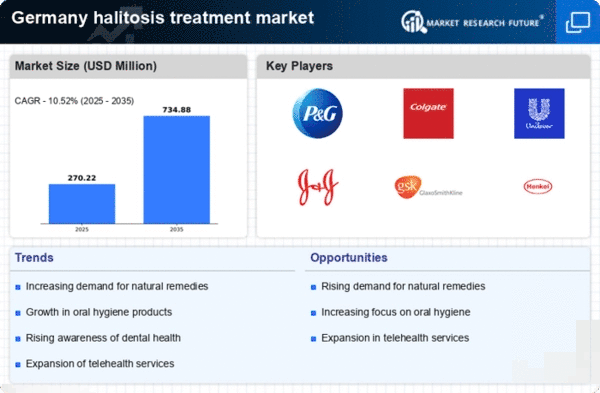
As per MRFR analysis, the halitosis treatment market size was estimated at 244.5 USD Million in 2024. The halitosis treatment market is projected to grow from 270.22 USD Million in 2025 to 734.88 USD Million by 2035, exhibiting a compound annual growth rate (CAGR) of 10.52% during the forecast period 2025 - 2035.

Key Market Trends & Highlights

The Germany halitosis treatment market is experiencing a shift towards natural and innovative solutions driven by heightened awareness of oral hygiene.

  • The market is witnessing a rise in demand for products featuring natural ingredients, reflecting consumer preferences for organic solutions.
  • Technological advancements in oral care are enhancing product efficacy, contributing to a more competitive landscape.
  • There is an increased focus on oral health education, which is likely to drive consumer engagement and product adoption.
  • The growing awareness of oral hygiene and the rising incidence of halitosis are major drivers propelling market growth.

Market Size & Forecast

2024 Market Size 244.5 (USD Million)
2035 Market Size 734.88 (USD Million)
CAGR (2025 - 2035) 10.52%

Major Players

Procter & Gamble (US), Colgate-Palmolive (US), Unilever (GB), Johnson & Johnson (US), GlaxoSmithKline (GB), Henkel (DE), Church & Dwight (US), Listerine (US)

Germany Halitosis Treatment Market Trends

The halitosis treatment market is currently experiencing notable developments, driven by a growing awareness of oral hygiene and the increasing prevalence of halitosis among the population. As individuals become more conscious of their breath and its impact on social interactions, the demand for effective treatments is rising. This trend is further supported by advancements in dental care technologies and the introduction of innovative products designed to combat bad breath. Additionally, the integration of natural ingredients in treatment options is gaining traction, appealing to consumers seeking holistic solutions. The market landscape is characterized by a diverse range of products, including mouthwashes, chewing gums, and specialized dental care items, all aimed at addressing the concerns associated with halitosis. Moreover, the regulatory environment in Germany is evolving, with stricter guidelines on product formulations and marketing claims. This shift is likely to influence the types of products available in the halitosis treatment market, as manufacturers adapt to comply with new standards. The emphasis on safety and efficacy is becoming paramount, leading to increased investment in research and development. As a result, consumers may benefit from a wider array of scientifically-backed options that promise to deliver effective results. Overall, the halitosis treatment market appears poised for growth, driven by consumer demand for quality and innovation in oral care solutions.

Rise of Natural Ingredients

There is a noticeable shift towards products that incorporate natural ingredients in the halitosis treatment market. Consumers are increasingly seeking solutions that are perceived as safer and more effective, leading to a rise in demand for organic and plant-based formulations. This trend reflects a broader movement towards health-conscious choices in personal care.

Technological Advancements in Oral Care

Innovations in dental technology are significantly impacting the halitosis treatment market. New devices and formulations are being developed to enhance oral hygiene and effectively combat bad breath. These advancements not only improve treatment efficacy but also cater to the growing consumer preference for high-tech solutions.

Increased Focus on Oral Health Education

There is a growing emphasis on educating consumers about oral health and the causes of halitosis. Awareness campaigns and informational resources are becoming more prevalent, encouraging individuals to take proactive steps in managing their oral hygiene. This trend is likely to drive demand for various treatment options as consumers become more informed.

Germany Halitosis Treatment Market Drivers

Expansion of Retail Channels

The expansion of retail channels in Germany is facilitating greater access to halitosis treatment products. With the rise of e-commerce and the presence of specialized oral care stores, consumers can easily find and purchase a variety of treatments. This accessibility is crucial, as it allows individuals to explore different options, from mouthwashes to chewing gums designed to combat halitosis. In 2025, online sales are projected to account for approximately 25% of the total market share, reflecting a shift in consumer purchasing behavior. This trend is likely to enhance competition among brands, further driving innovation within the halitosis treatment market.

Rising Incidence of Halitosis

The prevalence of halitosis in Germany appears to be on the rise, contributing to the growth of the halitosis treatment market. Studies suggest that around 30% of the population experiences chronic bad breath, which has prompted a greater need for effective treatments. This increasing incidence is likely linked to lifestyle factors such as diet, smoking, and inadequate oral hygiene practices. As more individuals seek remedies for this condition, the market is expected to expand, with an estimated value reaching €200 million by the end of 2025. This trend underscores the necessity for innovative solutions in the halitosis treatment market.

Growing Awareness of Oral Hygiene

The increasing awareness of oral hygiene among the German population is a significant driver for the halitosis treatment market. As individuals become more informed about the implications of poor oral health, the demand for effective halitosis treatments rises. Educational campaigns by dental associations and health organizations have highlighted the importance of maintaining fresh breath, which has led to a surge in product sales. In 2025, the market is projected to grow by approximately 8% as consumers seek solutions to combat halitosis. This trend indicates a shift towards preventive care, where individuals are more proactive in addressing oral health issues, thereby expanding the halitosis treatment market.

Development of Innovative Products

The continuous development of innovative products is a key driver in the halitosis treatment market. Manufacturers are investing in research and development to create advanced formulations that address the root causes of bad breath. Innovations such as probiotics, which promote oral health by balancing the oral microbiome, are gaining traction among consumers. In 2025, the market for these innovative solutions is anticipated to grow significantly, with an expected increase of 15% in sales. This trend indicates a shift towards more effective and scientifically-backed treatments, which could redefine consumer expectations in the halitosis treatment market.

Influence of Social Media and Marketing

The influence of social media and targeted marketing strategies is reshaping consumer perceptions and choices in the halitosis treatment market. Brands are increasingly leveraging platforms like Instagram and Facebook to promote their products, showcasing testimonials and before-and-after results. This marketing approach resonates particularly with younger demographics, who are more likely to seek solutions for halitosis. As a result, the market is expected to see a growth rate of around 10% in 2025, driven by effective online campaigns. The ability to engage consumers through social media is likely to play a pivotal role in shaping the future of the halitosis treatment market.


Market Segment Insights

By Indication: Gastrointestinal (Largest) vs. Kidney (Fastest-Growing)

In the Germany halitosis treatment market, Gastrointestinal indications hold the largest market share, significantly influenced by the high prevalence of gastrointestinal disorders leading to halitosis. The segment comprises a variety of treatment options that cater to the underlying causes of bad breath, making it a key area of focus for both manufacturers and healthcare providers. Following closely, the Kidney indication segment, while smaller in market share, is seeing increasing recognition due to rising awareness of systemic conditions affecting breath quality. Growth trends indicate a shift towards a more comprehensive understanding of halitosis causes, leading to new treatment developments tailored to specific indications. Factors driving this growth include evolving consumer awareness, innovative treatment methods, and increased investments in research and development. As healthcare professionals continue to advocate for targeted therapies, segments like Kidney are poised for rapid expansion, meeting the challenge of emerging health concerns related to breath quality.

Gastrointestinal (Dominant) vs. Kidney (Emerging)

The Gastrointestinal segment is characterized by its dominant position, addressing a wide range of halitosis causes through treatments focused on digestive health. The segment benefits from a well-established market presence, driven by high demand for effective solutions targeting halitosis rooted in gastrointestinal issues. On the other hand, the Kidney indications represent an emerging sector within the market. This segment is gaining traction as research highlights the link between kidney health and breath quality. The growing awareness of systemic health issues fosters innovation in treatment options specifically targeting kidney-related halitosis, making it a dynamic area for potential market growth.

By Diagnostic Tests: Halimeter (Largest) vs. Gas Chromatography (Fastest-Growing)

In the Germany halitosis treatment market, the Diagnostic Tests segment is primarily dominated by Halimeter, which holds a considerable market share due to its established presence and reliability. Gas Chromatography, on the other hand, is emerging as a significant competitor, rapidly gaining traction among healthcare professionals for its accuracy in quantifying volatile sulfur compounds, leading some practitioners to prefer it for precise assessments. Growth trends for the Diagnostic Tests segment are being driven by increasing awareness of halitosis and an emphasis on accurate diagnosis. The technological advancements in diagnostic methods, coupled with the rise in oral health issues, are contributing to this growth. Furthermore, the shift towards non-invasive testing methods has also propelled the demand for these diagnostic tools, especially the BANA Test and Β-Galactosidase Activity Assay as valuable alternatives.

Halimeter (Dominant) vs. Gas Chromatography (Emerging)

Halimeter is recognized as the dominant diagnostic tool in the Germany halitosis treatment market due to its simplicity and effectiveness in detecting halitosis. It provides immediate results, making it a preferred choice among dental practitioners. In contrast, Gas Chromatography, while more complex, is gaining traction for its high precision in analyzing breath samples. As healthcare professionals seek more accurate diagnostic methods, Gas Chromatography is positioned as an emerging tool that may redefine halitosis evaluations. Other options, such as the BANA Test and Β-Galactosidase Activity Assay, are also influential in catering to specific diagnostic needs with their unique methodologies.

By Drug Treatment: Antacids (Largest) vs. Antiseptics (Fastest-Growing)

In the Germany halitosis treatment market, Antacids lead the market with a significant share, providing relief from acidity-related odor issues. Following closely, Antiseptics are gaining momentum, especially among consumers seeking immediate results for oral hygiene. Ranitidine and others hold smaller portions but remain relevant in specific niches of treatment. Overall, the distribution indicates a well-rounded preference for established solutions with emerging products tapping into innovative approaches. Growth prospects in this segment are fueled by increasing consumer awareness of oral health and the continuous development of novel formulations. Antiseptics are particularly benefitting from trends favoring natural ingredients, while Antacids maintain their dominance due to established efficacy. The rising trend of preventive healthcare also motivates consumers to explore various treatment options, resulting in a more competitive landscape.

Antacids: Dominant vs. Antiseptics: Emerging

Antacids represent the dominant force within the Germany halitosis treatment market, known for their effectiveness in neutralizing stomach acids that contribute to halitosis. Their longstanding presence ensures brand recognition and consumer trust, making them a go-to solution for many. On the other hand, Antiseptics are emerging rapidly, appealing to health-conscious consumers who prefer products that offer swift and targeted action against bacteria in the mouth. These treatments emphasize fast results and are often marketed with natural ingredients, positioning them as modern alternatives. Together, these segments reflect a dynamic interplay of traditional and innovative approaches in addressing halitosis.

Get more detailed insights about Germany Halitosis Treatment Market

Key Players and Competitive Insights

The halitosis treatment market in Germany is characterized by a competitive landscape that is increasingly shaped by innovation, consumer awareness, and the growing demand for effective oral hygiene solutions. Key players such as Procter & Gamble (US), Colgate-Palmolive (US), and Henkel (DE) are actively engaged in strategies that emphasize product differentiation and technological advancements. These companies are not only focusing on traditional oral care products but are also exploring new formulations and delivery methods to enhance efficacy and consumer experience. The collective efforts of these firms contribute to a dynamic market environment where competition is driven by both product innovation and strategic partnerships.

In terms of business tactics, companies are increasingly localizing manufacturing to reduce costs and improve supply chain efficiency. This approach appears to be particularly relevant in the context of the halitosis treatment market, which is moderately fragmented, with several players vying for market share. The influence of major companies is significant, as they leverage their established brand recognition and distribution networks to capture consumer attention and loyalty. The competitive structure suggests that while there are numerous players, a few key companies dominate the landscape, shaping market trends and consumer preferences.

In October 2025, Procter & Gamble (US) announced the launch of a new line of breath-freshening products that utilize advanced microencapsulation technology. This strategic move is likely to enhance the effectiveness of their offerings, appealing to health-conscious consumers seeking long-lasting solutions for halitosis. The introduction of such innovative products may not only strengthen Procter & Gamble's market position but also set a new standard for efficacy in the industry.

In September 2025, Colgate-Palmolive (US) expanded its partnership with local dental clinics across Germany to promote oral health awareness and provide free consultations. This initiative underscores the company's commitment to community engagement and education, which could foster brand loyalty and increase consumer trust. By aligning its marketing strategies with health promotion, Colgate-Palmolive is likely to enhance its visibility and relevance in the competitive landscape.

In August 2025, Henkel (DE) unveiled a sustainability initiative aimed at reducing plastic waste in its packaging for oral care products. This move aligns with the growing consumer demand for environmentally friendly products and may enhance Henkel's brand image as a responsible corporate entity. The emphasis on sustainability could attract a segment of consumers who prioritize eco-conscious choices, thereby potentially increasing market share.

As of November 2025, the competitive trends in the halitosis treatment market are increasingly influenced by digitalization, sustainability, and the integration of artificial intelligence in product development. Strategic alliances among companies are becoming more prevalent, facilitating knowledge sharing and resource optimization. Looking ahead, it appears that competitive differentiation will increasingly hinge on innovation and technology rather than solely on price. Companies that can effectively leverage these trends are likely to secure a competitive edge in a market that is evolving rapidly.

Key Companies in the Germany Halitosis Treatment Market market include

Industry Developments

There has been significant activity in the Germany Halitosis Treatment Market recently, particularly with major companies such as Colgate-Palmolive and Listerine enhancing their product portfolios to address increasing consumer awareness of oral hygiene. Unilever has launched new breath-freshening products that emphasize natural ingredients, responding to the rising demand for sustainable solutions among health-conscious consumers. 

Crest and OralB have also introduced innovative toothpaste variants targeting halitosis specifically, contributing to a shift in focus towards specialized oral care. In terms of mergers and acquisitions, GlaxoSmithKline announced a strategic acquisition in June 2023 aimed at expanding its market presence, while Dentsply Sirona has been involved in discussions regarding complementary product lines. 

The market has experienced a growth in valuation, driven by heightened consumer spending on personal care products. Moreover, recent studies released in 2022 indicated that approximately 45% of adults in Germany reported concerns about bad breath, further propelling investments by companies such as Quip and Procter and Gamble into R&D for targeted treatments. This evolving landscape reflects the growing importance of effective halitosis solutions in the broader health and wellness industry in Germany.

Future Outlook

Germany Halitosis Treatment Market Future Outlook

The Halitosis Treatment Market is projected to grow at a 10.52% CAGR from 2024 to 2035, driven by increasing awareness and demand for oral hygiene solutions.

New opportunities lie in:

  • Development of subscription-based oral care products
  • Expansion of telehealth consultations for halitosis treatment
  • Investment in R&D for innovative breath-freshening technologies

By 2035, the market is expected to achieve substantial growth, reflecting evolving consumer needs and advancements in treatment options.

Market Segmentation

Germany Halitosis Treatment Market Indication Outlook

  • Respiratory
  • Liver
  • Kidney
  • Gastrointestinal
  • Systemic
  • Others

Germany Halitosis Treatment Market Drug Treatment Outlook

  • Antacids
  • Antiseptics
  • Ranitidine
  • Others

Germany Halitosis Treatment Market Diagnostic Tests Outlook

  • Halimeter
  • Gas Chromatography
  • BANA Test
  • Β-Galactosidase Activity Assay
  • Others

Report Scope

MARKET SIZE 2024 244.5(USD Million)
MARKET SIZE 2025 270.22(USD Million)
MARKET SIZE 2035 734.88(USD Million)
COMPOUND ANNUAL GROWTH RATE (CAGR) 10.52% (2024 - 2035)
REPORT COVERAGE Revenue Forecast, Competitive Landscape, Growth Factors, and Trends
BASE YEAR 2024
Market Forecast Period 2025 - 2035
Historical Data 2019 - 2024
Market Forecast Units USD Million
Key Companies Profiled Procter & Gamble (US), Colgate-Palmolive (US), Unilever (GB), Johnson & Johnson (US), GlaxoSmithKline (GB), Henkel (DE), Church & Dwight (US), Listerine (US)
Segments Covered Indication, Diagnostic Tests, Drug Treatment
Key Market Opportunities Emerging natural ingredients in halitosis treatment products cater to increasing consumer demand for organic solutions.
Key Market Dynamics Rising consumer awareness drives demand for innovative halitosis treatments amid evolving regulatory standards in Germany.
Countries Covered Germany

Leave a Comment

FAQs

What is the expected market size of the Germany Halitosis Treatment Market in 2024?

The Germany Halitosis Treatment Market is expected to be valued at 244.5 million USD in 2024.

What will the market size be by 2035?

By 2035, the Germany Halitosis Treatment Market is projected to reach 735.0 million USD.

What is the expected CAGR for the market from 2025 to 2035?

The expected CAGR for the Germany Halitosis Treatment Market from 2025 to 2035 is 10.524%.

Which segment holds the highest market share in 2024?

In 2024, the Systemic indication segment is projected to hold the highest market share at 79.0 million USD.

What is the market value for the Gastrointestinal segment in 2024?

The Gastrointestinal segment is expected to be valued at 60.0 million USD in 2024.

Who are the key players in the Germany Halitosis Treatment Market?

Key players in the market include ColgatePalmolive, Listerine, Unilever, Quip, and Crest.

What are the projected values for the Respiratory segment by 2035?

The Respiratory segment is projected to grow to 122.0 million USD by 2035.

What is the expected market value for the Kidney segment in 2035?

The Kidney segment is anticipated to reach a market value of 105.0 million USD by 2035.

What are the growth drivers for the Germany Halitosis Treatment Market?

Growth drivers include increasing awareness of oral health and rising demand for effective treatments.

What challenges might impact the market during the forecast period?

Challenges may include competition from alternative treatments and fluctuating consumer preferences.

Download Free Sample

Kindly complete the form below to receive a free sample of this Report

Compare Licence

×
Features License Type
Single User Multiuser License Enterprise User
Price $4,950 $5,950 $7,250
Maximum User Access Limit 1 User Upto 10 Users Unrestricted Access Throughout the Organization
Free Customization
Direct Access to Analyst
Deliverable Format
Platform Access
Discount on Next Purchase 10% 15% 15%
Printable Versions