×
Request Free Sample ×

Kindly complete the form below to receive a free sample of this Report

* Please use a valid business email

Leading companies partner with us for data-driven Insights

clients tt-cursor
Hero Background

South Korea Halitosis Treatment Market

ID: MRFR/HC/54788-HCR
200 Pages
Rahul Gotadki
October 2025

South Korea Halitosis Treatment Market Research Report By Indication (Respiratory, Liver, Kidney, Gastrointestinal, Systemic, Others), By Diagnostic Tests (Halimeter, Gas Chromatography, BANA Test, -Galactosidase Activity Assay, Others) and By Drug Treatment (Antacids, Antiseptics, Ranitidine, Others)- Forecast to 2035

Share:
Download PDF ×

We do not share your information with anyone. However, we may send you emails based on your report interest from time to time. You may contact us at any time to opt-out.

South Korea Halitosis Treatment Market Infographic
Purchase Options

South Korea Halitosis Treatment Market Summary

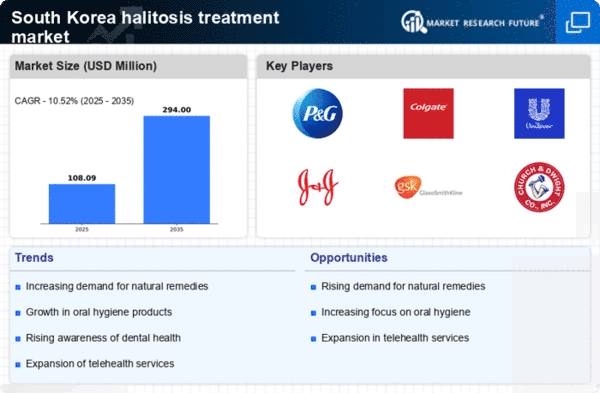
As per MRFR analysis, the halitosis treatment market size was estimated at 97.8 USD Million in 2024. The halitosis treatment market is projected to grow from 108.09 USD Million in 2025 to 294.0 USD Million by 2035, exhibiting a compound annual growth rate (CAGR) of 10.52% during the forecast period 2025 - 2035.

Key Market Trends & Highlights

The South Korea halitosis treatment market is experiencing notable growth driven by evolving consumer preferences and health awareness.

  • Rising consumer awareness regarding oral hygiene is significantly influencing the halitosis treatment market.
  • The preference for natural ingredients in oral care products is becoming increasingly prominent among consumers.
  • Technological advancements in treatment options are enhancing the effectiveness of halitosis solutions.
  • Key market drivers include increasing oral health concerns and the growth of the cosmetic dentistry sector.

Market Size & Forecast

2024 Market Size 97.8 (USD Million)
2035 Market Size 294.0 (USD Million)
CAGR (2025 - 2035) 10.52%

Major Players

Procter & Gamble (US), Colgate-Palmolive (US), Unilever (GB), Johnson & Johnson (US), GlaxoSmithKline (GB), Church & Dwight (US), Henkel (DE), Listerine (US)

South Korea Halitosis Treatment Market Trends

The halitosis treatment market is currently experiencing notable growth, driven by increasing awareness of oral hygiene and the rising prevalence of halitosis among the population. In South Korea, cultural factors play a significant role in the perception of bad breath, leading to a heightened demand for effective treatment solutions. Consumers are becoming more informed about the causes of halitosis, which include poor dental hygiene, dietary choices, and underlying health conditions. This awareness is prompting individuals to seek out specialized products and services aimed at combating bad breath, thereby expanding the market landscape. Moreover, the halitosis treatment market is witnessing innovation in product development, with a focus on natural and organic ingredients. As consumers become more health-conscious, there is a growing preference for treatments that are perceived as safe and effective. This trend is reflected in the increasing availability of mouthwashes, chewing gums, and lozenges that utilize herbal extracts and other natural components. Additionally, advancements in dental technology are contributing to the market's evolution, as new diagnostic tools and treatments emerge to address halitosis more effectively. Overall, the market appears poised for continued expansion as consumer demand evolves and new solutions are introduced.

Rising Consumer Awareness

There is a noticeable increase in consumer awareness regarding oral health and hygiene, particularly concerning halitosis. This trend is driven by educational campaigns and the influence of social media, which emphasize the importance of fresh breath. As individuals become more conscious of their oral health, they are more likely to invest in specialized treatments and products.

Preference for Natural Ingredients

A growing trend within the halitosis treatment market is the preference for products that contain natural ingredients. Consumers are increasingly seeking out treatments that utilize herbal extracts and organic components, reflecting a broader shift towards health-conscious choices. This inclination is likely to shape product development and marketing strategies.

Technological Advancements in Treatment

The halitosis treatment market is benefiting from technological advancements that enhance the effectiveness of treatments. Innovations in dental care, such as improved diagnostic tools and targeted therapies, are emerging. These advancements may lead to more efficient solutions for managing halitosis, thereby attracting a wider consumer base.

South Korea Halitosis Treatment Market Drivers

Increasing Oral Health Concerns

The rising awareness of oral health issues among the South Korean population is a significant driver for the halitosis treatment market. As individuals become more conscious of their oral hygiene, the demand for effective halitosis treatments is likely to increase. Reports indicate that approximately 30% of adults in South Korea experience chronic bad breath, which has led to a growing market for products aimed at addressing this concern. This heightened focus on oral health is prompting consumers to seek out specialized treatments, thereby expanding the market. Furthermore, educational campaigns by dental associations are contributing to this trend, emphasizing the importance of maintaining fresh breath as part of overall health. Consequently, the halitosis treatment market is expected to see sustained growth as more individuals prioritize their oral hygiene and seek solutions to combat halitosis.

Rising Demand for Innovative Products

The halitosis treatment market is experiencing a surge in demand for innovative products that offer effective solutions for bad breath. Consumers in South Korea are increasingly seeking out advanced formulations that promise longer-lasting results. This trend is reflected in the growing popularity of mouthwashes, chewing gums, and lozenges specifically designed to combat halitosis. Market data suggests that the oral care segment, which includes halitosis treatments, is projected to grow at a CAGR of 5% over the next five years. This growth is driven by the introduction of new ingredients and technologies that enhance product efficacy. As consumers become more discerning, they are likely to gravitate towards products that not only mask bad breath but also address the underlying causes. This shift towards innovative solutions is expected to significantly impact the halitosis treatment market.

Growth of the Cosmetic Dentistry Sector

The expansion of the cosmetic dentistry sector in South Korea is playing a pivotal role in driving the halitosis treatment market. As cosmetic procedures gain popularity, there is an increasing emphasis on aesthetics, including fresh breath. Many individuals are now seeking treatments not only for functional purposes but also to enhance their overall appearance. The cosmetic dentistry market has been valued at over $1 billion in recent years, indicating a robust demand for related services and products. This trend is likely to propel the halitosis treatment market as consumers look for complementary solutions to maintain their oral aesthetics. Additionally, dental clinics are increasingly offering halitosis treatments as part of their services, further integrating these solutions into the broader cosmetic dentistry landscape. This synergy between cosmetic dentistry and halitosis treatment is expected to foster market growth.

Influence of Social Media and Marketing

The influence of social media and targeted marketing strategies is becoming increasingly prominent in the halitosis treatment market. In South Korea, social media platforms are utilized extensively for promoting oral care products, including those aimed at treating halitosis. Influencers and dental professionals are leveraging these platforms to educate consumers about the importance of fresh breath and the available treatment options. This trend is likely to enhance consumer engagement and drive sales in the halitosis treatment market. Furthermore, marketing campaigns that highlight the social implications of bad breath are resonating with consumers, prompting them to seek solutions. As a result, the market is expected to benefit from increased visibility and awareness, leading to higher demand for effective halitosis treatments.

Growing Health Consciousness Among Consumers

The increasing health consciousness among South Korean consumers is a notable driver for the halitosis treatment market. As individuals become more aware of the link between oral health and overall well-being, there is a growing inclination to invest in products that promote fresh breath. This trend is supported by research indicating that poor oral hygiene can lead to various health issues, including cardiovascular diseases. Consequently, consumers are more likely to seek out halitosis treatments as part of their health regimen. The market is witnessing a shift towards products that not only address bad breath but also contribute to overall oral health. This growing health consciousness is expected to sustain the demand for halitosis treatments, as consumers prioritize their health and well-being.


Market Segment Insights

South Korea Halitosis Treatment Market Segment Insights

South Korea Halitosis Treatment Market Segment Insights

Halitosis Treatment Market Indication Insights

Halitosis Treatment Market Indication Insights

The South Korea Halitosis Treatment Market shows a diverse segmentation based on various indications, reflecting the complexity of halitosis as a health concern that requires targeted treatment approaches. Within this market, the respiratory tract is a significant source of halitosis, often linked to oral health issues and smoking, making respiratory-related treatments crucial. Liver and kidney conditions can also manifest as bad breath, emphasizing the need for comprehensive approaches that address systemic issues impacting overall well-being. 

Gastrointestinal conditions, including acid reflux and other digestive disorders, present another critical area, highlighting the interplay between digestive health and halitosis.Systemic conditions, such as diabetes, can exacerbate bad breath, necessitating integrated treatment regimens that involve both dental and medical professionals to achieve optimal outcomes for patients. The remaining category includes various other factors that can contribute to halitosis, ranging from infections to dietary influences. Overall, understanding these segments supports the development of effective strategies addressing the multi-faceted nature of halitosis. 

The government of South Korea has recognized oral health as a vital component of preventive healthcare, pushing forward programs aimed at awareness and treatment accessibility, thereby providing a favorable environment for the growth of targeted halitosis therapies based on these indications.As the population becomes increasingly health-conscious and aware of the social impacts of halitosis, the demand for specialized treatments across these segments is expected to rise, helping increase the focus on better health outcomes and quality of life.

Source: Primary Research, Secondary Research, Market Research Future Database and Analyst Review

Halitosis Treatment Market Diagnostic Tests Insights

Halitosis Treatment Market Diagnostic Tests Insights

The Diagnostic Tests segment within the South Korea Halitosis Treatment Market plays a vital role in identifying and managing bad breath issues, which is a significant concern for many individuals in the country. Techniques such as Halimeter and Gas Chromatography are crucial as they analyze the concentration of volatile sulfur compounds in breath, directly connecting these compounds to halitosis. Moreover, rapid tests like the BANA Test offer quick results, enhancing patient convenience and prompting timely intervention. 

The -Galactosidase Activity Assay is also noteworthy, as it targets specific bacteria associated with halitosis, aiding in precise diagnostics.The growing awareness of oral hygiene and the increasing prevalence of halitosis are propelling the demand for these diagnostic tests. South Korea's healthcare system emphasizes advanced diagnostic modalities, ensuring patients receive effective treatment based on accurate diagnostics. This focus presents significant opportunities for industry growth, highlighting the importance of innovative testing methodologies as they become essential tools in managing halitosis effectively.

As diagnostic technology continues to evolve, these methods are poised to dominate the market, making way for improved patient outcomes and satisfaction.

Halitosis Treatment Market Drug Treatment Insights

Halitosis Treatment Market Drug Treatment Insights

The Drug Treatment segment of the South Korea Halitosis Treatment Market showcases a broad array of options, notably including Antacids, Antiseptics, Ranitidine, and other agents. Antacids play a crucial role as they help neutralize stomach acid that may contribute to bad breath originating from gastrointestinal issues. Antiseptics are significant for their ability to kill bacteria, which is pivotal in managing oral hygiene and scent. Ranitidine, though primarily known for treating stomach acid-related ailments, has also found relevance in combating halitosis linked to these conditions.The diversity within this segment reflects growing consumer awareness and demand for effective treatments. 

As South Korea's population becomes increasingly health-conscious, the emphasis on maintaining good oral hygiene is evident, driving innovation and expansion in drug treatments. Furthermore, the growth of the South Korea Halitosis Treatment Market is also supported by rising disposable incomes and enhanced access to healthcare, making effective drug solutions more attainable. Overall, the Drug Treatment segment is vital, due to its wide-ranging effectiveness in addressing the root causes of halitosis while adapting to evolving consumer needs.

Get more detailed insights about South Korea Halitosis Treatment Market

Key Players and Competitive Insights

The halitosis treatment market in South Korea is characterized by a competitive landscape that is both dynamic and multifaceted. Key growth drivers include an increasing awareness of oral hygiene, rising disposable incomes, and a growing demand for effective and convenient treatment options. Major players such as Procter & Gamble (US), Colgate-Palmolive (US), and Unilever (GB) are strategically positioned to leverage these trends. Procter & Gamble (US) focuses on innovation in product formulations, while Colgate-Palmolive (US) emphasizes regional expansion and consumer education initiatives. Unilever (GB) is increasingly investing in digital transformation to enhance customer engagement. Collectively, these strategies contribute to a competitive environment that is both robust and evolving, with companies vying for market share through differentiated offerings.

Key business tactics employed by these companies include localizing manufacturing to reduce costs and optimize supply chains, which is particularly relevant in the context of South Korea's advanced logistics infrastructure. The market structure appears moderately fragmented, with several key players holding substantial market shares. This fragmentation allows for a diverse range of products and price points, catering to various consumer preferences and needs.

In October 2025, Colgate-Palmolive (US) launched a new line of natural mouthwashes aimed at health-conscious consumers. This strategic move is significant as it aligns with the growing trend towards natural and organic products, potentially capturing a segment of the market that prioritizes sustainability and health. The introduction of this product line may enhance Colgate-Palmolive's competitive edge by appealing to environmentally conscious consumers.

In September 2025, Procter & Gamble (US) announced a partnership with a leading dental health app to integrate oral care tracking features into their product offerings. This collaboration is noteworthy as it reflects a shift towards digital health solutions, allowing consumers to monitor their oral hygiene more effectively. By leveraging technology, Procter & Gamble (US) positions itself as a forward-thinking leader in the market, likely enhancing customer loyalty and engagement.

In August 2025, Unilever (GB) acquired a local South Korean brand specializing in herbal oral care products. This acquisition is indicative of Unilever's strategy to diversify its product portfolio and tap into the growing demand for traditional and herbal remedies. By integrating this brand, Unilever (GB) not only expands its market presence but also aligns itself with consumer preferences for natural ingredients, which may drive future growth.

As of November 2025, current competitive trends in the halitosis treatment market include a pronounced focus on digitalization, sustainability, and the integration of artificial intelligence in product development and consumer engagement. Strategic alliances are increasingly shaping the landscape, enabling companies to pool resources and expertise. Looking ahead, competitive differentiation is likely to evolve from traditional price-based competition to a focus on innovation, technology, and supply chain reliability. This shift suggests that companies that prioritize these areas may gain a significant advantage in capturing market share and fostering consumer loyalty.

Key Companies in the South Korea Halitosis Treatment Market market include

Industry Developments

Recent developments in the South Korea Halitosis Treatment Market have shown a growing interest in oral hygiene products, particularly those targeting bad breath. In September 2023, LG Household and Health Care launched a line of innovative mouthwashes designed to eliminate halitosis, gaining popularity among consumers. 

Meanwhile, Colgate-Palmolive has been actively promoting its advanced toothpaste formulas, emphasizing ingredients like activated charcoal that help combat oral odor. Since 2021, the South Korean market has experienced significant growth, attributed mainly to increasing awareness of oral health, with hygiene becoming a key focus post-pandemic. In June 2022, Unilever strengthened its market presence by acquiring a local oral care brand, enhancing its product portfolio. 

Additionally, PepsiCo's investment in mouth freshening lozenges has also contributed to diversifying oral care solutions available to consumers. The market is seeing a competitive landscape with players like Haleon and Procter and Gamble continuously innovating their offerings. Overall, a surge in demand for effective halitosis treatments is driving companies to invest in Research and Development, thereby fueling the growth of the South Korean Halitosis Treatment Market.

Future Outlook

South Korea Halitosis Treatment Market Future Outlook

The Halitosis Treatment Market is projected to grow at a 10.52% CAGR from 2024 to 2035, driven by increasing awareness and innovative product development.

New opportunities lie in:

  • Development of subscription-based oral care kits
  • Expansion of telehealth consultations for halitosis
  • Investment in R&D for natural ingredient formulations

By 2035, the market is expected to achieve substantial growth and innovation.

Market Segmentation

South Korea Halitosis Treatment Market Indication Outlook

  • Respiratory
  • Liver
  • Kidney
  • Gastrointestinal
  • Systemic
  • Others

South Korea Halitosis Treatment Market Drug Treatment Outlook

  • Antacids
  • Antiseptics
  • Ranitidine
  • Others

South Korea Halitosis Treatment Market Diagnostic Tests Outlook

  • Halimeter
  • Gas Chromatography
  • BANA Test
  • Β-Galactosidase Activity Assay
  • Others

Report Scope

MARKET SIZE 2024 97.8(USD Million)
MARKET SIZE 2025 108.09(USD Million)
MARKET SIZE 2035 294.0(USD Million)
COMPOUND ANNUAL GROWTH RATE (CAGR) 10.52% (2024 - 2035)
REPORT COVERAGE Revenue Forecast, Competitive Landscape, Growth Factors, and Trends
BASE YEAR 2024
Market Forecast Period 2025 - 2035
Historical Data 2019 - 2024
Market Forecast Units USD Million
Key Companies Profiled Procter & Gamble (US), Colgate-Palmolive (US), Unilever (GB), Johnson & Johnson (US), GlaxoSmithKline (GB), Church & Dwight (US), Henkel (DE), Listerine (US)
Segments Covered Indication, Diagnostic Tests, Drug Treatment
Key Market Opportunities Emerging natural ingredients and innovative delivery systems enhance consumer appeal in the halitosis treatment market.
Key Market Dynamics Rising consumer awareness drives demand for innovative halitosis treatments amid evolving regulatory standards in South Korea.
Countries Covered South Korea

Leave a Comment

FAQs

What is the projected market size of the South Korea Halitosis Treatment Market in 2024?

The South Korea Halitosis Treatment Market is projected to be valued at 97.8 million USD in 2024.

What is the expected market growth rate for the South Korea Halitosis Treatment Market between 2025 and 2035?

The market is expected to grow at a CAGR of 10.541% from 2025 to 2035.

How much is the South Korea Halitosis Treatment Market expected to be worth by 2035?

By 2035, the South Korea Halitosis Treatment Market is expected to reach a value of 294.5 million USD.

Which indication segment is projected to dominate the South Korea Halitosis Treatment Market in 2035?

The Respiratory indication segment is projected to dominate, expected to be valued at 104.6 million USD in 2035.

What are the key players in the South Korea Halitosis Treatment Market?

Major players include Colgate-Palmolive, LG Household & Health Care, Unilever, Amway, and Procter & Gamble.

How much is the Liver indication segment expected to be worth in 2035?

The Liver indication segment is expected to be valued at 54.7 million USD by 2035.

What is the market size for the Gastrointestinal indication in 2024?

In 2024, the Gastrointestinal indication segment is valued at 19.1 million USD.

How much is the Kidney indication expected to contribute to the market by 2035?

The Kidney indication is expected to reach a value of 46.1 million USD by 2035.

What challenges and opportunities does the market face in the upcoming years?

The market presents opportunities for innovation in treatment but also faces challenges related to competition and consumer awareness.

What is the expected market size of the Systemic indication segment in 2035?

The Systemic indication segment is projected to be valued at 28.4 million USD in 2035.

Download Free Sample

Kindly complete the form below to receive a free sample of this Report

Compare Licence

×
Features License Type
Single User Multiuser License Enterprise User
Price $4,950 $5,950 $7,250
Maximum User Access Limit 1 User Upto 10 Users Unrestricted Access Throughout the Organization
Free Customization
Direct Access to Analyst
Deliverable Format
Platform Access
Discount on Next Purchase 10% 15% 15%
Printable Versions