Download Free Sample
Kindly complete the form below to receive a free sample of this Report
Germany Hepatitis Test Solution Diagnosis Market Research Report: Size, Share, Trend Analysis By Test Type (Serological Tests, Nucleic Acid Tests, Direct Antigen Tests, Rapid Diagnostic Tests), By Technology (ELISA, PCR, Gene Sequencing, Immunoassays), By End Users (Hospitals, Diagnostic Laboratories, Research Institutions, Home Care) and By Sample Type (Blood Samples, Urine Samples, Saliva Samples) - Growth Outlook & Industry Forecast 2025 To 2035
As per Market Research Future analysis, the Germany hepatitis test-solution diagnosis market size was estimated at 104.5 USD Million in 2024. The Germany hepatitis test-solution-diagnosis market is projected to grow from 109.8 USD Million in 2025 to 180.0 USD Million by 2035, exhibiting a compound annual growth rate (CAGR) of 5.0% during the forecast period 2025 - 2035
The Germany hepatitis test-solution diagnosis market is experiencing robust growth driven by technological advancements and rising public awareness.
| 2024 Market Size | 104.5 (USD Million) |
| 2035 Market Size | 180.0 (USD Million) |
| CAGR (2025 - 2035) | 5.07% |
Abbott Laboratories (US), Roche Diagnostics (CH), Siemens Healthineers (DE), Thermo Fisher Scientific (US), Bio-Rad Laboratories (US), Ortho Clinical Diagnostics (US), Hologic (US), Cepheid (US)
Our Impact
Enabled $4.3B Revenue Impact for Fortune 500 and Leading Multinationals
Partnering with 2000+ Global Organizations Each Year
30K+ Citations by Top-Tier Firms in the Industry
The hepatitis test-solution-diagnosis market in Germany is currently experiencing notable developments driven by advancements in technology and increasing awareness of liver diseases. The rise in hepatitis cases, particularly hepatitis B and C, has prompted healthcare providers to enhance their diagnostic capabilities. Innovative testing solutions, including rapid tests and molecular diagnostics, are becoming more prevalent, allowing for quicker and more accurate results. This shift not only improves patient outcomes but also aids in the effective management of public health resources. Furthermore, the integration of digital health solutions is transforming the landscape, enabling remote monitoring and telemedicine consultations, which are particularly beneficial in rural areas. In addition, government initiatives aimed at increasing screening and vaccination rates are likely to bolster the hepatitis test-solution-diagnosis market. Public health campaigns are focusing on educating the population about the risks associated with hepatitis and the importance of early detection. As a result, there is a growing demand for comprehensive testing solutions that can be easily accessed by the public. The combination of technological advancements and supportive government policies suggests a promising future for the hepatitis test-solution-diagnosis market in Germany, with potential for further growth and innovation in the coming years.
The hepatitis test-solution-diagnosis market is witnessing a surge in technological innovations. New testing methods, such as point-of-care testing and molecular diagnostics, are enhancing the speed and accuracy of hepatitis detection. These advancements are crucial for timely treatment and management of the disease, potentially leading to better health outcomes.
There is a growing emphasis on public awareness regarding hepatitis, driven by government initiatives and health organizations. Educational campaigns are informing the population about the risks of hepatitis and the importance of regular testing. This heightened awareness is likely to increase demand for testing solutions.
The incorporation of digital health technologies is transforming the hepatitis test-solution-diagnosis market. Telemedicine and remote monitoring are becoming more common, allowing patients to access testing and consultations from home. This trend is particularly beneficial for individuals in remote areas, improving access to necessary healthcare services.
Government initiatives and funding play a pivotal role in shaping the hepatitis test-solution-diagnosis market. In Germany, the government has allocated substantial resources to combat viral hepatitis, including funding for testing programs and public health campaigns. For instance, the Federal Ministry of Health has launched initiatives aimed at increasing screening rates and improving access to diagnostic services. Such efforts not only enhance public awareness but also create a favorable environment for the adoption of innovative testing solutions. The financial support from the government is expected to bolster the market, as it encourages the development and distribution of advanced diagnostic technologies.
The growing demand for preventive healthcare is a notable driver of the hepatitis test-solution-diagnosis market. In Germany, there is a shift towards proactive health management, with individuals seeking regular screenings and preventive measures against hepatitis infections. This trend is supported by public health campaigns that emphasize the importance of early detection and treatment. As more people become aware of the risks associated with hepatitis, the demand for testing solutions is expected to increase. This shift towards preventive healthcare not only benefits patients but also encourages healthcare providers to invest in advanced diagnostic technologies.
The increasing incidence of hepatitis infections in Germany is a critical driver for the hepatitis test-solution-diagnosis market. Recent data indicates that approximately 0.5% of the population is affected by chronic hepatitis B and C, necessitating effective testing solutions. This rising prevalence compels healthcare providers to adopt advanced diagnostic tools to identify and manage these infections promptly. Furthermore, the German government has implemented various health initiatives aimed at reducing the burden of hepatitis, which further stimulates demand for testing solutions. As awareness of hepatitis-related health issues grows, the market is likely to expand, driven by the need for accurate and timely diagnosis.
Technological innovations in diagnostic tools are significantly influencing the hepatitis test-solution-diagnosis market. The introduction of rapid testing kits and point-of-care testing solutions has revolutionized the way hepatitis is diagnosed in Germany. These advancements allow for quicker results, which is crucial for effective patient management. Moreover, the integration of molecular diagnostics and serological tests enhances the accuracy of hepatitis detection. As healthcare providers increasingly adopt these innovative technologies, the market is poised for growth. The demand for efficient and reliable testing solutions is likely to rise, driven by the need for timely diagnosis and treatment.
Increased collaboration among healthcare stakeholders is fostering growth in the hepatitis test-solution-diagnosis market. Partnerships between government agencies, healthcare providers, and non-profit organizations are enhancing the effectiveness of hepatitis screening and diagnosis in Germany. These collaborations facilitate the sharing of resources, knowledge, and best practices, ultimately leading to improved patient outcomes. Additionally, joint initiatives often result in the development of comprehensive testing programs that address the needs of diverse populations. As stakeholders work together to combat hepatitis, the market for testing solutions is likely to expand, driven by collective efforts to enhance diagnostic capabilities.
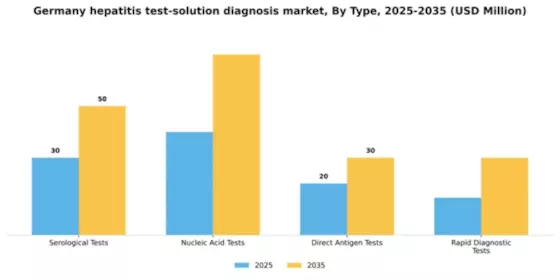
In the Germany hepatitis test-solution-diagnosis market, Serological Tests hold the largest market share, primarily due to their widespread acceptance and cost-effectiveness. These tests are crucial for the initial screening and diagnosis of hepatitis infections, contributing significantly to the overall market distribution. Nucleic Acid Tests, while smaller in comparative market share, are rapidly gaining attention due to their higher specificity and sensitivity, catering to the need for advanced diagnostic methods. The growth trends indicate a shift towards more precise diagnostic techniques, with Nucleic Acid Tests emerging as the fastest-growing segment. Factors such as technological advancements, rising awareness about hepatitis infections, and supportive government initiatives are driving this growth. Healthcare professionals increasingly prefer these tests for their accuracy and reliability, which positions them favorably in the evolving diagnostics landscape.
Serological Tests (Dominant) vs. Nucleic Acid Tests (Emerging)
Serological Tests have established themselves as the dominant player in the Germany hepatitis test-solution-diagnosis market, providing reliable results for hepatitis detection through antibody identification. Their widespread use in laboratories and clinics underscores their role in public health strategies for early diagnosis and management of hepatitis. In contrast, Nucleic Acid Tests, characterized by their ability to detect viral RNA, are emerging as a crucial tool for precise diagnosis, even in low viral loads. This increasing sophistication in testing technology is anchored in the need for timely and accurate interventions, making Nucleic Acid Tests a significant focus for future growth and innovation in the market.
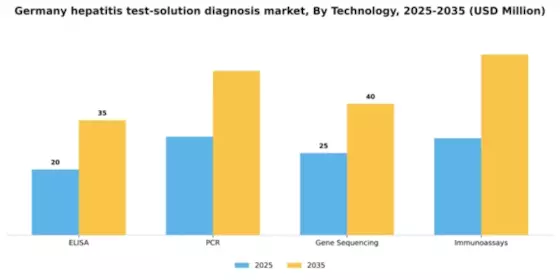
The technology segment in the Germany hepatitis test-solution-diagnosis market showcases a varied distribution of market share among ELISA, PCR, Gene Sequencing, and Immunoassays. ELISA retains the largest share due to its established efficacy and widespread application in diagnostic tests. In contrast, PCR is gaining traction and is identified as the fastest-growing segment, driven by its sensitivity and speed in detecting hepatitis viruses. Growth trends in this segment are significantly influenced by technological advancements and the increasing demand for rapid and accurate diagnosis of hepatitis. The rise in awareness regarding hepatitis infections plays a crucial role in driving the adoption of PCR technology. Additionally, innovations in Gene Sequencing are positioning it as a vital contributor to the understanding of hepatitis virus mutations, while Immunoassays continue to be a reliable choice in traditional diagnostic protocols.
Technology: ELISA (Dominant) vs. PCR (Emerging)
ELISA, as a dominant technology in the hepatitis test-solution-diagnosis landscape, is highly regarded for its reliability, cost-effectiveness, and ability to process multiple samples simultaneously. It is preferred in many clinical settings for serological tests, making it a staple in hepatitis diagnostics. Conversely, PCR is emerging due to its rapid processing time and high accuracy, effectively detecting low viral loads that might go unnoticed by other methods. This position enables PCR to cater to a growing need for timely diagnoses, especially in acute cases. The marketplace is also witnessing an uptick in Gene Sequencing that, while still developing, holds promise for detailed genetic insights into hepatitis strains, further enhancing the overall diagnostic capabilities.
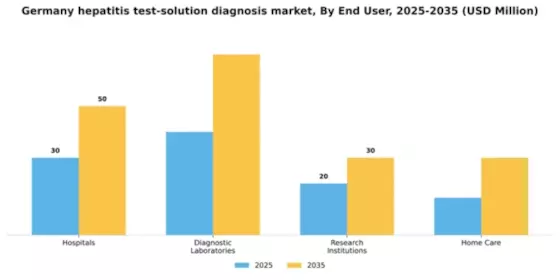
The distribution of market share among the different end-user segments in the Germany hepatitis test-solution-diagnosis market shows that hospitals dominate significantly due to their comprehensive resources for managing hepatitis cases. Diagnostic laboratories follow closely, characterized by their rapid adaptation and specialized focus on various hepatitis testing methods. Research institutions and home care segments hold lesser shares, but they play crucial roles in developing innovative testing solutions. Growth trends in this segment are largely driven by increasing awareness of hepatitis and the need for early diagnosis. Hospitals are expanding their testing capabilities, while diagnostic laboratories are embracing advanced technologies to enhance efficiency and accuracy. The rising trend of home testing solutions is emerging, responding to consumer demand for convenience and privacy, although they currently represent a smaller portion of the market.
Hospitals: Dominant vs. Diagnostic Laboratories: Emerging
Hospitals represent the dominant force in the end-user segment, given their extensive infrastructure and integrated healthcare services designed to cater to complex hepatitis cases. They possess the resources and expertise to conduct comprehensive testing and treatment protocols, thus playing a pivotal role in managing hepatitis outbreaks. Conversely, diagnostic laboratories are emerging as crucial players in the market, driven by their ability to provide specialized and rapid testing services. Their focus on innovative diagnostic technologies positions them well for rapid growth, as they enable quicker diagnostics, which is critical for timely intervention. As healthcare continues to evolve, the interaction between these two segments is likely to influence overall market dynamics significantly.
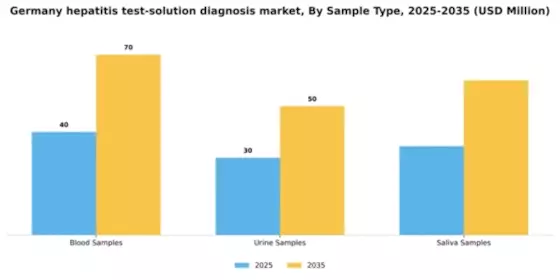
In the Germany hepatitis test-solution-diagnosis market, blood samples currently dominate the sample type segment, capturing the largest share due to their long-standing use and reliability in diagnosis. Blood testing methods are well-established, with healthcare providers favoring them for their accuracy and comprehensive results. Urine samples, meanwhile, hold a growing segment as they offer a non-invasive alternative, making them more appealing for patients and driving uptake. The growth trends for urine samples in particular are noteworthy, as they are expected to gain momentum considerably in the coming years. The shift towards more patient-friendly testing options has opened new avenues for urine tests, fostering innovation in testing methodologies. Additionally, increased awareness about hepatitis and a push for early detection are expected to catalyze the demand for these sample types across healthcare settings.
Blood Samples: Dominant vs. Urine Samples: Emerging
Blood samples serve as the dominant sample type in the Germany hepatitis test-solution-diagnosis market, revered for their accurate and thorough analysis abilities. They have been the gold standard for hepatitis diagnosis due to the robustness of collected data that can provide insights into viral loads and liver function. In contrast, urine samples are emerging as a viable alternative, gaining traction for their ease of collection and ability to enhance patient comfort during testing. Urine testing methodologies continue to evolve, with innovations aimed at improving their reliability and scope of use, thus positioning them favorably in the diagnostic landscape.
Get more detailed insights about Germany Hepatitis Test Solution Diagnosis Market Request Free Sample
The hepatitis test-solution-diagnosis market in Germany is characterized by a competitive landscape that is increasingly shaped by innovation, strategic partnerships, and a focus on digital transformation. Key players such as Abbott Laboratories (US), Roche Diagnostics (CH), and Siemens Healthineers (DE) are at the forefront, leveraging their technological expertise to enhance diagnostic accuracy and efficiency. These companies are not only investing in research and development but are also exploring mergers and acquisitions to expand their product portfolios and market reach. The collective strategies of these firms indicate a trend towards a more integrated and technologically advanced market, where the emphasis is on delivering comprehensive solutions rather than standalone products. In terms of business tactics, companies are increasingly localizing manufacturing to reduce supply chain vulnerabilities and enhance responsiveness to market demands. The market structure appears moderately fragmented, with several players vying for market share, yet dominated by a few key firms that hold substantial influence. This dynamic fosters a competitive environment where innovation and operational efficiency are paramount, as companies strive to differentiate themselves in a crowded marketplace. In October 2025, Roche Diagnostics (CH) announced the launch of a new hepatitis C diagnostic test that utilizes advanced molecular techniques to improve detection rates. This strategic move is significant as it not only enhances Roche's product offerings but also positions the company as a leader in the rapidly evolving diagnostics landscape. The introduction of this test is expected to meet the growing demand for accurate and timely hepatitis diagnostics, thereby reinforcing Roche's competitive edge. Similarly, in September 2025, Siemens Healthineers (DE) expanded its collaboration with local healthcare providers to enhance the accessibility of hepatitis testing in underserved regions. This initiative underscores Siemens' commitment to improving public health outcomes while simultaneously expanding its market presence. By focusing on regional partnerships, Siemens is likely to strengthen its distribution channels and foster community trust, which is essential for long-term success in the healthcare sector. In November 2025, Abbott Laboratories (US) revealed a strategic partnership with a leading telehealth provider to integrate hepatitis testing into remote healthcare services. This collaboration is indicative of the growing trend towards digital health solutions, allowing for more convenient access to testing and diagnosis. Abbott's initiative reflects a broader industry shift towards leveraging technology to enhance patient engagement and streamline healthcare delivery. As of November 2025, the competitive trends in the hepatitis test-solution-diagnosis market are increasingly defined by digitalization, sustainability, and the integration of artificial intelligence. Strategic alliances are playing a crucial role in shaping the current landscape, enabling companies to pool resources and expertise to drive innovation. Looking ahead, it appears that competitive differentiation will evolve from traditional price-based strategies to a focus on technological advancements, innovative solutions, and reliable supply chains. This shift may ultimately redefine how companies position themselves in the market, emphasizing the importance of adaptability and forward-thinking in a rapidly changing environment.
In recent months, the Germany Hepatitis Test Solution Diagnosis Market has been marked by strategic advancements and developments. Qiagen announced the launch of new diagnostic kits in October 2023, aimed at improving the detection rates of Hepatitis C, which is becoming increasingly critical as the country focuses on eradicating viral hepatitis by 2030. Abbott Laboratories showcased its latest point-of-care testing technologies, emphasizing their capacity to deliver rapid results, which is essential in managing outbreaks.
In terms of mergers and acquisitions, Siemens Healthineers has been reported to enhance its portfolio by acquiring advanced diagnostic technologies from a small biotech firm in September 2023, Further bolstering their capabilities in the hepatitis testing domain.
The market has also witnessed significant growth in valuation due to heightened awareness and government health initiatives, with a 25% increase in testing rates over the past two years, primarily driven by public health campaigns. Notably, in July 2022, Fujirebio advertised its commitment to R&D, pledging increased investment in the development of hepatitis biomarkers, which has attracted attention within the industry. Germany’s investment in healthcare infrastructure and technologies continues to propel advancements in this critical market.
The Hepatitis Test Solution Diagnosis Market is projected to grow at a 5.07% CAGR from 2025 to 2035, driven by technological advancements, increasing awareness, and rising prevalence of hepatitis.
New opportunities lie in:
By 2035, the market is expected to achieve substantial growth, driven by innovation and increased healthcare access.
| MARKET SIZE 2024 | 104.5(USD Million) |
| MARKET SIZE 2025 | 109.8(USD Million) |
| MARKET SIZE 2035 | 180.0(USD Million) |
| COMPOUND ANNUAL GROWTH RATE (CAGR) | 5.07% (2025 - 2035) |
| REPORT COVERAGE | Revenue Forecast, Competitive Landscape, Growth Factors, and Trends |
| BASE YEAR | 2024 |
| Market Forecast Period | 2025 - 2035 |
| Historical Data | 2019 - 2024 |
| Market Forecast Units | USD Million |
| Key Companies Profiled | Abbott Laboratories (US), Roche Diagnostics (CH), Siemens Healthineers (DE), Thermo Fisher Scientific (US), Bio-Rad Laboratories (US), Ortho Clinical Diagnostics (US), Hologic (US), Cepheid (US) |
| Segments Covered | Type, Technology, End User, Sample Type |
| Key Market Opportunities | Integration of advanced diagnostic technologies enhances hepatitis test-solution-diagnosis market potential in Germany. |
| Key Market Dynamics | Rising demand for rapid hepatitis diagnostics drives innovation and competition among local test-solution providers. |
| Countries Covered | Germany |
The market valuation was $104.5 Million in 2024.
The projected market valuation for 2035 is $180.0 Million.
The expected CAGR during the forecast period 2025 - 2035 is 5.07%.
Key players include Abbott Laboratories, Roche Diagnostics, Siemens Healthineers, and Thermo Fisher Scientific.
The main segments include Type, Technology, End User, and Sample Type.
The valuation of serological tests ranged from $30.0 Million to $50.0 Million.
The nucleic acid tests segment is valued between $40.0 Million and $70.0 Million.
The valuation range for diagnostic laboratories as an end user is $40.0 Million to $70.0 Million.
The projected valuation for blood samples is between $40.0 Million and $70.0 Million.
The immunoassays technology segment has a valuation range of $29.5 Million to $55.0 Million.


Kindly complete the form below to receive a free sample of this Report

“This is really good guys. Excellent work on a tight deadline. I will continue to use you going forward and recommend you to others. Nice job”


“Thanks. It’s been a pleasure working with you, please use me as reference with any other Intel employees.”


“Thanks for sending the report it gives us a good global view of the Betaïne market.”


“Thank you, this will be very helpful for OQS.”


“We found the report very insightful! we found your research firm very helpful. I'm sending this email to secure our future business.”


“I am very pleased with how market segments have been defined in a relevant way for my purposes (such as "Portable Freezers & refrigerators" and "last-mile"). In general the report is well structured. Thanks very much for your efforts.”


“I have been reading the first document or the study, ,the Global HVAC and FP market report 2021 till 2026. Must say, good info! I have not gone in depth at all parts, but got a good indication of the data inside!”


“We got the report in time, we really thank you for your support in this process. I also thank to all of your team as they did a great job.”


“The Automotive 48V ECU Components Procurement Intelligence Study” was a complex project, but the Market Research Future (MRFR) team handled it with quality, agility, and customer-centricity. They delivered all requested data on time and within the agreed scope. The team, including Shubhendra Anand and Rahul Gotadki, was always readily available to clarify questions and swiftly implement necessary adjustments, driving the project to a successful conclusion within a very demanding timeframe.
I would also like to specifically commend Akshay Agarwal for his responsiveness and support at every stage—from our initial inquiry on May 6th through to final delivery on June 18th. His dedication made the entire process seamless.”



