Download Free Sample
Kindly complete the form below to receive a free sample of this Report
South Korea Hepatitis Test Solution Diagnosis Market Research Report By Test Type (Serological Tests, Nucleic Acid Tests, Direct Antigen Tests, Rapid Diagnostic Tests), By Technology (ELISA, PCR, Gene Sequencing, Immunoassays), By End User (Hospitals, Diagnostic Laboratories, Research Institutions, Home Care) andBy Sample Type (Blood Samples, Urine Samples, Saliva Samples) - Growth & Industry Forecast 2025 To 2035
As per analysis, the South Korea hepatitis test-solution-diagnosis market Size was estimated at 41.8 USD Million in 2024. The South Korea hepatitis test-solution-diagnosis market is projected to grow from 44.18 USD Million in 2025 to 76.83 USD Million by 2035, exhibiting a compound annual growth rate (CAGR) of 5.6% during the forecast period 2025 - 2035
The South Korea hepatitis test-solution-diagnosis market. is experiencing robust growth driven by technological advancements and increased public awareness.
| 2024 Market Size | 41.8 (USD Million) |
| 2035 Market Size | 76.83 (USD Million) |
| CAGR (2025 - 2035) | 5.69% |
Abbott Laboratories (US), Roche Diagnostics (CH), Siemens Healthineers (DE), Thermo Fisher Scientific (US), Bio-Rad Laboratories (US), Ortho Clinical Diagnostics (US), Hologic (US), Cepheid (US)
Our Impact
Enabled $4.3B Revenue Impact for Fortune 500 and Leading Multinationals
Partnering with 2000+ Global Organizations Each Year
30K+ Citations by Top-Tier Firms in the Industry
The hepatitis test-solution-diagnosis market. in South Korea is currently experiencing notable developments driven by advancements in technology and increasing awareness of liver health. The government has implemented various initiatives aimed at enhancing screening and diagnosis rates, which appear to be yielding positive outcomes. Furthermore, the rising prevalence of hepatitis infections has prompted healthcare providers to adopt more efficient testing solutions. This shift not only improves patient outcomes but also aligns with national health objectives to reduce the burden of liver diseases. As a result, the market is witnessing a surge in demand for innovative diagnostic tools and solutions that facilitate early detection and treatment. In addition, the integration of digital health technologies into the hepatitis test-solution-diagnosis market is becoming increasingly prominent. Telemedicine and mobile health applications are being utilized to streamline the testing process, making it more accessible to the population. This trend is particularly relevant in urban areas where healthcare facilities are often overwhelmed. The collaboration between public health authorities and private sector entities is likely to foster further advancements in testing methodologies, thereby enhancing the overall efficiency of hepatitis diagnosis in South Korea. The market appears poised for continued growth as stakeholders prioritize the development of user-friendly and cost-effective solutions.
The hepatitis test-solution-diagnosis market is witnessing rapid technological advancements that enhance the accuracy and speed of testing. Innovations such as point-of-care testing and automated laboratory systems are becoming more prevalent, allowing for quicker diagnosis and treatment initiation. These developments are crucial in managing hepatitis effectively, as timely intervention can significantly improve patient outcomes.
Government initiatives aimed at increasing awareness and screening for hepatitis are playing a pivotal role in shaping the market. Campaigns focused on education and prevention are encouraging more individuals to undergo testing. This proactive approach is likely to lead to higher diagnosis rates, ultimately contributing to better public health outcomes.
The integration of digital health technologies into the hepatitis test-solution-diagnosis market is transforming how testing is conducted. Telehealth services and mobile applications are facilitating remote consultations and follow-ups, making testing more accessible. This trend is particularly beneficial in urban settings, where healthcare resources may be stretched, ensuring that more individuals receive timely diagnosis and care.
Government initiatives aimed at combating hepatitis are significantly influencing the hepatitis test-solution-diagnosis market. In South Korea, the government has allocated substantial funding to enhance screening and treatment programs. For instance, the Ministry of Health and Welfare has launched campaigns to increase public awareness and access to hepatitis testing. This financial support is expected to bolster the development and distribution of advanced diagnostic tools. Furthermore, the government's commitment to achieving hepatitis elimination by 2030 may lead to increased investments in research and development, thereby stimulating growth in the hepatitis test-solution-diagnosis market.
Public awareness regarding hepatitis and its implications is steadily increasing in South Korea, which serves as a vital driver for the hepatitis test-solution-diagnosis market. Educational campaigns conducted by health organizations have successfully informed the population about the importance of early detection and treatment. As a result, more individuals are seeking testing services, which could potentially lead to a higher demand for diagnostic solutions. The emphasis on preventive healthcare is likely to encourage more people to get tested, thereby expanding the market for hepatitis test-solution-diagnosis. This trend suggests a positive outlook for the industry as awareness continues to grow.
The shift towards preventive healthcare in South Korea is significantly impacting the hepatitis test-solution-diagnosis market. With a growing emphasis on early detection and management of diseases, healthcare providers are prioritizing screening programs for hepatitis. This focus aligns with global health initiatives aimed at reducing the burden of infectious diseases. As more healthcare facilities adopt preventive measures, the demand for hepatitis testing solutions is expected to rise. This trend indicates a potential expansion of the market, as stakeholders recognize the importance of proactive healthcare strategies in managing hepatitis effectively.
The increasing incidence of hepatitis infections in South Korea is a critical driver for the hepatitis test-solution-diagnosis market.. Recent data indicates that approximately 0.5-1.0 million individuals are living with chronic hepatitis B and C in the country. This rising prevalence necessitates enhanced testing solutions to facilitate early diagnosis and treatment. The healthcare system is under pressure to implement widespread screening programs, which could potentially increase the demand for innovative diagnostic solutions. As awareness grows regarding the health risks associated with hepatitis, the market is likely to see a surge in the adoption of testing solutions, thereby driving growth in the hepatitis test-solution-diagnosis market.
The hepatitis test-solution-diagnosis market is experiencing a transformation due to technological innovations in diagnostic tools. Advancements such as point-of-care testing and rapid diagnostic kits are becoming increasingly prevalent in South Korea. These innovations not only enhance the accuracy and speed of hepatitis testing but also improve accessibility for patients. The integration of artificial intelligence and machine learning in diagnostic processes is also emerging, potentially revolutionizing the way hepatitis is diagnosed. As these technologies become more widely adopted, they are likely to drive growth in the hepatitis test-solution-diagnosis market, making testing more efficient and effective.
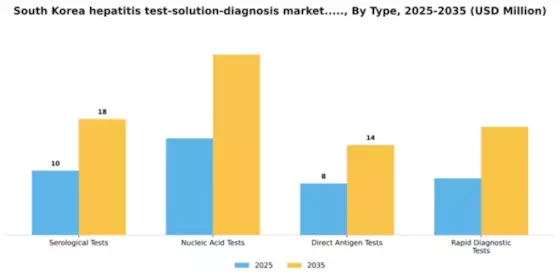
In the South Korea hepatitis test-solution-diagnosis market., Serological Tests hold the largest market share due to their established use and reliability in detecting various hepatitis viruses. These tests are predominantly utilized in clinical settings and public health initiatives, contributing significantly to the healthcare system's efforts in managing hepatitis infections. Meanwhile, Nucleic Acid Tests are gaining traction, particularly for their high accuracy and rapid results which cater to the increasing demand for efficient disease management. The growth trends in this segment are driven by technological advancements and increasing awareness of hepatitis-related health issues. Nucleic Acid Tests, in particular, are witnessing rapid growth as they respond effectively to the need for precise diagnostics, especially in regions with high prevalence rates. Additionally, the rising focus on personalized medicine is likely to propel the market for various testing methodologies, including Direct Antigen and Rapid Diagnostic Tests, further shaping the future of hepatitis diagnostics.
Serological Tests (Dominant) vs. Nucleic Acid Tests (Emerging)
Serological Tests are the dominant force in the South Korea hepatitis test-solution-diagnosis market, known for their robust performance in identifying antibodies against hepatitis viruses. Their long-standing presence in the market ensures a high level of trust among healthcare professionals, making them the go-to option for testing. In contrast, Nucleic Acid Tests are an emerging trend, favored for their precision and speed in detecting viral RNA. This segment reflects a shift towards modern, reliable diagnostics that meet the rising expectations for effective patient management. The combination of these two approaches enhances the overall robustness of the testing landscape, ensuring comprehensive hepatitis care.
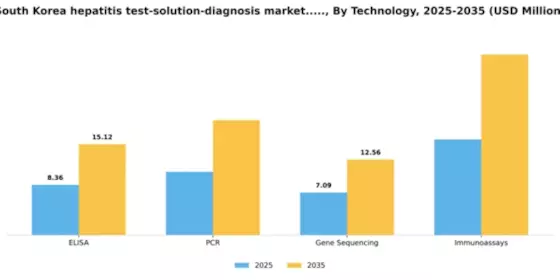
In the South Korea hepatitis test-solution-diagnosis market., the market share distribution among technology segments reveals ELISA as the largest segment owing to its traditional use and reliable performance in detecting hepatitis. PCR follows closely, capturing attention for its accuracy and faster results in hepatitis diagnosis. Gene Sequencing and Immunoassays also hold significant portions, enhancing the spectrum of diagnostic options available. Growth trends are primarily driven by advancements in PCR technology that enable rapid and precise testing, marking it as the fastest-growing segment. Increased awareness and screening efforts for hepatitis, especially in high-risk populations, are propelling the demand for accurate test solutions. Coupled with public health initiatives and governmental support, these technology segments are witnessing a transformation in their market dynamics.
Technology: ELISA (Dominant) vs. PCR (Emerging)
ELISA, or Enzyme-Linked Immunosorbent Assay, stands out as the dominant technology within the South Korea hepatitis test-solution-diagnosis market, widely recognized for its robustness and cost-effectiveness. It excels in large-scale screening, making it a trusted method for many healthcare providers. On the other hand, PCR technology is emerging as a pivotal player, contributing to a swift shift towards molecular diagnostics. PCR's ability to detect viral RNA at lower levels makes it critical in both acute and chronic hepatitis management. While ELISA remains a staple, the growing appetite for rapid testing solutions is poised to propel PCR's adoption, reshaping the landscape of hepatitis diagnostics.
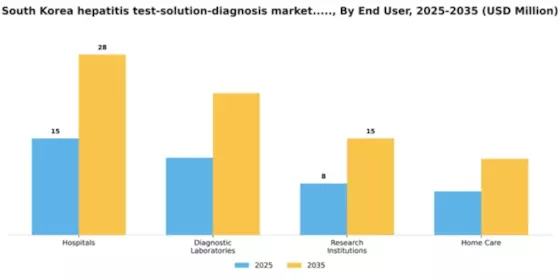
In the South Korea hepatitis test-solution-diagnosis market., hospitals hold the largest share, driven by their extensive patient base and advanced infrastructures. Diagnostic laboratories are emerging as the fastest-growing segment, as they increasingly adopt innovative technologies to enhance testing efficiency and accuracy. Research institutions and home care segments also contribute but remain smaller in market share and growth potential. Growth trends in this segment are significantly influenced by the rising prevalence of hepatitis infections and a growing emphasis on early diagnosis and treatment. Technological advancements in test solutions and diagnostics are propelling the capabilities of diagnostic laboratories, while hospitals continue to dominate due to their comprehensive service offerings. The expanding home care segment caters to the need for more convenient testing options, especially post-pandemic, allowing patients to access testing from the comfort of their homes.
Hospitals (Dominant) vs. Diagnostic Laboratories (Emerging)
Hospitals represent the dominant force in the South Korea hepatitis test-solution-diagnosis market, characterized by their ability to provide a wide range of medical services in one location. They benefit from established infrastructures, skilled medical personnel, and integrated healthcare solutions that cater to hepatitis patients. On the other hand, diagnostic laboratories are emerging as a crucial player, focusing on specialized hepatitis testing and adapting to rapid technological advancements. These laboratories utilize advanced equipment and methodologies to provide accurate results swiftly, meeting the growing demand for timely diagnostics. The strategic partnerships and collaborations between hospitals and laboratories further enhance patient care, while regulatory support for improved testing standards in both segments elevates their market positions.
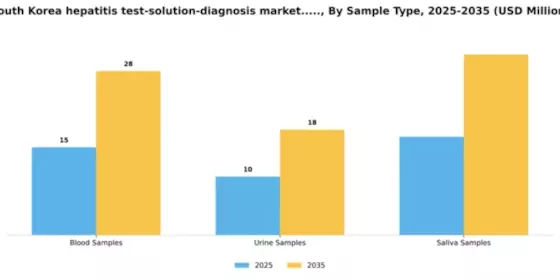
In the South Korea hepatitis test-solution-diagnosis market., Blood Samples hold the largest market share, preferred for their accuracy and reliability in diagnosing hepatitis. Following behind, Urine Samples and Saliva Samples present alternative options, but their adoption remains comparatively lower. The demand for Blood Samples is driven by their established use in clinical settings, making them the standard choice for hepatitis testing. Growth trends indicate that Urine Samples are emerging as the fastest-growing segment due to technological advancements that enhance test accuracy and ease of use. The increasing preference for non-invasive testing methods further drives this growth, appealing to individuals seeking less discomfort during the testing process. Saliva Samples, while gaining traction, still lag behind in market share but represent a valuable alternative for specific demographics.
Blood Samples (Dominant) vs. Urine Samples (Emerging)
Blood Samples are characterized by their dominant position in the South Korea hepatitis test-solution-diagnosis market, attributed to their long-standing use in diagnosing liver-related diseases. These samples provide accurate, reliable results and are preferred by healthcare professionals for clinical assessments. In contrast, Urine Samples are gaining popularity as an emerging alternative due to their non-invasive nature and advancements in testing technology. While Blood Samples remain the go-to choice, Urine Samples are becoming increasingly favored among consumers seeking convenience and comfort, indicating a shift towards newer testing methodologies.
Get more detailed insights about South Korea Hepatitis Test Solution Diagnosis Market Request Free Sample
The hepatitis test-solution-diagnosis market in South Korea is characterized by a competitive landscape that is increasingly shaped by innovation, strategic partnerships, and a focus on digital transformation. Key players such as Abbott Laboratories (US), Roche Diagnostics (CH), and Siemens Healthineers (DE) are actively pursuing strategies that enhance their market positioning. Abbott Laboratories (US) emphasizes innovation in its product offerings, particularly in point-of-care testing solutions, which are gaining traction due to their rapid results and ease of use. Roche Diagnostics (CH) focuses on expanding its diagnostic portfolio through strategic acquisitions and partnerships, thereby enhancing its capabilities in molecular diagnostics. Siemens Healthineers (DE) is investing in digital health solutions, integrating AI and data analytics into its diagnostic platforms, which appears to be a critical factor in maintaining competitive advantage.The business tactics employed by these companies include localizing manufacturing to reduce costs and optimize supply chains, which is particularly relevant in the context of South Korea's advanced manufacturing capabilities. The market structure is moderately fragmented, with several players competing for market share, yet the influence of major companies is substantial. This collective presence of key players fosters a competitive environment where innovation and operational efficiency are paramount.
In October Abbott Laboratories (US) announced the launch of a new hepatitis C test that utilizes advanced molecular technology, significantly reducing the time required for diagnosis. This strategic move is likely to enhance Abbott's market share by addressing the growing demand for rapid testing solutions in clinical settings. The introduction of this product aligns with the broader trend towards faster diagnostics, which is becoming increasingly important in the healthcare landscape.
In September Roche Diagnostics (CH) entered into a partnership with a local South Korean biotech firm to co-develop a new hepatitis B diagnostic tool. This collaboration not only strengthens Roche's foothold in the region but also leverages local expertise to enhance product development. Such partnerships are indicative of a trend where The hepatitis test-solution-diagnosis market needs.
In August Siemens Healthineers (DE) unveiled a new AI-driven diagnostic platform aimed at improving the accuracy of hepatitis testing. This platform is expected to streamline laboratory workflows and enhance diagnostic precision, reflecting Siemens' commitment to integrating cutting-edge technology into its offerings. The strategic importance of this development lies in its potential to set new standards for diagnostic accuracy in the market.
As of November the competitive trends in the hepatitis test-solution-diagnosis market are increasingly defined by digitalization, sustainability, and the integration of AI technologies. Strategic alliances are playing a crucial role in shaping the landscape, as companies recognize the need for collaboration to drive innovation. Looking ahead, competitive differentiation is likely to evolve from traditional price-based competition towards a focus on technological advancements, innovative solutions, and reliable supply chains. This shift underscores the importance of adaptability and forward-thinking strategies in maintaining a competitive edge.
Recent developments in the South Korea Hepatitis Test Solution Diagnosis Market have indicated a strong focus on improving diagnostic solutions and healthcare services for hepatitis. Companies like Roche and Abbott are actively engaged in enhancing their product offerings to comply with local health regulations and meet the growing demand for accurate diagnostic tools.
In September 2023, Meridian Bioscience announced advancements in molecular testing, which are expected to bolster its presence in the region. Additionally, merger activities are shaping the landscape; in August 2023, Danaher acquired a biotechnology firm that strengthened its diagnostic capabilities, significantly impacting market competition.
The South Korean government continues to prioritize hepatitis screening programs, reflecting a commitment to public health and wellness and fostering an environment conducive to rapid market growth. Investment in Research and Development is on the rise as companies such as Thermo Fisher Scientific and BioRad Laboratories innovate to produce more efficient testing solutions.
Overall, the market is experiencing notable growth, with the value of hepatitis test solutions expanding due to increasing healthcare needs driven by awareness campaigns and government initiatives.
The Hepatitis Test Solution Diagnosis Market is projected to grow at a 5.69% CAGR from 2025 to 2035, driven by technological advancements and increasing awareness.
New opportunities lie in:
By 2035, the market is expected to achieve substantial growth and innovation.
| MARKET SIZE 2024 | 41.8(USD Million) |
| MARKET SIZE 2025 | 44.18(USD Million) |
| MARKET SIZE 2035 | 76.83(USD Million) |
| COMPOUND ANNUAL GROWTH RATE (CAGR) | 5.69% (2025 - 2035) |
| REPORT COVERAGE | Revenue Forecast, Competitive Landscape, Growth Factors, and Trends |
| BASE YEAR | 2024 |
| Market Forecast Period | 2025 - 2035 |
| Historical Data | 2019 - 2024 |
| Market Forecast Units | USD Million |
| Key Companies Profiled | Abbott Laboratories (US), Roche Diagnostics (CH), Siemens Healthineers (DE), Thermo Fisher Scientific (US), Bio-Rad Laboratories (US), Ortho Clinical Diagnostics (US), Hologic (US), Cepheid (US) |
| Segments Covered | Type, Technology, End User, Sample Type |
| Key Market Opportunities | Emerging diagnostic technologies enhance early detection and treatment options in the hepatitis test-solution-diagnosis market. |
| Key Market Dynamics | Rising demand for rapid hepatitis diagnostics drives innovation and competition among local test-solution providers in South Korea. |
| Countries Covered | South Korea |
The market valuation was $41.8 Million in 2024.
The projected valuation for 2035 is $76.83 Million.
The expected CAGR during this period is 5.69%.
Key players include Abbott Laboratories, Roche Diagnostics, Siemens Healthineers, and Thermo Fisher Scientific.
The main segments include Type, Technology, End User, and Sample Type.
Serological tests increased from $10.0 Million to $18.0 Million.
Nucleic acid tests had a valuation of $15.0 Million in 2024.
Hospitals had the highest valuation at $15.0 Million in 2024.
Rapid diagnostic tests are expected to grow from $8.8 Million to $16.8 Million by 2035.
Saliva samples are projected to grow from $16.8 Million to $30.83 Million by 2035.


Kindly complete the form below to receive a free sample of this Report

“This is really good guys. Excellent work on a tight deadline. I will continue to use you going forward and recommend you to others. Nice job”


“Thanks. It’s been a pleasure working with you, please use me as reference with any other Intel employees.”


“Thanks for sending the report it gives us a good global view of the Betaïne market.”


“Thank you, this will be very helpful for OQS.”


“We found the report very insightful! we found your research firm very helpful. I'm sending this email to secure our future business.”


“I am very pleased with how market segments have been defined in a relevant way for my purposes (such as "Portable Freezers & refrigerators" and "last-mile"). In general the report is well structured. Thanks very much for your efforts.”


“I have been reading the first document or the study, ,the Global HVAC and FP market report 2021 till 2026. Must say, good info! I have not gone in depth at all parts, but got a good indication of the data inside!”


“We got the report in time, we really thank you for your support in this process. I also thank to all of your team as they did a great job.”


“The Automotive 48V ECU Components Procurement Intelligence Study” was a complex project, but the Market Research Future (MRFR) team handled it with quality, agility, and customer-centricity. They delivered all requested data on time and within the agreed scope. The team, including Shubhendra Anand and Rahul Gotadki, was always readily available to clarify questions and swiftly implement necessary adjustments, driving the project to a successful conclusion within a very demanding timeframe.
I would also like to specifically commend Akshay Agarwal for his responsiveness and support at every stage—from our initial inquiry on May 6th through to final delivery on June 18th. His dedication made the entire process seamless.”



